
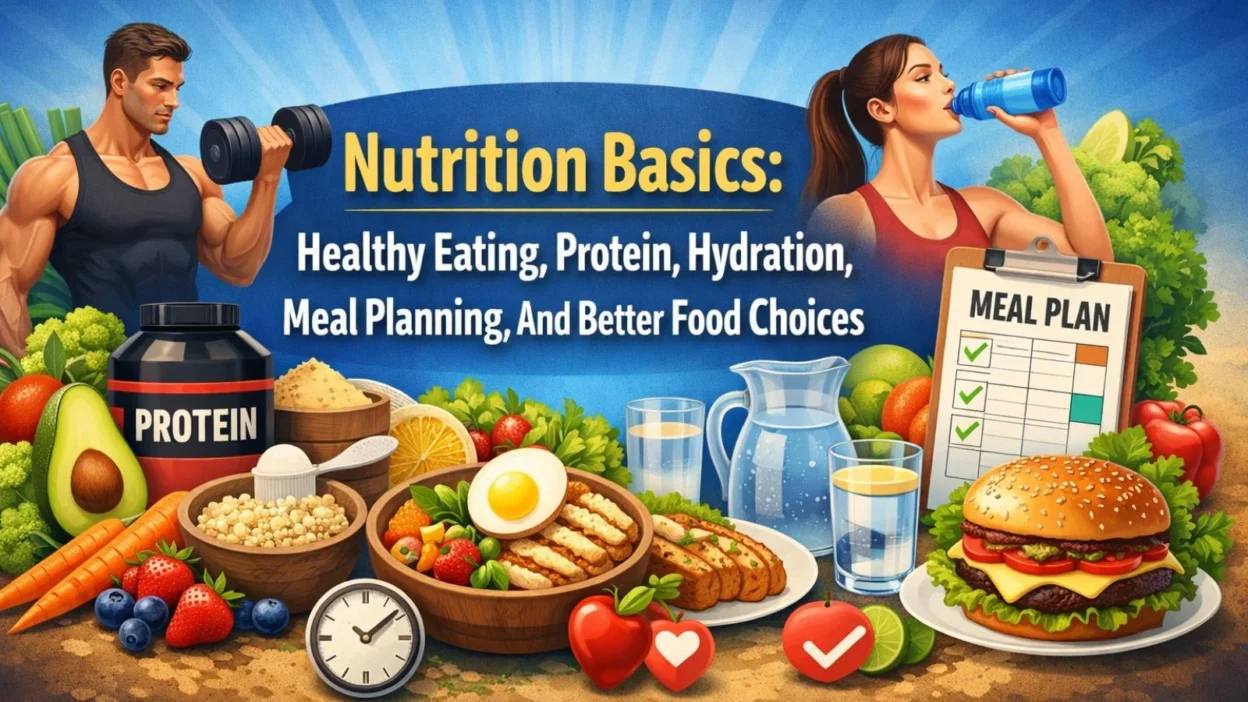
Good nutrition is not about eating perfectly. It is about building an eating pattern that supports your energy, training, recovery, hunger, and daily routine. Federal guidance consistently emphasizes a healthy dietary pattern over obsessing over single foods or nutrients, which makes this a much more useful way for beginners to think about nutrition.
This guide explains nutrition in plain English. You will learn what balanced eating actually means, how to build better meals, where protein and hydration fit in, how to plan food for busy weeks, what to do more often, what to limit, and when supplements make sense. This is general education, not personal medical care. The Dietary Guidelines themselves are not clinical treatment plans, and people with chronic conditions or specific nutrition concerns may need individualized guidance.
Quick Answer
Nutrition basics start with a healthy eating pattern you can repeat. For most people, that means building meals around fruits, vegetables, grains, protein foods, and dairy or fortified soy alternatives, drinking enough fluids, and limiting foods and drinks that are high in added sugars, saturated fat, and sodium.
What Good Nutrition Actually Means
Good nutrition means eating in a way that helps you feel steady, recover well, and keep going without turning food into a daily struggle. It is not a perfect menu. It is a repeatable pattern.
The strongest public nutrition guidance focuses on the overall pattern: eat a variety of nutrient-dense foods from the main food groups, stay within a reasonable calorie range for your needs, and limit foods and drinks that crowd out better choices.
A good nutrition routine should help you:
- feel more stable between meals
- support workouts and recovery
- reduce random, last-minute food decisions
- eat more filling meals
- stay consistent on normal days, not just perfect ones
The Simple Nutrition Foundation
If nutrition feels confusing, come back to the basics. Most people improve more by fixing their daily pattern than by chasing advanced tricks.
A strong everyday pattern usually includes:
- vegetables and fruit most days
- more whole or less-refined carbohydrate choices
- a clear protein source at meals
- regular fluids through the day
- meals that are filling enough to reduce grazing later
- fewer foods and drinks loaded with added sugars, saturated fat, and sodium
The Dietary Guidelines describe the core elements of a healthy pattern as vegetables, fruits, grains, dairy or fortified soy alternatives, protein foods, and oils, with an emphasis on nutrient-dense choices. They also recommend limiting added sugars, saturated fat, sodium, and alcohol.
What Nutrient-Dense Eating Looks Like
“Nutrient-dense” sounds technical, but the idea is simple: get more nutrition from the foods and drinks you choose most often.
That usually means choosing foods like:
- whole fruit more often than sugary drinks
- vegetables more often than fries or chips
- oats, brown rice, potatoes, or whole-grain bread more often than pastries
- yogurt, milk, or fortified soy foods instead of dessert-style snacks
- beans, eggs, fish, chicken, tofu, lentils, nuts, and seeds as regular protein choices
MyPlate materials reinforce this same pattern: eat a variety of fruits, vegetables, grains, protein foods, and dairy or fortified soy alternatives, and choose options with less added sugars, saturated fat, and sodium.
The Core Nutrition Pieces
Protein
Protein helps support muscle repair, fullness, and meal structure. It also makes meals more satisfying and often helps people avoid the “I ate, but I’m still hungry” problem. MedlinePlus notes that protein supports muscle growth and tissue repair, but more protein is not automatically better, and very high intake is not a magic shortcut.
Helpful protein options include:
- eggs
- Greek yogurt
- cottage cheese
- fish
- chicken
- turkey
- lean beef
- tofu
- tempeh
- beans
- lentils
- edamame
- milk or fortified soy foods
- nuts and seeds
Carbohydrates
Carbohydrates are your body’s easiest fuel source for daily activity and exercise. They are not the problem on their own. In fact, MedlinePlus notes that carbohydrates provide energy for exercise and that under-fueling can hurt performance and energy.
Useful carbohydrate choices include:
- oats
- rice
- potatoes
- fruit
- whole-grain bread
- pasta
- beans
- quinoa
- yogurt
- starchy vegetables
Fats
Fats help with satisfaction, hormones, and nutrient absorption. A balanced meal is usually easier to stick with when it includes some fat instead of trying to stay extremely low-fat all the time.
Good fat sources include:
- avocado
- olive oil
- nuts
- seeds
- nut butters
- salmon
- sardines
Fiber
Fiber supports fullness, digestion, and meal quality. Many fiber-rich foods also improve nutrition overall because they bring vitamins, minerals, and texture to meals.
Good fiber sources include:
- vegetables
- fruit
- oats
- beans
- lentils
- berries
- chia seeds
- whole grains
How To Build A Balanced Meal
A balanced meal does not need a complicated formula. For most people, a simple plate structure works well:
- one clear protein source
- one carbohydrate source
- one or two fruits or vegetables
- one fat source when it fits naturally
Examples:
- eggs, toast, and fruit
- Greek yogurt, oats, berries, and nuts
- chicken, rice, and roasted vegetables
- salmon, potatoes, and salad
- tofu, quinoa, and vegetables
- bean bowl with rice, salsa, avocado, and greens
This works because it improves structure without making eating feel rigid.
What To Eat More Often
If you want a simple rule, eat more foods that make it easier to build real meals.
That usually means more:
- fruit
- vegetables
- whole or less-refined grains
- beans and lentils
- lean or plant-based protein foods
- yogurt, milk, or fortified soy foods
- water and unsweetened drinks
- staple foods you can actually keep in the house
The Dietary Guidelines and MyPlate both support this kind of variety-based, food-group-first approach.
What To Limit More Often
You do not need to ban foods to improve your nutrition. But some foods and drinks are easier to overdo because they add calories without much fullness or nutrition.
Try to limit more often:
- sugary drinks
- dessert-style coffee drinks
- convenience meals that are low in protein and vegetables
- frequent grazing on chips, candy, or pastries
- oversized portions of foods that are easy to eat quickly
- “health” products that are expensive but do not improve your actual meals
The federal guidelines specifically call for limiting foods and beverages higher in added sugars, saturated fat, and sodium.
Hydration Basics That Actually Matter
Hydration does not need to be a math problem for most people. What matters most is drinking fluids regularly enough that your body stays in a good place through the day.
A practical hydration routine looks like:
- start the day with water
- drink with meals
- keep water within reach
- drink more in hot weather or around exercise
- pay attention to thirst, urine color, and how you feel
MedlinePlus notes that water needs vary by age, body size, activity, and health status, and that total water comes from both food and beverages. There is no single perfect amount that fits everyone.
Meal Planning For Real Life
Meal planning helps because it reduces decisions. It does not have to mean cooking every meal for the week.
A simple planning method:
- choose 2 breakfasts
- choose 2 lunches
- choose 2 dinners
- choose 2 snacks
- make a short grocery list built around those foods
That gives you structure without turning food into a rigid system.
Example Weekly Framework
Breakfast
- eggs and toast
- Greek yogurt with oats and berries
Lunch
- chicken rice bowl
- tuna sandwich with fruit
- lentil bowl with vegetables
Dinner
- salmon with potatoes and vegetables
- tofu stir-fry with rice
- turkey pasta with salad
Snacks
- fruit and peanut butter
- yogurt
- cottage cheese
- nuts and fruit
- a protein smoothie when convenient
MyPlate meal-planning resources emphasize starting with a few staple protein foods, grains, and produce items that can be used across multiple meals.
How To Eat Better On Busy Days
A good nutrition routine should survive a busy Tuesday, not just a calm Sunday.
What helps:
- keep easy proteins at home
- cook once, use twice
- buy frozen produce when fresh food goes bad too fast
- keep simple carbohydrate staples ready
- use repeat meals instead of chasing variety every day
- plan one backup dinner for chaotic nights
Busy-day nutrition is usually about reducing friction, not adding discipline.
Nutrition And Exercise
Food and training should support each other. You do not need perfect timing to benefit, but better fuel usually makes exercise feel better.
Before A Workout
For many people, a pre-workout snack works best when it is easy to digest and includes carbohydrates. MedlinePlus notes that avoiding hard training on an empty stomach often helps, and carbohydrates are especially useful for exercise fuel.
Simple pre-workout ideas:
- banana and yogurt
- toast with peanut butter
- oats with fruit
- smoothie with fruit and milk or protein
After A Workout
After exercise, a meal or snack with protein plus carbohydrates can help recovery, especially after harder or longer sessions. MedlinePlus notes that carbohydrates help restore energy stores and protein supports tissue repair.
Simple post-workout options:
- chicken and rice
- eggs and toast
- yogurt and fruit
- tofu bowl with rice
- smoothie with fruit and protein
The full-day pattern still matters more than chasing perfect timing around every single session.
Supplements: Useful Sometimes, But Not The Foundation
Supplements can be helpful in some situations, but they are not the base of a strong nutrition routine. NIH’s Office of Dietary Supplements says supplements can help some people get adequate amounts of essential nutrients, but they cannot replace the variety of foods that matter in a healthy eating pattern.
Beginner-friendly supplement thinking is simple:
- use food first
- use supplements to fill a clear gap or solve a practical problem
- do not assume “more” means “better”
- be cautious with products marketed for performance, fat loss, or fast body changes
Performance supplement products often contain multiple ingredients, and NIH notes that evidence and safety can vary widely across ingredients and combinations. Side effects and medication interactions are possible.
Common Nutrition Mistakes To Avoid
Trying To Fix Everything At Once
Big overhauls usually create stress, not consistency.
Skipping Meals, Then Overeating Later
This often leads to weak energy and chaotic choices.
Building Meals With Too Little Protein
Meals may feel less filling and less supportive of recovery.
Drinking More Calories Than You Realize
Sugary drinks, dessert coffees, and frequent liquid calories add up quickly.
Treating Supplements Like The Plan
Supplements can support a routine, but they cannot replace one.
Making The Plan Too Strict For Real Life
If your nutrition routine only works on ideal days, it is too fragile.
What To Do For Better Nutrition
- build meals around a clear protein source
- include produce more consistently
- keep easy staples at home
- choose more filling meals
- plan a few repeat meals each week
- drink fluids regularly through the day
- make your routine easier to follow, not harder
- improve your overall pattern before chasing details
What To Avoid
- extreme food rules
- cutting food groups without a real reason
- relying on willpower alone
- turning every meal into a test
- expecting perfect eating every day
- assuming supplements can fix weak meals
- ignoring your schedule, budget, or preferences
How To Know Your Nutrition Is Improving
Progress is not only about body weight.
You may be moving in the right direction if:
- meals feel more balanced
- you stay full longer
- energy feels more stable
- workouts feel better supported
- recovery feels easier
- grocery shopping feels simpler
- you stop “starting over” every few days
That kind of progress usually matters more than a short burst of perfect eating.
Build Your Nutrition Cluster Next
This pillar should support stronger, more specific guides such as:
- Healthy Eating For Beginners
- Meal Planning For Beginners
- Healthy Grocery List For Beginners
- How Much Protein Do You Need?
- Best High-Protein Foods
- Hydration Tips For Daily Health
- What To Eat Before A Workout
- What To Eat After A Workout
- Healthy Snack Ideas
- Foods That Keep You Full Longer
- Meal Prep Ideas For Busy People
- Supplements For Beginners
These should be linked contextually from the sections above, not left as a plain orphaned list. Google’s documentation specifically calls out helpful titles, descriptive link text, and crawlable links as core best practices.
FAQs
What are the basics of good nutrition?
The basics are a healthy dietary pattern, enough protein, regular fluids, better food choices, and meals you can repeat. Public nutrition guidance emphasizes nutrient-dense choices across food groups rather than obsessing over one nutrient at a time.
Why is protein important?
Protein helps support muscle repair, tissue maintenance, and fullness. It is useful for active people, but it also helps everyday meals feel more complete.
Do I need to count calories to eat better?
Not always. Many people improve first by building better meals, eating more regularly, and improving food quality and routine. That said, some goals may still benefit from more personalized tracking or professional guidance.
What should I eat before a workout?
A simple pre-workout snack is usually easy to digest and includes carbohydrates, with some protein if timing allows. Many people do well with fruit, toast, yogurt, or a simple smoothie.
Are supplements necessary?
No. Some supplements can be helpful in specific situations, but they do not replace a healthy eating pattern built from real foods. NIH states this directly.
When should I get personalized nutrition help?
Get individualized help if you have a chronic condition, symptoms that affect eating, a history of disordered eating, major digestive issues, or a sport or body-composition goal that needs more precision. The Dietary Guidelines are broad public guidance, not individualized treatment plans.
Conclusion
Good nutrition does not need to feel extreme to work. The strongest routine is usually the one built on balanced meals, better food choices, steady hydration, and habits you can repeat.
Start with your overall pattern, not perfection. Then improve one meal, one grocery trip, and one routine at a time.