
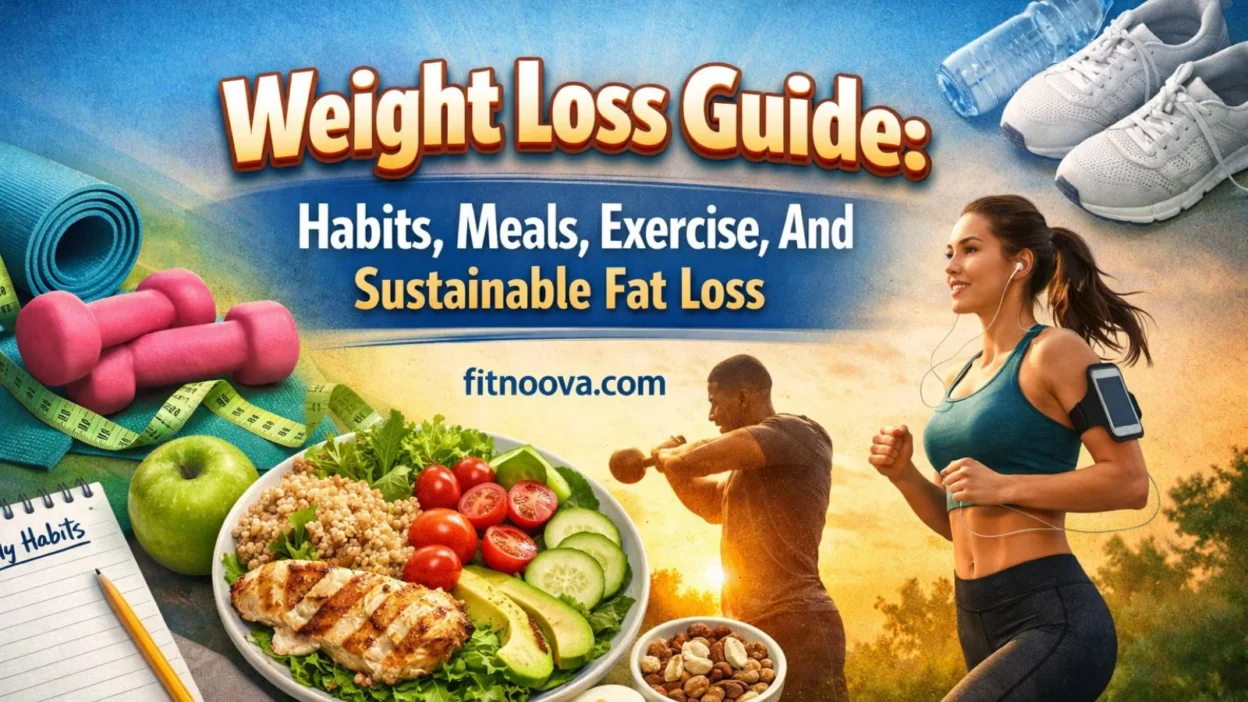
Weight loss usually works best when you stop chasing fast fixes and start building a routine you can repeat. For most beginners, that means eating in a way that helps you stay in a realistic calorie deficit over time, moving more during the day, doing some strength training, and keeping the plan simple enough to follow on busy weeks. That long-term approach is consistent with guidance from NIDDK, CDC, Mayo Clinic, and the American Heart Association. This guide is for general education and does not replace personal medical advice.
Quick Answer
Weight loss happens when your routine helps you take in less energy than your body uses over time, while still giving you enough structure, food quality, movement, and recovery to stay consistent. For most beginners, the most useful plan is built on better meals, more walking, regular strength training, and habits that are realistic enough to keep going next month, not just next Monday.
What Weight Loss Really Means
Weight loss means your total body weight goes down over time. Fat loss is more specific and is often the more useful goal because it points toward reducing body fat while keeping your routine supportive of strength, energy, and everyday function.
That distinction matters because the scale does not only reflect body fat. Weight can also shift because of fluid changes, meal timing, sodium intake, digestion, sleep, medications, health conditions, and menstrual cycle changes. That is one reason fast scale drops are not always the same thing as meaningful progress. NIDDK notes that weight is influenced by eating patterns, physical activity, sleep, medicines, and health conditions, not just willpower.
For most readers, the better target is not “lose weight as fast as possible.” The better target is “build a routine that helps body composition, health habits, and consistency improve over time.”
How Weight Loss Actually Works
At the center of weight loss is energy balance. Over time, your routine needs to create a calorie deficit, meaning you use more energy than you take in. That usually happens through a mix of more filling meals, fewer automatic extras, more walking and daily movement, and planned exercise.
That does not mean you need to count every calorie forever. Many people make progress by improving meal structure, portions, food quality, and consistency before they ever track anything closely. But the basic idea still matters, because it explains why progress comes from repeated patterns rather than one “clean” day or one hard workout.
It also helps to remember that the same plan does not work exactly the same way for everyone. Sleep, medications, stress, medical conditions, and routine adherence all affect results. If progress feels unusually difficult, that does not automatically mean you are lazy or doing everything wrong.
Why Sustainable Fat Loss Beats Fast Weight Loss
Fast weight-loss plans are tempting because they promise urgency, certainty, and control. The problem is that many of them depend on rules that are too strict to live with, such as severe calorie cuts, all-or-nothing food rules, or exercise volumes that leave beginners sore, tired, and inconsistent.
Mayo Clinic and NIDDK both emphasize lasting lifestyle changes over short-term extremes. Sustainable fat loss usually works better because it gives you enough flexibility to recover from real life instead of quitting when the week stops being perfect.
A sustainable plan is not a “lazy” plan. It is a plan that keeps working after motivation dips. It should leave room for normal meals, missed workouts, social events, and imperfect days without turning one setback into a lost month.
The Food Side Of Weight Loss
Food is usually the fastest lever in a weight-loss plan because it is easier to eat a large calorie surplus than it is to burn one off with exercise. But that does not mean you need a rigid meal plan or “diet food.” It means your meals should make hunger easier to manage and overeating harder to drift into.
For most beginners, a more helpful food pattern looks like this:
- Start meals with a protein source.
- Include fruit or vegetables often.
- Use fiber-rich carbs in portions that fit your appetite and activity.
- Keep high-calorie extras intentional instead of automatic.
- Reduce liquid calories and repetitive snacking.
- Plan at least a few repeat meals you can rely on during busy days.
That kind of structure is often more useful than trying to eat “perfectly.” It lowers decision fatigue and makes your routine easier to repeat.
Build Meals Around Protein And Fullness
Protein matters during weight loss because it can help with fullness and can support muscle retention when you are eating less overall. Many strong weight-management pages also pair protein guidance with fiber and minimally processed foods because that combination tends to be more satisfying than meals built around refined snacks or sugary drinks.
A simple way to build a meal is:
- Protein first
- Produce second
- A sensible carb or starch portion
- Fats and extras on purpose, not by accident
A few practical examples:
- Breakfast: Greek yogurt with fruit and oats, or eggs with toast and fruit
- Lunch: Chicken, tofu, tuna, lentils, or beans with vegetables and rice or potatoes
- Dinner: A protein-centered plate with vegetables and a moderate carb portion
- Snack: Something that includes protein, such as yogurt, cottage cheese, edamame, or a simple sandwich, instead of only something crunchy or sweet
You do not need “weight-loss foods.” You need meals that help you stay satisfied and reduce the chances of rebound eating later.
Food Choices That Usually Help
Helpful foods are usually the ones that are filling, nutrient-dense, and easier to portion well. Common examples include:
- Lean proteins
- Beans and lentils
- Eggs
- Greek yogurt
- Fruit
- Vegetables
- Oats
- Potatoes
- Rice and other staple carbs in reasonable portions
- Soup-based meals
- High-fiber foods that take longer to eat and keep you fuller
Healthline, Johns Hopkins, and Medical News Today all highlight versions of this pattern: more protein, more fiber, fewer ultra-processed foods, and less reliance on foods that are easy to overeat quickly.
It also helps to watch the foods and drinks that can quietly push calorie intake up without making meals more satisfying. Common examples include sugary drinks, frequent takeout add-ons, grazing while cooking, specialty coffee drinks, alcohol, dressings poured freely, and “healthy” snacks eaten without much awareness.
Walking Is One Of The Best Weight-Loss Habits
Walking is one of the most practical tools in a weight-loss plan because it is accessible, low impact for many people, and easier to recover from than hard training. It can raise your total activity without making the rest of your week harder to manage.
CDC guidance recommends at least 150 minutes of moderate-intensity physical activity each week for adults, and brisk walking counts. That target is a strong baseline for health, and it can absolutely support weight loss, especially for beginners. At the same time, CDC also notes that people vary in how much activity they need for weight management, so some people may eventually need more total movement than the minimum.
Walking usually works best when it becomes part of your routine instead of a random bonus. A 10- to 20-minute walk after meals, a morning walk before work, or a step goal you can actually hit most days is usually more useful than a huge target you abandon after four days.
Strength Training Helps More Than Many People Think
A good weight-loss plan should not rely only on cardio. Strength training supports muscle, function, and body composition, and it gives your week more structure. CDC recommends muscle-strengthening activity on 2 or more days each week for adults.
For beginners, strength training does not need to mean advanced programming. A simple approach works well:
- 2 to 3 full-body sessions each week
- Basic movement patterns such as squats, hinges, pushes, rows, and carries
- Controlled progression instead of random hard workouts
- One or two rest days between harder lifting sessions
A starter session might include a squat variation, a push movement, a row, a hip hinge, and a carry or core exercise. Two to three sets of each is enough for many beginners.
Some soreness after new training can be normal. Sharp pain, joint pain that worsens as you move, chest pain, fainting, severe shortness of breath, or dizziness that does not settle are not normal signs to push through. Those are reasons to stop and seek appropriate medical guidance.
Sleep And Stress Are Not Side Issues
Poor sleep and high stress can make weight loss harder by affecting hunger, cravings, routine quality, energy, and decision-making. NIDDK includes sleep among the factors that affect weight, and many stronger competitor pages treat sleep and stress as part of adherence, not as side notes.
That does not mean stress explains every stall. It means your plan should still work during stressful weeks. When life gets heavy, the smarter move is usually to simplify the routine:
- Keep meals basic and repeatable
- Walk instead of skipping movement entirely
- Shorten workouts rather than dropping them for weeks
- Protect sleep where possible
- Get back to your normal structure quickly after rough days
A Simple Beginner Weight-Loss Framework
If you want one practical starting point, use this:
- Eat 3 structured meals most days
- Build each meal around protein and add produce often
- Use snacks on purpose, not constantly
- Walk regularly, especially on non-gym days
- Strength train 2 to 3 times each week
- Keep drinks and extras intentional
- Aim for consistency across the week, not perfection every day
A simple beginner week might look like this:
- Walk 20 to 30 minutes on most days
- Strength train Monday and Thursday, or Monday, Wednesday, and Friday
- Repeat two or three easy breakfasts and lunches during the week
- Keep one or two satisfying snacks available
- Review your week before the weekend instead of waiting until things unravel
CDC’s baseline target is at least 150 minutes of moderate activity weekly plus muscle-strengthening activity on 2 or more days, and that total can be broken into smaller chunks.
What To Do For Better Progress
Do these things more often:
- Plan meals before you get overly hungry
- Make protein and fiber part of most meals
- Keep higher-calorie extras visible in your mind, not invisible in your routine
- Make walking a normal part of your week
- Use strength training to support muscle and structure
- Improve sleep where you can
- Track progress by trends, not mood
- Recover quickly after setbacks instead of “starting over” next week
NIDDK specifically advises getting back to your healthy pattern quickly after overeating or a disrupted day. That mindset is much more useful than all-or-nothing thinking.
What To Avoid
Avoid these common traps:
- Crash diets
- Aggressive calorie cutting
- Skipping meals if it leads to overeating later
- Trying to “earn” food with exercise
- Copying someone else’s plan without adjusting it to your life
- Adding too much exercise too quickly
- Treating weekends like they do not count
- Assuming a tough workout cancels out a chaotic eating pattern
- Quitting after one off-plan meal or one bad week
Mayo Clinic, NIDDK, and AHA all lean toward steady, realistic behavior change instead of extreme approaches, and that is the safer model for most readers.
Why You Might Not Be Losing Weight
If progress feels slow, the answer is often more ordinary than people expect. Common reasons include:
- Portions drifted up over time
- Snacks became frequent
- Drinks added more calories than expected
- Weekends erased the weekday deficit
- Activity dropped outside workouts
- The plan is too strict to follow consistently
- Sleep and stress made your routine harder to hold
- You are expecting scale changes faster than your actual habits support
It also helps to remember that body weight does not move in a perfectly straight line. Temporary increases can happen from sodium, hard training, digestion, menstrual cycle changes, and normal fluid shifts. That is why one weigh-in matters less than the broader trend over several weeks.
If your progress feels unusually difficult, or if you have symptoms that suggest a medical issue, that is a good reason to check in with a healthcare professional instead of just tightening the plan further.
How To Know Your Plan Is Working
A good plan is working when:
- Meals feel more structured
- Hunger is easier to manage
- Walking is more regular
- Workouts feel repeatable
- You recover faster after imperfect days
- Your weekly trend improves over time
- Your clothes, waist, energy, or routine consistency improve
NIDDK supports regular weight tracking as one helpful tool, but the bigger goal is staying with habits long enough to see a real pattern. If weighing yourself is stressful or obsessive, use other markers too, such as weekly waist measurements, workout consistency, step totals, or how often you followed your planned meals.
When To Get Professional Help
Get professional input if you have a medical condition, take medicines that may affect weight, have pain that limits activity, suspect your eating has become too restrictive or chaotic, or want help building a plan that fits your health history.
NIDDK specifically encourages people to talk with a healthcare professional when choosing a weight-loss program and notes that medicines and health problems can affect weight. Professional support can also be useful if you need a dietitian, a structured program, or guidance on exercise tolerance and safety.
That is not a failure. It is often the smartest next step.
FAQs
What is the difference between weight loss and fat loss?
Weight loss means your total body weight goes down. Fat loss is more specific and is often the more useful goal because it focuses on reducing body fat while keeping your routine supportive of strength, energy, and function.
Do I need to count calories to lose weight?
Not always. Many people improve first by structuring meals better, increasing activity, and reducing easy-to-overeat habits. But calorie balance still matters, because it helps explain why your routine does or does not move weight over time.
Is walking good for weight loss?
Yes. Walking is one of the easiest ways to add moderate activity, and brisk walking counts toward CDC activity guidance for adults. It is especially useful because it is simple, accessible, and easy to repeat consistently.
Should I do cardio or strength training for weight loss?
Most beginners do best with both. Walking and cardio help raise activity levels, while strength training supports muscle and gives your week more structure. CDC recommends adults get aerobic activity and muscle-strengthening activity each week.
Why does my weight feel inconsistent?
Body weight can shift for many reasons, including sodium intake, digestion, fluid balance, sleep, training soreness, menstrual cycle changes, medications, and normal routine variation. That is why one weigh-in matters less than the broader trend.
What is the best first step if I feel overwhelmed?
Start with the basics: eat regular meals, walk most days, and do 2 to 3 simple strength sessions each week. A small plan you can repeat is usually more effective than a perfect plan you cannot keep.
Conclusion
Weight loss usually works best when the plan becomes simpler, steadier, and easier to repeat. Better meals, more daily movement, regular walking, strength training, and realistic recovery from setbacks usually beat extremes.
Do not judge your plan by how dramatic it feels in one week. Judge it by whether it helps you eat well enough, move often enough, and stay consistent long enough to create real change over time.