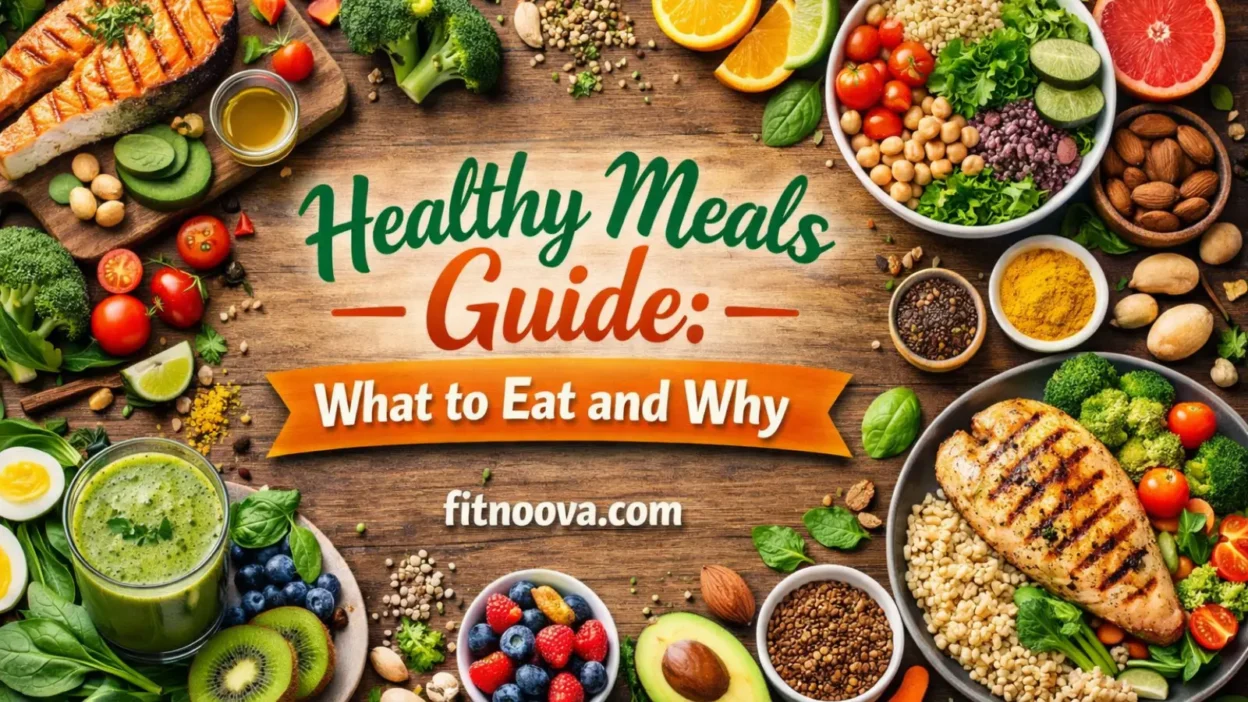
Healthy meals do not need to be expensive, perfect, or complicated. In practical terms, a healthy meal usually includes a good source of protein, plenty of vegetables or fruit, a smart carbohydrate choice such as whole grains or beans, and fats that support flavor and fullness rather than pushing the meal too far toward heavily processed ingredients. That general pattern lines up with current federal guidance and major heart-health recommendations.
Quick Answer
Healthy meals are meals built mostly from nutrient-dense foods: vegetables, fruit, whole grains, beans, lentils, nuts, seeds, dairy or fortified soy alternatives, and protein sources such as fish, eggs, poultry, tofu, or lean meats. A simple way to think about it is to fill about half your plate with produce, add a quarter plate of protein, and use the remaining quarter for grains or other high-fiber carbs.
What Counts as a Healthy Meal
A healthy meal is not one specific diet style. It is a balanced eating pattern that helps you get enough nutrients, supports energy, and is realistic enough to repeat. Current guidance consistently points toward meals centered on vegetables, fruits, whole grains, healthy protein sources, and lower-sugar dairy or fortified soy options, while keeping added sugars, sodium, and saturated fat in check.
That matters because healthy eating is about patterns over time, not one “clean” lunch or one less-healthy dinner. The American Heart Association and federal guidance both emphasize the overall pattern rather than treating a single meal as make-or-break.
The Easiest Way to Build Healthy Meals
One of the simplest frameworks is the plate method.
Make about half the plate vegetables and fruit. Use one quarter for protein. Use one quarter for grains or starchy foods, and choose whole-grain or higher-fiber options when you can. Add a small amount of healthy fat if the meal needs more staying power or flavor. This mirrors MyPlate and major heart-health guidance closely enough to be useful in real life.
Here is what that looks like in practice:
- Half the plate: salad, roasted vegetables, sautéed greens, tomatoes, cucumbers, berries, apples, oranges, or a mixed vegetable soup
- Quarter plate protein: chicken, fish, eggs, Greek yogurt, cottage cheese, tofu, tempeh, beans, lentils, edamame, lean beef, or turkey
- Quarter plate carbs: brown rice, oats, quinoa, whole-grain pasta, potatoes, corn tortillas, beans, lentils, or whole-grain bread
- Helpful extras: olive oil, avocado, nuts, seeds, salsa, yogurt-based sauces, herbs, and spices
Why Healthy Meals Matter Beyond Weight
Many people search for healthy meals because they want to manage weight, but that is only part of the picture. A healthier eating pattern helps people meet nutrient needs and is associated with better overall health and lower chronic disease risk. Public-health goals around nutrition also focus on getting enough fruits, vegetables, and whole grains for exactly that reason.
Healthy meals can also make everyday life easier. Meals with fiber, protein, and some healthy fat tend to be more filling than meals built mostly from refined carbs or ultra-processed snack foods, which can help with appetite control and steadier energy through the day. That does not mean every meal must be “perfect.” It means balanced meals usually work better than random grazing. This appetite point is a practical inference drawn from the consistent guidance to pair nutrient-dense foods, fiber-rich carbs, and protein.
The Core Parts of Healthy Meals
Vegetables and Fruit
These should do a lot of the heavy lifting in a healthy meal. They provide fiber, vitamins, minerals, and a lot of volume without making meals feel excessively heavy. Federal and heart-health guidance both encourage making produce a major part of the plate.
Fresh is great, but frozen and canned options count too. That matters for busy households and tight budgets. Just watch for versions packed with lots of added sugar, creamy sauces, or high sodium.
Protein
Protein helps meals feel complete. Good options include beans, lentils, fish, eggs, tofu, yogurt, nuts, seeds, poultry, and leaner cuts of meat. Major guidelines also encourage shifting some protein intake toward plant sources and seafood more often.
You do not need a huge portion. In many cases, a palm-sized serving of protein works well for a main meal, though individual needs vary by body size, age, activity, and goals.
Carbohydrates
Healthy meals include carbohydrates. The goal is not to fear them. The better question is which kinds you eat most often. Whole grains, beans, lentils, fruit, and starchy vegetables bring more fiber and nutrients than heavily refined choices. Federal and heart-health guidance continue to favor whole grains over refined grains.
That means foods such as oats, brown rice, potatoes, sweet potatoes, quinoa, whole-grain bread, corn tortillas, and beans can all fit well into healthy meals.
Fats
Healthy meals are not fat-free meals. Olive oil, nuts, seeds, avocado, and similar foods can improve flavor and satisfaction. Heart-health guidance specifically points toward plant oils such as olive or canola in place of less-helpful fat sources more often.
What Healthy Meals Look Like at Breakfast, Lunch, and Dinner
Healthy meals do not have to look the same all day.
Breakfast Ideas
A healthy breakfast might be Greek yogurt with fruit, nuts, and oats. It might be eggs with whole-grain toast and fruit. It might be oatmeal with peanut butter and berries. The point is not whether breakfast is sweet or savory. The point is getting a mix of protein, fiber, and enough substance to actually keep you full.
Lunch Ideas
Lunch works best when it is easy to repeat. A grain bowl with chicken or tofu, roasted vegetables, and a yogurt-based sauce is a solid option. So is a turkey and avocado sandwich on whole-grain bread with fruit and a side salad. Soup and a sandwich can also be a healthy meal when the soup includes beans, vegetables, or lentils and the sandwich is not overloaded with processed meat and salty extras.
Dinner Ideas
Dinner can stay simple. Salmon, rice, and broccoli works. Chili made with beans, lean ground turkey, and vegetables works. Tacos made with beans or chicken, cabbage, salsa, avocado, and corn tortillas work too. Healthy meals are often ordinary meals with better balance and more thoughtful portions.
Healthy Meals for Busy Adults
Busy adults usually do not need more nutrition information. They need fewer points of friction.
A few strategies help:
- Build 3 to 5 repeatable meals you genuinely like
- Keep staples around: eggs, yogurt, frozen vegetables, canned beans, fruit, oats, rice, potatoes, whole-grain wraps, tuna or salmon, tofu, nuts, and olive oil
- Cook proteins and grains in batches
- Use frozen produce without guilt
- Aim for “good enough” on busy days instead of skipping meals and overeating later
Planning meals ahead can support better balance and make healthy eating more affordable and practical.
Healthy Meals on a Budget
Healthy meals do not require specialty products. In many kitchens, the most cost-effective healthy foods are also the least flashy: oats, beans, lentils, rice, potatoes, eggs, yogurt, canned fish, peanut butter, frozen vegetables, bananas, carrots, onions, and seasonal fruit.
A budget-friendly healthy meal might be bean chili with rice, eggs with potatoes and sautéed spinach, or tuna mixed with yogurt and mustard on whole-grain toast with an apple on the side. Menu planning can lower waste and help keep nutrition more consistent week to week.
How to Read Labels When You Want Healthier Meals
Nutrition labels can help, especially when you compare similar products.
The FDA Daily Values are useful reference points. For most adults eating about 2,000 calories a day, the Daily Value for sodium is 2,300 milligrams, for added sugars is 50 grams, and for fiber is 28 grams. As a rule of thumb, 5% Daily Value or less is considered low, while 20% or more is considered high.
That does not mean you need to count everything. It just means labels can help you compare breads, cereals, frozen meals, sauces, yogurt, and snack foods more clearly.
Useful label habits include:
- Check serving size first
- Compare sodium across similar products
- Watch added sugars in drinks, flavored yogurt, cereals, sauces, and snacks
- Look for more fiber in breads, cereals, wraps, and crackers
- Keep ingredient lists simple when possible
Practical Tips for Building Better Meals Without Overthinking It
Start with one meal a day that you can improve consistently. For one person, that may mean swapping a pastry breakfast for yogurt, fruit, and nuts. For another, it may mean adding vegetables and protein to lunch so the afternoon feels less like a crash.
A few upgrades go a long way:
- Add produce to meals you already eat
- Choose whole-grain versions when you actually enjoy them
- Use beans more often, even if you also eat meat
- Keep protein in every main meal
- Use sauces and dressings for flavor, but not as the whole meal
- Do not rely on smoothies or bars as your default plan unless that truly fits your schedule
Small changes matter over time, which is a consistent message in federal guidance and MyPlate resources.
Common Mistakes That Make Healthy Meals Harder Than They Need to Be
Trying to Make Every Meal Perfect
Perfection is one of the fastest ways to make healthy eating less sustainable. A healthy meal pattern leaves room for convenience foods, restaurant meals, and preferences. The goal is consistency, not spotless eating.
Skipping Protein or Fiber
Meals built only around refined carbs often do not hold up well for long. Adding protein and higher-fiber foods usually improves fullness and meal quality.
Assuming Healthy Means Tiny
A salad that leaves you hungry in an hour is not automatically a better meal. Healthy meals should be satisfying enough to work in real life.
Overbuying Aspirational Food
A fridge full of ingredients you never use does not help. Healthy meals are easier when they match your actual schedule, cooking skills, and taste.
Going Too Heavy on Sodium, Added Sugars, and Saturated Fat
Packaged foods can fit in a healthy meal plan, but it helps to notice patterns. Current guidance advises limiting sodium to less than 2,300 milligrams a day and keeping added sugars and saturated fat below 10% of calories per day.
Who May Need a More Individual Approach
General healthy meal advice works for many adults, but some people need more tailored guidance. That includes people with diabetes, kidney disease, food allergies, digestive disorders, eating disorders, or medical nutrition restrictions. Athletes with very high training loads, pregnant people, and older adults with low appetite or muscle-loss concerns may also benefit from more individualized planning. NIDDK notes that food choices can play a role in managing diseases and conditions, not just general wellness.
If a certain eating pattern leaves you fatigued, dizzy, unusually hungry, or unable to meet your daily needs, that is a sign to reassess rather than push harder.
FAQ
What is the healthiest meal to eat every day?
There is no single healthiest meal for everyone. A strong everyday option is any meal built around vegetables or fruit, a solid protein source, and a high-fiber carb such as beans, oats, potatoes, or whole grains. Repeating simple balanced meals is often more helpful than chasing perfect variety at every sitting.
Can healthy meals help with weight loss?
They can support weight management because meals with protein, fiber, and minimally processed foods are often more filling and easier to build around consistent habits. But healthy meals are not a guarantee of weight loss, and your total pattern still matters.
Are frozen meals ever healthy?
Some are. Check the label for protein, fiber, sodium, and added sugars, and look at how much of the meal comes from vegetables, whole grains, or beans. A frozen meal can work especially well when you add fruit, yogurt, or a side vegetable.
Do healthy meals need to be low carb?
No. Healthy meals can include carbohydrates. Current guidance favors higher-quality carbohydrate sources such as whole grains, beans, lentils, fruit, and starchy vegetables rather than heavily refined options.
What are easy healthy meals for beginners?
Good beginner options include oatmeal with fruit and nuts, eggs with toast and fruit, rice bowls with chicken and vegetables, bean chili, yogurt with berries, or baked potatoes topped with Greek yogurt and beans. The best starter meals are simple enough to repeat.
How many meals a day should I eat?
There is no single ideal number for everyone. What matters more is whether your meal pattern helps you meet your nutrition needs, keeps your energy reasonably steady, and fits your routine without leading to constant overeating or skipped meals.
Conclusion
Healthy meals are usually simpler than people expect. They are meals built from mostly nutrient-dense foods, with a practical mix of produce, protein, fiber-rich carbohydrates, and healthy fats. If you want a workable standard, start with the plate method, keep a few repeatable meal ideas on hand, and focus on patterns you can actually maintain.