Last Updated: MAY 16, 2026
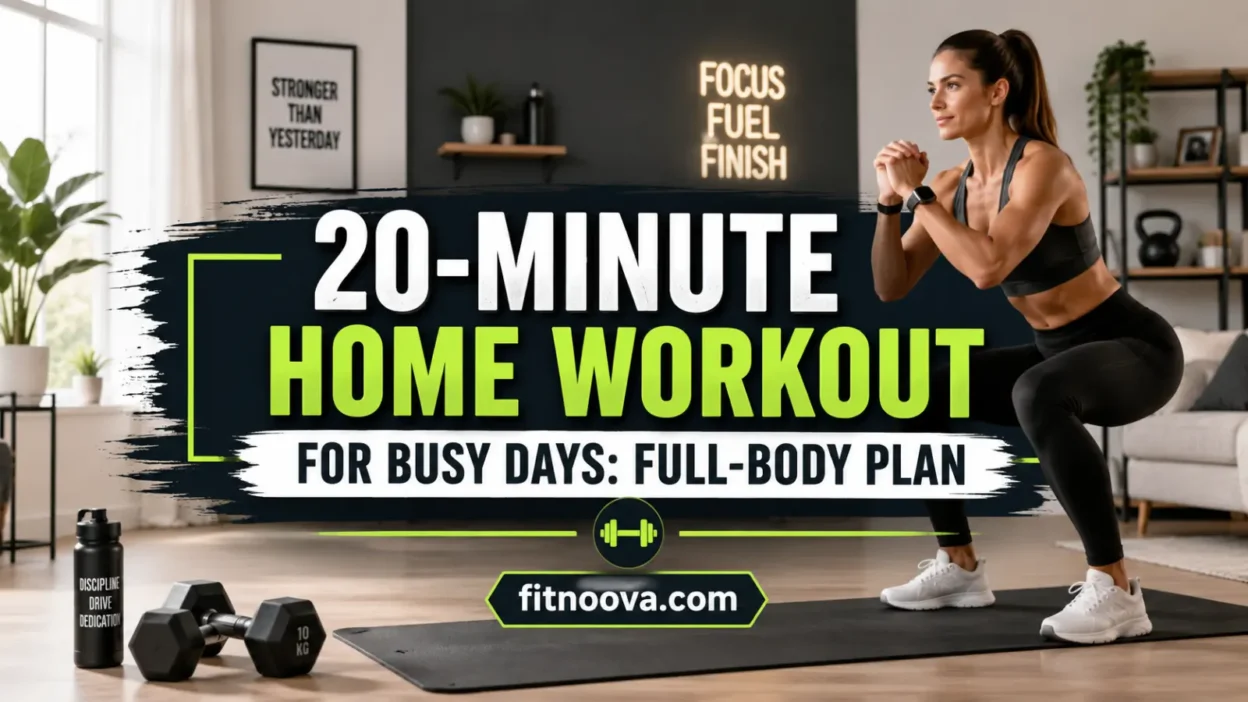
20-Minute Home Workout gives you a realistic way to train your whole body when your schedule is packed and your energy is limited. The goal is not to crush yourself. It is to move well, use simple bodyweight exercises, raise your heart rate, and finish feeling able to return. This routine keeps the structure clear: a brief warm-up, a balanced full-body routine, easier options for sore or newer movers, and a short cooldown. You can do it in a small space with no equipment, while still training your legs, core, upper body, and basic cardio. Keep the pace steady, choose the version that fits your current ability, and focus on clean form over speed.
Quick Answer
20-Minute Home Workout works best as a simple, repeatable plan with a warm-up, strength moves, light cardio, and a cooldown. Choose controlled movements, use easier versions when needed, and stop if pain changes your form. For busy days, it can help you stay active without needing equipment or a long gym session.
Why A 20-Minute Home Workout Can Work
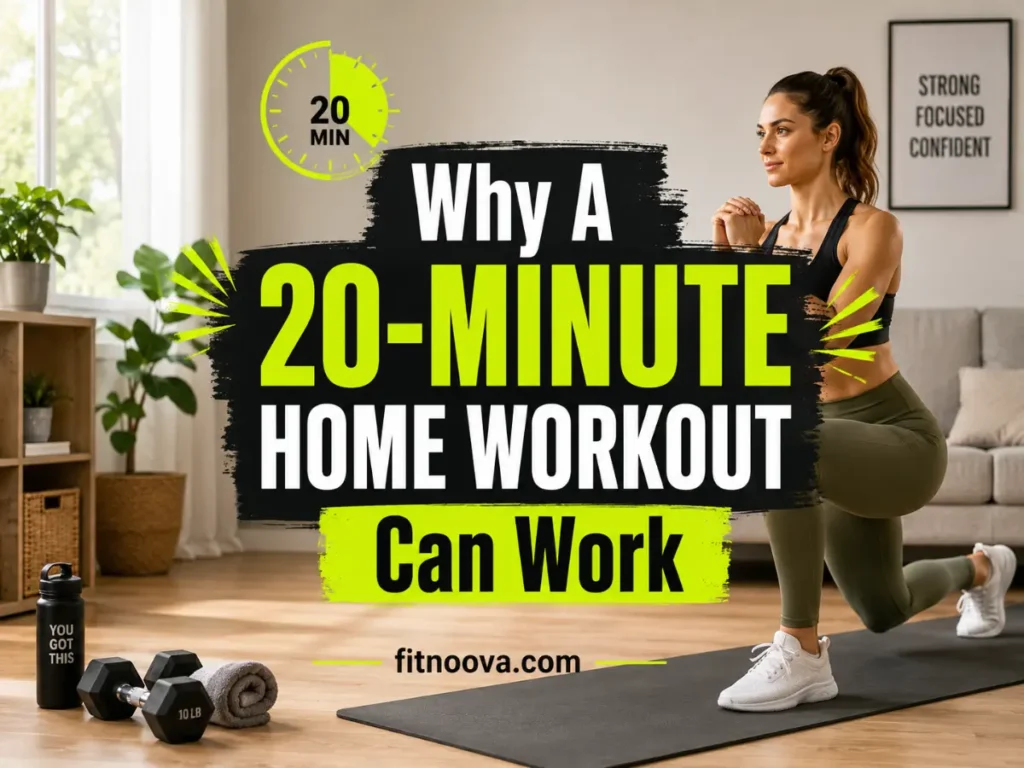
A short workout works because it lowers friction. You do not need a commute, a full gym setup, or a perfect hour-long block in your day. You need a plan that fits your real schedule. That matters because consistency usually drives more beginner progress than occasional all-out effort. Competing beginner workout guides consistently succeed when they make the session feel repeatable, not heroic.
A 20-minute session is long enough to train the major movement patterns, raise your heart rate, and give your week useful exercise volume. It is not a magic fix, but it is enough to count and enough to build momentum.
Who This Workout Is Best For
This routine is a strong fit if you:
- are just starting out
- want to work out at home
- have limited time
- need a simple full-body session
- want a plan you can repeat without thinking too much
- need a backup workout for busy days
It is also useful if you want a low-barrier routine before moving into longer workouts, dumbbell training, or a more structured weekly plan.
What You Need
You can do this workout with no equipment.
Helpful extras:
- a mat or towel
- a chair, bench, or couch edge
- a backpack with books for added resistance
- water nearby
If you are a total beginner, bodyweight is enough.
How Hard Should This Workout Feel?
For most beginners, this workout should feel like a moderate challenge, not a survival test. By the end of each work interval, you should feel like you are working, breathing harder, and paying attention to form, but you should still be able to recover during the rest period and keep your technique under control.
A simple rule:
- if you finish every interval feeling fresh, it is probably too easy
- if your form falls apart halfway through, it is too hard
- if you feel challenged but still controlled, it is about right
This matters because beginners do better when the workout is hard enough to create progress but not so hard that it destroys recovery or confidence.
The 20-Minute Workout Structure
This session is built like this:
- 3 minutes warm-up
- 14 minutes main workout
- 3 minutes cooldown
That keeps the session inside 20 minutes while still giving your body time to get ready and settle down.
How To Warm Up Before You Start
A warm-up should gradually raise your heart rate, increase blood flow, and prepare your body for harder movement. The American Heart Association recommends warming up for 5 to 10 minutes, and NHLBI guidance also emphasizes warming up, cooling down, and building activity gradually. Because this workout is short, the warm-up here is brief but purposeful.
Do each move for about 30 seconds:
- march in place
- arm circles
- hip hinges
- bodyweight squats
- step-back lunges or alternating reverse reaches
- shoulder rolls
Keep it easy. The goal is to feel ready, not tired.
The Main 14-Minute Full-Body Circuit
Do 7 exercises.
Work for 40 seconds, then rest for 20 seconds.
Complete 2 rounds.
This structure matches the kind of practical, beginner-friendly pacing that performs well across competing 20-minute routine pages.
1. Bodyweight Squat
What to do: Sit your hips back, keep your chest up, and stand tall.
Make it easier: Squat to a chair.
Make it harder: Hold a backpack at your chest.
Avoid: letting your knees cave in or dropping too fast.
2. Incline Push-Up
What to do: Put your hands on a chair, bench, or sturdy counter. Lower with control and press back up.
Make it easier: Use a wall.
Make it harder: Use a lower surface.
Avoid: sagging through your hips or craning your neck forward.
3. Reverse Lunge
What to do: Step one leg back, lower gently, then return to standing. Alternate sides.
Make it easier: Hold a chair for balance.
Make it harder: Add a backpack.
Avoid: rushing the step or wobbling into the front knee.
4. Backpack Row
What to do: Hold a backpack, hinge slightly forward, and row it toward your ribs.
Make it easier: Use less weight or shorten the range.
Make it harder: Slow the lowering phase.
Avoid: shrugging your shoulders up or turning the move into a fast yank.
5. Glute Bridge
What to do: Lie on your back, feet planted, and lift your hips until your body forms a straight line from knees to shoulders.
Make it easier: Use a smaller range of motion.
Make it harder: Pause at the top for 2 seconds.
Avoid: pushing through your low back instead of your hips.
6. High-Knee March Or Fast March
What to do: Drive your knees up and move your arms naturally.
Make it easier: Slow the pace.
Make it harder: Make it more athletic without turning it into sloppy running in place.
Avoid: bouncing out of control.
7. Dead Bug Or Forearm Plank
What to do: Choose the version you can control well.
Make it easier: Keep the movement smaller or shorten the hold.
Make it harder: Move more slowly and create more tension.
Avoid: letting your lower back arch hard or holding your breath.
A Simple Beginner Version
If the full circuit feels too hard, use this version:
- work 30 seconds
- rest 30 seconds
- complete 1 to 2 rounds
- use chair squats, wall push-ups, supported reverse lunges, and dead bugs
This is not a lesser workout. It is the right version if it helps you move well and finish the session.
A Low-Impact Version For Quieter Or Easier Days
If you want a lower-impact option, keep the same structure but use:
- squat to chair
- wall push-up
- supported reverse lunge or alternating step-back taps
- backpack row
- glute bridge
- march in place
- dead bug
That gives you a quieter apartment-friendly session with less jumping and less joint stress while still keeping the workout balanced.
How To Cool Down
A cooldown should help your breathing settle and your body shift out of workout mode. NHLBI and heart-health guidance both support gradually reducing intensity after exercise rather than stopping abruptly.
Try this:
- 1 minute slow walking in place
- 30 seconds quad stretch each side
- 30 seconds chest opener
- 30 seconds hamstring reach
- 30 seconds deep breathing
Do not rush the last few minutes.
How Often To Do This Workout
For many beginners, this routine works well 3 to 4 times per week. On other days, walking, light mobility work, or full rest can help you recover while still staying active. That fits well with current public guidance, which recommends aerobic activity across the week plus muscle-strengthening work on at least 2 days.
A practical week could look like this:
- Monday: 20-minute home workout
- Tuesday: walk
- Wednesday: 20-minute home workout
- Thursday: rest or light mobility
- Friday: 20-minute home workout
- Saturday: walk or easy activity
- Sunday: rest
What If You Only Have 10 Minutes?
Do not skip the session completely. Use one round instead of two and keep the warm-up short but present. A shorter, balanced session still supports the “some activity is better than none” principle in current physical activity guidance.
If you only have 10 minutes:
- warm up for 2 minutes
- do 1 round of the circuit
- finish with 1 minute of walking and breathing
That is still better than doing nothing.
How To Progress Without Overcomplicating It
You do not need advanced programming. Use one progression rule every 1 to 2 weeks:
- add 1 round
- add a little resistance with a backpack
- slow the lowering phase
- shorten rest slightly
- improve range of motion and control
Pick one change at a time.
A Simple 4-Week Progression
Week 1: Do 2 to 3 sessions and learn the movements.
Week 2: Keep the same structure and improve control.
Week 3: Add one small challenge, such as a longer work interval or a little resistance.
Week 4: Keep the routine stable and focus on cleaner reps and better pacing.
That approach is more useful for beginners than constantly changing exercises.
Common Mistakes With A 20-Minute Home Workout
Treating A Short Workout Like It Does Not Count
A short workout still matters if it is balanced and repeatable. Public activity guidance does not require every session to be long to count.
Doing Random Exercises With No Structure
A good short workout still needs balance. That is why this routine includes lower body, pushing, pulling, core work, and light cardio.
Rushing Every Rep Because The Timer Feels Short
A timer should create focus, not sloppy movement.
Making Every Short Workout HIIT
Not every 20-minute session needs to feel brutal. Many beginners do better with controlled full-body circuits than with high-intensity intervals every time.
Changing The Routine Too Often
Beginners usually improve more by repeating a simple routine long enough to get better at it.
What To Do
- warm up before you start
- choose a version you can finish with good form
- keep your reps controlled
- repeat the workout through the week
- walk or move lightly on off days
- track your sessions
- make one small progression at a time
What To Avoid
- skipping the warm-up
- turning a short workout into a sloppy workout
- choosing versions that are too advanced
- treating soreness as the only sign of success
- changing the routine every few days
- quitting because the plan feels “too basic”
Basic is often exactly what beginners need.
When To Scale Back Or Stop
A beginner workout should feel challenging, but it should not feel alarming. If you notice chest pain, dizziness, faintness, unusual breathlessness, or other concerning symptoms during exercise, stop and get appropriate medical help. Mayo Clinic guidance specifically flags chest pain, breathlessness, palpitations, and dizziness during exercise as warning signs that should not be ignored.
If you have not exercised in a long time, have a chronic condition, or are unsure where to start, use the easier version first and build gradually. NHLBI guidance also emphasizes starting gradually and working up slowly.
How This Workout Fits Into A Bigger Routine
This page works best as part of a larger beginner training setup. It naturally connects to related topics such as:
- beginner workout plan
- home workouts for beginners
- full-body workout routine
- recovery habits that help
- rest day explained
- how to stay consistent with exercise
That is also how you get more long-term value from the workout instead of treating it like a one-off session.
FAQ
Is 20 minutes of exercise enough?
Yes, especially for beginners. A structured 20-minute workout can help build consistency, support strength work, and add useful activity to your week. It is not the only workout length that works, but it is enough to matter.
Can I do this workout every day?
Most beginners do better with 3 to 4 sessions per week, not 7. You can stay active daily, but harder full-body sessions still need recovery.
Is this workout good for weight loss?
It can help, especially when paired with regular movement, reasonable nutrition habits, and consistency. It is best viewed as part of a bigger routine, not as a magic fix.
Do I need equipment for a 20-minute home workout?
No. Bodyweight is enough to start. A chair and a backpack can make the workout easier to scale later.
What if I cannot do push-ups yet?
Use a wall or incline version. The best variation is the one you can control with good form.
Should I repeat the same 20-minute home workout every week?
Yes. Beginners usually benefit more from repeating a simple routine long enough to improve than from constantly changing exercises.
Conclusion
20-Minute Home Workout is most useful when it fits your real schedule and leaves you ready to move again. A short session can still train major muscle groups, support basic cardio, and build consistency when the plan is simple. Keep your form steady, use low-impact options when your joints or energy need them, and make small progress over time instead of rushing harder moves. Try one round today.