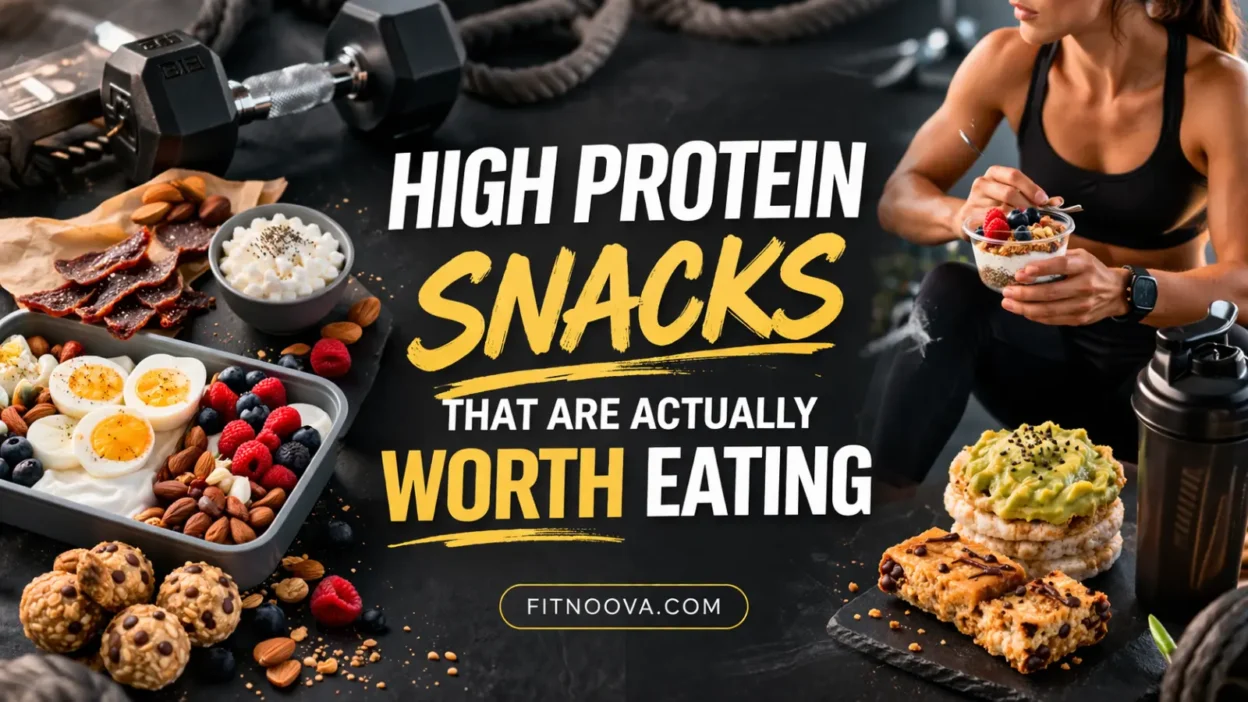
High protein snacks can help you stay fuller between meals, make it easier to hit your nutrition goals, and keep convenience foods from taking over your day. The best ones are not just high in protein. They also fit real life, taste good, travel well when needed, and do not come loaded with sugar, sodium, or extra calories you did not plan on. Heart-healthy guidance also favors getting protein from a mix of sources, especially beans, lentils, nuts, seeds, fish, lean meats, and low-fat or fat-free dairy.
Quick Answer
The best high protein snacks are simple, balanced foods such as Greek yogurt, cottage cheese, eggs, edamame, tuna with whole-grain crackers, roasted chickpeas, hummus with vegetables, and nuts paired with fruit. These choices give you protein while also helping with fullness, steady energy, and overall diet quality.
What Makes A Good High Protein Snack?
A good snack does one job well: it bridges the gap between meals without leaving you hungrier an hour later.
For most adults, that usually means choosing a snack with a meaningful amount of protein, keeping portions reasonable, and paying attention to the full package, not just the protein number. A protein bar with a long ingredient list and a lot of added sugar is not automatically a better choice than yogurt, eggs, or hummus.
In practical terms, the strongest options usually check most of these boxes:
• Easy to eat and easy to keep around
• Protein-rich without being excessively processed
• Moderate in calories for a snack
• Helpful for fullness because they also include fiber or healthy fats
• Lower in added sugar and not overloaded with sodium
That approach lines up with broader healthy eating guidance, which emphasizes minimally processed foods, a variety of protein sources, and smart portion awareness.
Why High Protein Snacks Help
Protein can make snacks more satisfying than foods built mostly around refined carbs. That matters if you tend to get overly hungry in the afternoon, snack mindlessly at night, or need something that can hold you over until a later meal.
Protein is also part of a balanced eating pattern that supports muscle maintenance, recovery from training, and day-to-day function. MedlinePlus notes that healthy adults generally get 10% to 35% of total calories from protein, while individual needs vary by age, activity, and health status.
That does not mean every snack needs to be protein-heavy. It means protein is often the missing piece when snacks leave you unsatisfied.
The Best High Protein Snacks To Keep In Rotation
You do not need a huge list of trendy products. A short list of dependable options is more useful.
Greek Yogurt
Plain Greek yogurt is one of the easiest high protein snacks to keep on hand. It is convenient, filling, and easy to dress up with berries, cinnamon, or a spoonful of chopped nuts.
Choose plain when you can, then add your own fruit if you want sweetness. That gives you more control over sugar and flavor.
Cottage Cheese
Cottage cheese works well if you want something cool, quick, and more substantial than a typical snack. Pair it with pineapple, berries, sliced tomatoes, or cucumber and black pepper depending on whether you want sweet or savory.
Hard-Boiled Eggs
Eggs are portable, inexpensive, and simple. The American Heart Association notes that eggs are a good source of protein, though people with dyslipidemia should be more cautious with intake and talk with their clinician about what fits their overall plan.
For most people, hard-boiled eggs are one of the easiest grab-and-go options.
Edamame
Shelled edamame is a strong plant-based choice. It is satisfying, easy to portion, and works hot or cold with a little salt, chili flakes, or lemon.
Tuna Or Salmon With Whole-Grain Crackers
Single-serve tuna or salmon packets are especially useful for busy adults who need something more filling than a sweet snack. Pairing them with whole-grain crackers gives you protein plus carbs for better staying power. Both the American Heart Association and Mayo Clinic point to tuna and salmon as practical protein options.
Roasted Chickpeas
Roasted chickpeas are crunchy, shelf-stable, and a nice alternative to chips. They also bring some fiber, which can make a snack more satisfying.
Hummus With Vegetables
Hummus is not the highest-protein snack on the list, but it can still be a smart one, especially when you want something savory. Pair it with carrots, cucumbers, bell peppers, or whole-grain crackers. Johns Hopkins specifically highlights hummus-based snack ideas, and heart-healthy guidance supports beans and legumes as good protein sources.
Nuts With Fruit
Nuts are more calorie-dense than yogurt or eggs, but they are still a useful snack because they combine protein, healthy fats, and convenience. Pairing a handful of almonds or pistachios with an apple, berries, or a pear makes the snack more balanced and often more satisfying than eating nuts alone. Nuts and seeds are recognized as protein foods in federal nutrition guidance.
Cheese With Fruit Or Whole-Grain Crackers
Low-fat cheese can work well when you want something simple and more filling than a standard cracker snack. Pair it with grapes, apple slices, or whole-grain crackers.
Protein Smoothie
A homemade smoothie can be a practical high protein snack if you keep the ingredients simple. Johns Hopkins recommends building smoothies around ingredients that match your nutrition needs, and notes they can be a good way to get protein, fiber, and other nutrients.
A better snack smoothie usually includes:
• A protein source such as Greek yogurt, cottage cheese, or a plain protein powder
• Fruit for flavor
• Optional extras like chia seeds, peanut butter, or spinach
Protein Bars
Protein bars are not automatically bad, and sometimes they are the most realistic option. But they are the category most likely to look healthier than they are.
Some are basically candy bars with added protein. Others are genuinely useful for travel, work, or busy afternoons. Read the label and compare options rather than assuming “protein” means “healthy.” Johns Hopkins and Mayo Clinic both note that bars can be useful, but the label matters.
High Protein Snacks By Goal
The right snack depends on why you need it.
For Fullness Between Meals
Choose options that combine protein with fiber or healthy fat:
• Greek yogurt with berries
• Cottage cheese with fruit
• Apple with peanut butter
• Hummus with vegetables
• Roasted chickpeas
• Nuts with fruit
This kind of pairing often works better than protein alone because it slows you down and makes the snack feel like actual food, not just something you grabbed.
For Weight Loss Support
A high protein snack can help with weight loss when it prevents rebound hunger and helps you stay consistent with meals. It does not help if it quietly turns into a second lunch.
Good picks here include:
• Plain Greek yogurt
• Cottage cheese
• Eggs
• Edamame
• Tuna packet with crackers
• Hummus with crunchy vegetables
The key is portion awareness. NIDDK recommends paying attention to serving sizes and the difference between a portion and a true serving.
For Busy Workdays
Choose foods that need little or no prep:
• Single-serve yogurt cups
• Hard-boiled eggs
• Tuna packets
• Roasted chickpeas
• Nuts
• Low-added-sugar protein bars
• String cheese
These are the snacks most likely to actually get eaten instead of forgotten in your bag.
For After A Workout
After training, a snack with protein plus some carbohydrate usually makes more sense than protein alone, especially if your next meal is not soon.
Good examples include:
• Greek yogurt with fruit
• Cottage cheese and pineapple
• Tuna and crackers
• A smoothie with yogurt and fruit
• Milk and fruit
• A protein bar with a piece of fruit
How To Choose Better Store-Bought High Protein Snacks
Not everyone wants to prep eggs, portion nuts, or roast chickpeas every week. Store-bought snacks are fine. You just want to choose them with a little more care.
Check The Protein, But Do Not Stop There
A higher protein number is helpful, but not enough on its own. Also check:
• Added sugar
• Sodium
• Saturated fat
• Serving size
• Whether the ingredient list still resembles food you recognize
This matters especially for jerky, bars, shakes, and snack packs.
Watch Sodium In Savory Snacks
Jerky, deli meat snack packs, flavored nuts, and some packaged cheese-and-cracker combinations can be surprisingly high in sodium. That does not mean you can never eat them. It means they should not be your only idea of a “healthy protein snack,” especially if you are working on blood pressure or eat a lot of packaged foods already. Heart-healthy guidance recommends keeping an eye on sodium and choosing lean, less processed protein sources more often.
Be Careful With “Healthy Halo” Snacks
A snack marketed as keto, low carb, paleo, or high protein can still be overly processed or easy to overeat. Marketing is not the same thing as quality.
When in doubt, compare it with a simple whole-food option. If the packaged version is not clearly more practical or more satisfying, the simpler option usually wins.
Easy High Protein Snack Combinations That Work In Real Life
Sometimes the easiest answer is a two-item combo. These are practical, balanced, and not fussy.
• Greek yogurt and berries
• Cottage cheese and pineapple
• Apple and peanut butter
• Cheese and whole-grain crackers
• Tuna packet and crackers
• Hummus and carrots
• Edamame and fruit
• Hard-boiled eggs and a banana
• Roasted chickpeas and an orange
• Protein smoothie with yogurt and frozen fruit
These combinations work well because they do not rely on protein alone. They give you a more complete snack, which tends to feel more satisfying.
Common Mistakes To Avoid
Treating Every Protein Product As Healthy
A snack can be high in protein and still not be a great everyday choice. Bars, cookies, chips, and shakes vary a lot.
Ignoring Portion Size
Nuts, trail mix, nut butters, and granola-based protein products can be nutritious, but they are easy to eat by the handful without noticing how much you had.
Skipping Fiber Entirely
If your snack is pure protein and nothing else, it may still leave you wanting more. Adding fruit, vegetables, beans, or whole grains often improves satiety.
Using Snacks To Replace Real Meals Too Often
A protein bar at your desk is helpful in a pinch. It is not the same as a balanced lunch. Snacks should support your eating pattern, not rescue it every day.
Choosing Protein Powder First
Protein powder can be useful, but it should not be your only strategy. For many people, ordinary foods do the job just fine.
Who May Need To Be More Careful
High protein snacks are generally easy to work into a healthy eating pattern, but not every option fits every person.
You may need a more tailored approach if you:
• Have kidney disease
• Have trouble swallowing or chewing
• Are managing high blood pressure and rely heavily on salty packaged snacks
• Have high cholesterol and want guidance on eggs, cheese, and processed meats
• Have diabetes and need to watch how a snack affects blood sugar
• Have food allergies, especially to nuts, dairy, soy, or eggs
If any of those apply, it is worth checking with your clinician or a registered dietitian instead of copying generic advice from the internet.
FAQ
What are the healthiest high protein snacks?
Some of the strongest options are Greek yogurt, cottage cheese, eggs, edamame, tuna or salmon with whole-grain crackers, hummus with vegetables, roasted chickpeas, and nuts with fruit. They offer protein along with other useful nutrients and tend to be less processed than many packaged snack foods.
Are protein bars a good snack every day?
They can be, but it depends on the bar. Some are genuinely convenient and balanced. Others are high in added sugar, saturated fat, or sodium. Read the Nutrition Facts label and ingredient list instead of assuming the word “protein” means it is a strong everyday choice.
What high protein snacks are best for weight loss?
The best choices are the ones that help you stay full without turning into a large extra meal. Plain Greek yogurt, cottage cheese, eggs, edamame, tuna with crackers, and hummus with vegetables are all practical options. Portion size still matters.
What high protein snacks do not need refrigeration?
Good shelf-stable options include tuna packets, roasted chickpeas, nuts, some protein bars, and dry roasted edamame. These work well for work, travel, or long afternoons away from home.
Is peanut butter a high protein snack?
Peanut butter does contain protein, but it is also calorie-dense and easy to overpour. It works best as part of a snack, such as apple slices with peanut butter or whole-grain toast with peanut butter, rather than as a stand-alone food. The American Heart Association includes nut butter among healthy snack ideas.
Do I need a high protein snack every day?
No. A high protein snack is useful when you have a long gap between meals, need something after training, or know a lower-protein snack will not keep you satisfied. If your meals are already balanced and your hunger is steady, you may not need one every day.
Conclusion
The best high protein snacks are the ones you will actually keep around and eat consistently: foods like Greek yogurt, eggs, cottage cheese, edamame, tuna, hummus, roasted chickpeas, and nuts with fruit. They are simple, filling, and easier to build into real life than most trendy snack products. If you want high protein snacks that genuinely support your goals, focus less on marketing and more on whole-food options, sensible portions, and choices that leave you satisfied rather than still hunting for more food.