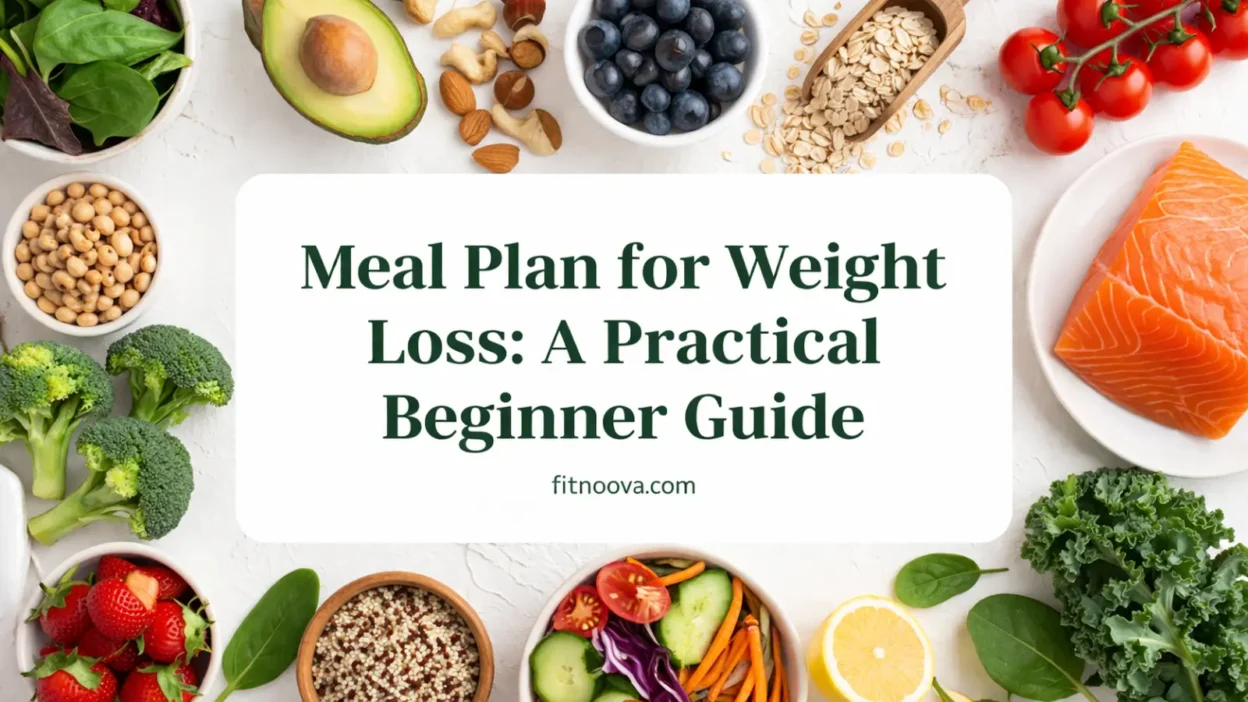
A good meal plan for weight loss is not about eating as little as possible. It is about creating meals you can repeat, enjoy, and adjust without feeling miserable. For most beginners, the best plan is built around a modest calorie deficit, plenty of filling foods, and a structure that fits real life. Public health guidance continues to favor slow, steady weight loss and eating patterns you can maintain over time, not extreme short-term diets.
Quick Answer
A meal plan for weight loss should center on vegetables and fruit, lean protein, high-fiber carbs, and healthy fats in portions that help you eat fewer calories without feeling constantly hungry. The best version is simple enough to follow on busy days, flexible enough for weekends, and balanced enough to support your energy, training, and long-term health.
What A Weight-Loss Meal Plan Should Actually Do
A meal plan is not just a list of “good” foods. It should help you do four things well.
First, it should make portion control easier. Second, it should reduce decision fatigue. Third, it should keep you reasonably full. Fourth, it should be repeatable for more than one week. NIDDK notes that the key to losing weight is choosing a healthy eating plan you can maintain over time. That matters more than finding the most restrictive approach on the internet.
A realistic plan also leaves room for preferences, culture, budget, and schedule. Mayo Clinic and CDC both emphasize healthy eating patterns built from familiar foods rather than a single rigid menu.
The Core Building Blocks Of A Meal Plan For Weight Loss
Most people do better when meals include the same basic structure.
Lean Protein
Protein helps make meals more satisfying, which can make it easier to stick to a calorie deficit. Good options include eggs, Greek yogurt, chicken, turkey, fish, tofu, beans, lentils, cottage cheese, edamame, and lean beef in reasonable portions. CDC includes seafood, lean meats and poultry, eggs, legumes, soy products, nuts, and seeds as healthful protein options.
High-Fiber Foods
Fiber can help with fullness and overall diet quality. That usually means vegetables, fruit, beans, lentils, oats, whole grains, and higher-fiber snacks. The Academy of Nutrition and Dietetics notes that fiber can promote fullness and support weight management.
Smart Carbohydrates
Carbs are not the enemy. For many beginners, the better move is choosing better carb sources and portions. Whole grains, potatoes, fruit, beans, and dairy can all fit. Harvard’s Healthy Eating Plate and related guidance favor whole grains over refined grains for most meals.
Healthy Fats
Healthy fats improve meal satisfaction and can make simpler meals taste better. Think olive oil, avocado, nuts, seeds, and nut butter. The goal is not to fear fat, but to use calorie-dense foods intentionally.
The Easiest Way To Build Your Plate
If calorie counting feels overwhelming, start with a plate method.
A practical template is to make about half the plate vegetables and fruit, one quarter lean protein, and one quarter whole grains or other higher-quality carbs. Harvard and CDC-backed plate-style guidance use this kind of visual structure because it helps with balance and portions without turning every meal into math.
For people who like a more specific visual, CDC’s diabetes plate method uses a 9-inch plate with half nonstarchy vegetables, one quarter lean protein, and one quarter carb foods. Even though that page is written for diabetes meal planning, the layout is also a useful, simple starting point for general portion control.
How Many Meals Should You Eat?
There is no single best meal frequency for fat loss.
Some people do well with three meals a day. Others prefer three meals plus one snack. A busy adult who skips breakfast and overeats at night may do better with a higher-protein breakfast. Someone who is not hungry in the morning may prefer a later first meal. The best schedule is the one that helps you control hunger, stay consistent, and avoid chaotic eating later in the day. NIDDK’s broader guidance supports individualized, sustainable meal planning rather than a one-size-fits-all formula.
A Simple Meal Planning Formula For Beginners
Use this formula for lunch and dinner:
Protein + vegetables or fruit + fiber-rich carb + healthy fat
That could look like:
• Grilled chicken, roasted vegetables, brown rice, and olive oil
• Greek yogurt, berries, oats, and chopped nuts
• Turkey sandwich on whole-grain bread with salad and fruit
• Bean bowl with rice, salsa, avocado, and sautéed peppers
• Salmon, potatoes, green beans, and a side salad
This works because it builds meals that are balanced, filling, and easier to repeat. It also helps you avoid the common pattern of eating too little protein and produce early in the day, then chasing snacks later. That approach matches current guidance emphasizing fruits, vegetables, whole grains, lean protein, and staying within calorie needs.
Sample 1-Day Meal Plan For Weight Loss
This is not the only way to eat. It is simply a realistic example of how a beginner-friendly day can look.
Breakfast
Greek yogurt bowl with berries, chia seeds, and a small serving of oats.
This gives you protein, fiber, and a more filling start than coffee and a pastry.
Lunch
Chicken or tofu grain bowl with mixed greens, roasted vegetables, quinoa or brown rice, and a light olive-oil-based dressing.
This kind of meal is easy to prep in batches and usually holds up well for work lunches.
Snack
Apple with peanut butter, or cottage cheese with cucumber and cherry tomatoes.
A snack like this is more satisfying than grabbing crackers alone.
Dinner
Baked salmon or beans, roasted potatoes, broccoli, and a side salad.
This keeps dinner balanced without making it feel like “diet food.”
Dessert Or Evening Option
A square of dark chocolate, fruit, or a higher-protein option such as yogurt if you tend to get hungry later.
The point is not to eat perfectly. The point is to make the day structured enough that you are less likely to drift into random, high-calorie eating. Public guidance also supports choosing filling, lower-calorie, fiber-rich ingredients so you can cut calories without feeling as hungry.
A 7-Day Framework You Can Actually Repeat
You do not need seven completely different days. Repetition is useful.
Day 1
Oats or yogurt breakfast, grain bowl lunch, protein-and-potatoes dinner.
Day 2
Egg-based breakfast, turkey wrap lunch, stir-fry dinner.
Day 3
Smoothie with protein-rich ingredients, leftovers for lunch, taco bowl dinner.
Day 4
Greek yogurt breakfast, soup and sandwich lunch, sheet-pan dinner.
Day 5
Eggs and toast, salad with chicken or beans, pasta with lean protein and vegetables.
Day 6
Flexible breakfast, restaurant-style lunch with portion awareness, simple protein-and-veg dinner.
Day 7
Brunch-style meal, lighter snack meal later, family dinner with balanced portions.
This is usually easier to sustain than chasing novelty every day. Most successful meal planning comes from keeping a short rotation of breakfasts, lunches, and dinners you genuinely like. Mayo Clinic’s weight-loss guidance also emphasizes practical meal planning and portion awareness over obsessive precision.
Best Foods To Include More Often
A strong meal plan for weight loss usually leans more heavily on foods that give you better fullness for the calories.
Good staples include:
• Nonstarchy vegetables
• Fruit
• Beans and lentils
• Whole grains like oats, brown rice, and quinoa
• Eggs
• Greek yogurt
• Cottage cheese
• Chicken breast or thighs
• Fish
• Tofu and edamame
• Potatoes
• Nuts and seeds in measured portions
• Olive oil
• High-fiber wraps or breads if you enjoy them
CDC and Mayo Clinic both describe healthy eating patterns as emphasizing fruits, vegetables, whole grains, lean protein, and limiting excess added sugar, saturated fat, sodium, and heavily processed extras.
Foods You Do Not Need To Ban
You do not need a good-food, bad-food mindset to lose weight.
Pizza, dessert, burgers, takeout, and holiday meals can all fit. The better question is how often, how much, and what they replace. Many people fail because they build a plan that is too strict to survive normal life. A sustainable plan works better than a perfect one followed for nine days. That idea lines up with NIDDK’s emphasis on safe, successful programs and meal patterns you can maintain.
How To Grocery Shop For A Weight-Loss Meal Plan
A simple shopping strategy makes follow-through much easier.
Buy a few options from each category:
• Protein: chicken, eggs, Greek yogurt, tuna, tofu, beans
• Produce: salad greens, frozen vegetables, berries, apples, carrots, broccoli
• Carbs: oats, rice, potatoes, whole-grain bread, tortillas
• Fats and extras: olive oil, avocado, nuts, salsa, hummus, seasoning blends
Frozen fruit and vegetables are completely fine. They are often cheaper, last longer, and help reduce the “I have nothing healthy at home” problem. Mayo Clinic’s healthy diet guidance also supports practical, accessible foods rather than specialty products.
Meal Prep Without Spending Sunday In The Kitchen
Meal prep does not have to mean packing 21 identical containers.
A lighter version works well for beginners:
• Cook one protein in bulk
• Wash and prep produce
• Make one carb source
• Keep two easy breakfast options ready
• Have one or two planned snacks available
• Repeat a few reliable lunches
This kind of prep reduces decision fatigue and helps you stay consistent during stressful weeks. It also makes portion control easier because the basics are already there.
Common Mistakes That Make Weight Loss Harder
Eating Too Little Too Early
An overly aggressive plan often backfires. CDC says people who lose weight at a gradual, steady pace are more likely to keep it off.
Building Meals Around “Low-Calorie” Foods Only
A salad with almost no protein or carbs may leave you hungry an hour later. A better meal includes protein, fiber, and enough food volume to feel satisfying.
Drinking A Lot Of Calories Without Noticing
Fancy coffees, juice, soda, and alcohol can quietly raise intake without helping fullness much. Keeping an eye on beverages often helps more than trying to make dinner impossibly small. CDC advises staying within calorie needs and limiting added sugars.
“Saving Up” Calories And Then Overeating At Night
Some people do fine with lighter daytime eating. Others end up arriving at dinner overly hungry and losing control. Your plan should match your actual hunger pattern, not an idealized one.
Relying On Willpower Instead Of Structure
Willpower fades. A plan with repeat meals, groceries on hand, and easy defaults works better.
Ignoring Portions Of Healthy Foods
Nuts, nut butter, oils, granola, and restaurant bowls can be nutritious and still easy to overdo. NIDDK’s current portion guidance stresses understanding servings and choosing amounts that fit your needs.
How To Adjust The Plan If Fat Loss Stalls
Do not make five changes at once.
Start by checking the basics:
• Are portions creeping up?
• Are weekends very different from weekdays?
• Are snacks turning into second meals?
• Are drinks and restaurant extras adding more than you think?
• Are you actually following the plan most days?
If the foundation is solid, a small adjustment usually works better than a drastic reset. That might mean tightening portions, adding more vegetables and lean protein, or cutting one calorie-dense extra that is not worth it to you. NIDDK’s Body Weight Planner can also help estimate a more personalized calorie and activity target.
Who Should Not Use A Generic Weight-Loss Meal Plan Without Extra Guidance
A general article can help many adults, but some people need a more individualized plan.
Talk with a qualified health professional before making major changes if you are pregnant, have diabetes, take glucose-lowering medication, have kidney disease, have a history of an eating disorder, or have had significant unexplained weight loss. CDC and NIDDK both highlight the need for medical guidance in pregnancy and diabetes, and Mayo Clinic emphasizes proper treatment support for eating disorders.
FAQ
What is the best meal plan for weight loss?
The best plan is one you can follow consistently. For most beginners, that means balanced meals with protein, vegetables or fruit, higher-fiber carbs, and sensible portions rather than a highly restrictive diet.
Should I count calories to lose weight?
Not always. Some people benefit from tracking for awareness, but others do well with a plate method, repeat meals, and portion control. A visual meal structure can be enough to create a calorie deficit without tracking every bite.
Can I eat carbs on a weight-loss meal plan?
Yes. Carbs can fit well in a weight-loss plan. The bigger issue is usually overall calorie intake, food quality, and portion size, not the presence of carbs alone. Whole grains, fruit, beans, and potatoes can all work well.
How fast should I expect to lose weight?
Public health guidance generally favors gradual, steady progress. CDC says people who lose weight at about 1 to 2 pounds per week are more likely to keep it off than those who lose faster.
Do I need to meal prep everything in advance?
No. Even light prep helps. Cooking one protein, prepping produce, and keeping a few easy meals ready is often enough to make the plan workable during a busy week.
Is a 1,200-calorie meal plan right for everyone?
No. Calorie needs vary based on body size, sex, age, activity, and other factors. A fixed number can be too low for many adults, which is why a personalized target or a sustainable portion-based approach is often better. NIDDK’s Body Weight Planner is one public tool designed for more individualized planning.
Conclusion
The best meal plan for weight loss is not the most extreme one. It is the one that helps you eat a little less, stay reasonably full, and repeat the pattern long enough for it to matter.
For most beginners, that means simple meals built from protein, vegetables or fruit, fiber-rich carbs, and healthy fats. Keep the structure steady, keep the portions honest, and make the plan fit your real life. That is usually what works.