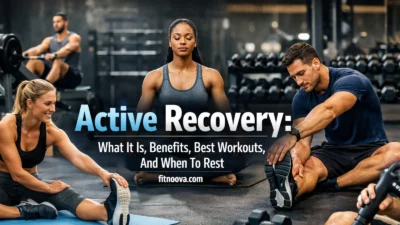

A recovery workout is a short, low-intensity session meant to help you move, loosen up, and feel better between harder training days. It is not meant to test your fitness or push through pain. On sore days, the best recovery workout is usually simple: an easy walk, gentle cycling, light mobility work, or relaxed pool movement. If you feel sharp pain, swelling, unusual weakness, dark urine, or soreness that changes how you move, skip the workout and get medical advice instead.
Quick Answer
If you feel mildly to moderately sore, a recovery workout can be a smart option. Keep it easy enough to hold a full conversation, and stop well before it feels like real training. For most people, that means 10 to 30 minutes of light movement plus a few gentle mobility drills. If you are sick, injured, severely fatigued, limping, or dealing with sharp or worsening pain, full rest is the better call.
What A Recovery Workout Really Is
A recovery workout is a low-stress session that helps you stay active without adding much fatigue. It can be done on a rest day, after a hard workout, or between harder training days. The point is to support recovery, not to squeeze in extra fitness work.
That matters because many people make the same mistake: they feel sore, so they either do nothing at all or they turn a recovery day into another full workout. Neither extreme is always ideal. On many sore days, easy movement is enough. On others, real rest is the better choice.
What To Do On Sore Days
If your soreness feels dull, general, and tied to the muscles you trained, light movement often helps you feel less stiff. A short walk, easy spin, or gentle mobility session is usually enough. If your soreness is severe, localized, worsening, or paired with swelling, weakness, or changes in how you walk or move, do not treat it like normal post-workout soreness.
A good recovery day should leave you feeling a little looser and a little fresher. It should not leave you drained, shaky, or proud that you “powered through.” If it feels demanding, it is probably too hard to count as recovery.
How To Tell Whether You Need Active Recovery Or Full Rest
Active recovery usually makes sense when:
- Your muscles feel sore or stiff, but not sharply painful
- You can move normally
- Your energy is okay, even if not great
- You want to stay loose between harder training days
- A little movement tends to make you feel better, not worse
Full rest is usually the better choice when:
- You feel run down or unusually exhausted
- You are sick or feverish
- You are not sleeping enough
- You are injured or think you might be
- Pain is sharp, worsening, or changing the way you move
This matches current guidance from Cleveland Clinic and other sports-health sources that describe active recovery as useful, but not appropriate when someone is injured, sick, severely fatigued, or simply not up for activity.
What Normal Soreness Usually Feels Like
Normal delayed onset muscle soreness, often called DOMS, tends to show up after a hard workout or after doing something new. It usually develops hours later and often peaks one to three days after the session. It tends to feel like a dull ache, stiffness, or tenderness in the muscles you trained.
That kind of soreness can be annoying, but it is not the same thing as injury pain. Light movement may help you feel less stiff. Another hard workout for the same area usually will not.
Warning Signs That Mean Stop And Get Help
Do not treat every sore day as a recovery-workout day. Get medical advice promptly if you have severe pain, sudden swelling, major weakness, dark urine, or symptoms that keep getting worse. Seek urgent care right away if muscle pain comes with dark urine or marked weakness, since those can be signs of rhabdomyolysis.
General fitness advice is not a substitute for personal medical care. If you are unsure whether you are dealing with ordinary soreness or something more serious, play it safe.
How Hard A Recovery Workout Should Be
Easy. That is the whole standard.
A recovery workout should feel like a 2 to 4 out of 10 for effort. You should be able to talk in full sentences. Your breathing should stay controlled. You should not need a long recovery period after the session itself. If the workout turns sweaty, breathless, or competitive, it has drifted out of recovery territory.
A useful rule is this: if you finish the session feeling more worked than refreshed, it was too much.
How Long A Recovery Workout Should Be
For most people, 10 to 30 minutes is enough. If you are very sore, 10 to 20 minutes may be plenty. If you are more experienced and the effort stays truly easy, 20 to 40 minutes can still work.
Longer is not automatically better. Recovery workouts work because they add gentle movement without meaningfully increasing fatigue. Once the session starts feeling like training, you lose the point.
The Best Recovery Workouts For Most People
The best recovery workout is the one you can keep easy.
Walking
Walking is the simplest option for most sore days. It is low impact, easy to control, and requires almost no setup. A 15- to 30-minute walk is enough for many people, especially after strength workouts or beginner exercise sessions.
Easy Cycling
A light bike ride works well when you want movement without much impact. Keep resistance low and pace easy. You should never feel like you are chasing a training effect.
Gentle Mobility Work
Mobility helps when soreness comes with stiffness. Think slow hip circles, thoracic rotations, ankle rocks, shoulder circles, and cat-cow. Recovery mobility should feel smooth and controlled, not aggressive.
Pool Walking Or Easy Swimming
Water can make movement feel easier because it reduces impact. This can be a good option after hard running, high-impact classes, or heavy leg work if you have access to a pool.
Gentle Yoga Or Light Stretching
These can help if you keep them light. A recovery day is not the time to force range of motion or turn stretching into another challenge session.
How To Choose The Right Recovery Workout
After a hard leg day, walking, easy cycling, or pool movement usually makes more sense than plyometrics, intervals, or long hikes.
After an upper-body session, a walk plus light shoulder and upper-back mobility often works well.
After a run or HIIT workout, choose something low impact the next day if your legs still feel beat up. Easy cycling, walking, or pool work often fits better than more running.
After a beginner full-body workout, the best recovery session is usually the least complicated one. Walk, do a few easy mobility drills, and stop there.
A Simple Recovery Workout Routine
Here is a beginner-friendly recovery workout for sore days:
5 Minutes Of Easy Warm-Up
Walk slowly, pedal lightly, or march in place at an easy pace.
8 Minutes Of Gentle Mobility
Do 5 to 8 controlled reps per side of:
- Cat-cow
- Hip circles
- Thoracic rotations
- Ankle rocks
- Arm circles
- Shoulder blade squeezes
5 To 10 Minutes Of Easy Movement
Choose one:
- Easy walk
- Easy bike
- Light pool movement
- Relaxed march in place
2 Minutes Of Downshift
Finish with calm breathing and a few comfortable stretches for any area that still feels tight.
That is enough. A recovery workout should not need willpower.
Recovery Workout Vs Rest Day
A recovery workout is not the same as a rest day, though both can be useful.
A recovery workout uses easy movement to help you feel better and stay loose. A rest day is a day with little to no formal exercise. Neither one is automatically better. The right choice depends on how you feel, how hard you trained, and whether your body is showing normal soreness or signs that it needs more complete rest.
A useful way to think about it:
- Mild soreness and normal movement: active recovery may help
- Deep fatigue, poor sleep, illness, or pain with movement: rest is often smarter
What Supports Recovery Beyond The Workout
A recovery workout can help, but it is only one piece of recovery.
Sleep
Sleep supports recovery in a way no mobility drill can replace. If your sleep is poor, your workouts will usually feel harder and your recovery will usually feel worse.
Hydration
Drinking enough fluids matters, especially if you train in heat, sweat heavily, or string together hard sessions. You do not need to obsess over it, but being noticeably underhydrated can make you feel worse during and after training.
Food
If you train regularly, recovery is easier when you eat enough overall and include balanced meals with protein, carbohydrate, and fluids across the day. Recovery does not require fancy supplements for most people. Consistency matters more.
Training Load
If you constantly feel wrecked and always need a recovery day, the issue may not be your recovery routine. It may be that your training is too hard, too frequent, or progressing too fast. Persistent soreness and fatigue can also be signs that your overall load needs to come down.
Common Recovery Day Mistakes
Turning Recovery Into A Real Workout
This is the most common mistake. The moment you start chasing calories, pace, sweat, or intensity, the session stops serving its original purpose.
Doing The Same Stressful Movement Again
If a hard run made your legs feel beaten up, another run is often not the smartest recovery choice. A different, lower-impact movement pattern is often better.
Stretching Through Pain
Light stretching can feel good. Aggressive stretching into pain usually does not.
Ignoring Warning Signs
Do not normalize limping, sharp pain, severe weakness, swelling, or dark urine as part of “training hard.” Those signs deserve attention.
How To Need Fewer Recovery Workouts
The best recovery strategy starts before the sore day.
Build training up gradually. Keep easy days easy. Avoid stacking hard days without a reason. Respect beginner soreness instead of glorifying it. Make room for at least one lighter day in your week if your program is demanding.
A good training plan does not leave you feeling crushed all the time. Recovery workouts are useful tools, but they should not be used to patch over a plan that is simply too aggressive.
FAQ
Is a recovery workout the same as active recovery?
Usually, yes. Most people use those terms the same way. They both refer to low-intensity movement meant to support recovery without adding much stress.
Should I do a recovery workout when I’m sore?
If the soreness feels like normal post-workout muscle soreness and you can still move normally, light movement may help. If pain is sharp, severe, worsening, or changes how you move, skip the workout and assess more carefully.
How long should a recovery workout be?
For most people, 10 to 30 minutes is enough. Keep it easy enough that you finish feeling better, not tired.
What is the best recovery workout after strength training?
Usually something simple and low impact, such as walking, easy cycling, or gentle mobility work. The best choice is one that does not heavily stress the muscles you trained the day before.
Can I do a recovery workout every day?
Easy daily movement like walking is fine for many people. But needing a formal recovery workout every day may be a sign that your harder training sessions are too frequent, too hard, or not well spaced.
Do recovery workouts build fitness?
Their main job is to support recovery, not to drive major gains. They can still help you maintain routine, mobility, and general activity without adding much training stress.
Conclusion
A recovery workout is one of the simplest tools for sore days when used correctly. Keep it short, light, and honest. Walk, spin easily, move through a few gentle drills, or use the pool if that feels good. Finish fresher than you started.
If soreness is mild and movement feels normal, active recovery can be useful. If pain is sharp, symptoms are worsening, or your body is showing clear signs that it needs full rest or medical attention, do not force movement just because it sounds productive. The smartest recovery plan is usually the least dramatic one: sensible training, enough sleep, enough food, enough fluids, and knowing when to move and when to back off.