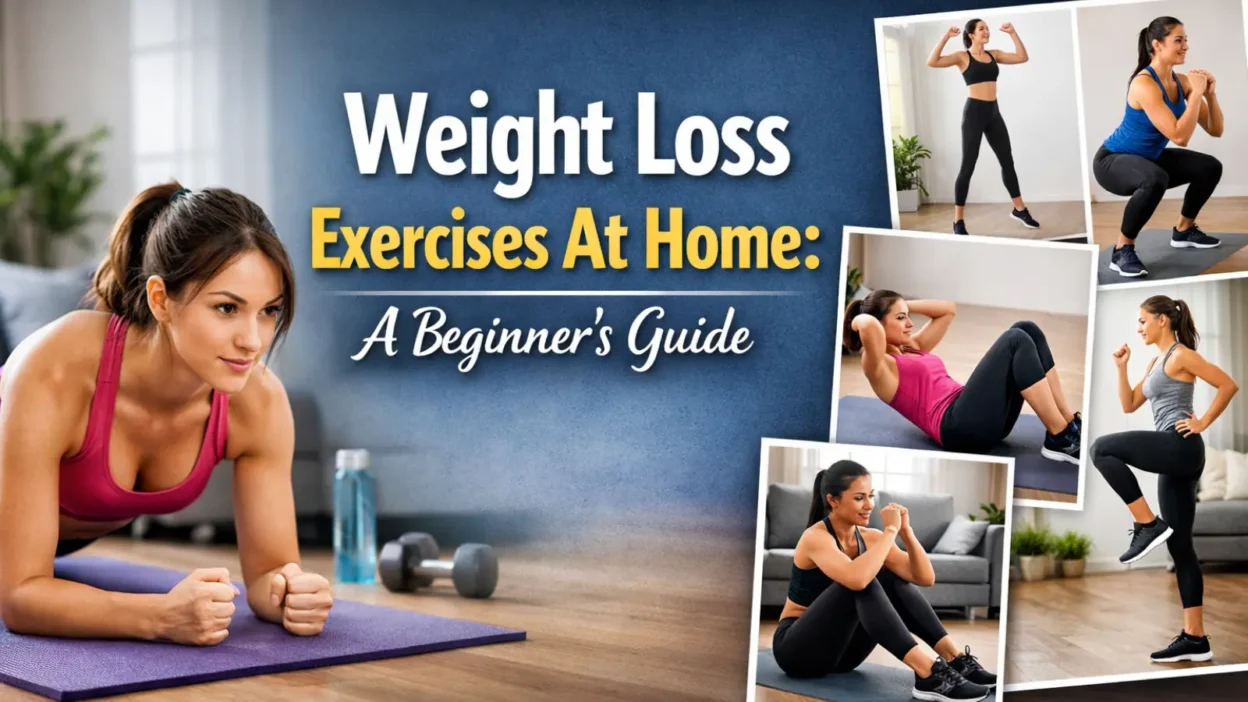
If you’re looking for effective weight loss exercises at home, the best approach is not to chase the hardest workout on the internet. It is to combine simple cardio-style movement, basic strength training, and a routine you can repeat week after week. That works better for most beginners than extreme sessions that leave you exhausted, sore, or ready to quit. Public health guidance for adults consistently points to a mix of aerobic activity and muscle-strengthening work, with room to build up gradually.
Quick Answer
The best weight loss exercises at home are the ones that raise your heart rate, train major muscle groups, and are realistic enough to do consistently. For most beginners, that means brisk walking in place or around the house, step-ups, squats to a chair, glute bridges, wall or incline push-ups, marching, low-impact cardio intervals, and short full-body circuits. Adults generally benefit from at least 150 minutes of moderate-intensity activity each week plus muscle-strengthening work on 2 days, and people trying to lose weight often need to pair exercise with eating habits that support a calorie deficit.
What Makes A Home Exercise Good For Weight Loss?
A good home exercise for weight loss usually does one or more of three things:
It helps you move long enough to burn energy.
It challenges large muscle groups, which can make workouts more demanding without fancy equipment.
It is easy to repeat often.
That last point matters more than people think. Weight loss usually works better when exercise becomes part of your normal week, not a once-in-a-while “all out” effort. CDC and NIDDK guidance both emphasize regular activity, building movement into daily life, and using a routine you can maintain.
The Best Weight Loss Exercises At Home For Beginners
You do not need a treadmill or a room full of equipment. A strong beginner plan can come from bodyweight exercises and a little floor space.
Walking, Marching, Or Stepping In Place
This is one of the easiest ways to start if your fitness level is low, your joints feel sensitive, or you want a low-pressure entry point. You can march in place, walk laps around your home, or step up and down on a sturdy stair or platform.
Why it works:
- Easy to scale
- Low impact
- Good way to build weekly activity minutes
Chair Squats Or Sit-To-Stand
Sit down to a chair and stand back up with control. This trains the legs and hips and helps beginners learn a squat pattern safely.
Why it works:
- Uses large lower-body muscles
- Builds strength for daily life
- Easy to modify with a higher chair
Glute Bridges
Lie on your back with knees bent and lift your hips. This trains the glutes and hamstrings without high joint stress.
Why it works:
- Beginner-friendly
- Helps balance a routine that includes lots of sitting
- Good option if squats bother the knees
Wall Push-Ups Or Incline Push-Ups
Push against a wall, countertop, or sturdy bench instead of the floor.
Why it works:
- Strengthens chest, shoulders, and arms
- Scales well for beginners
- Helps cover major muscle groups
Step-Ups
Use a safe stair or low platform and step up, then back down.
Why it works:
- Raises heart rate fast
- Trains the legs
- Can double as cardio and strength work
Reverse Lunges Or Split Squats
These are useful once your balance and leg strength improve. Hold onto a wall or chair if needed.
Why it works:
- Trains one leg at a time
- Improves coordination
- Can be progressed slowly
Mountain Climbers, Modified As Needed
Beginners can do these slowly with hands on a couch or bench instead of the floor.
Why it works:
- Combines core work with cardio demand
- Easy to scale from slow to fast
Low-Impact Cardio Moves
These include side steps, toe taps, knee lifts, bodyweight good mornings, and shadow boxing.
Why they work:
- Keep the heart rate up
- Reduce jumping stress
- Make home workouts more manageable for more body types
Cardio And Strength Both Matter
For weight loss, many people focus only on sweating and calorie burn. That is understandable, but incomplete.
Aerobic activity helps increase total movement and supports calorie expenditure. Strength training helps preserve or build muscle while you lose weight, improves function, and gives your plan more balance. Current federal guidance recommends both: at least 150 minutes of moderate-intensity aerobic activity each week and muscle-strengthening activity at least 2 days per week.
For home workouts, that usually means your week should include:
- dedicated cardio sessions
- dedicated strength sessions
- or mixed sessions that cover both
How Hard Should Weight Loss Exercises At Home Feel?
For most beginners, aim for moderate intensity most of the time. That usually means your breathing is faster, you feel warm, and talking becomes a little harder, but you can still speak in short sentences. The American Heart Association describes moderate activity as effort where you can still talk, even though you are breathing harder than normal.
For strength work, stop 1 to 3 reps before your form breaks down. A beginner set should feel like work, but not like a fight for survival.
A simple rule:
- cardio should feel challenging but controllable
- strength work should feel steady and clean
- you should finish feeling worked, not wrecked
A Simple Beginner Routine You Can Do At Home
This plan is built for a mixed beginner audience and does not require equipment.
Weekly Schedule
Day 1: Full-Body Strength + Short Cardio
Day 2: Brisk Walk, Marching Session, Or Low-Impact Cardio
Day 3: Rest Or Easy Mobility
Day 4: Full-Body Strength + Short Cardio
Day 5: Brisk Walk, Step-Ups, Or Low-Impact Cardio
Day 6: Optional Light Activity
Day 7: Rest
This setup supports the common recommendation to include aerobic movement through the week and muscle-strengthening work on at least 2 days.
Full-Body Home Workout
Start with 1 to 2 rounds.
- Chair Squats: 8 to 12 reps
- Wall Or Incline Push-Ups: 8 to 12 reps
- Glute Bridges: 10 to 15 reps
- Step-Ups Or Marching In Place: 30 to 60 seconds
- Bird Dogs: 6 to 10 reps per side
- Standing Knee Lifts Or Side Steps: 30 to 60 seconds
Rest 30 to 60 seconds between exercises if needed.
If that feels manageable after a couple of weeks, build to 2 to 3 rounds.
Cardio Days
Choose one of these for 20 to 30 minutes:
- brisk walking indoors or outdoors
- marching in place while watching TV
- step-ups at a steady pace
- low-impact cardio intervals
- dance-based movement if you enjoy it
CDC notes that activity can be broken up through the day, which is helpful if one long session feels hard to fit in.
How To Progress Without Burning Out
Progression matters, but beginners often make it too aggressive.
Use one small upgrade at a time:
- add 5 minutes to a cardio session
- add one extra round
- increase reps slightly
- reduce rest a little
- switch from wall push-ups to countertop push-ups
- move from chair squats to regular bodyweight squats
NIDDK guidance for staying active emphasizes manageable strength work, covering major muscle groups, and allowing recovery instead of training the same muscles hard on back-to-back days.
A simple progression target is to spend a few weeks building toward the general adult baseline of 150 minutes per week, then go beyond that only if your schedule, recovery, and eating habits support it. NIDDK notes that people trying to lose weight and keep it off may need more activity, sometimes up to 300 minutes per week, but that does not mean beginners need to start there.
Weight Loss Is Not Just About Exercise
Exercise helps, but exercise alone is not always enough to create meaningful weight loss. CDC and NIDDK both frame healthy weight loss as a bigger picture that includes eating patterns, sleep, stress, and regular physical activity. CDC also notes that keeping weight off often requires a high amount of physical activity unless eating patterns change as well.
That means home workouts work best when you also:
- eat in a way you can sustain
- get enough sleep most nights
- keep protein and fiber reasonably high
- avoid “earning” large treats after every workout
- stay active outside formal exercise too
If fat loss is the goal, think in terms of weekly habits, not a single workout.
Warm Up First, Even At Home
A quick warm-up is worth doing, especially if you are going from a desk or couch straight into exercise. Warm-ups help prepare the body, gradually raise heart rate, and can reduce injury risk.
A simple 5- to 8-minute warm-up:
- march in place
- shoulder rolls
- arm circles
- bodyweight good mornings
- gentle side steps
- shallow squats
- ankle rolls
You do not need anything fancy. You just want to feel looser and more ready than when you started.
Common Mistakes To Avoid
Starting Too Hard
The fastest way to quit is to begin with workouts that are too long, too intense, or too painful. CDC guidance for getting started leans toward building up in ways that fit your routine, not trying to do everything at once.
Doing Only Cardio
Walking and cardio circuits are useful, but skipping strength training can leave your plan incomplete. Adults are advised to include both aerobic and muscle-strengthening work.
Chasing Sweat Instead Of Progress
A sweaty workout is not automatically a better workout. Use repeatable markers instead:
- more total weekly minutes
- better form
- easier recovery
- a few more reps
- a slightly harder variation
Ignoring Recovery
Soreness can happen when you are new, but constant exhaustion, worsening performance, or sharp pain is a sign to back off.
Using High-Impact Moves Too Soon
Jump squats, burpees, and nonstop plyometrics are not required for weight loss. Low-impact training can still be effective, especially if it helps you stay consistent.
When To Modify Or Get Medical Guidance First
Exercise is a good fit for many adults, but some people should be more cautious when starting.
Slow down and consider medical guidance before beginning a new routine if you:
- have heart disease or a history of chest pain
- get unusual shortness of breath
- have uncontrolled blood pressure
- are recovering from injury or surgery
- have severe joint pain
- are pregnant or recently postpartum and unsure where to begin
- have a chronic condition that affects exercise tolerance
Stop exercising and seek prompt medical care if you develop chest pain, severe shortness of breath, dizziness or faintness, or an irregular heartbeat during exercise. Mayo Clinic guidance specifically flags those as symptoms that should not be pushed through.
FAQ
What are the best weight loss exercises at home with no equipment?
Walking, marching in place, step-ups, chair squats, glute bridges, wall push-ups, low-impact cardio intervals, and lunges are all strong no-equipment options. The best mix includes both cardio-style movement and full-body strength work.
How long should I exercise at home to lose weight?
A strong beginner goal is to build toward at least 150 minutes of moderate-intensity activity per week, plus 2 strength days. Some people trying to lose weight and keep it off may benefit from more activity, but you do not need to start with long daily workouts.
Can I lose weight with 20-minute home workouts?
Yes, especially if you do them consistently and pair them with supportive eating habits. Short sessions can count toward your weekly total, and CDC guidance supports breaking activity into pieces that fit your schedule.
Are high-impact workouts better for fat loss?
Not necessarily. High-impact workouts may burn more energy in some cases, but they are not required for fat loss. Low-impact workouts can be easier to recover from and easier to repeat, which often matters more for beginners.
Should I do home workouts every day?
Not usually at full intensity. Most beginners do better with a mix of cardio days, strength days, and easier recovery days. Muscle-strengthening sessions should allow recovery instead of hammering the same muscles hard every day.
Why am I exercising but not losing weight?
Weight change depends on more than workouts alone. Eating patterns, sleep, stress, consistency, and total daily movement all matter. CDC guidance notes that exercise helps, but weight loss often requires changes in eating patterns too.
Conclusion
The most effective weight loss exercises at home are not the flashiest ones. They are the ones you can do safely, repeat consistently, and progress over time. For most beginners, that means a practical mix of walking or low-impact cardio, simple full-body strength work, and a weekly plan that fits real life. Build toward the recommended weekly activity baseline, keep the effort challenging but manageable, and let consistency do the heavy lifting