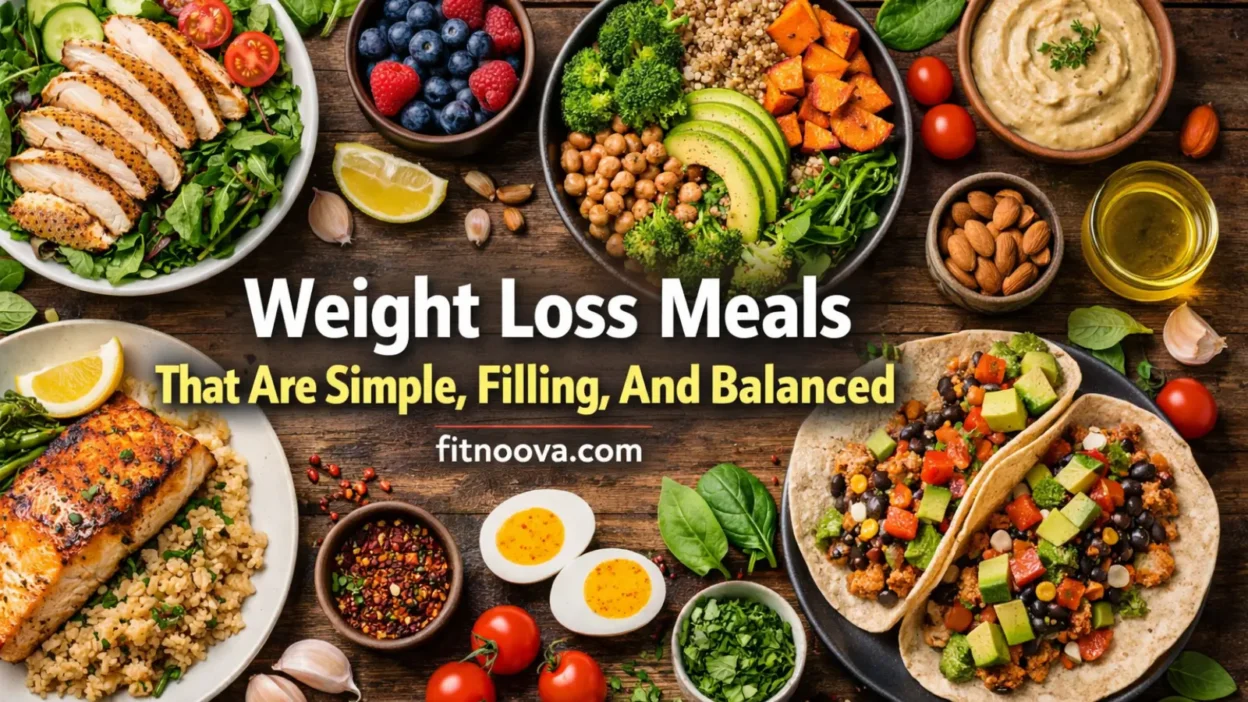
Weight loss meals work best when they help you eat fewer calories without feeling constantly hungry or stuck eating bland food. In practice, that usually means meals built around protein, fiber-rich foods, and reasonable portions of carbs and fats, using a pattern you can repeat on normal weekdays, not just on your most motivated days. Public-health guidance consistently points toward sustainable calorie control, nutrient-dense foods, and a meal pattern you can maintain over time rather than a single “perfect” diet.
Quick Answer
The best weight loss meals are balanced meals that keep you full while making it easier to stay in a calorie deficit. A simple formula is lean protein, plenty of vegetables or fruit, a smart portion of high-fiber carbs, and a moderate amount of healthy fat. That approach aligns with current CDC, USDA, and NIDDK guidance on healthy eating and sustainable weight management.
What Makes A Meal Good For Weight Loss?
A good weight loss meal does not need to be tiny, trendy, or expensive. It needs to do three jobs well.
First, it should help control hunger. Meals with protein and fiber tend to be more satisfying than meals built mostly around refined carbs or sugary drinks. Current federal and clinical guidance also emphasizes nutrient-dense foods such as vegetables, fruits, whole grains, beans, lean proteins, and dairy or fortified alternatives.
Second, it should fit your real life. If your meals take too long, require hard-to-find ingredients, or leave you hungry an hour later, they are unlikely to last. NIDDK specifically stresses choosing a healthy eating plan you can maintain over time.
Third, it should help you manage portions without turning every meal into math homework. Tools like MyPlate and the NIDDK Body Weight Planner can help people estimate food-group targets and calorie needs without guessing wildly.
A Simple Formula For Building Weight Loss Meals
If you want a meal structure that works for most beginners, start here:
• Protein: chicken, fish, eggs, Greek yogurt, cottage cheese, tofu, tempeh, beans, lentils, or edamame
• Produce: a large portion of vegetables, plus fruit when it fits the meal
• Smart carbs: potatoes, oats, brown rice, quinoa, beans, lentils, or whole-grain bread or wraps
• Healthy fats: avocado, nuts, seeds, olive oil, or peanut butter in sensible amounts
A helpful visual is the MyPlate pattern: fill about half the plate with fruits and vegetables, one quarter with protein, and one quarter with grains or starches, adjusting portions based on your calorie needs and activity level.
That does not mean every meal must look identical. It means most meals should have enough protein and produce to be satisfying, plus enough carbohydrate and fat to feel normal and sustainable.
How To Make Weight Loss Meals More Filling
Many people think they need “diet food” to lose weight. Usually, they just need meals that satisfy them better.
Protein helps. So does fiber. Volume matters too. A bowl built with chicken, rice, black beans, salsa, lettuce, and roasted peppers will usually keep someone fuller than a few handfuls of snack food with the same calories.
Useful upgrades include:
• Start with a protein source instead of adding protein as an afterthought
• Add vegetables to lunch and dinner by default
• Choose whole fruit more often than juice
• Use soups, salads, and grain bowls to add volume without relying on ultra-processed extras
• Keep liquid calories in check, especially soda, sweet coffee drinks, and frequent alcohol
CDC and NHLBI guidance also recommends limiting foods and drinks high in added sugars and excess fat because they add calories quickly without much nutritional payoff.
Easy Weight Loss Meal Ideas For Breakfast
Breakfast does not need to be huge. It just needs to prevent the mid-morning crash.
Greek Yogurt Bowl
Plain Greek yogurt with berries, chia seeds, and a small portion of granola works well because it combines protein, fiber, and some crunch. This is a good option for busy adults who need something fast.
Eggs And Toast With Fruit
Two eggs with sautéed spinach, one slice of whole-grain toast, and fruit is simple and satisfying. You can add egg whites for more protein without making the meal much heavier.
Oatmeal With Protein
Cook oats and add Greek yogurt or a side of cottage cheese. Top with cinnamon, berries, and a few nuts. Oatmeal alone can leave some people hungry, but oatmeal with protein tends to hold up better.
Smoothie That Eats Like A Meal
A real meal smoothie includes protein, fruit, and something with staying power, such as Greek yogurt, milk, soy milk, or nut butter. A fruit-only smoothie is often just a fast drink, not a filling meal.
Easy Weight Loss Meal Ideas For Lunch
Lunch is where many people either stay on track or drift into random snacking.
Chicken Or Tofu Grain Bowl
Use a base of rice or quinoa, add chicken or tofu, pile on vegetables, and finish with salsa, lemon, or a light dressing. This is easy to batch prep and easy to portion.
Big Salad That Actually Fills You Up
A good salad needs substance. Add grilled chicken, tuna, beans, eggs, or tofu. Include crunchy vegetables and a measured amount of dressing. Without protein and enough food volume, salads often backfire.
Turkey Or Hummus Wrap
A whole-grain wrap with turkey, hummus, lettuce, tomato, and cucumber can be a practical office lunch. Pair it with fruit or a yogurt instead of chips if you want more staying power.
Leftovers With A Purpose
Leftovers are often the best lunch strategy. A balanced dinner portion packed for the next day usually beats a last-minute vending machine decision.
Easy Weight Loss Meal Ideas For Dinner
Dinner should feel normal, not punishing.
Salmon, Potatoes, And Vegetables
This is a strong template because it includes protein, a satisfying carb, and plenty of volume. Roasted potatoes are often more satisfying than people expect and can fit well in a balanced meal.
Stir-Fry
Use lean beef, shrimp, chicken, tofu, or tempeh with frozen or fresh vegetables and serve over rice. Control calories by being measured with oil and sugary bottled sauces.
Taco Bowl
Ground turkey, lean beef, or black beans with rice, lettuce, salsa, corn, and avocado can work well. It tastes like real food because it is real food.
Sheet-Pan Dinner
Roast chicken or tofu, vegetables, and potatoes on one pan. This keeps cooking simple and reduces the chances of ordering takeout because you are tired.
Snack Ideas That Support Weight Loss Meals
Snacks are optional, not mandatory. But a planned snack is usually better than getting overly hungry and eating whatever is nearby.
Good options include:
• Greek yogurt
• Cottage cheese and fruit
• Apple with peanut butter
• Baby carrots and hummus
• String cheese and fruit
• Edamame
• A boiled egg with fruit
• Tuna packet with crackers
The goal is not to snack constantly. It is to use snacks strategically when meals are far apart or your schedule is uneven.
A Simple 1-Day Example Of Weight Loss Meals
Here is what a realistic day can look like:
Breakfast: Greek yogurt, berries, chia seeds, and a small handful of granola
Lunch: Chicken grain bowl with rice, black beans, peppers, lettuce, and salsa
Snack: Apple and peanut butter
Dinner: Salmon, roasted potatoes, and broccoli
Optional Evening Snack: Cottage cheese or fruit if you are genuinely hungry
This is not the only way to eat for fat loss. It is just a good example of balanced, satisfying meals built from ordinary foods.
How Much Should You Eat?
There is no single portion size that fits everyone. Your needs depend on body size, activity, age, sex, health status, and goals. That is why tools such as MyPlate Plan and the NIDDK Body Weight Planner can be more useful than copying someone else’s meal plan online.
In general, start by improving meal quality and consistency before making aggressive cuts. If your meals are balanced but weight is not moving over time, you may need to tighten portions, reduce liquid calories, or cut back on frequent extras such as sauces, desserts, or mindless snacking.
Common Mistakes To Avoid
Eating Too Little Too Fast
Very restrictive eating may look effective for a week or two, but it is often hard to sustain. NIDDK advises choosing an eating plan you can stick with, not one that collapses under normal life stress.
Building Meals Around “Low-Calorie” Foods Only
A meal of plain vegetables and almost nothing else may be low in calories, but it may also leave you raiding the pantry later. Satisfaction matters.
Skipping Protein
Meals without enough protein often do not hold up well. That can make later overeating more likely.
Drinking A Lot Of Calories
Sweet drinks, blended coffees, and regular alcohol can push calories up fast without helping fullness much. CDC and NHLBI both stress limiting sugar-heavy beverages.
Treating Weekend Eating Like It Does Not Count
Consistent habits matter more than one perfect weekday plan. A solid meal structure should still work when life gets busy or social.
When To Get Extra Help
If you have diabetes, a history of disordered eating, kidney disease, major digestive issues, or you are taking a weight-loss medication that changes your appetite, it is smart to get individualized guidance. NIDDK notes that some people may also need structured programs, medical support, or obesity medicine in addition to lifestyle changes.
Rapid, unintentional weight loss, ongoing vomiting, severe fatigue, fainting, or obsessive restriction are not normal signs of “discipline.” They are reasons to slow down and seek medical advice.
FAQ
What are the best foods to eat for weight loss meals?
The best foods are the ones that help you stay full and consistent. For most people, that means lean proteins, vegetables, fruit, beans, whole grains, potatoes, and healthy fats in moderate amounts.
Can I eat carbs and still lose weight?
Yes. Weight loss depends on your overall calorie intake and whether your eating pattern is sustainable. Carbs like oats, fruit, beans, rice, and potatoes can fit well in balanced meals.
Are frozen meals good for weight loss?
Some can be. The better choices usually have a decent amount of protein, vegetables, and reasonable sodium and calorie levels. They can be useful for busy days, but they are not required.
How many meals should I eat per day?
There is no single best number. Some people do well with three meals. Others prefer three meals and one snack. The best setup is the one that helps you manage hunger and stay consistent.
What should I eat when I want fast food?
Aim for the same structure: protein, produce when possible, and a reasonable portion. For example, a grilled sandwich, burrito bowl, or burger with fewer extras can work better than turning one fast-food meal into a full cheat day.
Conclusion
The best weight loss meals are not extreme. They are balanced, filling, and easy to repeat. Build meals around protein, produce, smart carbs, and moderate fats, then adjust portions based on your needs and progress. That is a far more useful strategy than chasing the most restrictive plan in the room.