Last Updated: MAY 15 , 2026
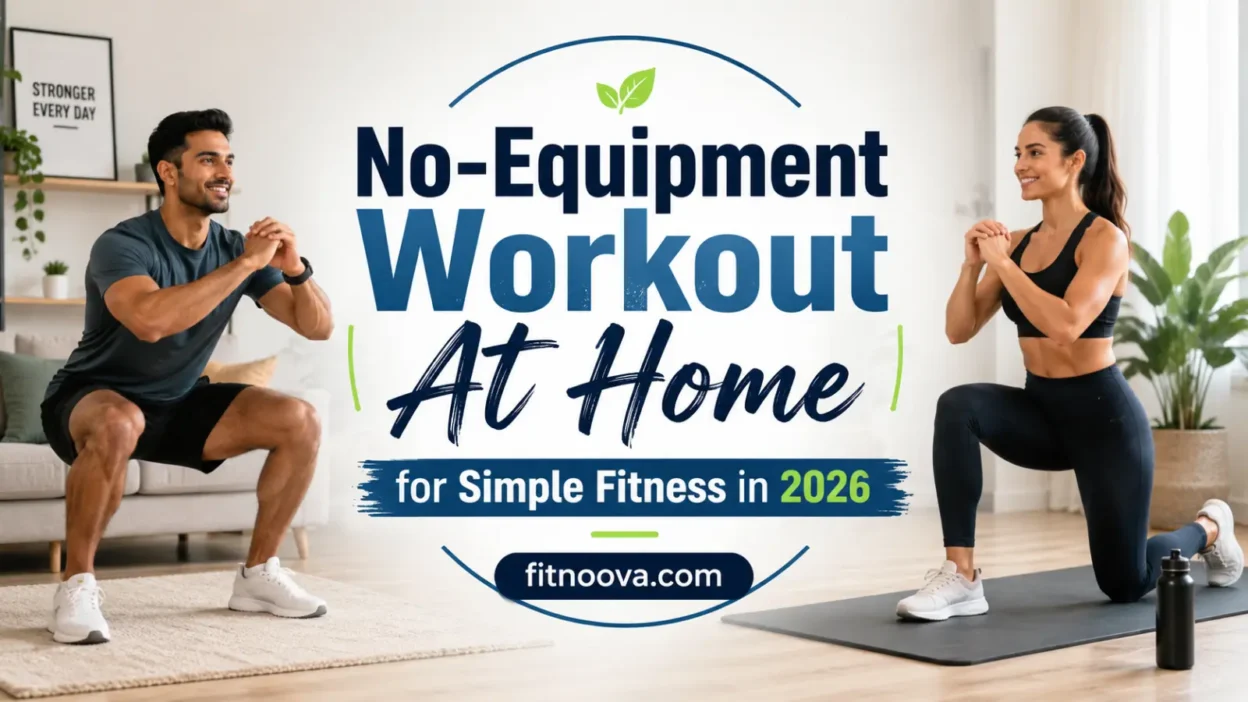
No-Equipment Workout At Home gives you a simple way to train with your own body weight when you want a practical routine that fits a busy day. Instead of relying on machines or a packed gym, you can use bodyweight exercises such as squats, push-ups, lunges, glute bridges, and planks to work major muscle groups in a small space. A balanced session can include strength training, low-impact cardio, mobility work, and short rest periods so the workout feels doable rather than rushed. Start with movements you can perform with good form, then add reps, sets, or time as you build confidence. This approach keeps fitness simple, flexible, and easy to repeat at home.
Quick Answer
No-Equipment Workout At Home uses body weight moves to build strength, improve movement, and support cardio fitness without gym gear. A simple plan can include squats, push-ups, lunges, planks, and low-impact intervals. Keep your form steady, choose exercises that match your ability, and increase time or reps gradually.
Why No-Equipment Workouts at Home Actually Work
A lot of beginners assume home workouts are less effective than gym training. That is not true. Your body still works against resistance, even without weights. When you squat, lunge, push, brace, and control movement, your muscles are being challenged.
Bodyweight exercises are especially effective for beginners because they improve several areas at once. They help build strength, coordination, balance, stability, and body control. Instead of relying on machines, you learn how to move your own body properly.
Another big advantage is convenience. You do not need to travel anywhere, wait for equipment, or figure out complicated machines. That makes it easier to stay consistent, and consistency matters more than perfection.
Benefits of Doing a No-Equipment Workout at Home
Training at home without equipment offers more than just convenience. It also removes many of the common reasons people struggle to stay active.
It Is Easy to Start
You do not need to buy gear or learn how to use machines. You can begin with simple exercises in your room, living room, or any open space at home.
It Saves Money
A gym membership is not necessary when you are starting with bodyweight training. This makes home workouts one of the most budget-friendly ways to improve fitness.
It Fits a Busy Schedule
You can train in the morning, during lunch, or in the evening. Even a short 20-minute workout can be enough to build momentum.
It Feels Less Intimidating
Many beginners feel uncomfortable in a gym. Home workouts give you privacy and allow you to learn at your own pace.
It Builds a Strong Foundation
Bodyweight workouts teach basic movement patterns like squatting, lunging, pushing, and bracing. These are essential skills that help with future fitness progress.
Who Should Try a No-Equipment Workout at Home
This type of workout is ideal for many people, especially:
- beginners starting their fitness journey
- busy adults with limited time
- people who prefer working out in private
- travelers who want a routine they can do anywhere
- anyone looking for a low-cost workout plan
It is also a great option for people who eventually want to start gym training, because it builds strength and movement confidence first.
What a Good Beginner Home Workout Should Include
A smart beginner workout should not be random. It should cover the basics in a balanced and repeatable way.
A good no-equipment home workout should:
- train the major movement patterns
- improve basic strength and control
- include light cardio or conditioning
- fit into a weekly routine you can maintain
- become gradually more challenging over time
That is far more effective than doing random workout videos every day.
Best No-Equipment Exercises for Beginners
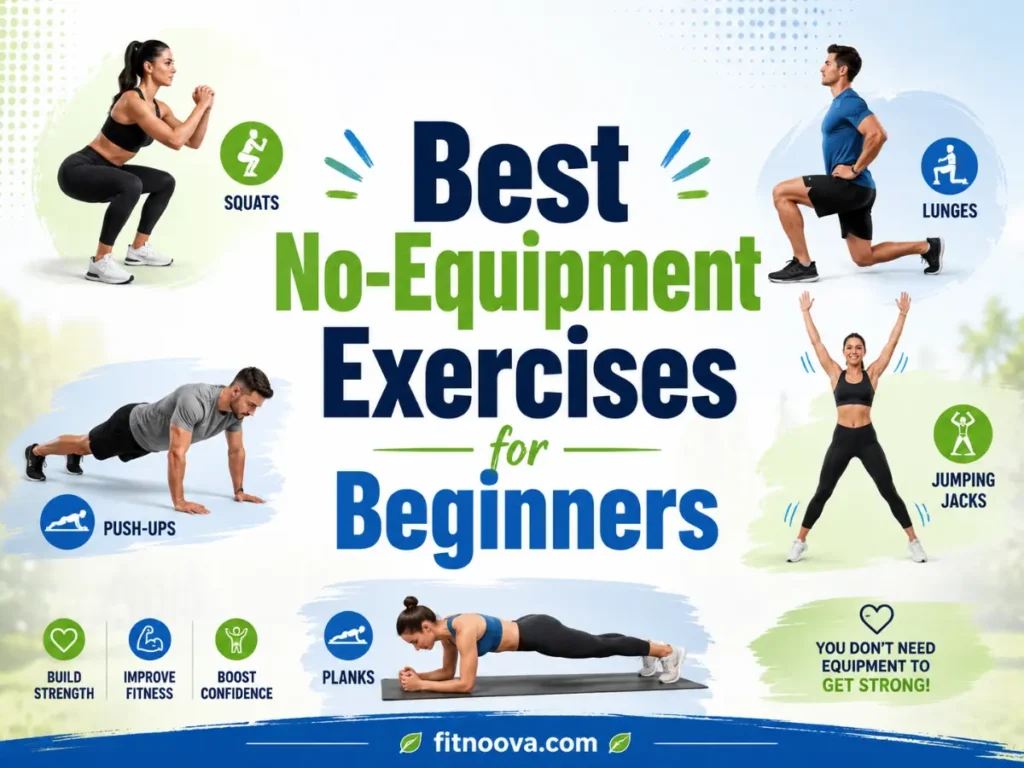
You do not need dozens of exercises to get started. A small number of high-value movements is enough.
Lower-Body Exercises
The lower body should be trained with simple movements that build strength and stability.
Good beginner options include:
- bodyweight squats
- reverse lunges
- glute bridges
- step-ups if you have a safe staircase or platform
These exercises target the legs and glutes while improving control and balance.
Upper-Body Exercises
For upper-body strength, push-up variations are among the best choices.
Start with:
- wall push-ups
- incline push-ups
- kneeling push-ups
- standard push-ups
The goal is to choose the version that matches your current level, not the hardest one possible.
Core Exercises
Core training should focus on control, not just ab fatigue.
Strong beginner choices include:
- plank
- dead bug
- bird dog
- side plank
These movements improve stability and support better posture and movement.
Light Conditioning Exercises
Conditioning can be simple and beginner-friendly.
Try:
- marching in place
- step jacks
- controlled high knees
- mountain climbers if form stays solid
These movements help raise the heart rate without making the workout chaotic or overly intense.
How to Warm Up Before a No-Equipment Workout
A warm-up prepares your muscles and joints for exercise. It helps your body move better and lowers the chance of jumping into difficult movements too quickly.
A simple warm-up can take just 5 to 10 minutes and may include:
- 1 to 2 minutes of brisk marching in place
- 10 slow bodyweight squats
- 8 hip hinges or good mornings
- 8 step-backs or reverse lunges
- 10 arm circles in each direction
- 6 bird dogs per side or 20 seconds of gentle plank practice
The warm-up should make you feel ready, not tired.
How to Choose the Right Push-Up Level
Push-ups are often one of the hardest exercises for beginners, which is why progression matters.
Start with wall push-ups if you have very limited upper-body strength. Move to incline push-ups when wall push-ups become easy. Use kneeling push-ups when you can keep your body aligned and control the movement. Move to standard push-ups only when you can do them with solid form.
There is no benefit in rushing to harder versions if your technique breaks down.
Beginner No-Equipment Workout at Home
Here is a simple full-body beginner workout you can start with right away. Begin with 2 rounds in the first week. Rest 30 to 60 seconds between exercises if needed.
- 10 bodyweight squats
- 8 wall, incline, or kneeling push-ups
- 10 reverse lunges total
- 12 glute bridges
- 20-second plank
- 8 bird dogs per side
- 30 seconds marching in place
If this feels manageable after 1 to 2 weeks, increase to 3 rounds or add a few reps to each movement.
A Simple 20-Minute No-Equipment Workout at Home
If you want something short and practical, this format works well.
5-Minute Warm-Up
- brisk march
- shoulder circles
- hip hinges
- slow squats
- step-backs
12-Minute Main Circuit
Repeat 3 times:
- 10 squats
- 8 push-up variation reps
- 10 glute bridges
- 20-second plank
3-Minute Cool-Down
- easy walking
- quad stretch
- chest stretch
- slow breathing
This kind of routine is short enough for busy days while still helping beginners improve steadily.
Weekly No-Equipment Workout Plan for Beginners
A weekly schedule makes your routine easier to follow.
Option 1: Three-Day Plan
Monday: Full-body workout
Wednesday: Full-body workout
Friday: Full-body workout
Other days: walking, stretching, or light recovery activity
Option 2: Four-Day Plan
Monday: Full-body strength
Tuesday: walk or light cardio
Thursday: full-body strength
Saturday: short conditioning workout or brisk walk
The goal is to spread your activity through the week without overdoing it.
How to Progress Without Equipment
You do not need weights to keep making progress. You just need to increase the challenge gradually.
You can progress by:
- adding 1 to 2 reps
- adding another round
- slowing down the lowering phase
- shortening rest slightly
- moving to a harder variation
- improving range of motion
- improving control and form
Here are a few examples:
- wall push-up to incline push-up to kneeling push-up to standard push-up
- squat to slower squat to paused squat to split squat
- plank to longer plank to side plank to more difficult plank variations
Progress slowly and change one variable at a time.
How to Know When It Is Time to Make the Workout Harder
You should make the workout harder when your reps feel controlled, the final reps are challenging without being sloppy, and you are recovering well between sessions.
If you are still losing form early, feeling extremely sore for days, or struggling to finish the workout, stay at the same level a little longer.
That is smarter than forcing progress too soon.
Recovery Is Part of the Plan
Many beginners focus only on workouts and ignore recovery. That is a mistake.
Your muscles and fitness improve between sessions, not only during them. Recovery supports that process. Good sleep, enough water, lighter movement on rest days, and better spacing between workouts all help your body adapt.
If you feel drained after every session, the problem may not be a lack of effort. It may be a lack of recovery.
Common Beginner Mistakes to Avoid
Beginners often slow their progress by making the same simple mistakes.
Skipping the Warm-Up
Even a short warm-up is better than none and helps prepare the body.
Training Hard Every Day
More is not always better. Your body needs time to recover and improve.
Following Advanced Online Workouts
Many viral workouts are designed for fitter people, not true beginners.
Rushing Through Reps
Fast, sloppy reps reduce control and make exercises less effective.
Changing Workouts Constantly
Repeating a simple routine is often better than switching plans every few days.
Chasing Sweat Instead of Progress
Sweat is not the best sign of success. Better form, stronger reps, and consistency matter much more.
What to Do
To get better results from home workouts:
- start with full-body routines
- train 2 to 4 times per week
- warm up before each session
- walk regularly if possible
- build up gradually
- use easier variations when needed
- keep the plan simple and repeatable
- focus on form before speed
What to Avoid
Try not to:
- go all out every day
- skip rest because home workouts seem easy
- force standard push-ups too early
- use bad form to get more reps
- make workouts too long
- quit because the first week feels awkward
When to Slow Down or Get Medical Advice
Stop exercising and seek medical help if you feel chest pain, severe dizziness, sharp pain, or any unusual symptoms during a workout.
If you have a medical condition, have been inactive for a long time, or have health concerns, it is sensible to speak with a healthcare professional before starting a new workout routine.
Frequently Asked Questions
Is a no-equipment workout at home enough to get fit?
Yes. For beginners, bodyweight workouts can improve strength, endurance, movement quality, and consistency when done regularly.
How often should I do no-equipment workouts?
Most beginners do well with 2 to 4 sessions each week, along with walking or other light activity on the remaining days.
Can I build muscle without equipment?
Beginners can build strength and some muscle with bodyweight training, especially when the exercises become more challenging over time.
How long should a home workout be?
A good home workout can last between 20 and 45 minutes. Even shorter workouts can be effective if they are structured well and done consistently.
What is the best first no-equipment exercise?
Bodyweight squats, push-up variations, glute bridges, and planks are among the best starting exercises because they are simple, effective, and easy to adjust.
What if I cannot do push-ups yet?
Start with wall push-ups, then move to incline push-ups, then kneeling push-ups. This is a normal and effective progression.
Should I do the same workout every week?
Yes. Most beginners improve faster when they repeat a simple routine long enough to build strength, confidence, and better form.
Conclusion
No-Equipment Workout At Home is a smart choice when you want a clear, low-cost routine that fits your space and schedule. By mixing squats, planks, lunges, push-ups, mobility drills, and short cardio bursts, you can create a balanced session without making fitness feel complicated. Good form, steady pacing, and gradual progress matter more than doing too much at once. Start with one simple routine today.