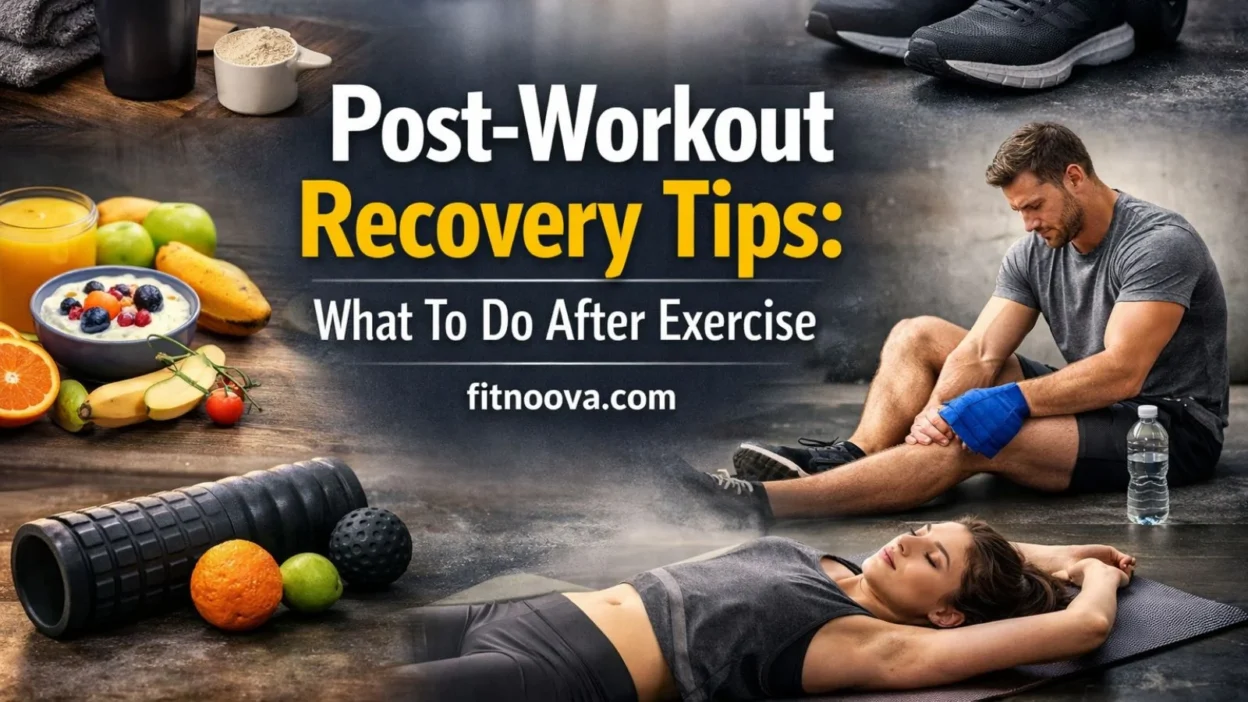
A workout does not end when the last set is done or the treadmill stops. What you do after exercise affects how you feel later that day, how sore you are tomorrow, and how ready you are for your next session. The biggest recovery wins usually come from a few basics: cool down gradually, rehydrate, eat well, sleep enough, and keep your training load realistic. Current guidance from sources such as MedlinePlus, Mayo Clinic, CDC, and NHLBI consistently supports those fundamentals.
Quick Answer
The best post-workout recovery tips are simple. Slow down instead of stopping abruptly, drink fluids, eat a balanced meal or snack with protein and carbohydrates, get enough sleep, and use light movement when it helps you feel better. Most recovery problems come from one of three things: doing too much, recovering too little, or ignoring warning signs like sharp pain, swelling, dizziness, chest pain, or symptoms that linger longer than they should.
What Recovery Really Means
Recovery is not just about soreness. It is the period after exercise when your body settles down, replaces fluids, restores energy, repairs stressed tissues, and gets ready for the next bout of activity. It also affects sleep, energy, mood, and how steady your performance feels from one workout to the next. That is why recovery is not an extra habit for serious exercisers. It is part of the plan.
Why Post-Workout Recovery Matters
Physical activity has immediate benefits, including better mood, better function, and better sleep, but that does not mean more is always better. MedlinePlus notes that it is possible to exercise too much, and Mayo Clinic notes that pain lasting more than two hours after exercise can be a sign that you pushed too hard. Good recovery helps keep exercise productive instead of draining.
What To Do Right After A Workout
The first few minutes after exercise matter more than many people realize. Your best move is not to collapse on a bench or go from all-out effort to complete stillness. Instead, give your body a gradual landing. Walk, pedal easily, or move gently for a few minutes while your breathing settles. Then start rehydrating and think about your next meal or snack.
A simple immediate checklist looks like this:
slow down gradually
let your breathing settle
drink water
change out of very sweaty clothes if needed
eat when it fits your schedule
avoid sitting completely still right away if you feel stiff
Cool Down Before You Fully Stop
A cooldown does not need to be long or complicated. Mayo Clinic says warmups and cool-downs generally mean doing your activity at a slower pace and lower intensity, while NHS recommends a short cooldown routine to gradually relax and slow your heart rate after exercise. For most people, a few minutes is enough.
Practical examples include slow walking after a run, easy cycling after intervals, or a few minutes of relaxed bodyweight movement after lifting. Stretching can fit here too, but it works better after your breathing has settled and your muscles are already warm. MedlinePlus specifically advises not to stretch cold muscles.
Rehydrate On Purpose
Hydration matters before, during, and after exercise. Mayo Clinic says you need enough fluids around exercise to help prevent dehydration, and MedlinePlus advises drinking before, during, and after workouts, even if you do not feel thirsty yet.
For most routine workouts, water is enough. If your session was long, very intense, or done in hot weather, you may need more fluid replacement and may benefit from replacing electrolytes as well. MedlinePlus specifically highlights hydration during exercise and warns that heat and heavy sweating raise dehydration risk.
Good post-workout hydration habits include:
drink water soon after finishing
keep sipping over the next hour or two
drink more if you trained in heat or sweat heavily
do not wait until you feel awful to start catching up
Eat Something That Supports Recovery
You do not always need a full meal the minute you finish, but post-workout eating does matter. Mayo Clinic recommends eating after exercise and suggests a meal with both carbohydrates and protein within two hours if possible, with a snack if your next meal is farther away.
A practical post-workout meal or snack usually includes protein, carbohydrates, and fluids. Simple options include yogurt and fruit, eggs and toast, a turkey sandwich, cottage cheese with fruit, or chicken, rice, and vegetables. The exact food matters less than the habit of refueling in a normal, balanced way.
Sleep Is One Of The Best Recovery Tools
Sleep is one of the most useful recovery tools because it affects how restored, alert, and physically ready you feel the next day. CDC says adults ages 18 to 60 should get 7 or more hours of sleep per night, and NHLBI notes that sleep deficiency can leave you tired, less refreshed, and less able to function well during the day.
If your workouts keep feeling harder than they should, sleep is one of the first things to check. A realistic recovery routine supports sleep instead of working against it. Rehydrate and eat well earlier, keep your bedtime reasonably steady, and pay attention if very late intense exercise seems to leave you too wired to sleep well. Mayo Clinic notes that exercise can improve sleep, but working out too close to bedtime may energize some people.
What To Do Over The Next 24 Hours
Recovery is not just the first 10 minutes after exercise. What you do over the rest of the day matters too. Keep drinking fluids, eat normally, and avoid swinging from one extreme to the other. One hard session is not a reason to spend the rest of the day dehydrated, underfed, or completely inactive if gentle movement would help you feel better.
For many people, light movement helps more than total stillness. Mayo Clinic notes that light exercise and stretching may help improve recovery after a tough workout, and NHS guidance supports cooldown stretching and gentle movement for easing back to rest. A walk, easy cycling, or relaxed mobility work is often enough.
Soreness Vs. Pain: Know The Difference
Mild muscle soreness can be normal, especially if you are new to exercise or recently changed your training. Overuse and minor muscle strain are common reasons people feel achy after activity.
But soreness is not the same thing as injury. Sharp pain, joint pain, visible swelling, dizziness, chest pain, unusual shortness of breath, or pain that changes how you walk or move should make you stop and reassess. MedlinePlus says that if you get hurt, you should stop playing or exercising because continuing can cause more harm. Mayo Clinic also notes that pain lasting more than two hours after exercise can mean you overdid it.
A Simple Post-Workout Recovery Routine
If you want a basic system you can repeat, use this:
Right After Exercise
walk or move easily for a few minutes
let your breathing settle
drink water
Within The Next One To Two Hours
eat a balanced meal or snack with protein and carbohydrates
continue drinking fluids
avoid staying completely still if your body feels stiff
Later That Day
keep your hydration steady
use light movement if it helps
do not turn one hard session into an all-day energy crash
That Night
aim for enough sleep
keep your evening routine calm and consistent
This works because it is realistic. Most people do not need a complicated recovery protocol. They need better follow-through on the basics.
What To Do
cool down gradually
drink water after training
eat a balanced meal or snack
prioritize sleep
use light movement if it helps
pay attention to unusual symptoms
adjust your training if soreness and fatigue keep stacking up
What To Avoid
stopping abruptly after hard effort
ignoring hydration
skipping food after tough sessions
assuming more soreness always means a better workout
forcing another hard session when your body clearly needs a break
treating sleep like it does not matter
pushing through obvious injury signs
Common Recovery Mistakes
Doing Too Much Too Soon
A lot of recovery problems start with the training plan, not the recovery plan. If you ramp up intensity or volume too fast, you make recovery harder than it needs to be. MedlinePlus warns that too much exercise without enough rest can lead to problems, and Mayo Clinic also cautions against overdoing it.
Thinking Recovery Is Lazy
Recovery is not the opposite of progress. It is what allows progress to continue. Cooling down, refueling, sleeping enough, and spacing hard sessions sensibly are training habits, not signs of weakness.
Ignoring Basic Hydration, Food, And Sleep
Most people do not need expensive recovery tools to recover better. They need enough fluid, enough food, enough sleep, and a more realistic training load. That conclusion matches the emphasis found across major health guidance on hydration, nutrition, sleep, and sensible exercise volume.
When To Scale Back Or Get Help
Be more cautious if pain is sharp, swelling appears, you feel faint, you have chest pain, or symptoms last longer than they should. Stop exercising if you think you are injured, and get medical help when symptoms seem serious or clearly out of proportion.
That does not mean every ache is dangerous. It means unusual symptoms deserve attention. Normal recovery may include mild soreness and temporary fatigue. Recovery should not mean limping through the next day, feeling unwell, or trying to convince yourself that obvious warning signs are “just part of training.”
FAQs
What is the best thing to do after a workout?
The best first step is to cool down gradually, drink fluids, and then eat when it makes sense for your schedule. After that, sleep and your overall routine usually matter more than fancy recovery tricks.
Is stretching after a workout helpful?
It can be. Stretching after exercise can fit well into a cooldown because your muscles are already warm. NHS describes post-workout stretching as a way to gradually relax and slow your heart rate, and MedlinePlus advises stretching after you have warmed up or after exercise rather than on cold muscles.
How much sleep do I need for recovery?
Most adults need at least 7 hours of sleep each night, and many do well in the 7-to-9-hour range depending on age and individual needs.
Should I eat right after every workout?
Not always immediately, but eating after exercise is usually helpful, especially after harder or longer sessions. Mayo Clinic recommends a meal with carbohydrates and protein within two hours if possible, or a snack if your meal will be later.
Is it okay to work out when sore?
Sometimes mild soreness is manageable. Sharp pain, swelling, movement changes, or pain that lingers longer than it should are different and are good reasons to back off.
Conclusion
The best post-workout recovery tips are not complicated. Cool down, rehydrate, eat something useful, sleep enough, and stop treating recovery like an optional extra. For most people, better recovery does not come from a hack. It comes from doing the basics well and keeping the overall training load realistic.