
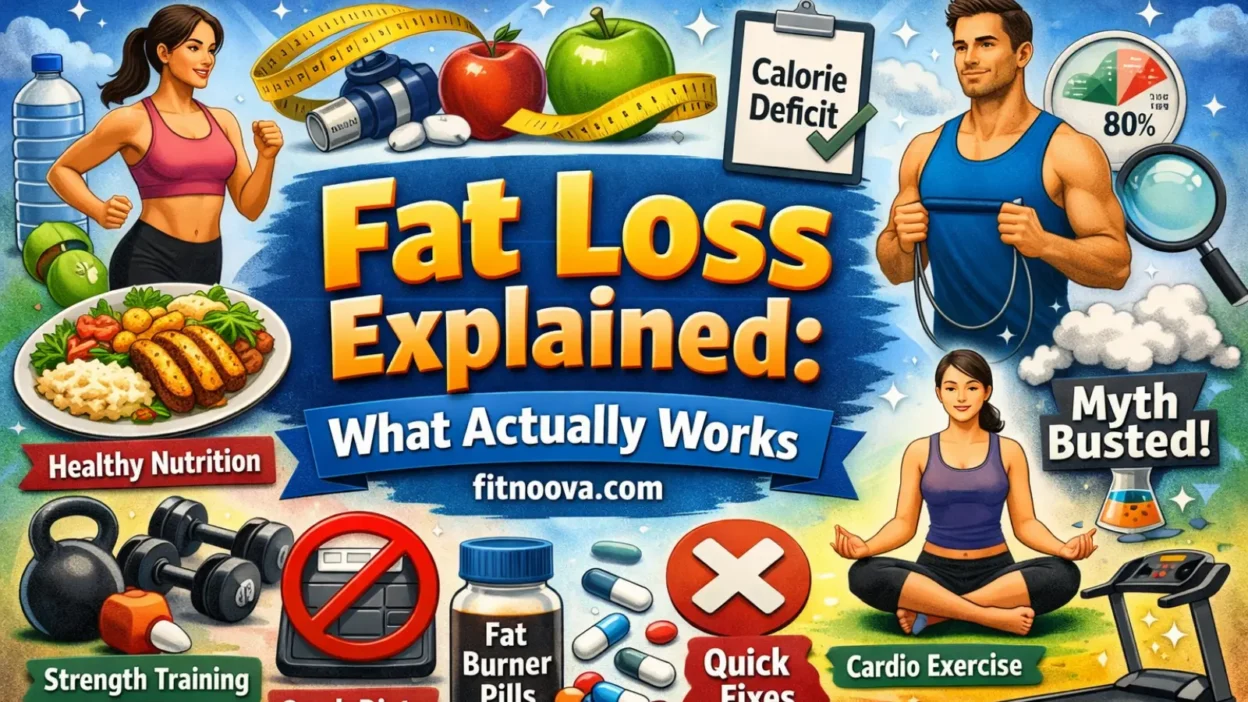
Fat loss is not about starving yourself, cutting out entire food groups, or doing endless cardio. For most adults, it comes down to creating a sustainable calorie deficit, keeping food quality high, staying active, doing strength training, and sticking with habits you can maintain for months, not just a few hard weeks. Public health guidance continues to support this big-picture approach: healthy weight loss is built on eating patterns, regular physical activity, enough sleep, and stress management.
Quick Answer
Fat loss happens when your body uses more energy than you take in over time. The most practical way to do that is to eat in a moderate calorie deficit, build meals around filling whole foods, lift weights or do other muscle-strengthening exercise at least twice a week, and stay consistently active across the week.
What Fat Loss Really Means
People often use “weight loss” and “fat loss” as if they mean the same thing, but they are not identical. Your scale weight can go down because of water loss, glycogen depletion, lower food volume in your system, or some loss of muscle as well as body fat. A better fat-loss plan aims to reduce body fat while protecting as much lean mass as possible through adequate food intake, resistance training, and patience. That is one reason crash diets often disappoint: they may move the scale fast, but they are harder to sustain and can make training, hunger, and energy levels worse. The broad guidance from CDC and NIDDK emphasizes durable lifestyle change rather than extreme short-term measures.
The Core Principle: A Manageable Calorie Deficit
You do not need a perfect diet label to lose fat. Low-fat, higher-protein, Mediterranean-style, balanced plate-based, and other structured approaches can all work if they help you eat fewer calories than you burn while still meeting your basic nutrition needs. CDC states that weight loss occurs when calorie intake is reduced and calorie use through activity helps create a calorie deficit. NIDDK also notes that the best eating plan is one you can maintain over time.
In real life, “manageable” matters more than “aggressive.” A small to moderate deficit is usually easier to stick with than a severe one. It leaves more room for normal meals, social eating, training performance, and recovery. If your plan makes you feel constantly wiped out, ravenous, or obsessed with food, it is probably too strict to last.
Build Meals That Make Fat Loss Easier
The best fat-loss meals usually have four traits: they are satisfying, simple, portion-aware, and repeatable. CDC and federal nutrition guidance consistently point toward eating patterns built around fruits, vegetables, whole grains, lean protein foods, and other nutrient-dense choices rather than ultra-processed foods in large portions. Foods with more water and fiber can help you feel full on fewer calories.
A practical plate for fat loss often looks like this:
- Half the plate from vegetables or fruit
- A clear source of protein
- A sensible portion of carbs such as potatoes, rice, oats, beans, or whole grains
- Some fat from foods like olive oil, nuts, seeds, avocado, eggs, dairy, or fish
That does not mean every meal has to look identical. It means your meals should be structured enough that you do not accidentally eat far more than you realize.
Foods That Tend To Help Most
No single food burns fat. What helps is choosing foods that make it easier to stay in a calorie deficit without feeling miserable.
These foods usually do that well:
- Vegetables
- Fruit
- Beans and lentils
- Potatoes
- Greek yogurt
- Eggs
- Chicken, turkey, fish, tofu, or lean meat
- Oats and other whole grains
- Soups and stews with a lot of volume
- High-fiber meals with enough protein
CDC specifically notes that foods high in water and fiber can help you eat fewer calories while still feeling full.
Foods And Habits That Commonly Slow Progress
Fat loss usually stalls because of patterns, not because your body has “stopped responding.”
Common examples include:
- Drinking a lot of calories
- Frequent takeout portions
- Snacking without noticing quantity
- Weekend overeating that cancels out weekday restraint
- Treating workouts as permission to eat far more
- Very low daytime intake followed by heavy evening eating
- Poor sleep that drives hunger, cravings, and inconsistency
You do not need to ban fun foods. CDC’s current guidance explicitly notes that comfort foods can still fit in limited amounts within a healthy eating pattern. The better strategy is to make indulgent foods deliberate, not automatic.
Why Strength Training Matters For Fat Loss
If your goal is better body composition, strength training should be part of the plan. It helps you maintain muscle while dieting, supports long-term function, and gives your body a reason to hold on to lean tissue as scale weight changes. Federal physical activity guidance recommends adults do muscle-strengthening activity at least two days per week, along with regular aerobic activity.
For beginners, this does not need to be fancy. Two to four full-body sessions per week is enough to start. Focus on basic movement patterns:
- Squat or sit-to-stand
- Hinge or hip-dominant move
- Push
- Pull
- Carry
- Core stability work
Simple, repeatable training beats random hard workouts.
Cardio Helps, But It Is Not The Whole Plan
Cardio can absolutely support fat loss because it raises energy expenditure, improves fitness, and helps many people feel better physically and mentally. But cardio alone is usually not enough if eating habits are off. CDC notes that physical activity plus reduced calorie intake creates the deficit needed for weight loss, and it also plays an important role in maintaining weight loss.
Walking is often the best starting point because it is accessible, low-impact, and easy to recover from. You do not have to turn every workout into a suffer session. Regular brisk walks, cycling, swimming, or intervals you can recover from are all valid tools.
A Simple Weekly Fat Loss Routine For Beginners
If you are starting from scratch, this is a realistic setup:
Option 1: Beginner Friendly Week
- 3 full-body strength sessions
- 3 to 5 brisk walks of 20 to 40 minutes
- 1 to 2 easier days with light movement
Option 2: Very Busy Schedule
- 2 full-body strength sessions
- Daily walking target or short movement breaks
- 1 longer walk on the weekend
Effort Guide
Most sessions should feel challenging but controlled. You should usually finish feeling like you could still do a bit more. That makes it easier to recover, repeat, and progress.
This lines up with the broader federal guideline of at least 150 minutes of moderate-intensity aerobic activity a week plus muscle-strengthening work on 2 or more days.
How To Progress Without Burning Out
Fat loss works better when the plan is stable enough to keep running.
Good ways to progress include:
- Add 1 to 2 reps before adding load
- Increase walking time gradually
- Tighten portion control before slashing calories
- Improve meal consistency before chasing perfection
- Keep most weekdays predictable
- Review your habits before assuming you need a harsher plan
NIDDK’s Body Weight Planner exists for exactly this reason: your calorie needs and rate of loss change over time, so progress is rarely perfectly linear.
Sleep And Stress Matter More Than People Think
Healthy fat loss is not just food and workouts. CDC includes enough sleep and stress management as part of healthy weight loss. When sleep is poor, decision-making, appetite control, recovery, and training quality often get worse. Chronic stress can push people toward irregular eating, less movement, and lower consistency.
That does not mean you need a perfect recovery routine. It means basic habits matter:
- Keep a regular bedtime when possible
- Avoid turning every evening into a snack window
- Do not use exercise as punishment for stressful eating
- Protect a few routines you can repeat even during busy weeks
How To Tell If Your Plan Is Working
The scale can help, but it should not be your only marker.
Useful signs include:
- Waist measurement trending down
- Clothes fitting differently
- Strength staying steady or improving
- Better daily energy
- More consistent hunger patterns
- Better movement habits week to week
Day-to-day scale spikes are normal. Water retention, sodium intake, training soreness, menstrual cycle changes, and meal timing can all affect the number. Look for trends over several weeks, not emotional reactions to one weigh-in.
Common Mistakes That Hurt Fat Loss
Eating “Healthy” But Not Watching Portions
Nut butters, oils, granola, smoothies, trail mix, restaurant salads, and healthy snacks can still be very calorie-dense. Portion awareness matters. NIDDK specifically recommends learning the difference between portions and servings and using nutrition labels to better understand intake.
Relying On Exercise Alone
Workouts help, but they rarely cancel out a consistently high intake. Fat loss usually gets easier when food structure and activity improve together.
Doing Too Much Too Soon
Starting with a seven-day workout plan, a strict meal plan, and no flexibility usually backfires. Better results often come from a smaller plan you can actually keep.
Skipping Strength Training
If you only chase sweat and calorie burn, you miss one of the best tools for preserving lean mass and improving body composition.
Expecting Fast, Linear Results
Your body weight will not move in a perfectly straight line. Normal fluctuations do not mean failure.
When To Slow Down Or Get Medical Guidance
General fat-loss advice is not the same as personal medical advice. It makes sense to talk with a qualified health professional before pushing harder if you are pregnant, postpartum, have a history of disordered eating, take weight-related medication, have diabetes, have significant joint pain, or have heart, kidney, or other medical conditions that affect exercise or nutrition. CDC also recommends discussing weight-related concerns and treatment options with a health care provider when appropriate.
Also back off and reassess if you notice:
- Chest pain
- Dizziness or fainting
- Unusual shortness of breath
- Pain that feels sharp or worsening rather than normal exercise discomfort
- Ongoing fatigue that makes daily function worse
- Compulsive food or exercise patterns
FAQ
What Is The Best Diet For Fat Loss?
The best diet for fat loss is the one that helps you maintain a calorie deficit without feeling out of control. NIDDK’s guidance is clear that the key is choosing a healthy eating plan you can maintain over time.
Can You Lose Fat Without Exercise?
Yes, because fat loss depends on a calorie deficit. But exercise still matters because it supports health, fitness, weight-loss maintenance, and lean-mass retention, especially when strength training is included.
Is Walking Good For Fat Loss?
Yes. Walking is one of the simplest and most sustainable ways to increase activity. It counts toward the weekly aerobic activity adults are advised to get and is often easier to recover from than harder forms of cardio.
How Often Should Beginners Work Out For Fat Loss?
A good starting point is 2 to 4 strength sessions per week plus regular walking or other moderate activity. The broader public-health target is at least 150 minutes of moderate aerobic activity weekly and muscle-strengthening activity at least 2 days a week.
Why Am I Not Losing Fat Even Though I’m Trying?
The most common reasons are inconsistent intake, underestimated portions, low daily activity outside workouts, poor sleep, or a plan that is too strict to maintain. Sometimes progress is also hidden by normal short-term scale fluctuations.
Conclusion
Fat loss does not need to be extreme to work. For most people, the most effective approach is a moderate calorie deficit, meals built around filling nutrient-dense foods, regular activity, strength training, and habits you can repeat long enough for results to add up. If your fat loss plan feels realistic, steady, and sustainable, you are probably on the right track.