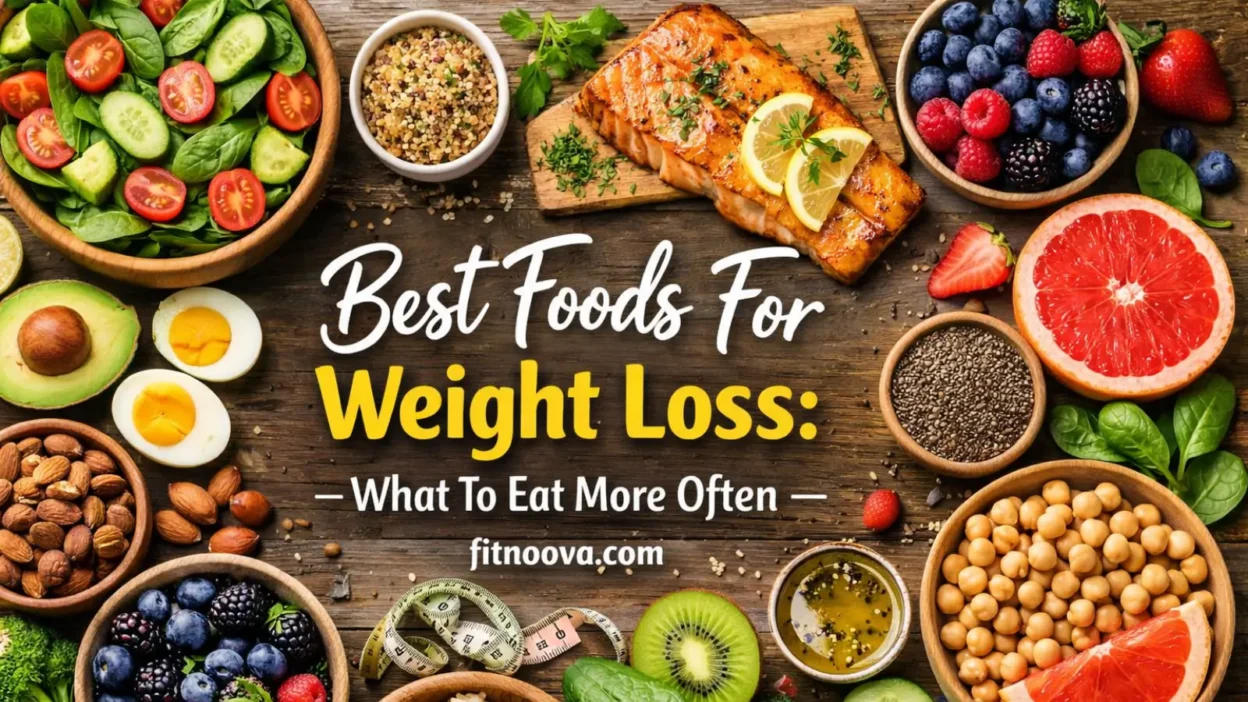
Trying to lose weight usually gets framed the wrong way. Most people are told to look for “fat-burning” foods, cut out entire food groups, or survive on tiny meals that leave them hungry an hour later. In real life, the best foods for weight loss are usually the ones that help you stay full, keep portions reasonable, and make it easier to stick with a healthy eating pattern over time. Public-health and medical guidance consistently points toward nutrient-dense foods such as vegetables, fruits, beans, lentils, whole grains, lean proteins, and low-fat dairy as strong choices for weight management.
Quick Answer
The best foods for weight loss are foods that help control hunger while keeping calories reasonable, especially foods rich in protein, fiber, or both. That usually means vegetables, fruit, beans, lentils, oats, whole grains, eggs, fish, plain yogurt, and other minimally processed foods that fit into a sustainable calorie deficit.
What Makes A Food Good For Weight Loss?
No single food causes weight loss by itself. Weight loss still comes down to taking in fewer calories than your body uses, but the foods you choose can make that easier or much harder. NIDDK notes that the key is choosing a healthy eating plan you can maintain over time, while CDC guidance emphasizes lower-calorie, fiber-rich foods that help you feel full without eating as much.
In practice, the most helpful foods tend to do at least one of three things: add volume with relatively few calories, provide protein that helps with fullness, or provide fiber that slows digestion and helps meals feel more satisfying. Higher-protein diets may offer a modest advantage for long-term weight management, but the benefit is not magic and works best as part of an overall eating pattern you can keep doing.
Non-Starchy Vegetables Deserve A Bigger Place On Your Plate
If there is one food group that makes weight-loss meals easier, it is non-starchy vegetables. Leafy greens, broccoli, cauliflower, cucumbers, peppers, zucchini, cabbage, green beans, tomatoes, and similar vegetables add volume, water, and fiber without adding many calories. CDC specifically notes that fruits and vegetables can help you feel full while eating fewer calories because they add bulk to meals.
That matters because fullness is practical, not theoretical. A bowl built around grilled chicken and roasted vegetables is often easier to control than a small portion of a more calorie-dense meal. The same is true for adding extra vegetables to soups, stir-fries, omelets, wraps, grain bowls, and pasta dishes. You are not just “eating healthy.” You are making the meal more filling for fewer calories.
Frozen and canned vegetables can work just as well when fresh is inconvenient. The American Heart Association notes that healthy eating can include fresh, frozen, canned, and dried produce, with the reminder to choose versions without added salt, sugar, or heavy sauces when possible.
Fruit Can Help, Not Hurt, A Weight-Loss Diet
A lot of people trying to lose weight get nervous about fruit because it contains natural sugar. That usually misses the point. Whole fruit also brings water, fiber, and chewing time, which makes it very different from sugary drinks, candy, or desserts. CDC includes fruit among the foods that can add volume and help reduce overall calorie intake.
Berries, apples, oranges, pears, melon, and grapefruit are especially useful because they are easy to pair with meals or snacks. Fruit works well when it replaces more calorie-dense sweets or when it is paired with protein, such as plain yogurt with berries or an apple with a small portion of nuts.
Dried fruit can still fit, but portion size matters because it is more concentrated. Whole fruit is usually the easier everyday choice when fullness is the goal.
Beans, Lentils, And Chickpeas Pull Double Duty
Legumes are some of the most useful foods for weight loss because they bring both protein and fiber. Mayo Clinic lists beans, peas, and lentils among lower-energy-dense protein choices, and its fiber guidance also highlights beans and lentils as major fiber sources.
That combination makes them especially helpful in real meals. Lentil soup, black beans in tacos, chickpeas in salads, or white beans added to a grain bowl can make a meal more satisfying without relying on large portions of red meat or heavily processed convenience foods. They also tend to be affordable and easy to keep on hand, which matters more than people think when consistency is the goal.
If you are newer to eating legumes, increasing them gradually and drinking enough water can make the adjustment easier. Canned versions are fine; rinsing them can help reduce sodium.
Protein-Rich Foods Make Weight Loss Easier For Many People
Meals that are too low in protein often leave people hunting for snacks not long after they eat. A reasonable amount of protein can help with fullness, and evidence suggests higher-protein approaches may be slightly more favorable for long-term weight management, though the effect is modest rather than dramatic.
Useful protein choices include fish, skinless poultry, eggs, beans, lentils, tofu, tempeh, plain Greek yogurt, cottage cheese, and low-fat dairy. Mayo Clinic and the American Heart Association both point toward lean proteins and low-fat dairy as part of healthy eating patterns, while also advising more careful choices if you increase protein intake.
The goal is not to build every meal around oversized portions of meat. It is to make sure your meals are satisfying enough to keep you from feeling deprived. For many adults, that looks like including a meaningful protein source at meals and using protein-containing foods in snacks when needed.
Plain Greek Yogurt And Cottage Cheese Are Strong Everyday Options
Plain Greek yogurt and cottage cheese earn a place on most weight-loss food lists for a simple reason: they are convenient, protein-rich, and easy to pair with fruit, oats, nuts, or seeds. Harvard’s Nutrition Source notes that yogurt provides protein and calcium, and the American Heart Association includes plain low-fat yogurt among healthy snack options.
What matters most is the version you buy. A lightly sweetened yogurt can still fit, but many flavored products add enough sugar that they become less filling for the calories. Plain yogurt with fruit is often the better baseline choice because you control both the flavor and the portion.
These foods also work well for people who struggle with breakfast or need a fast afternoon meal that does not turn into random grazing. A bowl of plain Greek yogurt with berries and a spoonful of chia seeds usually offers more staying power than a pastry or sugary cereal.
Eggs Are Simple, Filling, And Easy To Build Around
Eggs are useful because they are practical. They are easy to cook, portable when hard-boiled, and pair well with vegetables, fruit, or toast. They also provide protein, which can make breakfast or lunch more satisfying than meals built mostly around refined carbs. Harvard’s Nutrition Source includes eggs among common protein foods, and Mayo Clinic lists egg whites among lower-calorie protein choices.
For weight loss, eggs work best as part of a meal rather than as a “diet trick.” An omelet with vegetables, scrambled eggs with salsa and fruit, or two boiled eggs with a balanced lunch can be more helpful than skipping meals and getting overly hungry later.
Oats And Other High-Fiber Whole Grains Can Be Very Helpful
Carbs do not automatically work against weight loss. The type of carb matters. Whole grains and other higher-fiber choices tend to be more satisfying than refined grains, especially when portions are reasonable and they are paired with protein. CDC and NHLBI both include whole grains in healthy eating patterns for weight management.
Oats stand out because they are affordable, easy to prepare, and rich in soluble fiber. Mayo Clinic notes that oats contain beta-glucan, a type of soluble fiber associated with increased fullness and reduced hunger.
That does not mean unlimited oatmeal leads to weight loss. It means a sensible portion of oats, especially with fruit and protein, is often more filling than highly sweetened breakfast foods. Other useful grain options include brown rice, quinoa, farro, barley, and whole-grain bread, depending on what fits your budget and preferences.
Fish And Lean Meats Can Support Weight Loss Without Making Meals Feel Sparse
Fish, chicken breast, turkey, and other lean proteins can make meals more satisfying while keeping calories moderate. Mayo Clinic lists fish and lean meat among lower-energy-dense protein choices, and the DASH eating plan from NHLBI also includes fish and poultry as part of a healthy eating pattern.
Fish can be especially useful because it provides protein and can help replace more heavily processed or higher-saturated-fat choices. Salmon, tuna, cod, sardines, and shrimp can all work. The “best” option is usually the one you will actually cook and eat consistently.
This is one place where cooking method matters. Baked, grilled, air-fried, or sautéed fish is very different from a large breaded and fried restaurant portion with creamy sides. The food still matters, but the overall meal matters more.
Nuts, Seeds, And Nut Butters Can Fit, But Portions Matter
Many people assume nuts are bad for weight loss because they are calorie-dense. That is too simplistic. Nuts and seeds offer healthy fats, fiber, and some protein, which can make snacks and meals more satisfying. The American Heart Association notes that nuts contain protein, fats, fiber, vitamins, minerals, and antioxidants.
The catch is portion size. A small handful of almonds or pistachios can be a smart snack. Eating mindlessly from a large container can add calories fast without much awareness. Nut butters can work too, but they are easiest to manage when spread on toast, added to oatmeal, or portioned deliberately instead of eaten straight from the jar.
Used well, nuts and seeds help bridge the gap between meals. Used casually, they can become one of those “healthy foods” that quietly pushes intake higher than expected.
Soups, Salads, And Simple Mixed Meals Often Work Better Than “Diet Foods”
Weight-loss eating does not have to look like plain grilled chicken and steamed broccoli every day. In fact, people usually do better with meals that feel normal and satisfying. Soups, chili, burrito bowls, chopped salads with protein, stir-fries, and grain bowls tend to work well because they combine volume, fiber, protein, and flavor in one place. That lines up with guidance emphasizing vegetables, fruits, whole grains, legumes, lean proteins, and low-fat dairy rather than special “diet products.”
These kinds of meals also make portion control easier than grazing on snack foods. A bowl of lentil soup with fruit on the side or a salad with salmon, beans, and vegetables is often more filling than trying to piece together a meal from low-calorie packaged foods.
The Best Foods For Weight Loss Are Usually The Ones You Will Actually Keep Eating
This part gets overlooked. The most effective food choice is not always the one with the best nutrition profile on paper. It is the one that works in your actual life. NIDDK emphasizes that weight loss depends on choosing an eating plan you can maintain over time, and its myth-busting guidance is clear that you do not have to give up all your favorite foods to lose weight.
That means cultural foods, convenience foods, and favorite comfort meals can all fit. The more useful question is whether the meal helps you stay satisfied and within a realistic calorie range most of the time. Sometimes the fix is not replacing a food completely. It is adjusting the portion, adding vegetables, improving the protein content, or changing how often you eat it.
How To Build A Weight-Loss Plate Without Overthinking It
A simple plate framework is often more helpful than memorizing “good” and “bad” foods.
Start with a protein source such as chicken, fish, eggs, yogurt, tofu, beans, or lentils. Add plenty of vegetables or fruit. Then include a smart carb or fiber source such as oats, potatoes, beans, fruit, or whole grains, plus a moderate amount of healthy fat if needed for flavor and satisfaction. This approach matches the broad food pattern recommended by CDC, NHLBI, and the American Heart Association.
A few practical examples:
- Greek yogurt, berries, and oats
- Eggs with vegetables and fruit
- Lentil soup with a side salad
- Salmon, roasted vegetables, and brown rice
- Chicken bowl with beans, salsa, lettuce, and avocado
- Cottage cheese with fruit and a small handful of nuts
These meals are not identical in calories, but they share the same strength: they combine fullness, nutrition, and realism.
Common Mistakes That Make “Healthy” Weight-Loss Foods Less Helpful
One common mistake is focusing only on whether a food is healthy, not whether it is filling. A smoothie bowl, granola mix, or nut-butter snack can be nutritious and still easy to overdo if it is low in protein or very calorie-dense.
Another mistake is buying foods with a health halo and assuming portion size no longer matters. Trail mix, avocado toast, dried fruit, protein bars, and restaurant salads can all fit, but they can also become surprisingly calorie-heavy depending on the ingredients and serving size. Learning serving awareness and reading labels is part of weight management, not a sign that you are doing it wrong.
A third mistake is trying to live on foods you do not enjoy. That usually backfires. Sustainable weight loss is more likely when the food pattern feels satisfying enough to repeat.
Who Should Be More Careful Before Making Big Diet Changes?
If you have diabetes, kidney disease, a history of disordered eating, digestive disease, food allergies, are pregnant, or take prescription weight-loss medication, it is worth getting individualized guidance before making major diet changes. General healthy-eating advice is broadly useful, but calorie targets, protein needs, fiber increases, and meal timing may need to be adjusted to your situation. NIDDK also notes the importance of monitoring for malnutrition in some people using weight-loss medications or after weight-loss surgery.
If a plan leaves you dizzy, exhausted, obsessed with food, or constantly hungry, that is not a sign to “push through.” It usually means the approach needs work.
FAQ
What is the number one best food for weight loss?
There is no single best food. The most helpful choices are usually foods high in protein, fiber, or both, such as vegetables, fruit, beans, lentils, plain yogurt, eggs, fish, and whole grains.
Can I eat carbs and still lose weight?
Yes. Whole grains, oats, beans, fruit, and other higher-fiber carbohydrate foods can fit well into a weight-loss plan. The overall eating pattern and total calorie intake matter more than avoiding carbs entirely.
Are eggs good for weight loss?
Eggs can be a helpful weight-loss food because they provide protein and are easy to build into balanced meals. They are most useful when paired with other filling foods like vegetables, fruit, or whole grains.
Is fruit too high in sugar for weight loss?
Whole fruit is usually a strong choice for weight loss because it provides fiber, water, and volume. It is very different from sugary drinks or desserts.
Are nuts too high in calories to eat while trying to lose weight?
Not necessarily. Nuts can fit well because they provide healthy fats, fiber, and some protein, but portions matter because they are calorie-dense.
Do I need to avoid all processed foods to lose weight?
No. The better goal is to base your diet mostly on minimally processed, nutrient-dense foods while using packaged foods selectively and checking ingredients, added sugar, sodium, and portion size. The American Heart Association notes that not all processed foods are the same.
Conclusion
The best foods for weight loss are not secret, extreme, or expensive. They are the foods that help you eat in a way you can actually maintain: vegetables, fruit, beans, lentils, whole grains, lean proteins, yogurt, eggs, fish, and other satisfying staples that support fullness and reasonable portions. The most effective weight-loss diet usually looks less like a short-term food list and more like a repeatable eating pattern you can live with.