
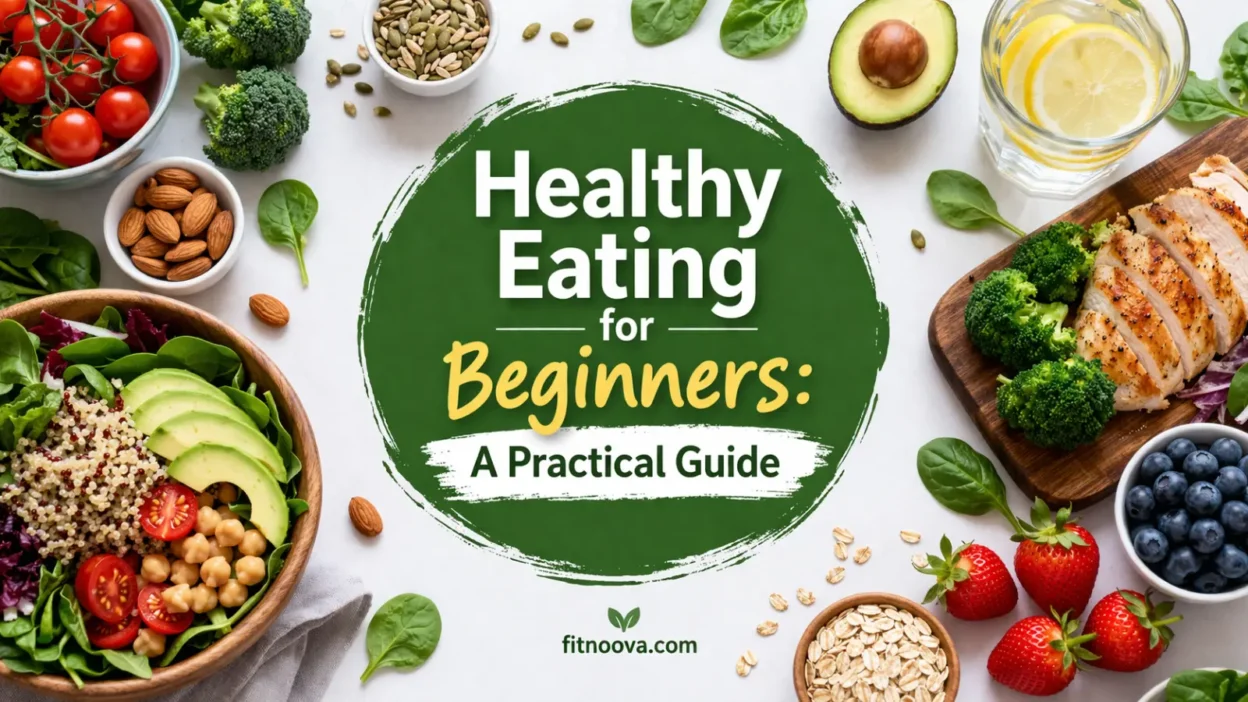
Healthy eating does not require a perfect diet, expensive groceries, or strict food rules. In simple terms, healthy eating means building most of your meals around foods that provide fiber, protein, healthy fats, vitamins, and minerals, while limiting foods and drinks that are high in added sugar, sodium, and saturated fat. Public-health guidance consistently points in the same direction: eat more vegetables, fruit, whole grains, beans, nuts, and other minimally processed foods, and rely less often on heavily processed foods and sugary drinks.
Quick Answer
Healthy eating means choosing a balanced mix of vegetables, fruit, whole grains, quality protein foods, and healthy fats most of the time. A practical way to do it is to make about half your plate vegetables and fruit, include a source of protein, choose whole grains more often than refined grains, and drink water regularly instead of sugary drinks.
What Healthy Eating Actually Means
A lot of people hear “healthy eating” and think it means cutting out favorite foods or following a rigid plan. That is not what strong nutrition guidance supports.
A healthy eating pattern is less about one “perfect” meal and more about what your overall routine looks like across days and weeks. It should give your body enough energy and nutrients, fit your culture and budget, and be realistic enough to keep doing. That is one reason reputable sources focus on patterns rather than “good” and “bad” foods.
In practice, healthy eating usually includes:
- plenty of vegetables and fruit
- whole grains more often than refined grains
- protein from a mix of beans, lentils, nuts, seeds, fish, eggs, dairy, soy foods, and lean meats
- healthy fats in reasonable amounts
- fewer sugary drinks and fewer foods high in added sugar, salt, and saturated fat
The Easiest Way to Build a Healthy Plate
If you want one simple starting point, use a plate method.
A strong beginner model is:
- Half your plate: vegetables and fruit
- One quarter: whole grains or other high-fiber starches
- One quarter: protein foods
- On the side: water, and a modest amount of healthy fat if needed
This works because it naturally improves fiber intake, helps with fullness, and makes meals more balanced without requiring calorie counting.
Examples of Balanced Meals
- Grilled chicken, brown rice, roasted broccoli, and berries
- Lentil soup with whole-grain toast and a side salad
- Greek yogurt with fruit, nuts, and oats
- Salmon, potatoes, green beans, and sliced oranges
- Tofu stir-fry with mixed vegetables and quinoa
You do not need every meal to look exactly the same. The goal is a useful pattern, not meal-by-meal perfection.
Foods to Eat More Often
Healthy eating is easier when you focus first on what to add, not just what to avoid.
Vegetables and Fruit
Vegetables and fruit are linked with better long-term health and are core parts of every major healthy eating pattern. They provide fiber, vitamins, minerals, and plant compounds that support overall health. WHO recommends at least 400 grams, or about five portions, of fruits and vegetables per day.
A practical goal is to include produce at two or three meals each day. Frozen and canned options can count too, especially when they are lower in added salt or sugar.
Whole Grains
Whole grains such as oats, brown rice, whole-wheat bread, barley, and quinoa usually offer more fiber and nutrients than refined grains. They also tend to have a gentler effect on blood sugar than highly refined grain products.
You do not have to switch everything at once. Start with one swap, like oatmeal instead of sugary cereal or brown rice instead of white rice a few times a week.
Protein Foods
Healthy eating includes enough protein, but it is also worth paying attention to protein quality and variety. Good options include beans, lentils, fish, eggs, yogurt, cottage cheese, tofu, tempeh, nuts, seeds, and lean poultry. Guidance from the American Heart Association also encourages shifting some protein intake toward plant sources and minimizing processed meats.
Healthy Fats
Fat is part of a healthy diet. The goal is not to avoid it, but to choose better sources more often. Useful options include nuts, seeds, avocado, and oils such as olive or canola oil. Public-health sources consistently recommend keeping saturated fat lower overall and avoiding trans fat.
What to Limit Without Becoming Overly Restrictive
Most healthy eating advice becomes clearer when you frame it as “less often” and “smaller amounts,” not “never again.”
Sugary Drinks
Sugary beverages are one of the easiest things to reduce because they add calories without much fullness or nutrition. Water is the simplest default. Unsweetened tea, coffee in moderation, and lower-sugar options can also fit depending on your needs and preferences.
Highly Processed Foods High in Salt, Sugar, and Saturated Fat
Not all processed foods are a problem. Some processed foods, like wholemeal bread, yogurt, canned beans, and frozen vegetables, can be useful parts of a healthy diet. The bigger issue is relying heavily on ultra-processed foods that are high in added sugar, salt, and unhealthy fats.
Too Much Sodium
Many people get more sodium than they realize, often from packaged foods, restaurant meals, sauces, and processed meats. Over time, excess sodium can raise blood pressure in many adults. Reading food labels and cooking at home more often can help.
How to Start Healthy Eating Without Overhauling Your Life
The best healthy eating plan is one you can actually keep doing.
Start with one or two changes like these:
1. Build One Better Breakfast
Try:
- eggs and fruit with whole-grain toast
- plain Greek yogurt with berries and oats
- oatmeal with peanut butter and banana
A balanced breakfast can make it easier to get fiber and protein earlier in the day.
2. Upgrade Your Lunch
A healthy lunch does not need to be fancy. Aim for protein, fiber, and produce.
Examples:
- turkey or hummus wrap with fruit
- rice bowl with beans, chicken, salsa, and vegetables
- leftovers from dinner with a side salad
3. Make Dinner Simpler
Pick one from each category:
- Protein: chicken, fish, tofu, beans, eggs
- Carb or grain: rice, potatoes, pasta, quinoa, whole-grain bread
- Vegetables: fresh, frozen, roasted, sautéed, or salad
- Healthy fat: olive oil, avocado, nuts, seeds
This creates structure without forcing a meal plan.
4. Keep Easy Staples at Home
Useful basics include:
- oats
- eggs
- canned beans or lentils
- tuna or salmon
- yogurt
- frozen vegetables
- fruit
- potatoes
- brown rice or whole-grain pasta
- nuts or nut butter
This makes healthy eating easier on busy days.
5. Drink Water More Often
A simple habit like carrying a water bottle or having water with meals can reduce automatic intake of soda, juice drinks, and other sweet beverages.
Healthy Eating on a Busy Schedule
Busy adults often do better with repeatable systems than with ambitious meal-prep plans.
Try this approach:
- choose two breakfasts you like
- choose two or three lunches you can rotate
- keep three quick dinners on hand
- wash and prep produce once or twice a week
- use frozen vegetables, canned beans, and bagged salads when needed
- cook extra portions for leftovers
Healthy eating gets more sustainable when convenience works in your favor instead of against you.
Healthy Eating on a Budget
A nutritious diet does not require specialty products or expensive “health” foods.
Budget-friendly staples include:
- beans and lentils
- eggs
- oats
- bananas
- potatoes
- peanut butter
- canned fish
- plain yogurt
- frozen fruit and vegetables
- store-brand whole grains
Buying in-season produce, using frozen options, and planning meals around overlapping ingredients can reduce waste and save money. MedlinePlus also notes that a healthy eating plan should fit your budget and preferences, which matters for real-life consistency.
How Healthy Eating Supports Weight Management
Healthy eating can support weight loss or weight maintenance, but it is better to think in terms of habits than quick fixes.
Eating patterns built around fiber-rich foods, adequate protein, and fewer sugary drinks can help with fullness and make calorie control easier without extreme restriction. Public-health sources also connect healthy eating patterns with lower risk of obesity, type 2 diabetes, and heart disease.
That said, healthy eating is not only about weight. It also supports energy, blood sugar control, heart health, digestion, and long-term health.
Common Mistakes That Make Healthy Eating Harder
Trying To Change Everything at Once
Large, sudden changes usually do not last. Start with one or two repeatable habits first.
Labeling Foods as Completely Off-Limits
Rigid rules can make eating feel stressful and harder to maintain. Most people do better with a flexible approach that leaves room for enjoyment.
Ignoring Protein and Fiber
Meals built mostly around refined carbs can leave you hungry soon after. A better balance often improves fullness and makes eating more steady.
Drinking Most of Your Sugar
Sweet drinks are easy to overlook, but they can add up quickly.
Expecting Every Meal To Be Perfect
Healthy eating is about your overall pattern. One restaurant meal, dessert, or convenience dinner does not undo a solid routine.
When Healthy Eating May Need More Personal Guidance
General healthy eating advice works for many adults, but some people need a more individualized approach. Talk with a qualified clinician or registered dietitian if you have diabetes, kidney disease, digestive disorders, food allergies, a history of disordered eating, or other medical concerns that affect what or how you eat.
That is not a sign that basic healthy eating advice failed. It just means your situation needs a more tailored plan.
FAQ
What is the healthiest way to eat every day?
For most adults, the healthiest way to eat every day is to base most meals on vegetables, fruit, whole grains, quality protein foods, and healthy fats, while limiting sugary drinks and foods high in added sugar, sodium, and saturated fat. Consistency matters more than eating perfectly.
Do I have to give up carbs to eat healthy?
No. Healthy eating includes carbohydrates. The more useful distinction is usually between higher-fiber, less-refined carbs and heavily refined options. Whole grains, beans, fruit, and starchy vegetables can all fit in a healthy diet.
Can healthy eating include processed foods?
Yes. Some processed foods can be practical and nutritious, such as canned beans, yogurt, frozen vegetables, and whole-grain bread. The main issue is eating a lot of highly processed foods that are high in salt, sugar, and saturated fat.
Is healthy eating expensive?
It can be, but it does not have to be. Many affordable staples support healthy eating, including oats, eggs, beans, potatoes, frozen produce, plain yogurt, and canned fish. A healthy plan should be realistic for your budget.
How long does it take to see benefits from healthy eating?
Some people notice better energy, digestion, or meal satisfaction fairly quickly, but long-term health benefits come from steady habits over time. Healthy eating is best viewed as an ongoing pattern, not a short-term reset.
Conclusion
Healthy eating is not about eating perfectly or following strict food rules. It is about building a pattern you can maintain: more vegetables and fruit, more whole grains, enough protein, better fat choices, more water, and fewer foods and drinks that crowd out nutrition. Start small, repeat what works, and let healthy eating become a normal part of your routine rather than a temporary fix.