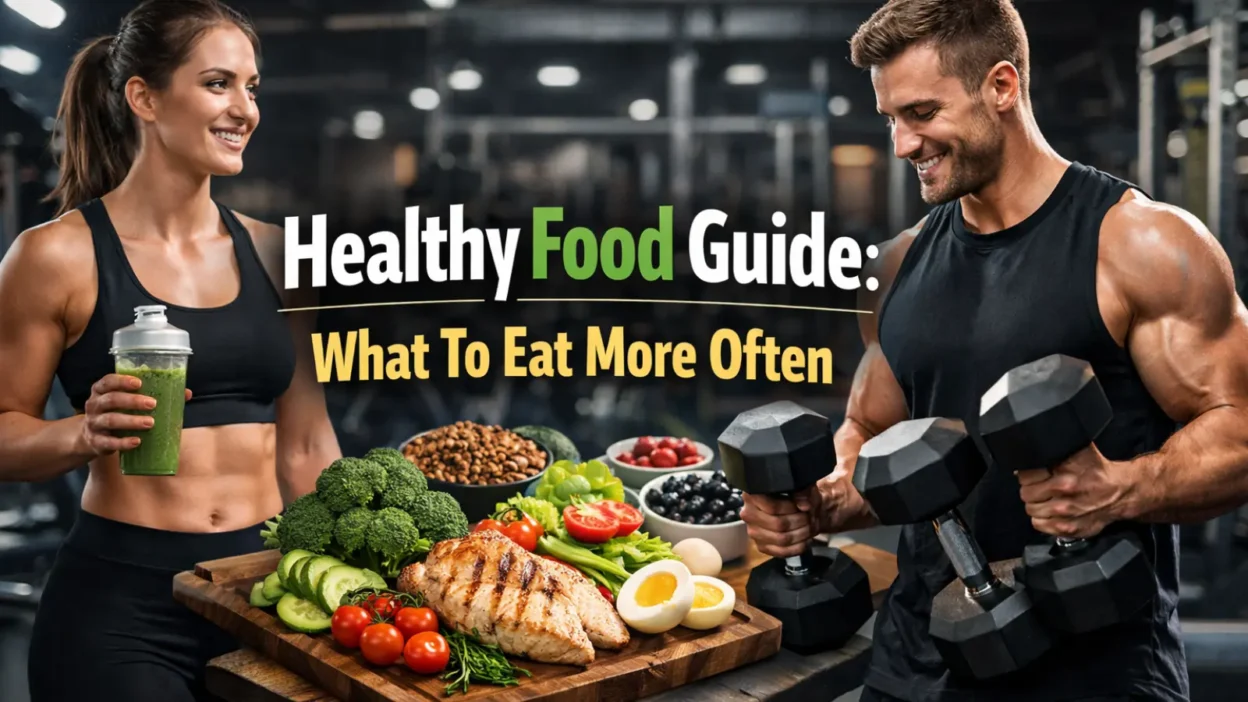
Healthy food is not one perfect list and it is not about eating “clean” all the time. In practical terms, healthy food usually means foods that give you useful nutrients without piling on large amounts of added sugar, sodium, saturated fat, or ultra-processed extras. A strong everyday pattern includes vegetables, fruits, whole grains, beans, lentils, nuts, seeds, quality protein foods, and dairy or fortified soy foods, with more meals built around minimally processed choices.
Quick Answer
Healthy food is food that helps meet your body’s needs for energy, protein, fiber, vitamins, minerals, and healthy fats without relying heavily on highly processed items, sugary drinks, or meals loaded with sodium and saturated fat. For most adults, the simplest approach is to eat a variety of foods from the major food groups, make more of your plate fruits and vegetables, choose whole grains more often, and use beans, fish, nuts, seeds, eggs, dairy, soy, or lean meats as regular protein sources.
What Counts As Healthy Food?
Healthy food is less about a single “superfood” and more about your overall eating pattern. Current public-health guidance consistently points to the same foundation: variety, balance, moderation, and a diet built mostly from minimally processed foods. That means your daily intake should lean toward vegetables, fruit, whole grains, legumes, nuts, seeds, and other nutrient-dense staples, while foods high in free sugars, sodium, and unhealthy fats stay in a smaller role.
A helpful way to think about it is this: healthy food gives you more of what your body needs and less of what tends to crowd out better choices. It should also be realistic. Healthy eating patterns can reflect culture, taste, schedule, and budget. They do not have to look the same from one person to the next to be healthy.
The Main Food Groups That Deserve Most Of Your Plate
Vegetables
Vegetables are one of the clearest building blocks of a healthy diet. They provide fiber, vitamins, minerals, and a lot of volume for relatively few calories. Fresh, frozen, and canned vegetables can all work well. The main thing is to prepare and choose them in ways that do not add a lot of sodium, butter, cream sauce, or sugar.
Fruit
Whole fruit is one of the easiest healthy foods to add because it is convenient, naturally sweet, and rich in nutrients. Fresh, frozen, canned, and dried fruit can all fit, though whole fruit is usually more filling than juice. If you buy canned fruit, look for fruit packed in water or its own juice rather than heavy syrup.
Whole Grains
Whole grains help round out a healthy eating pattern by adding fiber and other nutrients that refined grains often have less of. Good examples include oats, brown rice, whole-wheat bread, whole-grain pasta, quinoa, and popcorn. An easy rule is to check the ingredient list and look for “whole” or “whole grain” near the beginning.
Protein Foods
Healthy protein does not mean meat at every meal. Public-health guidance supports a mix of protein sources, including beans, peas, lentils, soy foods, nuts, seeds, eggs, seafood, poultry, and leaner cuts of meat when you eat meat. Shifting some meals toward plant proteins can make it easier to increase fiber and reduce saturated fat.
Dairy Or Fortified Soy Foods
Milk, yogurt, and fortified soy alternatives can be practical healthy foods because they provide protein, calcium, and other nutrients. Lower-fat or unsweetened options often make it easier to keep saturated fat and added sugar in check. This matters most in routine foods you eat often, like milk with cereal or yogurt as a snack.
Healthy Fats
Healthy food still includes fat. The better goal is choosing more unsaturated fats from foods such as nuts, seeds, avocado, and plant oils instead of leaning heavily on butter, fatty meats, and other major sources of saturated fat.
What Healthy Food Usually Looks Like In Real Life
A healthy meal does not need a complicated rulebook. One of the most practical starting points is the MyPlate idea: make half your plate fruits and vegetables, make at least some of your grains whole grains, include a protein food, and add dairy or a fortified soy option if it fits the meal. That framework is simple enough for beginners and flexible enough for busy adults.
Here are a few examples:
- Oatmeal with berries, chopped nuts, and plain yogurt
- A grain bowl with brown rice, roasted vegetables, beans, and avocado
- A turkey or hummus sandwich on whole-grain bread with fruit on the side
- Salmon, potatoes, and a big salad
- Stir-fry with tofu or chicken, mixed vegetables, and rice
- Greek yogurt with fruit and seeds for a quick snack
These meals are not “healthy” because they are trendy. They work because they combine useful nutrients, reasonable portions, and foods people can actually eat regularly. That is what makes a pattern sustainable.
Healthy Food Does Not Have To Be Expensive
A healthy diet can cost more in some situations, but it does not require specialty products. Frozen vegetables, canned beans, oats, potatoes, eggs, plain yogurt, canned tuna or salmon, peanut butter, brown rice, and seasonal fruit can all be budget-friendly staples. Canned and frozen produce count too, especially when you choose lower-sodium and no-added-sugar versions when possible.
Budget also gets easier when you buy foods you will actually use. A bag of spinach that spoils in the fridge is less helpful than frozen vegetables you can heat in minutes. Healthy food works best when convenience matches your life.
Foods To Limit More Often Than You Add
Healthy eating does not require banning foods forever. Still, several categories are worth keeping smaller in your routine:
- Sugary drinks and heavily sweetened coffee drinks
- Snacks and desserts with a lot of added sugar
- Packaged foods very high in sodium
- Foods high in saturated fat and trans fat
- Highly processed foods that crowd out more nutritious meals
This is not about fear. It is about proportion. When these foods take up too much space, it gets harder to eat enough fiber, vitamins, minerals, and quality protein.
How To Start Eating More Healthy Food Without Overhauling Everything
Big food changes often fail because they ask too much, too fast. Smaller changes usually last longer.
Start with one or two shifts such as:
- Add a fruit or vegetable to one meal you already eat every day
- Switch one refined grain to a whole grain you enjoy
- Replace one sugary drink each day with water or unsweetened tea
- Keep beans, eggs, yogurt, or tuna on hand for quick protein
- Build two easy dinners you can repeat during busy weeks
- Read labels on packaged foods and compare sodium and added sugar
Small changes matter over time, and that steady approach lines up well with current nutrition guidance.
Common Mistakes People Make With Healthy Food
Treating One Food As A Fix-All
No single food makes your diet healthy on its own. Kale, salmon, oats, and berries are all useful foods, but the bigger issue is your usual pattern across the week.
Cutting Out Too Much At Once
Strict rules can backfire, especially for beginners. A better approach is to improve the base of your meals first rather than trying to eliminate every less-nutritious food overnight.
Assuming “Natural” Means Healthy
Words like natural, low-carb, gluten-free, or organic do not automatically make a product nutritious. It still helps to check the label and ingredient list, especially for added sugar, sodium, and saturated fat.
Forgetting Convenience Matters
A healthy plan that takes too much time will not always survive a busy schedule. Keep at least a few low-effort staples at home so healthy food stays practical on normal weekdays.
When “Healthy Food” Needs A More Individual Approach
General healthy eating advice works for many adults, but some people need more tailored guidance. That includes people with diabetes, kidney disease, digestive disorders, food allergies, eating disorders, pregnancy-related nutrition needs, or medically required dietary restrictions. In those cases, a doctor or registered dietitian can help turn broad advice into something safer and more specific.
FAQ
What Is The Healthiest Food To Eat Every Day?
There is no single healthiest food. A healthier daily pattern usually includes vegetables, fruit, whole grains, protein foods, and dairy or fortified soy foods, with most meals built around minimally processed choices.
Can Healthy Food Help With Weight Management?
It can support weight management because foods like vegetables, fruit, beans, whole grains, and protein-rich foods can be more filling and more nutrient-dense than heavily processed alternatives. But healthy eating is not a guarantee of weight loss, and calorie intake, activity, sleep, stress, medications, and medical conditions also matter.
Are Frozen And Canned Foods Still Healthy?
Yes. Frozen vegetables, frozen fruit, canned beans, canned fish, and some canned vegetables can all fit well. It helps to look for options with less added sugar and lower sodium when possible.
Do I Need To Stop Eating Processed Food Completely?
No. The more practical goal is to rely more on minimally processed foods and keep highly processed items in a smaller role. Healthy eating patterns are built over time, not from perfection.
Is Healthy Food The Same For Everyone?
The basic principles are similar, but the exact foods can vary based on culture, age, budget, preferences, activity level, and health needs. A healthy pattern should fit your real life, not fight it.
Conclusion
Healthy food is not about finding perfect foods or following rigid rules. It is about building most meals from vegetables, fruits, whole grains, protein foods, and other minimally processed staples, then keeping added sugar, sodium, and heavily processed foods in a smaller place. If you want the simplest starting point, make half your plate fruits and vegetables, choose whole grains more often, include a satisfying protein source, and repeat that pattern consistently.