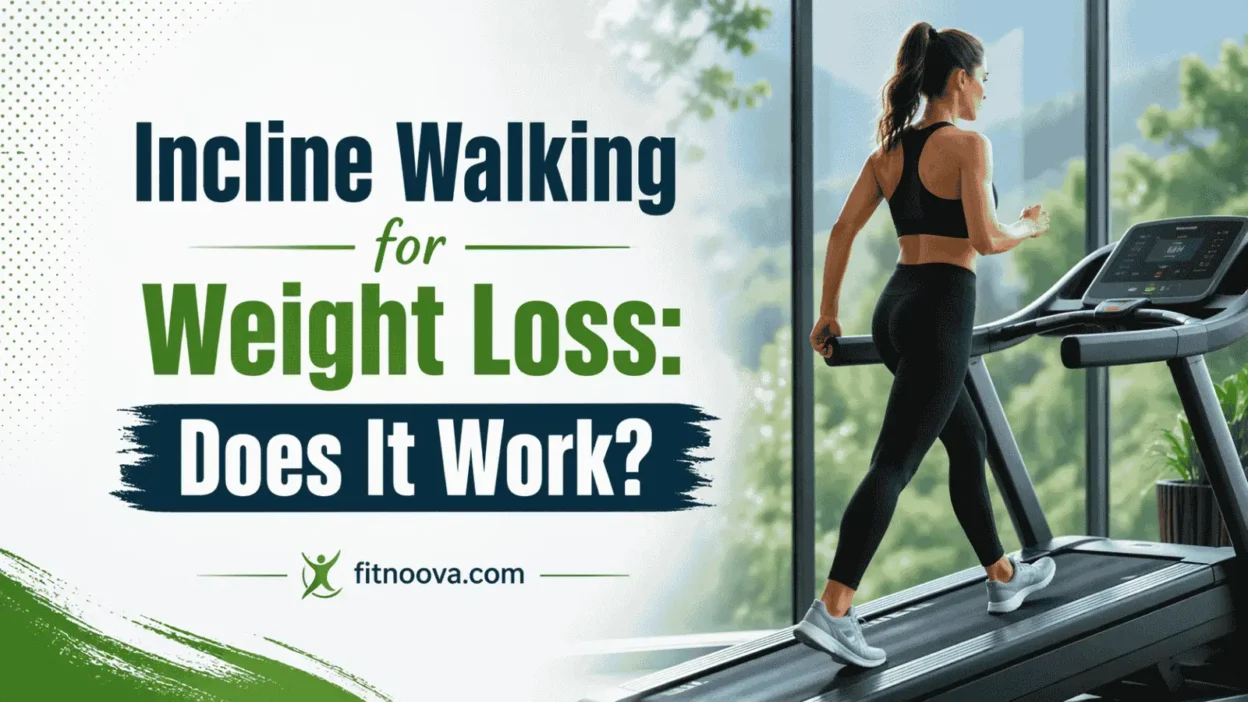
Incline walking for weight loss can work well, especially for beginners, people who want lower-impact cardio, and anyone who needs a routine they can actually stick with. Walking uphill raises the effort level without requiring running, which can help you burn more energy, build fitness, and make your cardio sessions more productive when paired with sustainable eating habits. Health guidelines still matter here: adults should aim for at least 150 minutes of moderate activity per week, and evidence suggests that getting to or beyond that range is more helpful for body-fat and waist changes than doing very small amounts of cardio.
Quick Answer
Yes, incline walking can support weight loss because it makes walking more demanding than flat walking while staying accessible for many people. It is most effective when you do it consistently, keep the intensity moderate to challenging, and combine it with habits that support a calorie deficit over time.
Why Incline Walking Helps With Weight Loss
The main reason incline walking helps is simple: the hill changes the workload. When the treadmill grade goes up or you walk uphill outdoors, your heart rate and breathing rise, and the work shifts more toward your glutes, calves, and hamstrings than easy flat walking. That usually means a harder session without the impact of jogging. Walking is also a legitimate form of moderate exercise, and public-health guidance recognizes brisk walking as a meaningful way to improve health and support weight management.
That does not mean incline walking is magic. It is still one tool. Weight loss usually comes from the combination of regular activity, nutrition, sleep, and consistency. Exercise helps, but it rarely overpowers an eating pattern that keeps calories too high. The useful part of incline walking is that many people can recover from it well enough to repeat it several times per week, which matters more than one brutally hard workout. Evidence from a recent dose-response meta-analysis found that aerobic exercise produced modest changes at lower doses, while programs at or above 150 minutes per week at moderate intensity were more likely to produce clinically meaningful reductions in waist size and body fat.
Is Incline Walking Better Than Flat Walking?
For weight loss support, incline walking is often more time-efficient than casual flat walking because the same session feels harder and typically demands more from your cardiovascular system and lower body. That said, “better” depends on what you can do regularly.
Flat walking may be the smarter starting point if:
- you are very new to exercise
- you get calf, Achilles, or foot discomfort easily
- you are returning after time off
- your balance feels shaky on a treadmill
Incline walking may be the better choice if:
- flat walking no longer feels challenging
- you want harder cardio without running
- you prefer shorter, more focused treadmill sessions
- you tolerate uphill work well
The best option is the one you can repeat week after week. A lower-intensity plan you actually follow beats an aggressive setup that leaves you too sore to come back.
How Hard Should Incline Walking Feel?
Most of your incline walking for weight loss should feel like moderate intensity. A simple way to judge that is the talk test: you should be able to talk, but not sing. If you can only get out a few words at a time, you have probably drifted into vigorous intensity.
For beginners, that usually means resisting the urge to crank the incline too fast. A useful session is one you can control with good posture, steady breathing, and a normal walking stride. Hanging on to the treadmill rails, leaning forward from the waist, or taking tiny panicked steps usually means the setting is too aggressive.
Best Incline and Speed for Beginners
There is no single perfect treadmill number. The best incline is the one that makes the walk meaningfully harder while still looking and feeling like walking.
A good beginner range is:
- incline: about 3% to 8%
- speed: whatever lets you walk briskly with control, often around 2.5 to 3.5 mph
From there, progress one variable at a time. Raise the incline a little, or add a few minutes, or walk slightly faster. Do not increase everything at once.
A common mistake is copying a social-media treadmill workout before building the base to handle it. Popular formats can be fine, but only if the intensity fits your current fitness and your joints tolerate it.
A Simple Incline Walking Routine for Weight Loss
Here is a beginner-friendly template that works well for many people.
Week 1 to 2
- Warm up for 5 minutes on a flat or gentle incline
- Walk 15 to 20 minutes at a moderate effort
- Use a small incline, such as 3% to 5%
- Cool down for 3 to 5 minutes
Do this 3 times per week.
Week 3 to 4
- Warm up for 5 minutes
- Walk 20 to 30 minutes
- Use 4% to 6% incline for most of the session
- Cool down for 3 to 5 minutes
Do this 3 to 4 times per week.
Week 5 and Beyond
Once that feels manageable, progress in one of these ways:
- add 5 minutes to the session
- increase incline by 1% to 2%
- keep one session easy and make one session more challenging
- build toward 150 minutes per week total across your walks and other cardio
If your main goal is fat loss, this is a good weekly target:
- 3 to 5 incline walking sessions
- 20 to 45 minutes each
- 1 to 2 strength-training days alongside it
That combination usually works better than doing cardio alone because strength training helps preserve lean mass while dieting, and public-health guidance recommends muscle-strengthening work at least twice per week.
How Often Should You Do Incline Walking for Weight Loss?
For most beginners, 3 to 4 sessions per week is enough to make progress without beating up your calves or feet. More is not automatically better.
A practical range looks like this:
- 2 to 3 days per week: good starting point if you are new
- 3 to 5 days per week: strong range for many people trying to lose weight
- Daily incline walking: possible for some, but only if intensity is managed and recovery is good
If you want to walk most days, keep some sessions easier. Not every walk needs to feel like a test.
How Long Should Each Session Be?
That depends on your fitness, recovery, and schedule. For beginners, 20 to 30 minutes is often enough. Over time, 30 to 45 minutes can be a strong working range. Across the week, aim to build toward at least 150 minutes of moderate activity, and know that higher weekly volumes may help more with body-fat reduction than very low volumes.
Longer is not always better if the quality drops. A focused 25-minute incline walk you can recover from is more useful than a sloppy 50-minute grind with aching calves and poor form.
What to Eat If You Are Using Incline Walking to Lose Weight
Incline walking helps create energy expenditure, but your eating pattern still does much of the heavy lifting for fat loss. The goal is not to “earn” food with exercise. It is to pair regular activity with meals that make a moderate calorie deficit realistic.
A few habits tend to help:
- center meals around protein, produce, and high-fiber foods
- avoid turning every workout into a reason to over-snack
- watch liquid calories
- keep weekend eating from wiping out weekday consistency
- get enough sleep, since poor sleep can make hunger and adherence harder
You do not need a perfect diet. You need one you can follow long enough for the walking to matter.
Mistakes That Make Incline Walking Less Effective
Going Too Steep Too Soon
A high incline can feel impressive, but it is not better if it wrecks your form or leaves you limping. Start with manageable grades and earn the harder settings.
Holding the Rails
Light contact for balance is one thing. Leaning your weight into the rails is another. That changes the work and can make the treadmill setting look harder than it really is.
Treating Every Session Like HIIT
Most people lose consistency when every workout feels punishing. A moderate, repeatable effort is usually the better bet.
Ignoring Strength Training
If body composition is the goal, cardio alone is not the full answer. Two weekly strength sessions can improve the overall plan.
Assuming Sweat Equals Fat Loss
You may sweat more on an incline, but sweat is not body-fat loss. It mostly reflects heat and fluid loss, not the quality of your fat-loss plan.
Skipping Recovery Signals
Tight calves after a new uphill routine are common. Sharp pain, worsening joint pain, chest pain, or sudden dizziness are not things to push through. Chest pain should be taken seriously, and symptoms that feel unusual or severe warrant medical attention.
When to Modify, Slow Down, or Get Medical Guidance
Incline walking is often lower impact than running, but it is not automatically easy on everyone. You may need to modify the plan if you have:
- recent foot, ankle, calf, or Achilles issues
- knee pain that worsens with hills
- balance limitations
- heart, lung, or metabolic conditions that affect exercise tolerance
It is wise to start more gradually or check with a clinician before ramping up if you are new to exercise and have significant medical risk factors. During sessions, back off if you notice chest pain, unusual shortness of breath, dizziness, or pain that changes your gait.
FAQ
Can incline walking reduce belly fat?
Incline walking can help reduce overall body fat, and that may include fat around the waist over time, but it does not specifically burn belly fat on command. The broader evidence on aerobic exercise suggests waist size and body-fat measures improve as weekly exercise volume increases, especially at or above about 150 minutes per week.
Is incline walking better than running for weight loss?
Not automatically. Running can burn more energy per minute for many people, but incline walking is often easier to recover from and may be more sustainable. If incline walking lets you train more consistently and with fewer aches, it can be the better choice for you.
What incline should I use for fat loss?
Use an incline that raises your effort while still allowing good walking form. For many beginners, 3% to 8% is a sensible starting range. The best setting is not the steepest one. It is the one you can use consistently without hanging on or overstriding.
How many calories does incline walking burn?
That varies with body size, speed, incline, duration, and fitness level. Rather than chasing a treadmill number, it is smarter to focus on session quality, weekly consistency, and whether your overall routine supports a calorie deficit.
Can I do incline walking every day?
Some people can, but daily hard incline sessions are not necessary. Many beginners do better with 3 to 5 sessions per week and at least some easier days. Recovery matters if you want the routine to last.
Does incline walking build muscle?
It can challenge the glutes, calves, and hamstrings more than easy flat walking, but it is still mainly cardio. It can support lower-body endurance and help you keep active, but it will not replace a well-designed strength-training program.
The Bottom Line on Incline Walking for Weight Loss
Incline walking for weight loss is a solid option because it raises the challenge of a basic walk without forcing you into running. For most people, the winning formula is not an extreme incline or a trendy treadmill number. It is a manageable uphill walking routine done often enough, hard enough, and long enough to support your weekly activity target, while your eating habits make fat loss possible in the background.