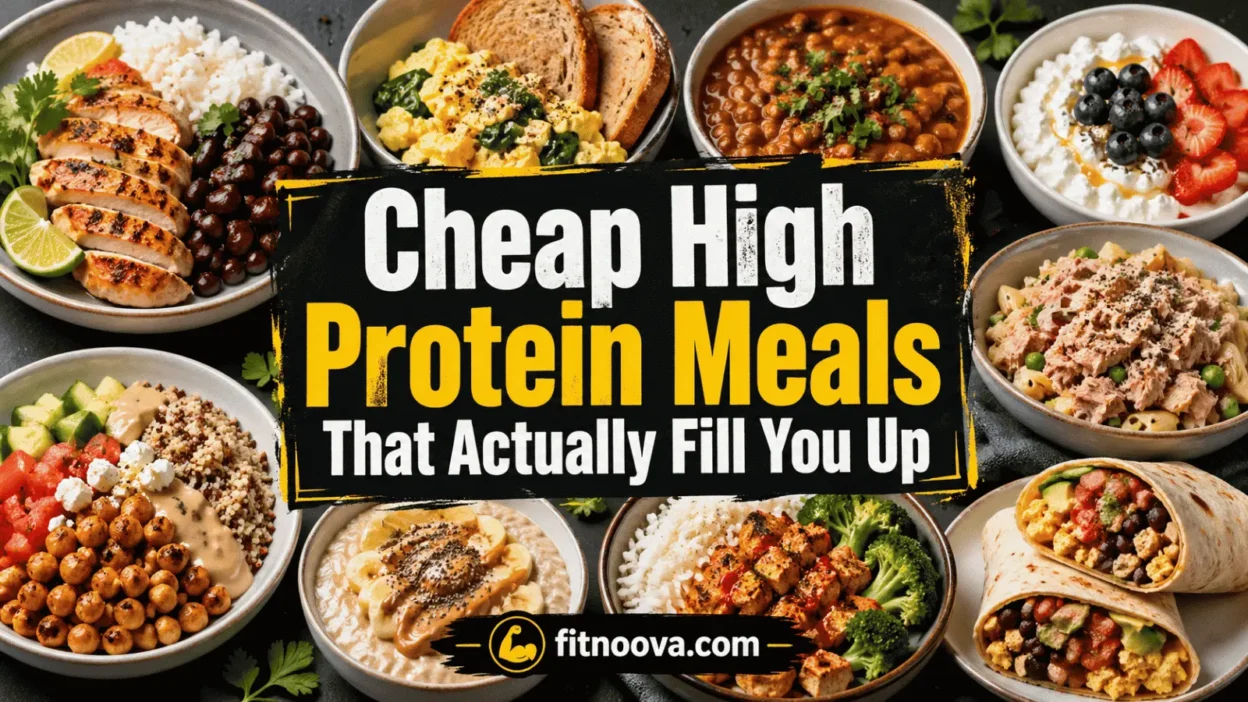
Eating more protein does not have to mean buying expensive shakes, meal delivery boxes, or premium cuts of meat. The best cheap high protein meals usually come from simple staples: eggs, beans, lentils, canned fish, chicken thighs, tofu, Greek yogurt, cottage cheese, frozen vegetables, rice, oats, and potatoes.
The key is building meals around affordable protein first, then adding fiber-rich carbs, vegetables, and enough fat or sauce to make the meal satisfying. That approach works whether you are trying to support strength training, manage hunger while losing weight, or simply eat more balanced meals on a tight grocery budget.
Quick Answer
Cheap high protein meals are easiest to make when you pair one low-cost protein source with an inexpensive carb and a vegetable. Good examples include lentil chili, egg-and-bean breakfast burritos, tuna rice bowls, Greek yogurt oats, chicken thigh meal prep bowls, tofu stir-fry, cottage cheese toast, and bean-based soups. For most healthy adults, protein needs vary by body size, activity level, age, and health status, so use these meals as practical building blocks rather than a strict prescription.
What Counts As A Cheap High Protein Meal?
A cheap high protein meal does three things well:
It gives you a meaningful serving of protein, uses ingredients that are easy to find, and keeps you full without relying on expensive specialty foods.
For most everyday meals, a useful target is around 20 to 35 grams of protein per meal, depending on your body size, appetite, training routine, and total daily needs. That range is not a rule, but it is a practical starting point for many adults who want meals that feel more filling.
Affordable protein foods include:
- Eggs
- Dry or canned beans
- Lentils
- Split peas
- Canned tuna or salmon
- Chicken thighs or drumsticks
- Ground turkey or lean ground beef when on sale
- Tofu or tempeh
- Greek yogurt
- Cottage cheese
- Milk
- Peanut butter
- Edamame
- Sardines
- Frozen fish
- Protein-rich grains such as oats and quinoa, when they fit the budget
The USDA’s MyPlate guidance encourages choosing a variety of protein foods, including seafood, lean meats, poultry, eggs, beans, peas, lentils, nuts, seeds, and soy products. That variety matters because a budget-friendly diet should still cover more than protein alone.
The Best Budget Protein Sources To Build Meals Around
Eggs
Eggs are one of the most flexible cheap protein foods. They work for breakfast, lunch, dinner, snacks, and meal prep.
Use them in:
- Breakfast burritos with beans
- Egg fried rice
- Egg salad sandwiches
- Frittatas with frozen vegetables
- Shakshuka-style eggs with canned tomatoes
- Boiled egg snack boxes
A good budget move is to stretch eggs with beans, potatoes, rice, or vegetables instead of making eggs the entire meal.
Lentils
Lentils are one of the strongest cheap high protein meal ingredients because they cook faster than many dry beans and do not require soaking. A cup of cooked lentils provides a meaningful amount of plant protein along with fiber, which helps meals feel more filling. USDA FoodData Central is a reliable source for checking the nutrient values of staples like lentils, beans, eggs, chicken, and dairy.
Use lentils in:
- Lentil chili
- Lentil soup
- Lentil curry
- Lentil taco filling
- Lentil pasta sauce
- Lentil sloppy joes
Beans
Beans are inexpensive, filling, and easy to use in large batches. Dry beans are usually the cheapest option, but canned beans are still useful when time is limited.
Good meal ideas include:
- Black bean rice bowls
- White bean soup
- Bean and cheese quesadillas
- Chickpea salad sandwiches
- Pinto bean tacos
- Three-bean chili
Rinsing canned beans can improve flavor and reduce some of the sodium from the canning liquid.
Canned Tuna, Salmon, And Sardines
Canned fish can be a strong budget protein option, especially when bought on sale. Tuna rice bowls, salmon patties, sardine toast, and tuna pasta salad are all fast, inexpensive meals.
One safety note: fish is nutritious, but some types contain more mercury than others. The FDA and EPA provide fish guidance, especially for pregnant people, people who may become pregnant, breastfeeding parents, and children. Canned light tuna is generally listed as a lower-mercury choice than albacore tuna, but portions and frequency still matter.
Chicken Thighs And Drumsticks
Chicken breast often gets treated as the default fitness food, but thighs and drumsticks are usually cheaper and more forgiving to cook. They work well for meal prep because they stay tender after reheating.
Use them in:
- Chicken rice bowls
- Sheet-pan chicken and potatoes
- Chicken tacos
- Chicken soup
- Chicken and frozen vegetable stir-fry
- BBQ chicken sandwiches
Remove the skin if you want a leaner meal, or keep it if it helps the meal fit your calories, budget, and preferences.
Greek Yogurt And Cottage Cheese
Greek yogurt and cottage cheese are helpful because they require no cooking. They work for quick breakfasts, snacks, sauces, and higher-protein desserts.
Try:
- Greek yogurt with oats and frozen berries
- Cottage cheese toast
- Yogurt ranch dip with vegetables
- Greek yogurt tuna salad
- Cottage cheese bowls with fruit
- Yogurt-based sauce for rice bowls or wraps
Choose plain versions most of the time if you want more control over added sugar.
Tofu
Tofu is often cheaper than meat per serving, especially at Asian markets or larger grocery stores. It absorbs flavor well, cooks quickly, and works in many meal styles.
Use tofu in:
- Tofu scramble
- Tofu fried rice
- Tofu stir-fry
- Crispy tofu bowls
- Tofu curry
- Tofu tacos
Pressing tofu helps it brown better, but you can still make a good meal without pressing it when time is tight.
15 Cheap High Protein Meals For Busy Weeks
1. Lentil Chili
Lentil chili is one of the best cheap high protein meals because it uses pantry staples and scales easily.
Use lentils, canned tomatoes, beans, onion, chili powder, garlic, and frozen corn. Serve it with rice, a baked potato, or a small amount of shredded cheese. Make a large pot and freeze leftovers in single portions.
2. Egg And Bean Breakfast Burritos
Scramble eggs with black beans, salsa, and a little cheese, then wrap everything in tortillas. Add sautéed peppers or frozen spinach if you have them.
These freeze well. Wrap each burrito tightly, then reheat in a skillet, microwave, or air fryer.
3. Tuna Rice Bowl
Mix canned tuna with rice, cucumber, shredded carrots, soy sauce, hot sauce, and a spoonful of Greek yogurt or light mayo. Add seaweed, sesame seeds, or avocado if they fit your budget.
This is a strong no-fuss lunch because it uses mostly shelf-stable ingredients.
4. Greek Yogurt Overnight Oats
Combine oats, Greek yogurt, milk, frozen berries, and peanut butter or chia seeds. Refrigerate overnight.
This meal is inexpensive, portable, and easy to adjust. Add more yogurt for more protein or more oats if you need a larger breakfast.
5. Chicken Thigh Rice Bowls
Bake chicken thighs with a simple seasoning blend, then serve with rice, frozen vegetables, and sauce. Salsa, teriyaki sauce, yogurt garlic sauce, or hot sauce all work.
Cook the rice and chicken in batches so weekday meals take only a few minutes to assemble.
6. Tofu Fried Rice
Use leftover rice, tofu, frozen peas and carrots, eggs if desired, soy sauce, garlic, and a small amount of oil. Crumble or cube the tofu and cook it until lightly browned before adding the rice.
This is a good way to turn leftovers into a complete meal instead of ordering takeout.
7. Cottage Cheese Toast
Top toast with cottage cheese, sliced tomato, pepper, and everything bagel seasoning. For a sweeter version, use banana, cinnamon, and a drizzle of peanut butter.
Pair it with fruit or vegetables if you need a larger meal.
8. Chickpea Salad Sandwiches
Mash chickpeas with Greek yogurt or mayo, mustard, diced celery, onion, lemon juice, salt, and pepper. Serve on whole-grain bread or in a wrap.
It has the feel of tuna salad but uses a cheaper pantry staple.
9. Turkey Or Bean Taco Bowls
Use ground turkey when it is on sale, or make the bowl fully plant-based with pinto beans or black beans. Add rice, lettuce, salsa, corn, and a little cheese.
The cheapest version is usually beans and rice with taco seasoning, but adding turkey can raise the protein if your budget allows.
10. White Bean And Chicken Soup
Combine white beans, leftover chicken, broth, carrots, celery, onion, garlic, and spinach or kale. Simmer until the vegetables are tender.
This meal is especially useful when you have a small amount of chicken left and want to stretch it into several servings.
11. Peanut Butter Banana Protein Oats
Cook oats with milk, then stir in peanut butter and top with banana. For more protein, add Greek yogurt after cooking or serve the oats with eggs on the side.
Peanut butter is calorie-dense, so measure it if you are managing calories closely.
12. Salmon Patties With Potatoes
Mix canned salmon with egg, breadcrumbs or oats, mustard, and seasoning. Pan-cook into patties and serve with potatoes and vegetables.
This is a practical way to use canned fish in a more dinner-like meal.
13. Bean And Cheese Quesadillas
Fill tortillas with mashed beans and cheese, then cook in a skillet until crisp. Serve with salsa and a side of vegetables.
Use just enough cheese for flavor and structure; the beans do most of the budget-friendly work.
14. Edamame Noodle Bowl
Pair frozen edamame with noodles, shredded cabbage or frozen vegetables, and a simple peanut-soy sauce. Add tofu if you want more protein.
Frozen edamame is not always the cheapest option in every store, but it can be a strong value when bought in larger bags.
15. Baked Potato With Chili Beans
Top a baked potato with chili-style beans, Greek yogurt, salsa, and green onions. This meal is cheap, filling, and easy to make in batches.
It is also a good example of how a high protein meal does not need to be low-carb to be useful.
How To Build Cheap High Protein Meals Without A Recipe
Use this simple formula:
Protein + Carb + Vegetable + Flavor
That might look like:
- Eggs + potatoes + spinach + salsa
- Lentils + rice + frozen broccoli + curry sauce
- Tuna + pasta + peas + Greek yogurt dressing
- Chicken thighs + rice + cabbage + hot sauce
- Tofu + noodles + frozen vegetables + soy garlic sauce
- Beans + tortillas + lettuce + salsa
This formula keeps meals flexible. You do not need a new recipe every night; you need a few repeatable combinations that fit your schedule and grocery budget.
How Much Protein Do You Actually Need?
Protein needs are individual. The Recommended Dietary Allowance for healthy adults is commonly listed as 0.8 grams of protein per kilogram of body weight per day, which is a baseline amount for general health, not necessarily an ideal target for every goal or activity level. People who strength train, older adults, people dieting, and people with certain medical conditions may need different guidance.
A practical approach is to spread protein across the day instead of saving most of it for dinner. For many people, that means including a protein source at breakfast, lunch, and dinner, then using snacks only if needed.
Talk with a qualified healthcare professional or registered dietitian if you have kidney disease, liver disease, a history of disordered eating, are pregnant, are breastfeeding, take medications that affect nutrition needs, or have been told to follow a specific medical diet.
Budget Grocery List For High Protein Meals
A useful high protein grocery list does not need to be complicated.
Pantry Staples
- Dry lentils
- Dry or canned beans
- Canned tuna, salmon, or sardines
- Rice
- Oats
- Pasta
- Tortillas
- Peanut butter
- Canned tomatoes
- Broth or bouillon
- Salsa
- Spices and seasoning blends
Fridge Staples
- Eggs
- Greek yogurt
- Cottage cheese
- Milk
- Cheese
- Tofu
- Chicken thighs or drumsticks
- Ground turkey, when on sale
Freezer Staples
- Frozen vegetables
- Frozen berries
- Frozen edamame
- Frozen fish, when affordable
- Batch-cooked chili, soup, or burritos
Frozen produce is especially useful because it reduces waste. You can use exactly what you need and keep the rest for later.
Meal Prep Tips That Keep Costs Down
Cook One Protein In Bulk
Make one large batch of lentils, beans, chicken, tofu, or chili. Use it in different meals throughout the week so you do not feel like you are eating the same plate every day.
For example, one pot of lentils can become chili, taco filling, rice bowls, and soup.
Use Meat As Part Of The Meal, Not The Whole Meal
You do not have to remove meat to save money, but it helps to stretch it. Combine chicken, turkey, or beef with beans, lentils, rice, potatoes, or vegetables.
This keeps protein high while lowering the cost per serving.
Buy Store Brands
Store-brand oats, beans, rice, yogurt, frozen vegetables, and canned fish often taste similar to name-brand versions and cost less.
Repeat Breakfast And Lunch
Variety is useful, but trying to reinvent every meal gets expensive. Many people save money by keeping breakfast and lunch simple, then adding more variety at dinner.
Keep Two Emergency Meals On Hand
Budget eating falls apart when there is nothing quick available. Keep a few backup meals ready, such as tuna rice bowls, bean quesadillas, eggs and toast, or frozen chili.
Common Mistakes To Avoid
Chasing Protein While Ignoring Fiber
A meal can be high in protein and still leave you hungry if it lacks fiber or volume. Beans, lentils, vegetables, oats, potatoes, fruit, and whole grains help make meals more satisfying.
Buying Too Many Specialty Protein Products
Protein bars, shakes, chips, cereals, and desserts can be convenient, but they are often more expensive than basic foods. They can fit occasionally, but they should not be the backbone of a cheap high protein meal plan.
Making Meals Too Plain
Plain chicken and rice may be cheap, but it gets old fast. Sauces, spices, salsa, vinegar, mustard, garlic, lemon juice, and hot sauce make budget meals easier to stick with.
Forgetting About Food Safety
Meal prep only helps if the food stays safe to eat. Refrigerate cooked food promptly, store leftovers in sealed containers, and reheat meals thoroughly. When in doubt, follow current food-safety guidance from reputable public-health sources.
Treating More Protein As Automatically Better
Protein is important, but it is not the only thing that matters. A good diet still needs enough calories, carbohydrates, fats, fiber, vitamins, minerals, and fluids. More protein is not automatically better for every person or every health condition.
FAQ
What is the cheapest way to eat high protein?
The cheapest way is usually to build meals around eggs, dry beans, lentils, canned fish, tofu, oats, Greek yogurt, cottage cheese, and chicken thighs when they are on sale. Dry beans and lentils are often the lowest-cost options per serving, while eggs and dairy are useful because they require little prep.
Can I eat high protein meals without meat?
Yes. Lentils, beans, tofu, tempeh, edamame, Greek yogurt, cottage cheese, eggs, milk, and some whole grains can all help build high protein meals without relying on meat. Plant-based meals are often more filling when you combine legumes with grains, vegetables, and flavorful sauces.
Are cheap high protein meals good for weight loss?
They can support weight loss if they help you stay full while keeping your overall calorie intake appropriate for your needs. Protein can be helpful for satiety, but weight loss still depends on the bigger pattern of eating, activity, sleep, stress, and consistency. Avoid extreme restriction or cutting out entire food groups unless medically directed.
How can I get more protein at breakfast on a budget?
Use eggs, Greek yogurt, cottage cheese, milk, oats, peanut butter, beans, or tofu. Good budget breakfasts include Greek yogurt oats, egg-and-bean burritos, cottage cheese toast, tofu scramble, and oatmeal made with milk plus a side of eggs.
Is canned tuna a good cheap protein?
Canned tuna can be a convenient and affordable protein source, but it should not be your only protein. Vary it with beans, eggs, yogurt, chicken, tofu, and other fish. People who are pregnant, may become pregnant, breastfeeding, or feeding young children should pay close attention to FDA and EPA fish guidance because mercury levels vary by fish type.
How do I make high protein meals taste better without spending much?
Use low-cost flavor builders: garlic, onion, chili powder, curry powder, soy sauce, mustard, vinegar, salsa, hot sauce, lemon juice, bouillon, and dried herbs. A simple sauce can make beans, tofu, eggs, rice, or chicken taste like a completely different meal.
Conclusion
Cheap high protein meals work best when they are simple, repeatable, and built from affordable staples. Start with a protein source like eggs, lentils, beans, tuna, tofu, Greek yogurt, cottage cheese, or chicken thighs, then add a filling carb, vegetables, and enough flavor to make the meal satisfying.
You do not need an expensive grocery list to eat more protein. You need a few reliable meals, a realistic shopping routine, and ingredients you will actually use.