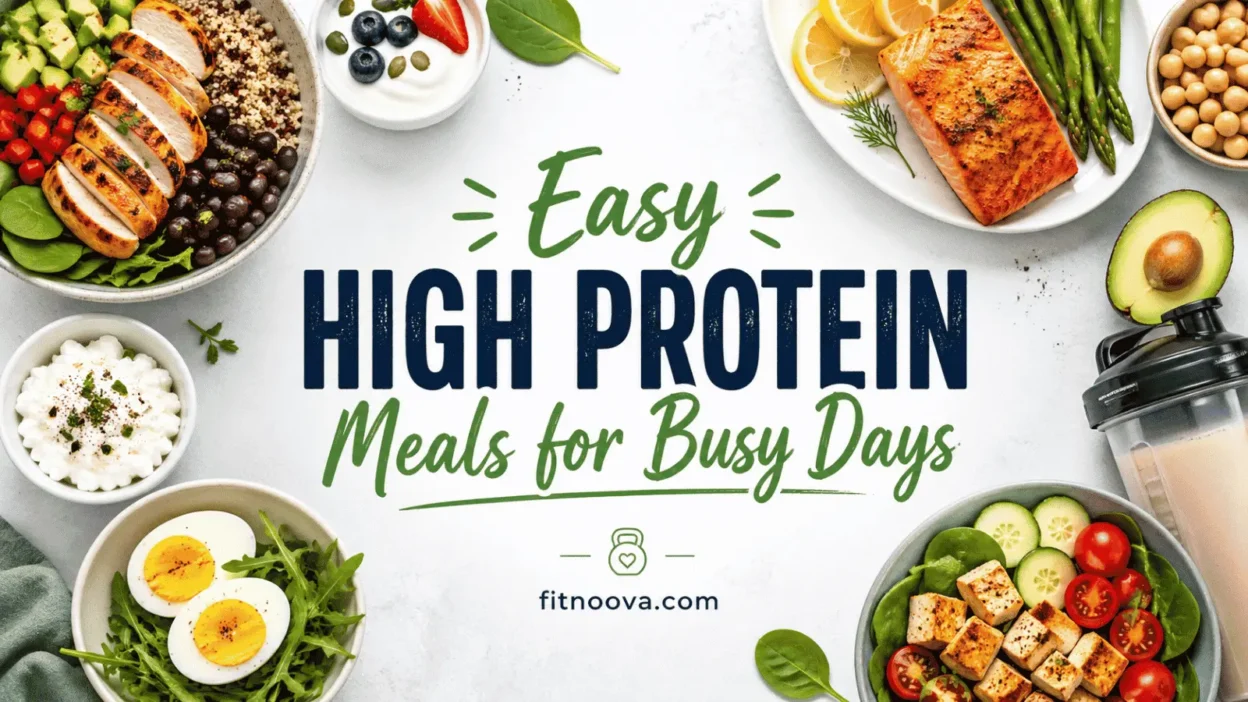
Easy high protein meals do not have to mean dry chicken, expensive powders, or complicated meal prep. For most busy adults, the best options are simple meals built around familiar protein sources—eggs, Greek yogurt, chicken, fish, lean meat, tofu, beans, lentils, cottage cheese, or protein-rich grains—then rounded out with fiber-rich carbs, vegetables, and healthy fats.
The goal is not to eat as much protein as possible. It is to get enough protein consistently while still eating balanced, satisfying meals you can actually repeat.
Quick Answer
Easy high protein meals usually include one clear protein source, one fiber-rich carbohydrate, and vegetables or fruit. A practical target for many adults is about 25 to 40 grams of protein per meal, though individual needs vary by body size, activity level, age, health status, and fitness goals. The official adult protein RDA is 0.8 grams per kilogram of body weight per day, while active people and strength-training adults may need more.
What Counts As A High Protein Meal?
A high protein meal is one that provides a meaningful portion of your daily protein needs without crowding out the rest of your nutrition. For many everyday meals, that means roughly 25 grams of protein or more.
That number is not a medical rule. It is a useful cooking benchmark. A smaller person with lower calorie needs may do well with less at some meals. A larger, highly active person may need more.
For context, the FDA Daily Value for protein is 50 grams per day on a 2,000-calorie diet, while the adult RDA is 0.8 grams per kilogram of body weight per day. Those are general reference points, not personalized targets.
A balanced high protein meal usually has:
- A main protein: eggs, poultry, fish, lean beef, tofu, tempeh, Greek yogurt, cottage cheese, beans, lentils, or edamame
- A high-fiber carb: oats, potatoes, beans, fruit, brown rice, quinoa, whole-grain bread, or whole-wheat tortillas
- Produce: vegetables, greens, berries, fruit, salsa, slaw, or roasted vegetables
- Flavor and fat: olive oil, avocado, nuts, seeds, cheese, tahini, pesto, herbs, spices, or dressing
Protein matters, but the rest of the plate still matters too.
How Much Protein Should You Aim For Per Meal?
For a simple starting point, many adults can build meals around these ranges:
- Breakfast: 20 to 35 grams of protein
- Lunch: 25 to 40 grams of protein
- Dinner: 30 to 45 grams of protein
- Snacks: 10 to 25 grams of protein
People who strength train often need more total protein than sedentary adults. Sports nutrition guidance commonly places endurance athletes around 1.2 to 1.4 grams per kilogram of body weight per day and resistance-trained athletes around 1.2 to 1.7 grams per kilogram per day.
That said, more is not automatically better. Protein should fit into an overall eating pattern that includes enough carbohydrates, fats, fiber, vitamins, minerals, and total calories.
People with kidney disease, certain medical conditions, or specific nutrition restrictions should ask a clinician or registered dietitian before increasing protein intake. The National Kidney Foundation notes that people with chronic kidney disease may need to limit protein depending on their stage of disease and treatment plan.
Easy High Protein Breakfast Meals
Greek Yogurt Bowl With Berries And Granola
This is one of the fastest high protein breakfasts because it requires no cooking.
Use plain Greek yogurt as the base, then add berries, a small handful of granola, and chia seeds or chopped nuts. A 170-gram serving of plain nonfat Greek yogurt provides about 17 grams of protein, so a larger bowl or added nuts, seeds, or nut butter can push the meal higher.
Simple build:
- Plain Greek yogurt
- Blueberries or strawberries
- Granola or oats
- Chia seeds, walnuts, or almond butter
- Cinnamon or a drizzle of honey
Approximate protein: 25 to 35 grams, depending on portions.
Egg And Cottage Cheese Scramble
Eggs are useful, but eggs alone may not be as high in protein as people assume. Mixing eggs with cottage cheese gives the scramble a richer texture and raises the protein without much effort.
Cook two eggs in a skillet, then fold in cottage cheese near the end. Add spinach, peppers, mushrooms, or leftover roasted vegetables.
Serve it with whole-grain toast or a small potato if you want a more filling meal.
Approximate protein: 25 to 35 grams.
Protein Oatmeal With Peanut Butter And Greek Yogurt
Oatmeal is not usually high protein on its own, but it becomes more balanced when you add Greek yogurt, milk, protein powder, cottage cheese, or egg whites.
Cook oats with milk, then stir in Greek yogurt after cooking. Add peanut butter, cinnamon, banana slices, and ground flaxseed.
Approximate protein: 25 to 35 grams.
Breakfast Burrito With Eggs, Beans, And Cheese
A breakfast burrito is easy to prep ahead and reheat. Scramble eggs with black beans, a little cheese, salsa, and sautéed peppers. Wrap it in a whole-wheat tortilla.
For more protein, add turkey sausage, chicken, tofu scramble, or extra egg whites.
Approximate protein: 25 to 40 grams.
Smoked Salmon Toast With Greek Yogurt Spread
Mix Greek yogurt with lemon juice, dill, black pepper, and a pinch of salt. Spread it on whole-grain toast and top with smoked salmon, cucumber, tomato, and red onion.
This is a strong option when you want something savory but do not want to cook.
Approximate protein: 25 to 35 grams.
Easy High Protein Lunch Meals
Chicken Rice Bowl
A chicken rice bowl is simple, flexible, and easy to batch cook. Use cooked chicken, rice, vegetables, and a sauce you enjoy.
Cooked chicken breast is a dense protein source; 100 grams of cooked chicken breast provides roughly 31 grams of protein.
Simple build:
- Cooked chicken breast or thighs
- Rice, quinoa, or cauliflower rice
- Roasted vegetables or bagged salad
- Salsa, tzatziki, teriyaki sauce, or avocado-lime dressing
Approximate protein: 35 to 45 grams.
Tuna White Bean Salad
This is a no-cook lunch that works well in a bowl, wrap, or sandwich. Mix canned tuna with white beans, chopped celery, olive oil, lemon juice, parsley, and black pepper.
Canned tuna in water is protein-rich, with about 24 grams of protein per 100 grams of drained tuna.
Approximate protein: 30 to 45 grams.
Turkey And Avocado Wrap
Layer sliced turkey, avocado, lettuce, tomato, and mustard or hummus in a whole-wheat tortilla. Add cheese if you want more protein and staying power.
Choose lower-sodium turkey when possible, especially if you eat deli meat often.
Approximate protein: 25 to 40 grams.
Lentil Soup With Chicken Or Tofu
Lentils are practical, affordable, and high in both protein and fiber. One cup of cooked lentils provides about 18 grams of protein, making them a strong plant-forward base.
To make the meal higher in protein, add shredded chicken, tofu cubes, turkey meatballs, or Greek yogurt on top.
Approximate protein: 25 to 40 grams.
Cottage Cheese Power Plate
This is less of a recipe and more of a reliable “I need lunch now” formula.
Add cottage cheese to a plate with whole-grain crackers or toast, sliced cucumbers, cherry tomatoes, fruit, and boiled eggs or turkey slices.
It is fast, filling, and easy to adjust based on what you have.
Approximate protein: 30 to 45 grams.
Easy High Protein Dinner Meals
Sheet Pan Chicken With Potatoes And Vegetables
Sheet pan meals are ideal when you want dinner with minimal cleanup. Add chicken, potatoes, broccoli, peppers, onions, or zucchini to a pan. Season with olive oil, garlic, paprika, lemon, salt, and pepper. Roast until cooked through.
This meal works because it is balanced without needing multiple pans: protein, carbs, vegetables, and flavor all cook together.
Approximate protein: 35 to 50 grams.
Salmon Bowl With Quinoa And Cucumber Salad
Bake or air-fry salmon, then serve it over quinoa with cucumber, greens, edamame, and a yogurt-dill sauce.
This meal gives you protein, carbohydrates, and fats in a satisfying format. It also feels fresh rather than heavy.
Approximate protein: 35 to 45 grams.
Turkey Chili
Turkey chili is one of the easiest high protein meals to cook once and eat for several days. Brown ground turkey, then add beans, crushed tomatoes, chili powder, cumin, onions, peppers, and broth.
Beans add fiber and additional protein, while the turkey keeps the meal hearty.
Approximate protein: 30 to 45 grams per bowl.
Tofu Stir-Fry With Edamame
For a plant-based high protein dinner, use extra-firm tofu and edamame together. Press the tofu if you have time, cube it, then pan-sear or bake until crisp. Toss with vegetables and a simple sauce made from soy sauce, garlic, ginger, and a touch of sesame oil.
Serve with rice or noodles for a complete meal.
Approximate protein: 30 to 45 grams.
Lean Beef Taco Bowls
Cook lean ground beef with taco seasoning, then serve it over rice, lettuce, beans, salsa, corn, and Greek yogurt instead of sour cream.
This is easy to customize for different calorie needs. Use more lettuce and vegetables for a lighter bowl, or more rice and beans for a more filling one.
Approximate protein: 30 to 45 grams.
Shrimp Pasta With Peas
Shrimp cooks quickly, which makes it useful for weeknight meals. Toss cooked shrimp with whole-grain pasta, peas, lemon, garlic, olive oil, and Parmesan.
The peas and pasta add some protein too, but shrimp does most of the work.
Approximate protein: 30 to 45 grams.
Easy High Protein Meals With No Cooking
Not every meal needs to involve a stove. These options are useful for work lunches, travel days, hot weather, or low-energy evenings.
Rotisserie Chicken Salad Plate
Use store-bought rotisserie chicken, bagged salad, microwave grains, and a dressing you like. Add chickpeas, avocado, or boiled eggs if you want it more filling.
Approximate protein: 30 to 50 grams.
Tuna Or Salmon Crackers Plate
Pair canned tuna or salmon with whole-grain crackers, raw vegetables, fruit, and a Greek yogurt-based dip.
Approximate protein: 25 to 40 grams.
Greek Yogurt Smoothie
Blend Greek yogurt, milk, frozen berries, banana, spinach, and peanut butter. Add protein powder only if you need it; many smoothies can reach a solid protein range with yogurt and milk alone.
Approximate protein: 25 to 45 grams.
Hummus, Chicken, And Pita Box
Pack hummus, sliced cooked chicken, pita, cucumbers, tomatoes, olives, and feta. It is simple, satisfying, and easy to eat cold.
Approximate protein: 30 to 40 grams.
Cottage Cheese Fruit Bowl
Top cottage cheese with berries, peaches, pineapple, walnuts, and cinnamon. For a more complete meal, add whole-grain toast or a small bowl of oats.
Approximate protein: 25 to 35 grams.
Budget-Friendly High Protein Meals
Protein can get expensive if you rely on specialty products, bars, powders, or individually packaged snacks. These meals keep costs lower by using basic ingredients.
Bean And Egg Tostadas
Top corn tortillas with refried beans, scrambled eggs, salsa, lettuce, and a little cheese. Add Greek yogurt if you like a creamy topping.
Approximate protein: 25 to 35 grams.
Lentil Bolognese
Simmer lentils with marinara sauce, garlic, onions, and Italian seasoning. Serve over pasta or spaghetti squash. Add ground turkey or lean beef if you want a higher-protein version.
Approximate protein: 20 to 40 grams, depending on whether you add meat.
Chicken Thigh Meal Prep Bowls
Chicken thighs are often cheaper than chicken breast and stay juicy after reheating. Pair them with rice, frozen vegetables, and a simple sauce.
Approximate protein: 30 to 45 grams.
Egg Fried Rice With Edamame
Use leftover rice, eggs, edamame, frozen vegetables, soy sauce, garlic, and ginger. This is quick, inexpensive, and better balanced than plain fried rice.
Approximate protein: 25 to 35 grams.
Sardine Toast
Mash sardines with lemon, black pepper, and Dijon mustard. Serve on whole-grain toast with tomato, greens, or pickled onions.
Approximate protein: 25 to 35 grams.
High Protein Meal Prep Ideas For The Week
Meal prep does not need to mean eating the same meal five days in a row. A better approach is to prep protein and mix it into different meals.
Prep Two Proteins
Choose two protein sources for the week, such as:
- Chicken and tofu
- Turkey chili and Greek yogurt
- Boiled eggs and tuna
- Salmon and lentils
- Lean beef and cottage cheese
This gives you options without creating too much work.
Prep One Grain Or Starchy Carb
Cook a batch of rice, quinoa, potatoes, pasta, or oats. Carbs help meals feel complete and support training, daily energy, and satisfaction.
Prep Two Vegetables
Roast a sheet pan of vegetables and keep one fresh option ready, such as salad greens, cucumbers, carrots, or slaw.
Keep Fast Protein Backups
A good high protein kitchen usually has a few “rescue foods” available:
- Canned tuna or salmon
- Greek yogurt
- Cottage cheese
- Eggs
- Frozen edamame
- Rotisserie chicken
- Canned beans
- Tofu
- Turkey slices
- Protein powder, if useful
These make it much easier to build meals when plans change.
A Simple Formula For Easy High Protein Meals
Use this formula when you do not want to follow a recipe:
Protein + Fiber-Rich Carb + Produce + Flavor
Here are a few examples:
- Chicken + rice + broccoli + teriyaki sauce
- Greek yogurt + oats + berries + peanut butter
- Tofu + noodles + stir-fry vegetables + soy-ginger sauce
- Eggs + beans + salsa + avocado
- Tuna + whole-grain bread + salad greens + mustard
- Turkey + potatoes + green beans + pesto
- Lentils + quinoa + spinach + feta
This formula works because it prevents the most common high protein mistake: eating protein by itself and wondering why the meal still feels unsatisfying.
Common Mistakes To Avoid
Eating Protein Without Enough Fiber
A plate of chicken may be high in protein, but it is not a complete meal. Add vegetables, fruit, beans, lentils, oats, whole grains, or potatoes so the meal supports fullness, digestion, and overall nutrition.
Relying Too Much On Protein Bars
Protein bars are convenient, but they should not become the backbone of your diet. Many are expensive, highly processed, low in fiber, or less satisfying than real meals.
Use them when they help. Do not let them replace basic foods most of the time.
Going Too Low On Carbs
If you train, walk a lot, work long days, or feel drained between meals, cutting carbs too aggressively can backfire. High protein meals can still include rice, oats, potatoes, fruit, pasta, beans, or bread.
Carbs are not the enemy of a high protein diet. They often make it more sustainable.
Chasing Huge Protein Numbers
There is no need to force extreme protein intake. Once your needs are covered, more protein does not guarantee more muscle, more fat loss, or better health.
Strength training, adequate calories, sleep, consistency, and overall diet quality all matter.
Forgetting About Sodium And Saturated Fat
Some high protein foods are also high in sodium or saturated fat, especially processed meats, fast-food items, sausages, bacon, and some packaged meals.
You do not have to avoid them completely, but it is smart to rotate in lean meats, fish, beans, lentils, tofu, low-sugar dairy, eggs, and minimally processed options.
Ignoring Medical Needs
High protein eating is not appropriate for everyone in the same way. People with chronic kidney disease or other medical conditions may need individualized protein guidance. The safest move is to check with a healthcare professional before making major changes.
FAQ
What are the easiest high protein meals for beginners?
The easiest high protein meals for beginners are Greek yogurt bowls, egg scrambles, chicken rice bowls, tuna wraps, turkey chili, cottage cheese plates, tofu stir-fries, and rotisserie chicken salads. These meals use simple ingredients, require little cooking skill, and can be adjusted based on appetite and schedule.
Can I make high protein meals without protein powder?
Yes. Protein powder is optional. You can build high protein meals with Greek yogurt, cottage cheese, eggs, chicken, turkey, fish, tofu, tempeh, lentils, beans, edamame, lean beef, milk, and cheese. Protein powder can be convenient, but it is not required.
Are high protein meals good for weight loss?
High protein meals can support weight-loss efforts because protein helps meals feel more satisfying and can support muscle maintenance when paired with resistance training. But weight loss still depends on overall calorie intake, food quality, activity, sleep, and consistency. No single meal guarantees fat loss.
What is a good high protein meal with no cooking?
A good no-cook option is a tuna white bean salad with whole-grain crackers and vegetables. Another easy choice is a Greek yogurt bowl with berries, granola, and nuts. Cottage cheese with fruit, rotisserie chicken salad, and turkey avocado wraps also work well.
How can I add more protein to meals I already eat?
Add Greek yogurt to smoothies or oatmeal, mix cottage cheese into eggs, add beans to salads, use chicken or tofu in grain bowls, add edamame to stir-fries, choose higher-protein pasta, or include a side of eggs, tuna, or yogurt. Small upgrades are often easier to maintain than rebuilding your entire diet.
Are plant-based high protein meals enough?
Yes, plant-based meals can provide enough protein when they are planned well. Tofu, tempeh, lentils, beans, edamame, soy milk, seitan, chickpeas, nuts, seeds, and whole grains can all contribute. Many plant-based eaters do best by including a protein source at each meal rather than relying on vegetables or grains alone.
Conclusion
Easy high protein meals work best when they are simple, balanced, and repeatable. Start with one protein source, add a fiber-rich carb, include produce, and use sauces or seasonings that make the meal enjoyable.
You do not need complicated recipes or extreme protein targets. You need meals you can make on normal days—Greek yogurt bowls, chicken rice bowls, tuna salads, turkey chili, tofu stir-fries, egg scrambles, lentil soups, and cottage cheese plates. Build from there, adjust portions to your needs, and keep easy high protein meals realistic enough to become part of your routine.