
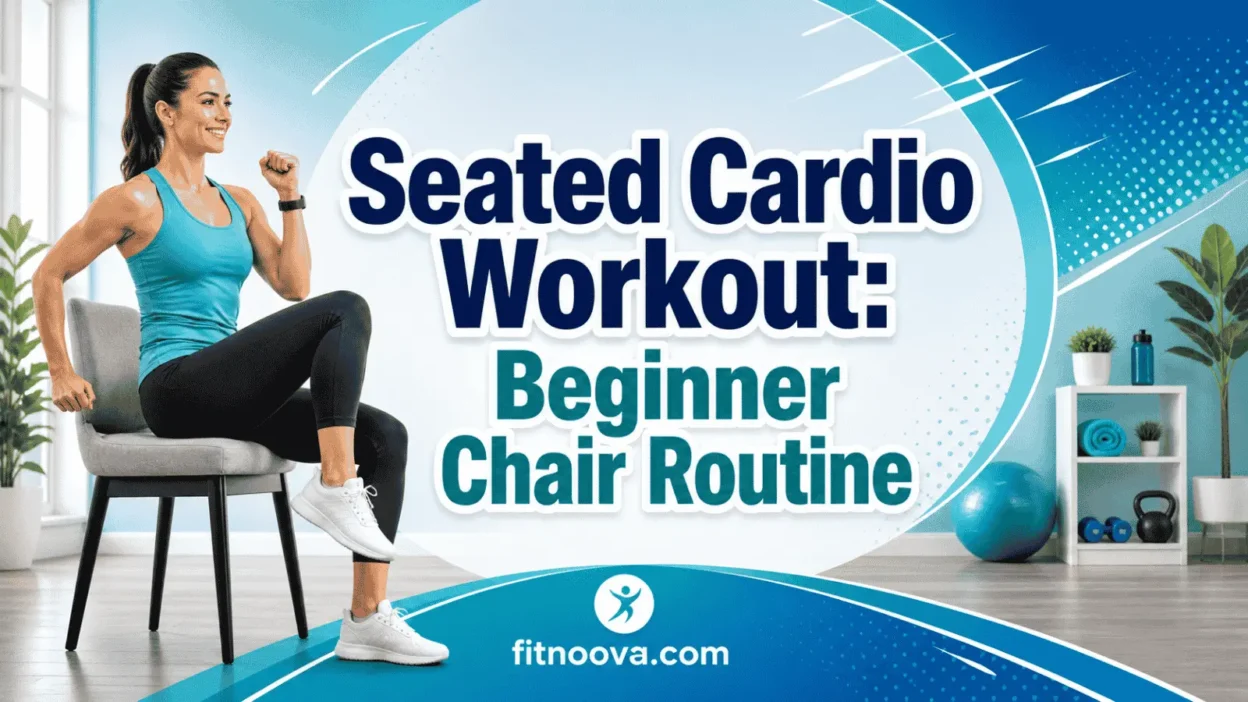
A seated cardio workout is a low-impact way to raise your heart rate, move more during the day, and build fitness without standing exercises, jumping, or complicated equipment. It can be especially useful for beginners, busy adults, people easing back into exercise, or anyone who wants a chair-based workout that feels approachable but still productive.
You do not need a gym, treadmill, or long block of time. With a sturdy chair, a little space around you, and a simple plan, you can turn seated movements into a practical cardio session that gets your arms, core, and legs working together.
This guide explains how seated cardio works, who it is best for, how hard it should feel, and how to do a safe beginner routine from start to finish.
Quick Answer
A seated cardio workout uses chair-based movements like seated marches, arm punches, heel taps, knee lifts, and side reaches to raise your heart rate while reducing impact on your joints. It is a good option for beginners, home workout users, and people who need a lower-impact alternative to standing cardio. Start with 10 to 20 minutes, keep the effort moderate, and progress gradually as your stamina improves.
What Is A Seated Cardio Workout?
A seated cardio workout is a chair-based exercise session designed to increase breathing and heart rate through continuous movement. Instead of walking, jogging, cycling, or doing standing intervals, you perform rhythmic movements while sitting upright.
Common seated cardio exercises include:
- Seated marching
- Arm circles
- Chair jacks
- Alternating punches
- Toe taps and heel taps
- Seated knee lifts
- Side reaches
- Fast feet from a seated position
The goal is not to make exercise easier in a dismissive sense. The goal is to make cardio more accessible. A well-designed chair cardio workout can still feel challenging when you use a steady pace, strong posture, controlled breathing, and purposeful arm and leg movement.
Physical activity guidelines for adults generally recommend at least 150 minutes of moderate-intensity aerobic activity per week, along with muscle-strengthening activity on at least two days per week. Seated cardio can contribute to that weekly movement total when it raises your heart rate and breathing enough to count as moderate activity.
Who Seated Cardio Is Best For
Seated cardio is useful for a wide range of people, not just one specific group. It may be a good fit if you:
- Are new to exercise and want a gentle starting point
- Prefer home workouts
- Have limited space
- Want a low-impact cardio workout
- Need a movement break during a workday
- Are rebuilding consistency after time away from exercise
- Have difficulty with jumping, running, or long periods of standing
- Want an active recovery option between harder workouts
It can also work well for older adults, people with balance concerns, and anyone who feels more comfortable exercising from a stable seated position. That said, “seated” does not automatically mean appropriate for every condition. If you have heart disease, recent surgery, uncontrolled blood pressure, significant dizziness, chest symptoms, or a medical condition that affects exercise tolerance, get medical guidance before starting or progressing.
How Hard Should Seated Cardio Feel?
For most beginners, seated cardio should feel like a moderate effort: warm, slightly breathy, and alert, but still controlled. A simple way to check intensity is the talk test. During moderate-intensity activity, you should usually be able to talk but not sing.
You can also use a 1-to-10 effort scale:
- 2 to 3: Very easy, good for warm-ups or recovery
- 4 to 6: Moderate, a good target for most of the workout
- 7 to 8: Challenging, best used briefly if you are ready
- 9 to 10: Very hard, not necessary for this beginner routine
If you are just starting out, aim for a 4 or 5 out of 10. You should finish feeling like you worked, not like you barely survived.
Before You Start: Setup And Safety
Choose a sturdy chair with a flat seat and no wheels. Sit toward the front half of the chair so your feet can reach the floor comfortably. Keep your chest lifted, ribs stacked over your hips, and shoulders relaxed.
A few simple setup checks make the workout safer and more effective:
- Keep both feet within comfortable reach of the floor.
- Move rugs, cords, and clutter away from your workout area.
- Wear supportive shoes if your feet slide or your floor is slick.
- Keep water nearby.
- Avoid holding your breath during harder moves.
- Reduce your range of motion if your shoulders, hips, knees, or back feel irritated.
Stop exercising and seek medical help if you experience chest pain, faintness, unusual shortness of breath, irregular heartbeat symptoms, or severe dizziness. Mayo Clinic guidance for people with heart disease highlights symptoms such as dizziness, unusual shortness of breath, chest pain, or irregular heartbeat as reasons to stop exercising and seek appropriate care.
Mild muscle effort, warmth, and faster breathing can be normal during cardio. Sharp pain, pressure in the chest, sudden weakness, or symptoms that feel unusual for you are not signals to push through.
20-Minute Beginner Seated Cardio Workout
This seated cardio workout is designed for beginners and home workout users. You can make it shorter by doing one round, or longer by adding another round once your endurance improves.
Workout Overview
Time: 20 minutes
Equipment: Sturdy chair
Level: Beginner
Style: Low-impact chair cardio
Intensity: Moderate, about 4 to 6 out of 10
Format: Warm-up, two cardio rounds, cool-down
Move at a pace that lets you stay in control. If a movement bothers your joints, reduce the range, slow down, or switch to seated marching.
Warm-Up: 4 Minutes
Seated Posture Reset — 30 Seconds
Sit tall near the front of the chair. Place both feet flat on the floor. Roll your shoulders gently back and down. Take a few slow breaths and let your arms relax by your sides.
Easy Seated March — 60 Seconds
Lift one foot, then the other, as if marching in place. Keep the movement small at first. Let your arms swing naturally or rest your hands lightly at your sides.
Shoulder Rolls With Heel Taps — 60 Seconds
Tap one heel forward, bring it back, then switch sides. Add slow shoulder rolls. Keep the taps light and controlled.
Seated Side Reaches — 60 Seconds
Reach one arm slightly overhead or out to the side while leaning gently in that direction. Return to center and switch sides. Keep your hips grounded on the chair.
Gentle Arm Circles — 30 Seconds
Extend your arms out slightly and make small circles. Reverse direction halfway through. Keep your shoulders away from your ears.
Cardio Round One: 6 Minutes
Perform each movement for 45 seconds, then take 15 seconds to reset.
Seated March With Arm Swing
March your feet at a steady pace while swinging your arms as if you are walking briskly. Sit tall and keep your core lightly engaged.
To make it easier, keep your feet closer to the floor. To make it harder, lift your knees slightly higher and move your arms with more purpose.
Alternating Front Punches
Bring your hands near your chest. Punch one arm forward, bring it back, then switch sides. Keep your punches controlled rather than snapping your elbows aggressively.
This move raises intensity quickly because your arms are moving continuously. If your shoulders get tired, punch lower or slow the pace.
Heel Taps With Forward Reach
Tap your right heel forward as both arms reach forward. Return to center, then switch sides. Keep the movement rhythmic and smooth.
Focus on reaching through your arms without rounding your upper back.
Seated Knee Lifts
Lift one knee, lower it, then lift the other. Keep your spine tall and avoid leaning far back. Use your lower abdominal muscles to help control the movement.
If knee lifts feel uncomfortable, switch to toe taps or a smaller march.
Chair Jacks
Step one foot out to the side while raising both arms outward or overhead. Bring the foot back in and repeat on the other side. This mimics a jumping jack without the jump.
For a lower-intensity version, keep your arms below shoulder height.
Fast Feet
Tap your feet quickly on the floor as if doing a seated jog. Keep your steps light and your posture steady. Let your arms move naturally.
You should feel your breathing pick up here, but you should not feel out of control.
Recovery Break: 2 Minutes
Slow down to an easy march for one minute. Then sit tall, breathe slowly, and roll your shoulders for the second minute.
Use this break honestly. If you feel ready, continue. If your breathing is still too high, repeat another minute of easy marching before starting the next round.
Cardio Round Two: 6 Minutes
Perform each movement for 45 seconds, then take 15 seconds to reset.
Cross-Body Punches
Punch gently across your body, rotating through your upper back and ribs. Keep the movement comfortable and avoid forcing your spine.
This exercise adds light rotation, which can make the workout feel more dynamic. Keep your hips stable on the chair.
Toe Taps With Arm Press
Tap one toe forward while pressing both arms forward. Return to center and switch sides. Keep your elbows soft and your chest lifted.
If you want more intensity, press your arms slightly faster while keeping control.
Seated Skaters
Tap your right foot out to the side while reaching your left arm across your body. Return to center and switch. Imagine a low-impact version of a skater movement, but seated.
Keep the reach comfortable. This should feel active, not strained.
Knee Lift With Opposite Elbow
Lift your right knee while bringing your left elbow slightly toward it. Return to center and switch sides. The elbow and knee do not need to touch.
Keep the movement small if you feel pulling in your back or hips.
Overhead Reach And Pull
Reach both arms overhead, then pull your elbows down toward your ribs as if pulling a band. Add a gentle march if you want more cardio.
If overhead movement bothers your shoulders, reach forward instead.
Seated Sprint Finish
Return to fast feet or seated marching. Move at the quickest pace you can maintain with good posture and steady breathing.
This is the final push, but it should still feel controlled. Do not hold your breath or tense your neck.
Cool-Down: 2 Minutes
Slow March — 60 Seconds
Return to a slow seated march. Let your breathing come down gradually. Relax your hands and shoulders.
Seated Stretch And Breathing — 60 Seconds
Place both feet flat on the floor. Inhale as you sit tall. Exhale and relax your shoulders. Gently stretch your arms forward, then open them wide. Finish with a few calm breaths.
How Often Should You Do A Seated Cardio Workout?
A good starting point is two to four seated cardio sessions per week, depending on your current fitness level and recovery. Beginners may start with 10 minutes at a time and slowly build toward 20 to 30 minutes.
If seated cardio is your main form of aerobic exercise, you can gradually work toward the general adult guideline of 150 minutes of moderate-intensity physical activity per week. That does not need to happen all at once. The CDC notes that activity can be spread throughout the week and broken into smaller chunks.
A realistic weekly plan might look like this:
- Beginner: 10 to 15 minutes, 3 days per week
- Building Consistency: 20 minutes, 3 to 4 days per week
- More Active: 20 to 30 minutes, 4 to 5 days per week
You can also pair chair cardio with gentle strength training, mobility work, walking, or balance exercises if those are appropriate for you.
How To Make Seated Cardio Easier
Seated cardio should meet you where you are. If the routine feels too difficult, adjust it instead of quitting.
Try these modifications:
- Move slower.
- Keep your feet closer to the floor.
- Use smaller arm movements.
- Skip overhead reaches.
- Take longer breaks.
- Do one round instead of two.
- Replace any difficult move with seated marching.
You can also do the workout in short blocks. Five minutes in the morning and five minutes later in the day still count as movement and can help build the habit.
How To Make Seated Cardio Harder
Once the workout feels manageable, progress gradually. You do not need to make every session intense.
To increase the challenge:
- Add another cardio round.
- Reduce rest from 15 seconds to 10 seconds.
- Increase arm speed while keeping control.
- Lift your knees slightly higher.
- Add light hand weights only after you can move safely without them.
- Extend the workout from 20 minutes to 25 or 30 minutes.
Avoid adding too many progressions at once. A harder workout is not automatically a better workout. The best progression is the one you can recover from and repeat consistently.
Common Mistakes To Avoid
Sitting Too Far Back In The Chair
Leaning into the chair back can make the workout passive and may encourage slouching. Sit closer to the front edge while keeping your feet grounded and your posture tall.
Moving So Fast That Form Falls Apart
Speed can raise your heart rate, but sloppy movement can irritate joints. Keep your movements controlled, especially during punches, knee lifts, and fast feet.
Holding Your Breath
Breath-holding can make a moderate workout feel much harder than it needs to. Keep breathing steadily, especially during faster intervals.
Ignoring Shoulder Discomfort
Many seated cardio routines use a lot of arm movement. If your shoulders feel pinchy or irritated, lower your arms, reduce the range, or switch to forward reaches instead of overhead reaches.
Treating Chair Cardio As “Not Real Exercise”
Seated workouts can be meaningful when they are done with intention and enough effort. If your breathing increases, your heart rate rises, and you stay consistent, the workout has value.
Doing Too Much Too Soon
Beginners often feel good during the first session and then overdo the next one. Build gradually. Your joints, muscles, and cardiovascular system need time to adapt.
Tips For Better Results From Chair Cardio
Use the first few minutes to ease in. Your warm-up is not wasted time; it helps your body transition from rest to movement.
Keep your posture active. Imagine the crown of your head lifting toward the ceiling while your ribs stay stacked over your hips. This helps your arms and legs move more freely.
Choose music with a steady beat if it helps you keep rhythm. For many people, seated cardio feels more natural when the pace is easy to follow.
Track consistency, not perfection. A simple note like “15 minutes, moderate effort” can help you see progress without obsessing over numbers.
Most importantly, match the workout to your body today. Some days you may move faster. Other days you may need smaller movements and more recovery. Both can be useful.
FAQ
Can a seated cardio workout help with weight loss?
A seated cardio workout can support a weight-loss plan by helping you move more and burn energy, but it should not be treated as a guaranteed weight-loss solution. Body weight is influenced by many factors, including nutrition, total activity, sleep, stress, medications, and health conditions. Use seated cardio as one practical habit within a sustainable routine.
Is seated cardio good for beginners?
Yes, seated cardio can be a strong option for beginners because it lowers the barrier to starting. You can control the pace, reduce impact, and take breaks without needing special equipment. Start with shorter sessions and build gradually.
Can chair cardio count as aerobic exercise?
Chair cardio can count as aerobic exercise when it raises your heart rate and breathing for a sustained period. The talk test is a useful guide: moderate intensity usually means you can talk but not sing during the activity.
How long should a seated cardio workout be?
Beginners can start with 10 to 15 minutes. As stamina improves, 20 to 30 minutes is a reasonable target for many people. Shorter sessions still have value, especially when they help you build consistency.
Do I need weights for seated cardio?
No. Bodyweight movements are enough to start. Light hand weights can increase the challenge, but they are optional and should only be added when you can move with good control and no joint discomfort.
Is seated cardio only for older adults?
No. Seated cardio can help older adults, but it is not only for them. It can also work for beginners, people exercising at home, busy adults, people with limited space, or anyone who wants a lower-impact cardio option.
Conclusion
A seated cardio workout gives you a practical way to build fitness without standing exercises, jumping, or gym equipment. Start with a sturdy chair, keep the effort moderate, and choose movements you can perform with good posture and steady breathing.
For beginners, the best routine is not the hardest one. It is the one you can do safely, recover from well, and repeat often enough to make movement a normal part of your week.