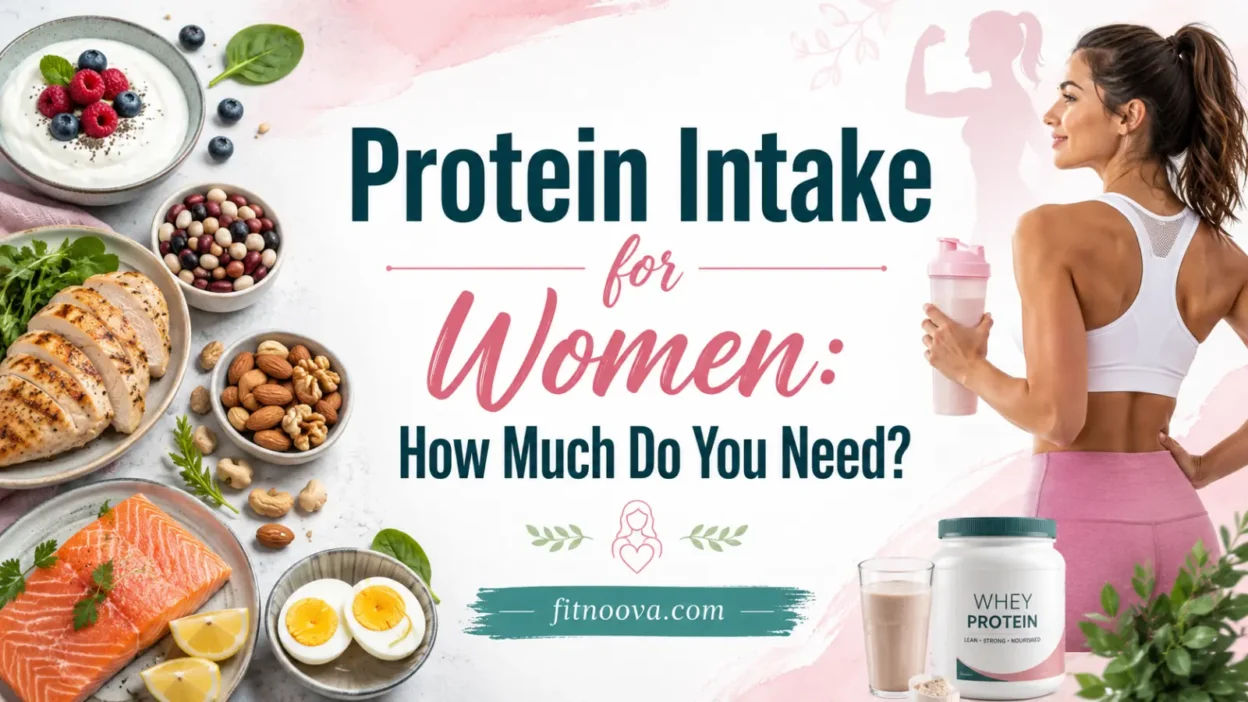
Protein intake for women is not a one-size-fits-all number. A sedentary woman may meet her basic needs with about 46 grams per day, while an active woman, a woman lifting weights, an older adult, or someone eating in a calorie deficit may need more to support muscle, recovery, fullness, and overall health. The current Dietary Reference Intake table lists 46 grams per day for most adult women and notes that adult protein recommendations are based on 0.8 grams per kilogram of body weight.
That 46-gram number is best understood as a baseline, not a perfect target for every woman. Your ideal daily protein intake depends on your body size, training, age, health status, appetite, pregnancy or breastfeeding status, and overall diet quality.
Quick Answer
Most healthy adult women need at least 46 grams of protein per day, but many active women do better with a higher range based on body weight. A practical target is about 0.8 grams per kilogram for sedentary women, 1.2 to 1.6 grams per kilogram for active women, and about 1.4 to 2.0 grams per kilogram for women doing consistent strength training or regular hard exercise. Exercising individuals are often advised to aim around 1.4 to 2.0 grams per kilogram per day to support training adaptations.
For an easier starting point, many women can aim for 20 to 35 grams of protein at each main meal, then adjust based on hunger, workout recovery, body size, and personal goals.
Why Protein Matters For Women
Protein helps the body build and repair tissue, maintain muscle, support immune function, and produce enzymes and hormones. For women who exercise, it also plays a practical role in recovery after workouts and helps preserve lean mass during fat-loss phases.
Protein also matters because muscle is not just about appearance or athletic performance. Muscle supports strength, balance, daily movement, metabolic health, and healthy aging. This becomes especially important after midlife, when women may notice changes in muscle mass, strength, appetite, and body composition.
Protein is not a magic fat-loss tool, and eating more protein will not automatically build muscle without strength training. But getting enough protein makes it easier to build a balanced diet that supports training, satiety, and recovery.
How Much Protein Do Women Need Per Day?
The simplest way to estimate protein needs is to use body weight.
For general health, the adult Recommended Dietary Allowance is 0.8 grams of protein per kilogram of body weight. The National Academies table lists 46 grams per day for adult women using reference body weight, with 71 grams per day listed during pregnancy and lactation.
Here is a practical guide:
| Goal Or Lifestyle | Daily Protein Target |
|---|---|
| Sedentary adult woman | About 0.8 g/kg |
| Lightly active or beginner exerciser | About 1.0–1.2 g/kg |
| Regular workouts or active lifestyle | About 1.2–1.6 g/kg |
| Strength training several days weekly | About 1.4–2.0 g/kg |
| Older adult focused on strength and function | Often about 1.0–1.2 g/kg or more, depending on health |
| Pregnancy or breastfeeding | Often higher; the RDA table lists 71 g/day |
To convert pounds to kilograms, divide your weight in pounds by 2.2.
Example:
A 150-pound woman weighs about 68 kilograms.
At 0.8 g/kg, that is about 54 grams per day.
At 1.2 g/kg, that is about 82 grams per day.
At 1.6 g/kg, that is about 109 grams per day.
This does not mean every 150-pound woman needs 109 grams daily. It means her needs may rise if she trains regularly, wants to preserve muscle during weight loss, or has higher recovery demands.
Protein Intake For Women By Goal
For General Health
For a healthy adult woman who is not very active, 0.8 g/kg is a reasonable minimum target. For many women, this lands near 45 to 60 grams per day depending on body size.
The bigger issue is often distribution. Some women eat very little protein at breakfast, a moderate amount at lunch, and most of it at dinner. A more balanced pattern usually feels better and makes the target easier to reach.
A simple day might look like this:
- Breakfast: Greek yogurt with fruit and nuts
- Lunch: Turkey, tofu, tuna, beans, or eggs with a salad or grain bowl
- Dinner: Chicken, fish, lentils, lean beef, tempeh, or cottage cheese with vegetables and carbs
For Strength Training And Muscle Gain
Women who lift weights usually need more protein than sedentary women. For most healthy women doing regular resistance training, a good range is about 1.4 to 2.0 g/kg per day. The International Society of Sports Nutrition position stand states that most exercising individuals need approximately 1.4 to 2.0 g/kg per day to support exercise-related adaptations.
The lower end may be enough for beginners or women training a few days per week. The higher end may fit women training harder, eating fewer calories, or trying to preserve muscle while losing fat.
Protein helps, but it cannot replace progressive strength training. To build muscle, you still need enough total calories, enough sleep, a well-designed lifting plan, and consistent progression.
For Weight Loss
Protein can make a fat-loss plan more manageable because it helps meals feel more satisfying and supports lean mass while calories are reduced. That said, weight loss still depends on the overall eating pattern and energy balance.
A reasonable target for many women trying to lose weight is about 1.2 to 1.6 g/kg per day, paired with high-fiber carbohydrates, fruits, vegetables, healthy fats, and strength training. Very high-protein diets that cut out most carbohydrates can reduce fiber and diet quality if they are not planned carefully. Mayo Clinic notes that some restrictive high-protein diets may limit nutrients and fiber, and that protein choices matter.
A sustainable approach is better than chasing the highest possible number. Build meals around lean or minimally processed protein, then add plants, carbs, and fats that keep you energized.
For Women Over 40 Or 50
Protein becomes more important with age because muscle maintenance gets harder over time. Strength training, daily movement, and enough protein all matter.
Many women over 40 or 50 may benefit from moving above the basic 0.8 g/kg minimum, especially if they lift weights, walk often, have a physically demanding job, or are trying to maintain strength. Some research-focused guidance for older adults commonly discusses ranges around 1.0 to 1.2 g/kg or higher depending on health and activity level.
The goal is not to eat protein all day. The goal is to avoid accidentally under-eating it, especially at breakfast and lunch.
During Pregnancy Or Breastfeeding
Protein needs are higher during pregnancy and breastfeeding. The Dietary Reference Intake table lists 71 grams per day for pregnancy and lactation.
Pregnancy and postpartum nutrition should be individualized. Appetite, nausea, food aversions, medical history, iron status, gestational diabetes, kidney health, and breastfeeding demands can all change what is appropriate. A doctor or registered dietitian can help set a safe target.
Best Protein Sources For Women
A strong protein routine does not need to rely on powders or complicated meal plans. Most women can meet their needs with a mix of everyday foods.
Good animal-based options include:
- Eggs
- Greek yogurt
- Cottage cheese
- Chicken or turkey
- Fish and seafood
- Lean beef or pork
- Milk or kefir
Good plant-based options include:
- Tofu
- Tempeh
- Edamame
- Lentils
- Beans
- Chickpeas
- Soy milk
- Nuts and seeds
- Quinoa
- Pea or soy protein powder, when useful
Current U.S. dietary guidance emphasizes a variety of nutrient-dense protein foods, including animal sources such as eggs, poultry, seafood, and red meat, along with plant sources such as beans, peas, lentils, nuts, seeds, and soy.
The best choice depends on the full meal. Salmon with potatoes and vegetables, tofu stir-fry with rice, eggs with whole-grain toast, or lentil soup with Greek yogurt on the side can all fit a healthy diet.
How To Spread Protein Through The Day
Most women do not need to count every gram forever. Tracking for a few days can help you see your baseline, then you can switch to a simpler meal structure.
A practical target is:
- Breakfast: 20–30 grams
- Lunch: 25–35 grams
- Dinner: 25–40 grams
- Snack, if needed: 10–25 grams
This pattern works better than saving nearly all protein for dinner. It also tends to reduce random snacking because meals are more filling.
Here are simple examples:
Higher-Protein Breakfast Ideas
- Greek yogurt, berries, and granola
- Two eggs with cottage cheese and fruit
- Protein smoothie with milk, protein powder, banana, and peanut butter
- Tofu scramble with potatoes and vegetables
- Overnight oats made with Greek yogurt or soy milk
Higher-Protein Lunch Ideas
- Chicken or tofu grain bowl
- Tuna, salmon, or chickpea salad sandwich
- Lentil soup with a side of Greek yogurt
- Turkey wrap with vegetables
- Bean burrito bowl with salsa and avocado
Higher-Protein Dinner Ideas
- Salmon, rice, and roasted vegetables
- Lean beef or tempeh stir-fry
- Chicken tacos with beans
- Pasta with turkey meat sauce or lentil bolognese
- Tofu curry with vegetables
Do Women Need Protein Powder?
Protein powder is optional. It can be useful if you struggle to meet your target, train early in the morning, have a low appetite, or need a convenient snack. It is not automatically better than food.
A good protein powder should be simple, third-party tested when possible, and easy to digest. Whey, casein, soy, and pea protein can all work. If you already meet your needs through meals, you do not need a supplement.
Use protein powder as a tool, not the foundation of your diet. A shake can help, but it should not crowd out fruits, vegetables, whole grains, beans, nuts, seeds, and other nutrient-rich foods.
Can Women Eat Too Much Protein?
Yes, especially if a very high-protein diet pushes out fiber, carbohydrates, healthy fats, or overall food variety. For healthy people, higher-protein diets are not automatically dangerous, but extreme or restrictive approaches can create problems.
Mayo Clinic notes that high-protein diets may cause issues when they heavily restrict carbohydrates or rely on processed meats and foods high in saturated fat. It also cautions that high-protein diets may worsen kidney function in people with kidney disease.
The National Kidney Foundation explains that people with kidney disease may need individualized protein targets because the kidneys filter waste from protein metabolism, and needs differ depending on kidney status and dialysis.
Women with kidney disease, diabetes, a history of kidney stones, liver disease, eating disorder history, pregnancy complications, or complex medical conditions should get personalized guidance before making a major protein change.
Common Mistakes To Avoid
Treating 46 Grams As The Perfect Number For Everyone
The 46-gram recommendation is a useful baseline for many adult women, but it does not account for every body size, training plan, age group, or goal. A smaller sedentary woman and a taller woman lifting four days per week may need different amounts.
Eating Almost No Protein At Breakfast
A low-protein breakfast can make it harder to hit your target later. You do not need a huge breakfast, but adding Greek yogurt, eggs, tofu, cottage cheese, milk, soy milk, or a protein smoothie can make the day easier.
Assuming More Protein Always Means Better Results
More is not always better. Once your needs are covered, extra protein will not automatically build more muscle or burn more fat. Training, total calories, sleep, consistency, and food quality still matter.
Relying Too Much On Bars And Shakes
Protein bars and shakes are convenient, but they should not replace most meals. Whole foods bring fiber, minerals, healthy fats, and other nutrients that supplements often lack.
Ignoring Fiber And Carbs
A high-protein diet can feel worse if it is low in fiber and carbohydrates. Many active women train, recover, and feel better with balanced meals that include protein, carbs, fats, and produce.
FAQs
How much protein should a woman eat daily?
Most adult women need at least 46 grams per day, but a body-weight target is more useful. A sedentary woman may need about 0.8 g/kg, while active women often fall closer to 1.2 to 1.6 g/kg. Women who lift weights regularly may benefit from about 1.4 to 2.0 g/kg.
Is 100 grams of protein too much for a woman?
Not necessarily. For many active women, 100 grams can be a reasonable daily amount. For a smaller sedentary woman, it may be more than needed. The right number depends on body weight, training, health status, appetite, and the rest of the diet.
How can women increase protein without eating more meat?
Use Greek yogurt, cottage cheese, eggs, tofu, tempeh, lentils, beans, edamame, soy milk, quinoa, nuts, seeds, and protein-rich smoothies. Plant-based diets can meet protein needs, but they usually require more planning and variety.
Should women eat protein before or after workouts?
Total daily protein matters most. Eating protein within a few hours before or after training is usually enough for most recreational exercisers. A post-workout meal with protein and carbohydrates can be helpful if you trained hard or will not eat again for several hours.
Does protein help women lose belly fat?
Protein can support fat loss by helping meals feel filling and supporting muscle during a calorie deficit, but it does not specifically burn belly fat. Sustainable fat loss comes from consistent habits, strength training, enough sleep, and an overall calorie balance.
Is protein powder safe for women?
Protein powder can be safe for healthy women when used in reasonable amounts, but quality matters. Choose a reputable product, avoid using powders to replace most meals, and talk with a healthcare professional if you have kidney disease, pregnancy-related concerns, or a medical condition.
Conclusion
Protein intake for women should be based on body size, activity, age, and goals—not a random number from social media. The basic recommendation for most adult women is 46 grams per day, but many active women, strength-training women, older adults, and women in fat-loss phases may benefit from higher targets.
Start with a realistic range, spread protein across meals, choose mostly nutrient-dense foods, and adjust based on how you feel, train, recover, and eat overall. Protein works best when it supports a balanced diet—not when it takes over the whole plate.