
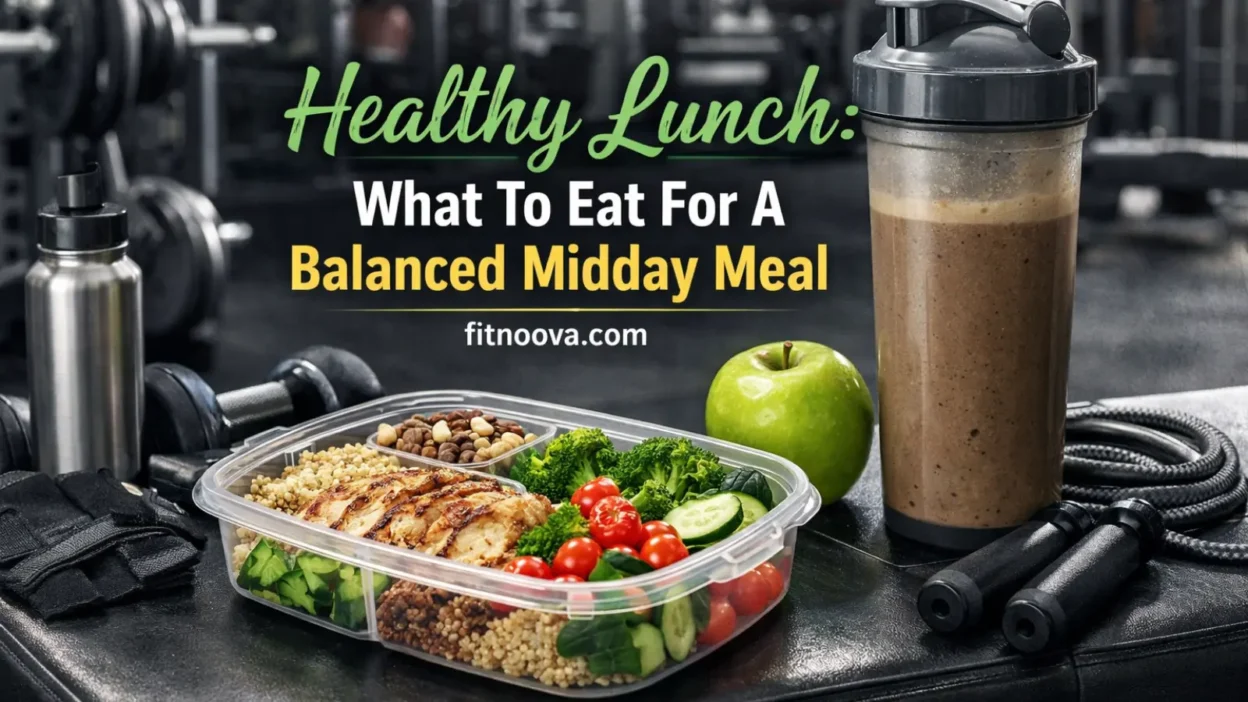
A healthy lunch should do more than just fill a gap in your day. It should help you feel satisfied, steady, and energized without leaving you overly full or searching for snacks an hour later. For most adults, a balanced lunch includes produce, a solid protein source, and a satisfying carbohydrate such as beans, fruit, potatoes, or whole grains, with richer extras kept in proportion.
It does not need to be complicated, low calorie, or built around the same foods every day. A healthy lunch is one that gives you useful nutrition, fits your schedule, and is realistic enough to repeat.
Quick Answer
A healthy lunch usually includes three core parts: produce, protein, and a satisfying higher-fiber carbohydrate. A simple formula is vegetables or fruit + lean or minimally processed protein + whole grains, beans, potatoes, or another filling carb source, with portions adjusted to your hunger, activity, and needs.
What Makes A Healthy Lunch
A healthy lunch does not have to mean salad every day, and it does not have to be small to count. A better standard is whether the meal helps you stay full, gives you a good mix of nutrients, and supports the rest of your day.
A strong lunch usually includes:
- Vegetables, fruit, or both
- Protein from foods such as chicken, fish, eggs, Greek yogurt, tofu, beans, lentils, or cottage cheese
- A higher-fiber carbohydrate, such as brown rice, quinoa, oats, beans, fruit, whole-grain bread, or potatoes
- Fats that improve flavor and staying power, such as avocado, nuts, seeds, olive oil, or hummus
A Simple Formula You Can Use Every Day
Thinking in meal parts instead of recipes can make lunch easier and more repeatable.
Start With Produce
Make produce the base of the meal, not just a garnish. That can mean a salad base, roasted vegetables, sliced cucumbers and tomatoes, fruit on the side, or leftover cooked vegetables from dinner.
Add Protein
Protein helps lunch feel more complete and usually makes the afternoon easier to manage. Good options include grilled chicken, tuna, salmon, eggs, edamame, lentils, black beans, tofu, tempeh, cottage cheese, and plain Greek yogurt.
Include A Smart Carb
Carbohydrates can absolutely fit into a healthy lunch. Whole grains, beans, fruit, and potatoes can all work well. In many cases, choosing less refined and more fiber-rich options helps with fullness and steadier energy.
Use Extras That Improve The Meal
Healthy fats and flavorful extras can make lunch more satisfying. Olive oil-based dressings, avocado, nuts, seeds, hummus, salsa, pesto, and tahini are all useful additions when used in a balanced way.
Healthy Lunch Ideas That Work In Real Life
The best healthy lunch is the one you can make or buy consistently without getting bored or overwhelmed.
Grain Bowl
Start with brown rice, quinoa, or farro. Add roasted vegetables, greens, chicken or tofu, and a simple sauce such as tahini-lemon dressing or salsa with avocado.
Why it works: it combines produce, protein, and fiber-rich carbs in one meal and is easy to prep ahead.
Wrap Or Sandwich
Use whole-grain bread or a whole-wheat wrap. Fill it with turkey, chicken, tuna, egg salad made with Greek yogurt, hummus with vegetables, or mashed chickpeas. Add lettuce, tomato, cucumber, shredded carrots, or peppers.
Why it works: it is portable, familiar, and easy to improve with better ingredients.
Leftovers Reworked For Lunch
Use leftover chicken, salmon, chili, stir-fry, or roasted vegetables from dinner. Add fruit, yogurt, or whole-grain toast if the meal needs more balance.
Why it works: it saves time, cuts food waste, and often leads to a better lunch than grabbing something random.
Soup And A Side
Choose lentil soup, bean soup, vegetable soup, or chicken-and-vegetable soup. Pair it with fruit, a side salad, or half a sandwich.
Why it works: it is simple, comforting, and useful when you want something lighter that still feels like a meal.
Snack Plate Lunch
Combine hard-boiled eggs, hummus, cut vegetables, fruit, whole-grain crackers, cheese, tuna, or yogurt.
Why it works: it is practical for busy days or low-appetite days when a full plated meal feels like too much.
Salad That Actually Fills You Up
Build the salad around more than greens. Add protein and carbs, such as grilled chicken and chickpeas, or tofu with quinoa and edamame.
Why it works: the added protein and carbohydrate make it more complete and help prevent the usual “hungry again in an hour” problem.
How To Build A Healthy Lunch For Your Goal
The basic structure stays the same, but the details can change based on what you need lunch to do.
If You Want Better Fullness
Make protein and fiber more obvious in the meal. Foods such as beans, lentils, eggs, Greek yogurt, tofu, chicken, vegetables, fruit, and whole grains often help lunch feel more satisfying.
Also check whether your lunch is simply too small. A bowl of greens with dressing may sound healthy, but it may not be enough for a busy adult.
If You Are Trying To Lose Weight
Focus on structure instead of restriction. A useful lunch often includes plenty of vegetables, a clear protein source, and a carbohydrate portion that matches your hunger and day.
That might look like:
- A large salad with chicken, beans, or tofu
- A turkey and veggie wrap with fruit
- Lentil soup with a side salad
- A grain bowl with more vegetables and a moderate portion of grains
If You Exercise In The Afternoon
Lunch should not leave you low on energy. Including carbohydrates for activity and enough protein to support recovery across the day can help.
A rice bowl with chicken and vegetables, a turkey sandwich with fruit, or yogurt with oats and berries can all work depending on timing and appetite.
If You Need Something Fast
Keep easy staples around:
- Prewashed greens or chopped vegetables
- Canned beans or tuna
- Rotisserie chicken
- Greek yogurt or cottage cheese
- Whole-grain bread or wraps
- Microwavable brown rice or quinoa
- Fruit
- Hummus
With those basics, you can build a balanced lunch in minutes.
How To Make Healthy Lunch Easier During A Busy Week
Healthy lunch gets easier when you reduce the number of decisions you have to make.
Prep Components, Not Full Meals
You do not need to prepare five complete meal containers every week. Often, it is easier to prep a few basics:
- One protein
- One grain or bean
- Washed produce
- One sauce or dressing
- Two fruit options
That gives you flexibility without making lunch feel repetitive.
Repeat A Small Rotation
Most people do better with three to five lunch ideas they genuinely like instead of trying a brand-new recipe every day. Repetition can support consistency.
Keep Convenience Foods In Perspective
Convenience foods can still fit into a healthy lunch. Bagged salad kits, frozen vegetables, canned beans, microwavable grains, and lower-sugar yogurt can all be useful. What matters most is the overall balance of the meal.
What To Look For On Packaged Foods
If part of your lunch comes from a package, it helps to check the label for serving size, sodium, saturated fat, added sugars, and fiber.
This is especially useful for:
- Soups
- Wraps
- Sauces
- Frozen meals
- Deli meats
- Snack bars
- Flavored yogurts
In general, choosing options with less sodium, saturated fat, and added sugar, while looking for more fiber when it makes sense, can improve the overall quality of lunch.
Common Healthy Lunch Mistakes
Making Lunch Too Small
A lunch that is too small can backfire if it leaves you extremely hungry later. Healthy lunch should still feel like a real meal.
Skipping Protein
Without enough protein, lunch often does not last very long. This is one reason many people feel hungry again by midafternoon.
Relying On Refined Snack Foods
Chips, crackers, pastries, and sweet drinks can be part of a meal sometimes, but if they make up most of lunch, the meal may fall short on fullness and overall nutrition.
Drinking Most Of The Meal
Smoothies can work, but liquid meals are easy to underbuild or overload. If you make one, include a real protein source and consider pairing it with something you chew.
Treating “Healthy” As One Specific Food
Healthy lunch does not have to look the same every day. It can be a sandwich, soup, grain bowl, leftovers, or a snack plate.
When A Standard Healthy Lunch May Need Adjusting
General lunch advice works for many adults, but some people may need a more tailored approach.
You may need more individualized guidance if you:
- Have diabetes, kidney disease, digestive conditions, food allergies, or a history of disordered eating
- Are pregnant
- Train at a high level
- Have ongoing fatigue, unintended weight change, or low appetite
General nutrition advice is not the same as personal medical advice. If lunch choices need to support a health condition or specific medical concern, a registered dietitian or clinician can help tailor the approach.
Easy Healthy Lunch Combinations To Try
Here are a few balanced combinations you can mix and match:
- Chicken, brown rice, roasted broccoli, and fruit
- Whole-grain wrap with turkey, hummus, lettuce, tomato, and apple slices
- Lentil soup with a side salad and whole-grain toast
- Greek yogurt with berries, oats, chia seeds, and a boiled egg on the side
- Tofu stir-fry with vegetables and quinoa
- Tuna salad on whole-grain toast with cucumbers and orange slices
- Cottage cheese, fruit, nuts, and whole-grain crackers
- Bean and veggie burrito bowl with salsa and avocado
None of these meals has to be perfect. The goal is a lunch you can enjoy, repeat, and fit into real life.
FAQ
What is the healthiest thing to eat for lunch?
There is no single healthiest lunch for everyone. In general, a healthy lunch includes produce, protein, and a satisfying carbohydrate source such as beans, fruit, potatoes, or whole grains.
Is a sandwich a healthy lunch?
Yes, it can be. A sandwich becomes a stronger lunch when it uses whole-grain bread, includes a solid protein source, adds vegetables, and is not overloaded with heavily processed fillings or rich spreads.
How much protein should lunch have?
There is no one number that fits everyone. What matters most is that lunch includes a meaningful protein source and fits your overall eating pattern, activity, and hunger.
Can a healthy lunch help with weight loss?
It can support weight loss by making your eating pattern more consistent and satisfying, but no single lunch causes weight loss on its own.
Are salads always the best healthy lunch option?
No. Salads can be great, but only if they are built like a real meal. A healthy lunch can also be a wrap, soup, leftovers, grain bowl, or snack plate.
What if I buy lunch instead of packing it?
You can still make a solid choice. Look for a meal with produce, a decent protein source, and a satisfying carbohydrate source, while keeping portions and extras in perspective.
Conclusion
A healthy lunch is not about eating perfectly at noon. It is about building a midday meal that is balanced enough to keep you full, practical enough to repeat, and flexible enough to fit real life. Start with produce, add protein, include a satisfying carb, and keep highly processed extras in proportion. That simple structure is often enough to make healthy lunch easier, more useful, and more sustainable.