
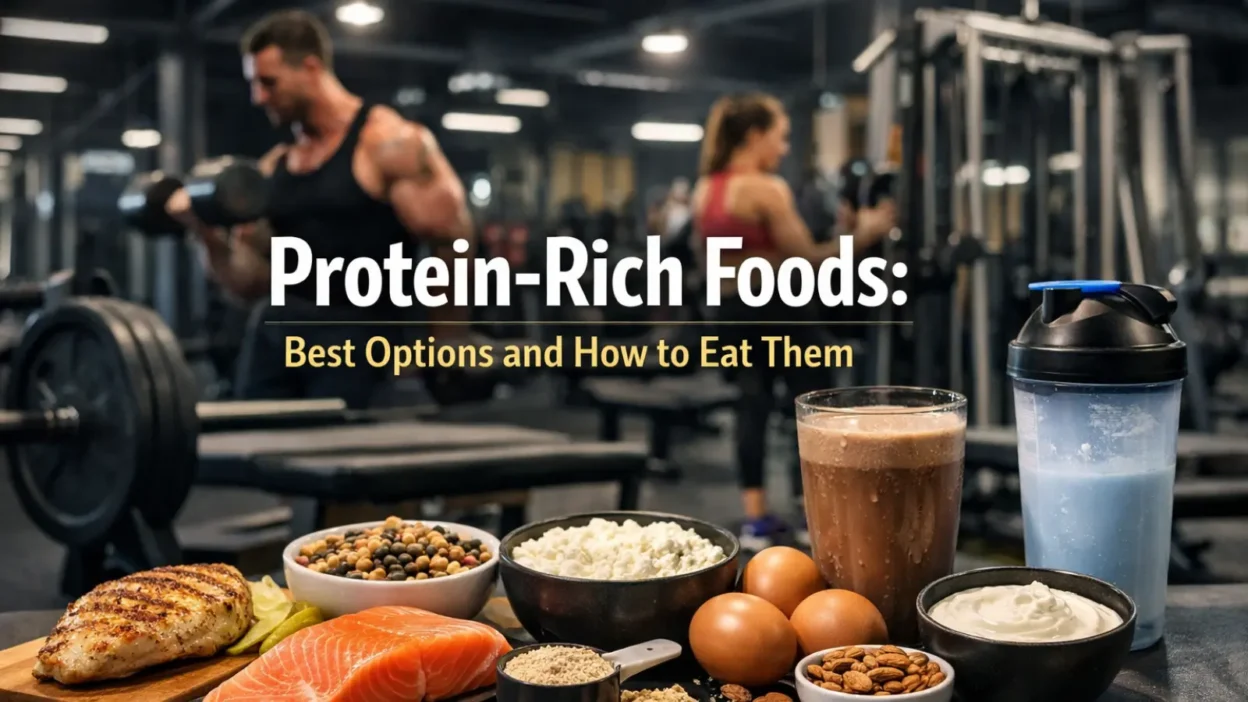
Protein-rich foods can help support muscle maintenance, tissue repair, fullness, and overall health. But the goal is not to eat as much protein as possible or rely on one “perfect” food. A smarter approach is to choose a variety of protein sources, build balanced meals, and spread protein intake across the day in a way that feels practical and sustainable.
Quick Answer
Protein-rich foods include eggs, Greek yogurt, cottage cheese, fish, chicken, turkey, lean beef, tofu, tempeh, edamame, beans, lentils, nuts, seeds, milk, and fortified soy milk. For most people, the best approach is to eat a mix of animal and plant protein sources, focus on minimally processed options, and include protein in each meal instead of chasing extreme intake.
What Counts As a Protein-Rich Food?
A protein-rich food is any food that gives you a useful amount of protein in a normal serving. Some foods are mostly protein, such as chicken breast, tuna, shrimp, egg whites, and protein powders. Others provide protein along with fiber, healthy fats, vitamins, and minerals, which can make them even more useful in everyday meals.
That is why the “best” protein food is not always the one with the highest number of grams. A bowl of lentils, a serving of tofu, or a cup of Greek yogurt may offer protein while also supporting overall diet quality.
How Much Protein Do You Actually Need?
For healthy adults, the baseline recommendation is often 0.8 grams of protein per kilogram of body weight per day. That amount is meant to cover basic needs, but some people may need more depending on age, activity level, and health status.
For many people, the easiest strategy is to include a protein source at each meal rather than trying to eat most of it at dinner. This usually feels more realistic and supports better meal balance.
If you are pregnant, highly active, older, or managing a medical condition, your needs may be different. If you have kidney disease or another health condition that affects nutrition, it is better to get personalized medical advice before making major changes.
Best Protein-Rich Foods To Keep In Regular Rotation
Eggs
Eggs are affordable, versatile, and easy to prepare. They work well for breakfast, lunch, or dinner and pair easily with vegetables, whole grains, and fruit.
Greek Yogurt And Cottage Cheese
These are convenient, protein-rich dairy foods that work well in meals or snacks. Plain versions are often a better everyday choice because flavored options may contain a lot of added sugar.
Fish And Seafood
Fish and seafood provide protein and can also contribute other nutrients depending on the type. They are useful when you want a lighter option that cooks quickly.
Chicken And Turkey
Skinless chicken and turkey are dependable lean-protein staples. They are easy to batch-cook and use in wraps, bowls, soups, sandwiches, and salads.
Lean Beef And Pork
These can fit into a balanced diet, but portion size and frequency matter. They work best as part of a varied eating pattern rather than your only protein source.
Tofu, Tempeh, And Edamame
Soy foods are some of the most practical plant-based protein options. They are filling, versatile, and easy to use in stir-fries, bowls, salads, and simple dinners.
Beans, Lentils, And Peas
These are affordable, filling, and high in fiber. They do more than add protein. They also help support meal satisfaction and overall diet quality.
Nuts And Seeds
Almonds, peanuts, pistachios, pumpkin seeds, chia seeds, and hemp seeds can help boost protein intake, especially at breakfast or snack time. They also provide healthy fats, so portion awareness matters.
Milk And Fortified Soy Milk
Both can be simple ways to increase protein intake, especially in smoothies, breakfasts, or light meals. Fortified soy milk is one of the better plant-based milk choices when protein matters.
Protein Powders
Protein powder can be useful when meals are rushed or appetite is low, but it should not replace most of your meals. Whole foods usually provide a better mix of nutrients, fiber, and satisfaction.
Animal Protein Vs. Plant Protein
This does not need to be an all-or-nothing choice. A healthy eating pattern can include both.
Animal proteins often make it easier to get more protein in a smaller serving. Plant proteins, however, bring important benefits too, especially foods like beans, lentils, soy foods, nuts, and seeds.
For many adults, a balanced approach works well:
- use plant proteins often
- include fish, eggs, or dairy if you eat them
- rely less on processed meats
- keep red meat in a reasonable place instead of making it the default
Do You Need To Combine Plant Proteins At The Same Meal?
Not usually. Most people do not need to carefully combine plant proteins at every meal as long as they eat a varied diet across the day.
That means you do not need to overthink every plate. A day that includes oats with nuts, lentils at lunch, and tofu at dinner can work well without complicated planning.
Simple Ways To Add More Protein Without Overdoing It
The easiest way to eat more protein is to build meals around real foods rather than depend on shortcuts.
You can try simple upgrades like:
- adding Greek yogurt, eggs, or cottage cheese to breakfast
- using beans, tofu, chicken, tuna, or turkey in lunch bowls and wraps
- keeping edamame, yogurt, nuts, or roasted chickpeas ready for snacks
- adding lentils or beans to soups, tacos, and chili
- using tofu, fish, or shredded chicken in salads and grain bowls
- choosing dairy milk or fortified soy milk in smoothies
A Beginner-Friendly Protein-Rich Day Of Eating
Here is one simple example of how protein-rich foods can fit into a normal day:
- Breakfast: Greek yogurt with berries, oats, and pumpkin seeds
- Lunch: Rice bowl with grilled chicken, black beans, salsa, and roasted vegetables
- Snack: Apple with peanut butter
- Dinner: Baked salmon, potatoes, and green beans
- Optional Evening Snack: Cottage cheese with fruit
This kind of pattern spreads protein across the day and pairs it with fiber-rich carbs and produce, which usually works better than making every meal protein-heavy.
Common Mistakes To Avoid
Choosing “High-Protein” Foods That Are Mostly Marketing
A product may say “high protein” on the front but still be heavily sweetened or highly processed. It is better to check the full ingredient list and nutrition label.
Relying Too Much On Processed Meats
Processed meats are not the best everyday protein choice. They are better treated as occasional foods rather than staples.
Ignoring The Rest Of The Meal
Protein matters, but so do fiber, produce, healthy fats, and overall diet quality. A balanced meal usually does more for health and satisfaction than protein alone.
Assuming More Is Always Better
More protein is not automatically better. Extremely high intake is not necessary for most people and may crowd out other important foods.
Skipping Plant Protein
Beans, lentils, tofu, soy foods, nuts, and seeds are not second-best options. They are strong protein foods in their own right and deserve a regular place in your routine.
When Protein Powders Make Sense
Protein powders may be useful when:
- you struggle to eat enough after training
- you need something portable
- your meals are inconsistent
- low appetite makes full meals difficult
Still, they are optional. Most people can meet their needs through food. If you use one, look for a product with a short ingredient list, clear protein content, and a reasonable amount of added sugar.
FAQ
What are the highest-protein foods?
Foods such as chicken breast, tuna, shrimp, lean meats, Greek yogurt, cottage cheese, eggs, tofu, tempeh, and protein powders often provide a lot of protein per serving. Beans, lentils, nuts, and seeds also contribute, though they usually come with more carbs or fat.
Are plant-based protein foods enough for muscle support?
Yes, they can be. A varied diet with soy foods, beans, lentils, peas, nuts, seeds, and whole grains can provide enough protein for many people.
Is Greek yogurt a good protein food?
Yes. Greek yogurt is a practical, protein-rich option that works well at breakfast, as a snack, or as part of sauces and bowls.
Are protein bars as good as real food?
They can be useful sometimes, but they are not always as filling or nutritious as balanced meals made from whole foods.
Do I need protein after workouts?
Protein after exercise can support recovery, but total daily intake matters more than perfect timing for most people.
Can you eat too much protein?
Yes. More is not always better, especially if it pushes out other important foods or if you have a health condition that affects protein needs.
Conclusion
The best protein-rich foods are the ones you can eat consistently as part of balanced meals. Eggs, yogurt, fish, poultry, tofu, tempeh, beans, lentils, nuts, seeds, and other minimally processed staples can all help you meet your needs in a realistic way. Instead of chasing extremes, focus on variety, spread protein across the day, and build meals that support your overall diet.