Last Updated: MAY 19, 2026
Beginner Home Workout Plan gives you a simple way to start moving without crowded gyms, expensive gear, or confusing routines. The goal is to build confidence first, then add challenge as your body adapts. Start with bodyweight exercises like squats, wall push-ups, glute bridges, and step-backs. Keep each session short, steady, and easy to repeat. A smart warm-up helps your joints feel ready, while a calm finish helps reduce soreness. Focus on clean form, slow reps, and enough rest between sets. You do not need a hard session every day. Three steady sessions each week can help you build strength, improve balance, and create a routine that feels realistic.
Quick Answer
Beginner Home Workout Plan should start with short sessions, simple movements, and enough rest to keep your body fresh. Use squats, modified push-ups, bridges, and light core work for 20 to 30 minutes, three days a week. Keep the pace controlled, track how you feel, and add reps only when the moves feel smooth.
Who This Plan Is For
This routine fits most healthy beginners who want to get stronger, move more, and exercise at home with little or no equipment. It is especially useful for people who have been inactive, feel intimidated by gym programs, or want a structured place to start.
If you have a chronic medical condition, are returning after illness, or notice symptoms such as chest pain, dizziness, fainting, unusual shortness of breath, or palpitations with activity, it is smart to speak with a healthcare professional before pushing harder. Those symptoms are not the same as normal exercise effort.
What A Good Beginner Plan Should Do
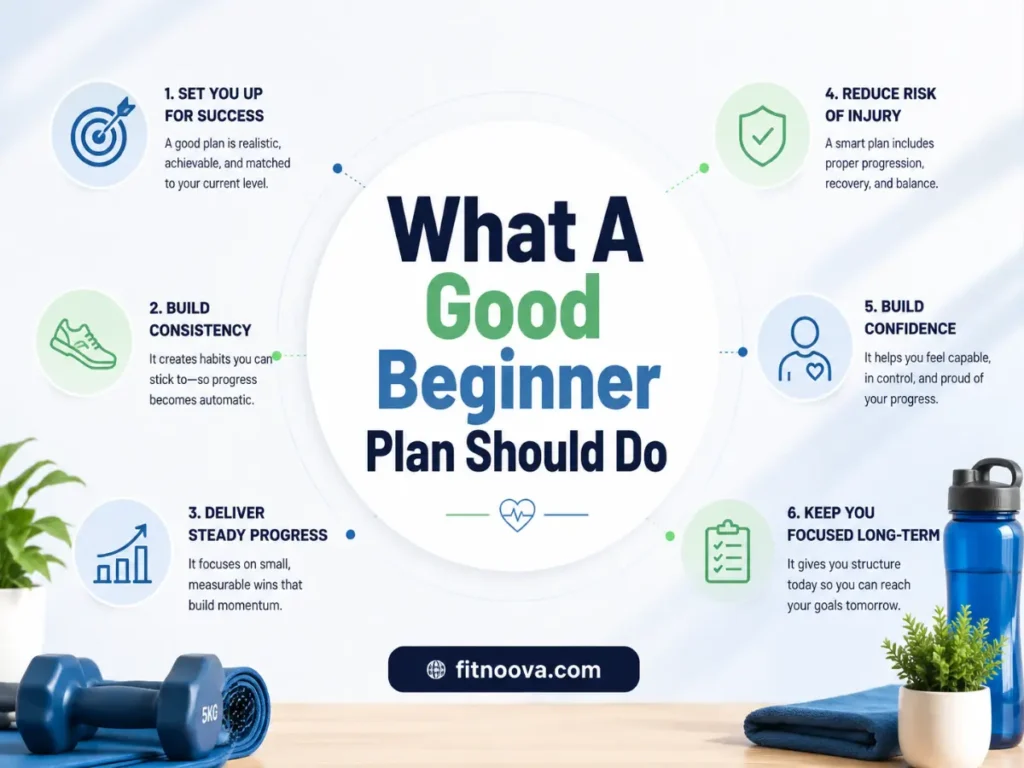
A solid home plan should help you do five things well:
• Practice basic movement patterns
• Build enough strength for daily life
• Improve work capacity without crushing recovery
• Create a routine you can repeat next week
• Move you toward the broader weekly activity guidelines over time
That matters because “effective” for a beginner does not mean extreme. It means sustainable. Some activity is better than none, and beginners are usually better off building consistency first, then adding intensity later.
The 4-Week Beginner Home Workout Plan
Use this plan for 4 weeks before making major changes.
Weekly Schedule
Monday: Full-Body Workout A
Tuesday: 20 to 30 minutes easy walking or light movement
Wednesday: Full-Body Workout B
Thursday: Rest or easy walk
Friday: Full-Body Workout A
Saturday: 20 to 30 minutes easy walking, mobility, or both
Sunday: Rest
In week two, switch the pattern so Workout B appears twice that week. Keep alternating like that.
This structure gives you 3 strength sessions each week while leaving room for light aerobic activity. That fits well with public-health guidance that says aerobic work can be broken into smaller chunks and spread across the week.
How Hard The Workouts Should Feel
For most sets, stop with the feeling that you could still do 2 to 4 more good reps. You should be working, but not grinding. For walking or cardio, use the talk test: moderate intensity usually means you can talk but not sing.
That level is hard enough to build fitness, but controlled enough for a beginner to learn form and recover.
Warm-Up Before Every Session
Start each workout with 5 to 10 minutes of easy movement. A warm-up can be as simple as:
• Marching in place
• Arm circles
• Bodyweight good mornings
• Slow squats to a chair
• Wall push-ups
• Easy step-ups or a slow walk around the room
A proper warm-up raises body temperature and prepares you for the session ahead. The American Heart Association recommends 5 to 10 minutes, with longer warm-ups before harder sessions.
Workout A
1. Chair Squat or Bodyweight Squat
Sets: 2
Reps: 8 to 12
Sit back to a chair, stand up with control, and keep your feet flat. If bodyweight squats feel easy, slow the lowering phase.
2. Wall Push-Up or Incline Push-Up
Sets: 2
Reps: 6 to 10
Use a wall, counter, or sturdy bench. The higher the surface, the easier it is. Keep your body in a straight line.
3. Hip Hinge or Glute Bridge
Sets: 2
Reps: 10 to 12
This teaches the hips to do the work instead of the lower back. Choose glute bridges if hinging feels awkward at first.
4. Reverse Lunge Hold or Split Squat
Sets: 2
Reps: 6 to 8 each side
Hold onto a chair or wall if needed. Start with a short range of motion.
5. Dead Bug
Sets: 2
Reps: 6 to 8 each side
Move slowly and keep your lower back from arching.
6. March In Place or Low-Impact Cardio Finisher
Time: 5 to 8 minutes
Keep the pace moderate. You should be breathing harder, but still in control.
Workout B
1. Sit-To-Stand
Sets: 2 to 3
Reps: 8 to 12
This is a practical beginner leg exercise and a great confidence builder.
2. Dumbbell, Backpack, or Band Row
Sets: 2
Reps: 8 to 12
If you have no equipment, do towel rows around a secure anchor only if it is truly stable. If not, replace rows with isometric back squeezes and focus on getting a resistance band soon.
3. Glute Bridge
Sets: 2 to 3
Reps: 10 to 15
Pause for one second at the top.
4. Step-Up or Supported Split Squat
Sets: 2
Reps: 6 to 10 each side
Use a low, stable step. Control the descent.
5. Bird Dog
Sets: 2
Reps: 6 to 8 each side
Move slowly. Do not rush to lift higher than you can control.
6. Brisk Walk, March, Or Easy Cardio
Time: 5 to 10 minutes
Keep it steady rather than intense.
If You Have No Equipment
You can still make this beginner home workout plan work with bodyweight alone. The key is to change leverage, tempo, and range of motion.
Here is how to make common moves easier or harder:
• Squat: use a chair for support, then lower the chair height over time
• Push-up: start on a wall, then use a counter, then a bench, then the floor
• Glute bridge: add a pause at the top
• Split squat: shorten the range first, then deepen it later
• Core work: slow down the reps before adding more volume
How To Progress Without Overdoing It
Beginners usually do better with small changes. Start slowly and add a little at a time. That is consistent with guidance from NIDDK, CDC, and NIA, which all emphasize gradual progression rather than sudden jumps in volume or intensity.
Use this order:
Week 1
Learn the movements. Stay at 1 to 2 sets if needed.
Week 2
Add a few reps to each exercise.
Week 3
Add one set to one or two exercises.
Week 4
Slightly increase difficulty by slowing the lowering phase, using a lower push-up surface, or adding light weight such as a backpack.
A useful rule is to change one variable at a time. Do not add reps, sets, tempo, and extra cardio all in the same week.
How Often To Walk Or Do Cardio
A beginner strength plan works even better when paired with regular walking. Try 20 to 30 minutes on most non-lifting days, or break it into shorter sessions if that fits your schedule better. Current guidance allows activity to be accumulated in smaller chunks across the week.
Use the talk test for pacing. If you can talk but not sing, you are usually in the moderate range.
What Normal Soreness Feels Like
Mild to moderate muscle soreness after a new workout can be normal, especially in the first few weeks. Delayed onset muscle soreness often shows up a day or two later, especially after unfamiliar activity.
Normal soreness usually:
• Feels muscular rather than sharp
• Shows up after the workout, not as a sudden pain during it
• Improves over a few days
• Affects the muscles you trained
That is different from warning-sign pain.
When To Back Off Or Stop
Stop the workout and get medical advice if you feel chest pain, faintness, unusual dizziness, severe shortness of breath, or other concerning symptoms. Slow down or modify the plan if you have sharp joint pain, worsening pain that changes your movement, or soreness that does not settle after several days.
For day-to-day training, a little fatigue is fine. Feeling wrecked every session is not.
Common Mistakes To Avoid
Starting Too Hard
The fastest way to quit is to make week one feel like a fitness test. Current public-health guidance consistently favors building up gradually.
Chasing Sweat Instead Of Structure
A workout is not better just because it leaves you exhausted. Beginners need repeatable structure more than random intensity.
Skipping Warm-Ups
A few minutes of easy movement helps prepare your body for exercise and makes the first working sets feel better.
Doing Too Many Exercises
You do not need 15 movements per session. A few basic patterns done well is enough.
Ignoring Rest Days
Muscle and skill improve between sessions, not only during them.
Progressing Everything At Once
Add a little, then reassess. More is not always better.
Simple Form Cues That Help Most Beginners
You do not need to obsess over perfect form, but a few cues go a long way:
• Move in control, especially on the way down
• Keep breathing; do not hold your breath through every rep
• Use a range of motion you can control
• Stop a set when form clearly breaks down
• Choose the version you can repeat well next time
FAQ
How many days a week should a beginner work out at home?
Three full-body strength sessions per week is a practical starting point for many beginners. Add light walking or easy cardio on other days as tolerated to help move toward the weekly activity recommendations.
Can I lose weight with a beginner home workout plan?
This kind of plan can support weight loss by helping you become more active and preserve muscle while improving routine and consistency. But body-weight change depends on your overall habits, especially nutrition, sleep, and total activity, so no workout plan can promise a specific result.
Do I need dumbbells to start?
No. You can begin with bodyweight, a chair, a wall, and a small amount of floor space. Over time, simple equipment like a resistance band or adjustable dumbbells can make progression easier.
How long should each workout take?
Most beginner sessions can be finished in about 25 to 40 minutes, including the warm-up. That is enough time to train the major movement patterns without turning the workout into a marathon.
Should I work out if I am still sore?
Light soreness is often okay, especially if it improves as you move. But if pain is sharp, changes how you move, or feels worse instead of better, back off and reassess.
What should I do after the first month?
Keep the same structure, but make one small progression: add a set, add a few reps, lower the incline on push-ups, or add light resistance. You do not need a totally new program just because four weeks have passed.
Conclusion
Beginner Home Workout Plan works best when it feels simple, repeatable, and safe from the start. Focus on strength training basics, low-impact moves, steady breathing, and good form before adding harder sessions. Small progress matters more than long workouts that leave you drained. Keep rest days in your week, adjust reps when needed, and stay patient as your body gets stronger. Start your first session today.