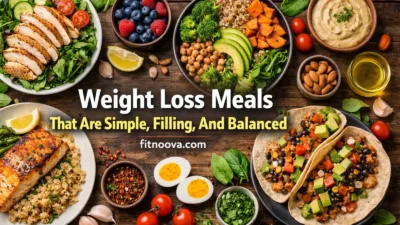
Weight loss usually works best when you stop chasing quick fixes and start building a routine you can keep. For most beginners, that means eating in a way that creates a manageable calorie deficit, moving more, keeping some form of strength training in the week, and paying attention to sleep, stress, and consistency.
Public health guidance also supports this broader approach rather than relying on one diet, one workout, or one supplement.
Quick Answer
Weight loss happens when your body uses more energy than it takes in over time, but the safest and most realistic way to get there is through sustainable habits, not aggressive restriction. A strong beginner plan usually includes a balanced eating pattern, regular physical activity, two weekly strength sessions, enough sleep, and a routine you can follow for months instead of days.
What Weight Loss Really Means
At the most basic level, weight loss is driven by energy balance. If you consistently take in less energy than your body uses, body weight tends to go down over time. That part is simple. Living it out is not.
Real life brings hunger, social eating, stress, low sleep, schedule changes, medications, and long workdays. That is why the best weight loss advice is usually boring in a good way. It focuses on repeatable habits. Health agencies also note that weight management is influenced by more than willpower alone, including sleep, stress, health conditions, medications, and environment.
Start With A Goal You Can Actually Maintain
A good beginner goal is not “lose as much as possible.” A better goal is to create a plan you can still follow when life gets messy.
That often means:
- cooking a few more meals at home
- building meals around protein, fiber, and produce
- walking more often
- doing basic strength work twice a week
- sleeping enough to avoid constant appetite swings
- tracking a few useful behaviors instead of obsessing over perfection
If your current routine is all over the place, even modest changes can matter. Some people first need to aim for weight stability, fewer binge-like eating episodes, or better meal structure before faster fat loss becomes realistic.
The Best Weight Loss Diet Is Usually The One You Can Repeat
There is no single eating style that works for everyone. What matters most is whether your way of eating helps you stay in a calorie deficit without making you miserable.
A useful beginner approach looks like this:
- include a source of protein at most meals
- eat vegetables, fruit, beans, whole grains, or other high-fiber foods often
- keep highly processed snacks and sugary drinks from becoming automatic defaults
- make portions easier to manage without turning meals into punishment
- leave room for foods you enjoy so the plan does not collapse after one social event
Public health and medical sources consistently recommend healthy eating patterns you can maintain over time rather than short, extreme diets. They also point out that regular physical activity supports weight loss and helps with keeping weight off, but food choices still matter because exercise alone often is not enough to create a large deficit.
Calories Matter, But You Do Not Need To Be Perfect
A calorie deficit matters for weight loss, but beginners often make it harder than it needs to be.
You do not need to:
- count every leaf of spinach
- guess your worth from the scale each morning
- cut out entire food groups for no reason
- aim for the lowest calories you can survive on
You do need to understand the basics. Foods that are high in calories and easy to overeat can slow progress fast. Foods with lower energy density, such as vegetables, fruit, broth-based soups, beans, potatoes, Greek yogurt, and lean protein, can help you feel fuller for fewer calories. Mayo Clinic specifically highlights lower energy density as a practical way to feel full on fewer calories.
For many beginners, the most useful first step is not detailed tracking forever. It is learning where excess calories tend to hide:
- liquid calories
- frequent snacking without hunger
- oversized restaurant portions
- “healthy” foods eaten in huge amounts
- weekend eating that erases weekday structure
Build Meals That Make Weight Loss Easier
You do not need a complicated meal plan. You need meals that are filling, simple, and repeatable.
A good plate often includes:
- protein
- produce
- a high-fiber carb or smart starch portion
- healthy fat in a reasonable amount
Here are a few examples:
- Greek yogurt, berries, and oats
- eggs with toast and fruit
- grilled chicken, rice, and roasted vegetables
- lentil bowl with salad and yogurt sauce
- salmon, potatoes, and green beans
- turkey sandwich with fruit and a side salad
This style of eating is easier to sustain because it reduces the constant tug-of-war between hunger and restraint.
Exercise Helps, But It Is Not Just About Burning Calories
Many beginners think weight loss means endless cardio. That is too narrow.
Exercise supports weight loss in several ways:
- it helps increase daily energy use
- it supports fitness and health markers
- it helps preserve muscle when dieting
- it can improve mood, routine, sleep, and stress management
Adults are generally advised to get at least 150 minutes of moderate-intensity aerobic activity each week, along with muscle-strengthening activity at least two days a week. You can spread that out across the week, and it does not have to be fancy. Brisk walking counts. So do cycling, dancing, swimming, and many home workouts.
A Simple Beginner Workout Plan For Weight Loss
If you are new to exercise, this is enough to start:
Weekly Plan
- 3 to 5 days of walking, biking, or another moderate activity
- 2 full-body strength sessions
- 1 to 2 easier days for recovery, light walking, or mobility
Example Week
Monday: 30-minute brisk walk
Tuesday: Full-body strength workout
Wednesday: 25-minute walk
Thursday: Rest or light movement
Friday: Full-body strength workout
Saturday: 35 to 45-minute walk
Sunday: Easy walk or full rest
Beginner Strength Session
Do 2 to 3 rounds:
- squat to chair or bodyweight squat
- wall push-up or incline push-up
- hip hinge or dumbbell Romanian deadlift
- one-arm row with dumbbell or band
- glute bridge
- plank or dead bug
Keep the effort moderate. You should feel like you are working, but not destroyed. For beginners, the goal is to create a routine your body can recover from, not to prove toughness.
Why Strength Training Matters During Weight Loss
When people try to lose weight with only cardio and low food intake, they often end up feeling flat, tired, and frustrated. Strength training helps protect lean mass, improves function, and gives structure to a weight loss plan.
It also helps beginners focus on performance goals, not only scale changes. That matters because the scale does not always move in a straight line, even when progress is real.
Walking Is Still One Of The Best Tools
Walking is underrated because it is simple.
It is useful for beginners because it is:
- accessible
- low impact
- easier to recover from than hard workouts
- realistic to fit into daily life
- good for people who are deconditioned or carrying more body weight
You do not need to start with long walks. Ten to fifteen minutes after meals, one extra daily walk break, or parking farther away can be enough to build momentum.
Sleep And Stress Affect Weight Loss More Than People Think
Weight loss is not only about food and workouts. Public health guidance also points to sleep and stress as part of healthy weight management.
Poor sleep can make appetite, cravings, decision-making, and recovery harder to manage. CDC notes that better sleep habits support health and healthy weight, and that adults sleeping fewer than 7 hours are more likely to report several health problems.
That does not mean perfect sleep is required before weight loss can happen. It means sleep is worth treating like part of the plan:
- keep a regular sleep schedule
- limit late-night screen time when possible
- avoid heavy meals and excess caffeine close to bedtime
- avoid building a routine so demanding that it wrecks recovery
How To Know If Your Plan Is Too Aggressive
A weight loss plan is probably too harsh if:
- you are hungry all the time
- your workouts feel worse every week
- you are thinking about food nonstop
- you keep swinging between restriction and overeating
- your social life disappears because the plan is too rigid
- you feel dizzy, exhausted, or unusually irritable
A plan that looks impressive on paper but fails every weekend is usually worse than a moderate plan that works for six months.
What To Track Instead Of Obsessing
The scale can be useful, but it is not the whole story. Body weight naturally fluctuates because of water, food volume, hormones, sodium intake, and bowel patterns.
Helpful things to track include:
- your average weight over time
- waist measurements
- workout consistency
- daily step count
- protein and produce intake
- sleep hours
- how often you eat meals versus grazing all day
If you want a more individualized estimate for calorie needs and timeline, NIDDK’s Body Weight Planner can help users build a personalized calorie and activity plan.
Common Weight Loss Mistakes
Doing Too Much Too Soon
A total lifestyle overhaul sounds powerful, but it usually breaks fast. Start with a few changes you can maintain.
Treating Exercise Like Punishment
Workouts should support your life, not make you dread every day. Consistency beats punishment.
Drinking A Lot Of Calories Without Noticing
Sweet coffee drinks, soda, juice, and alcohol can add up fast without keeping you full.
Ignoring Strength Training
Cardio matters, but skipping resistance work can make a beginner plan less balanced and harder to sustain.
Eating Too Little
Very low intake often leads to rebound eating, poor training, and burnout.
Expecting Weekly Perfection
A rough weekend or missed workout does not ruin progress. The bigger risk is deciding one off-plan meal means the week is over.
Believing There Is One “Best” Diet
The best approach is the one that fits your health needs, preferences, and routine well enough to keep going.
When To Slow Down Or Get Medical Guidance
Weight loss advice online is often too casual about medical context. It is smart to check in with a qualified clinician before starting if you:
- have diabetes
- have a history of eating disorders
- are pregnant or recently postpartum
- have heart, kidney, or major metabolic conditions
- take medications that affect appetite, blood sugar, or weight
- plan to use prescription weight-loss medication
NIDDK also advises discussing risks and benefits with a health professional before taking obesity medications, since these drugs can have significant side effects and are not appropriate for everyone.
FAQ
How can a beginner start weight loss without getting overwhelmed?
Start smaller than you think you need to. Build regular meals, walk most days, add two strength sessions a week, and improve sleep where you can. That is enough to create traction without turning your life upside down.
Is diet or exercise more important for weight loss?
Both matter, but nutrition usually has the bigger effect on creating a calorie deficit. Exercise still matters because it supports health, fitness, routine, and long-term weight maintenance.
How much exercise do I need to lose weight?
Adults are generally advised to get at least 150 minutes of moderate activity a week plus muscle-strengthening work at least two days a week. Some people may need more activity for long-term weight control, especially if food intake does not change much.
Do I need to count calories to lose weight?
Not always. Some people do well by improving portions, food quality, and meal structure without strict tracking. Others find short-term calorie tracking helpful because it shows where extra intake is coming from.
What is the best food for weight loss?
No single food causes weight loss by itself. Meals that are high in protein and fiber and lower in calorie density tend to be more helpful because they support fullness and make a calorie deficit easier to manage.
Why is my weight not dropping every week?
Body weight can fluctuate even when fat loss is happening. Water retention, sodium, hormones, soreness, stress, and digestion can all affect the scale. Look at trends over several weeks, not one random weigh-in.
Conclusion
Weight loss gets much easier when you stop looking for a perfect method and start building a repeatable one. For most beginners, the basics still matter most: a manageable calorie deficit, better meal structure, regular walking, some strength training, enough sleep, and patience with normal fluctuations. The goal is not to do everything at once. It is to make weight loss steady enough to last.