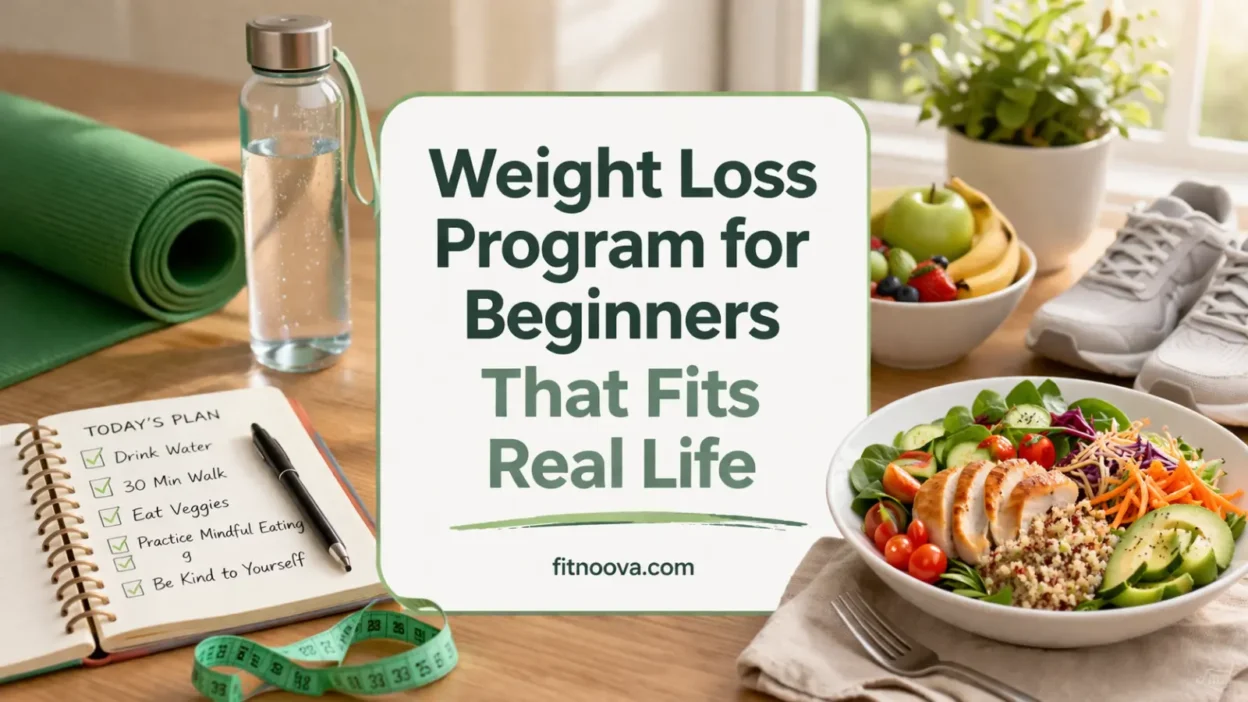
A good weight loss program is not a crash diet, a punishment plan, or an all-day workout schedule. It is a simple system you can repeat: eat in a way you can maintain, move regularly, do some strength training, sleep enough, and make changes that are realistic for your body and schedule. Public-health guidance also supports steady, gradual weight loss over quick fixes.
Quick Answer
The best weight loss program for most beginners is one that creates a manageable calorie deficit without extreme restriction, includes regular walking or other aerobic activity, adds strength training at least twice a week, and supports sleep and stress management. Adults are generally advised to aim for at least 150 minutes of moderate activity per week plus muscle-strengthening work on 2 or more days, but beginners can start below that and build up.
What A Healthy Weight Loss Program Actually Looks Like
A healthy program is built around repeatable habits, not short bursts of effort. The CDC and NIDDK both emphasize the same foundation: nutritious eating, regular physical activity, enough sleep, and a plan you can keep going after the first few motivated weeks. That matters because people who lose weight gradually are more likely to keep it off than people who try to lose it as fast as possible.
That means your program should feel structured, but not punishing. You should be able to imagine doing it on a busy workweek, during a stressful month, and after the first wave of enthusiasm wears off. If your plan only works under perfect conditions, it is not much of a plan. This is also why reputable guidance warns against programs that promise fast results without long-term maintenance support.
Who This Weight Loss Program Is For
This approach fits most beginners, busy adults, and people who want a safer starting point instead of a hard-core routine. It also works well for people who are returning to exercise after time off or who have been stuck in the cycle of “start strict, burn out, quit, repeat.”
It is not a substitute for individualized medical care. If you are pregnant, recovering from an eating disorder, managing diabetes, taking weight-related medications, dealing with significant joint pain, or living with a heart, lung, hormone, or metabolic condition, it is smart to speak with a qualified clinician before changing your diet or exercise routine in a major way. Weight can also be affected by medications, medical conditions, hormones, age, and other factors beyond effort alone.
The Five Parts Of A Beginner-Friendly Weight Loss Program
1. A Calorie Deficit You Can Live With
Weight loss usually requires eating fewer calories than you use, but the method matters. The most useful plan is one you can stay with over time, not the most aggressive one you can survive for ten days. NIDDK specifically points people toward a healthy eating pattern they can maintain rather than a short-lived fix.
In practice, that often means:
- eating meals on a fairly regular schedule
- including protein and fiber more consistently
- drinking calorie-containing beverages less often
- keeping ultra-processed “extras” smaller and less automatic
- building meals around foods that are filling, not just “low calorie”
You do not need to eat perfectly. You need a pattern that makes overeating less likely most days.
2. Regular Aerobic Activity
For general health, adults should get at least 150 minutes of moderate-intensity aerobic activity each week, or 75 minutes of vigorous activity, or a combination of the two. Brisk walking counts. The minutes can be broken up across the week, which is good news for beginners who do better with short sessions.
For weight loss, walking is often the easiest place to start because it is accessible, low cost, and easier to recover from than harder training. If you are currently inactive, even a 10- to 15-minute walk after one or two meals per day is a meaningful beginning.
3. Strength Training
Adults are also advised to do muscle-strengthening work on 2 or more days per week. This matters in a weight loss program because strength training helps maintain muscle while you lose weight, supports function, and adds an important form of physical activity beyond cardio alone.
For a beginner, strength training does not need to mean heavy barbells. Bodyweight movements, resistance bands, machines, dumbbells, or a simple home circuit can all work. The goal is not to crush yourself. The goal is to train the major muscle groups consistently and get a little stronger over time.
4. Sleep
Sleep is not an extra credit habit. CDC guidance notes that getting enough sleep supports healthy weight, stress, mood, and metabolism, and adults generally need 7 or more hours per night.
Many people try to solve a schedule problem with willpower. That usually backfires. If you are underslept most nights, start by cleaning up one part of your sleep routine before you try to perfect the rest of your plan.
5. Stress Management And Consistency
Stress does not make weight loss impossible, but it can make routine habits harder to follow. CDC weight guidance includes stress management as part of a healthy weight-loss approach, not as a side note.
You do not need elaborate recovery rituals here. A few basics go a long way: a short walk, a regular bedtime, fewer skipped meals, less all-or-nothing thinking, and a program with enough flexibility that one rough day does not turn into a rough month.
A Simple 8-Week Weight Loss Program For Beginners
This is not a medical plan or a guaranteed-results plan. It is a practical starting structure.
Weeks 1 And 2: Build The Base
Your goal:
- walk 15 to 20 minutes on 4 to 5 days per week
- do 2 full-body strength sessions per week
- eat 3 structured meals most days
- add one protein-rich food to breakfast or lunch
- reduce one obvious source of excess calories, such as soda, juice, specialty coffees, or nightly snacking
Your strength workouts can be very simple:
- squat to chair or bodyweight squat
- wall push-up, incline push-up, or dumbbell press
- hip hinge or glute bridge
- one rowing movement
- plank or dead bug
- optional step-up or split squat
Do 1 to 2 sets of each exercise and stop with a few reps left in the tank.
Weeks 3 And 4: Raise Activity Gently
Your goal:
- build walks toward 25 to 30 minutes on 5 days per week
- keep 2 strength sessions per week
- aim for vegetables or fruit at least twice a day
- make your meals more filling before you try to make them smaller
This is a better time to improve meal quality than to slash intake. A plate that includes lean protein, produce, and a reasonable carbohydrate source is usually easier to stick with than a plate built around restriction.
Weeks 5 And 6: Improve Structure
Your goal:
- reach roughly 150 minutes of moderate activity across the week if you can
- keep strength training twice weekly
- limit “mindless extras” that are easy to overlook
- set one consistent sleep target
At this stage, many beginners do well with a simple rule: most meals should keep you full for a few hours. If they do not, you may need more protein, more fiber, or better meal timing.
Weeks 7 And 8: Progress Without Going Extreme
Your goal:
- keep the same weekly structure
- progress one variable at a time: more walking, slightly harder strength work, or better meal consistency
- review what is actually sustainable
This is where a lot of people go wrong. They feel good, then suddenly double the plan. A better move is to keep the routine recognizable and make only one meaningful upgrade at a time.
What To Eat In A Weight Loss Program
There is no single diet that everyone must follow. What matters most is whether your eating pattern helps you manage hunger, control portions, and stay consistent over time. NIDDK explicitly frames healthy eating for weight loss around sustainability.
A practical meal pattern often looks like this:
- Protein at each meal: eggs, Greek yogurt, chicken, fish, tofu, beans, cottage cheese, lean meat, or protein-rich snacks
- High-fiber foods: fruit, vegetables, beans, oats, potatoes, whole grains
- Mostly calorie-free drinks: water, sparkling water, unsweetened tea, black coffee if tolerated
- Flexible treats: included on purpose, not as an uncontrolled rebound after over-restriction
A few meal examples:
- Greek yogurt, berries, and oats
- eggs with toast and fruit
- chicken, rice, and vegetables
- bean bowl with salsa, avocado, and salad
- salmon, potatoes, and roasted vegetables
That is enough structure for most people to make progress without feeling like they are living in a food spreadsheet.
How Hard Your Workouts Should Feel
A beginner weight loss program should feel doable, not crushing. Most cardio can sit in the moderate-intensity range, where you can still speak in short sentences. Strength work should feel like effort, but not like sloppy max-effort grinding.
You do not need to be drenched in sweat for a workout to count. The goal is to accumulate work you can recover from and repeat. Public-health guidance also supports building up gradually when you are not yet active.
How To Progress Without Burning Out
Progress should be clear but modest. Useful ways to progress include:
- adding 5 to 10 minutes to total weekly walking
- adding one extra set to a few strength exercises
- using slightly more resistance
- improving exercise form and control
- becoming more consistent with meal timing
- getting closer to a stable sleep schedule
That is enough. A weight loss program works better when you build capacity first and intensity second.
How To Know If Your Weight Loss Program Is Working
The scale can help, but it should not be the only measure. CDC guidance notes that steady loss of about 1 to 2 pounds per week is the healthier pattern for most adults trying to lose weight.
Also watch for:
- improved consistency
- better energy across the week
- easier walks
- stronger workouts
- better hunger control
- looser clothes
- fewer “start over Monday” cycles
Sometimes the earliest win is not rapid weight change. It is finally having a routine you can keep doing.
Common Weight Loss Program Mistakes
Starting Too Aggressively
Very low food intake, daily hard workouts, and an overnight identity change usually do not last. Rapid weight loss can also carry risks. NIDDK notes that losing weight very quickly may increase the chance of gallstones.
Doing Only Cardio
Walking and cardio matter, but skipping strength work leaves a major gap in most beginner plans. A stronger body is usually easier to train consistently.
Ignoring Sleep
If you are trying to out-discipline chronic sleep loss, you are making the job harder than it needs to be. Sleep supports weight management, mood, and day-to-day functioning.
Treating One Bad Meal Like Failure
One off-plan meal does not matter much. The “I already messed up” response is what causes the real damage. A good program has enough flexibility that normal life does not break it.
Using A Program With No Maintenance Plan
NIDDK advises asking whether a weight-loss program includes a plan for keeping weight off. That is a smart question because the finish line is not “lost some weight once.” The finish line is building habits you can still use later.
When To Modify The Plan Or Check With A Professional
Slow down and reassess if:
- workouts leave you unusually wiped out for days
- pain feels sharp, worsening, or joint-specific rather than like normal training fatigue
- you are cutting food so hard that you feel faint, obsessed, or out of control around eating
- your schedule cannot support the plan you wrote
- you have a medical condition or medication issue that may affect weight, appetite, blood sugar, blood pressure, or exercise tolerance
A weight loss program should make your life more stable, not less.
FAQ
How long should a weight loss program last?
Long enough to become normal. The most useful answer is not 4 weeks or 12 weeks. It is whether the habits are sustainable enough to carry into maintenance. Reputable guidance on safe programs includes a plan for keeping weight off, not just losing it.
Is walking enough for weight loss?
Walking can absolutely be a strong part of a weight loss program, especially for beginners. But most people do better when walking is paired with strength training and a more structured eating pattern. Adults are generally advised to combine aerobic activity with muscle-strengthening work each week.
Do I need to join a gym?
No. A beginner weight loss program can work at home with walking, bodyweight training, bands, or a few dumbbells. What matters most is consistency, progression, and choosing activities you can actually repeat.
What is a realistic rate of weight loss?
For many adults, a gradual pace of about 1 to 2 pounds per week is considered the healthier pattern and is more likely to be maintained than faster loss.
Should I eat less or exercise more?
Usually both, but in a balanced way. A maintainable eating pattern and regular activity work better together than relying on one side alone. NIDDK describes healthy eating and physical activity as the core of losing weight and maintaining it.
What if the scale is not moving every week?
That can happen. Daily body weight shifts for many reasons, including food intake, hydration, and routine changes. Look for trend movement over time and also pay attention to habits, energy, strength, and how your clothes fit. If your routine is solid but nothing is changing over a longer stretch, review portion sizes, activity levels, and sleep before assuming you need a more extreme plan.
Conclusion
The best weight loss program is usually the one that looks almost boring on paper: structured meals, regular walking, strength training twice a week, enough sleep, and steady adjustments instead of dramatic overhauls. That does not make it weak. It makes it usable. And a usable weight loss program is far more likely to help you make progress you can actually keep.