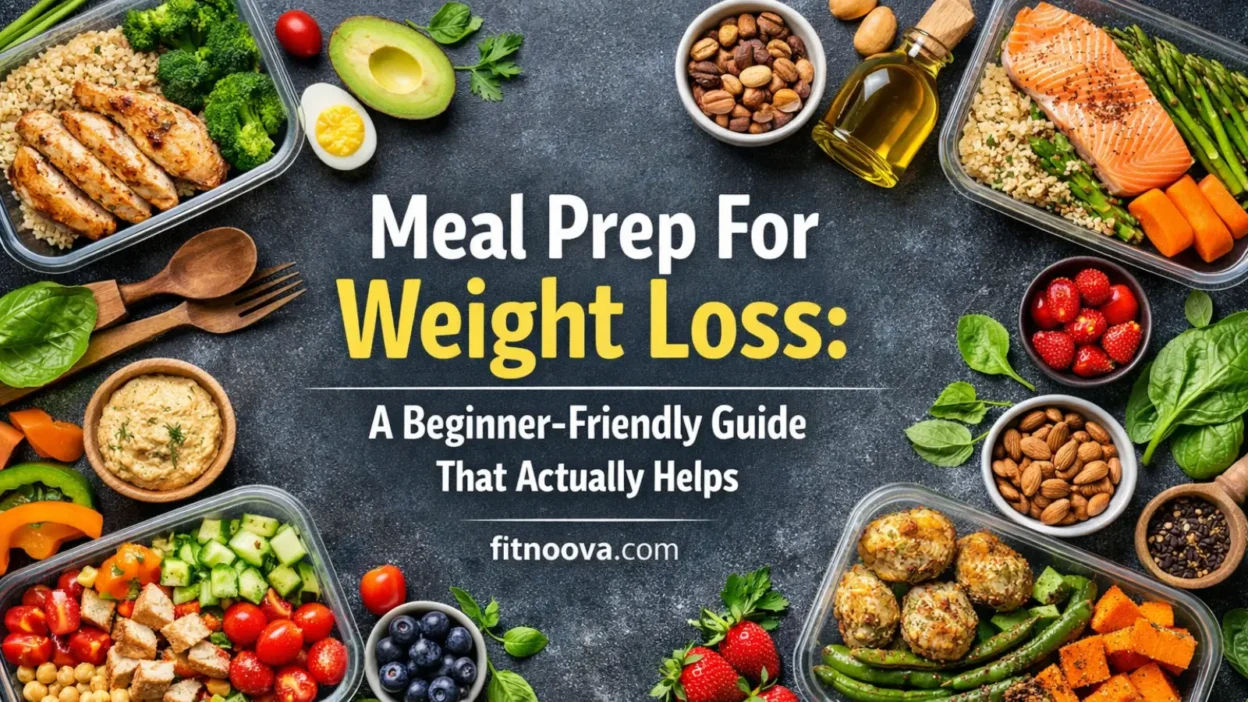
Meal prep for weight loss is not about eating bland chicken and broccoli out of identical containers for the rest of your life. It is about making healthy meals easier to follow than takeout, random snacking, or oversized portions.
When done well, meal prep helps you stay more consistent with calories, portions, and food quality without having to make a dozen food decisions every day. The best version is simple, repeatable, and realistic enough to keep doing when life gets busy. A sustainable weight-loss approach is built around a reduced-calorie eating pattern you can actually maintain over time, not a short burst of restriction.
Quick Answer
Meal prep for weight loss means planning, cooking, and portioning meals ahead of time so it is easier to eat a balanced, lower-calorie diet consistently. It works best when your meals are built around vegetables, fruit, protein foods, whole grains or other high-fiber carbs, and mostly water instead of sugary drinks.
What Meal Prep for Weight Loss Really Means
A lot of people think meal prep means cooking every meal for seven days in one exhausting session. It does not have to look like that.
For most beginners, meal prep works best in one of two forms:
- Full meal prep: you cook complete meals ahead of time and portion them into containers.
- Component prep: you cook a few basics such as protein, rice, potatoes, chopped vegetables, yogurt bowls, or sauces, then mix and match them during the week.
Component prep is often easier to stick with because you get more variety. You can eat the same grilled chicken in a rice bowl on Monday, a wrap on Tuesday, and a salad on Wednesday without feeling like you are repeating the exact same meal.
The goal is not perfection. The goal is to make your next good choice faster.
Why Meal Prep Can Help With Weight Loss
Weight loss usually comes down to doing boring but important things consistently: eating reasonable portions, limiting high-calorie extras, planning ahead, and staying close to a healthy routine long enough for it to work. Meal prep helps with all of that.
When your meals are already planned, you are less likely to skip meals, order whatever is nearby, or overeat because you are starving by evening. A healthy eating plan for weight loss should reduce calories in a way you can maintain, and it should lean on foods that support fullness and good nutrition rather than quick-fix rules.
It also helps you control the parts people often underestimate, like oils, dressings, sugary drinks, snack portions, and restaurant-size servings. Current federal nutrition guidance emphasizes fruits, vegetables, whole grains, protein foods, and dairy or fortified soy alternatives, while keeping added sugars, sodium, and saturated fat in check.
The Best Foods to Prep for Weight Loss
The easiest meal-prep foods are the ones that hold up well in the fridge, reheat well, and help you stay full.
Good protein options include chicken, turkey, eggs, Greek yogurt, cottage cheese, tofu, tempeh, beans, lentils, tuna, salmon, and edamame. Healthy eating guidance consistently includes a variety of protein foods such as lean meats, poultry, eggs, legumes, soy foods, nuts, and seeds.
For produce, think less about “superfoods” and more about convenience. Washed greens, cucumbers, bell peppers, carrots, broccoli, cauliflower, berries, apples, oranges, and frozen vegetables all make meal prep easier.
For carbs, focus on options that are filling and easy to portion, such as oats, potatoes, sweet potatoes, brown rice, quinoa, whole grain pasta, beans, lentils, and whole grain wraps. Fiber-rich foods such as fruits, vegetables, whole grains, legumes, nuts, and seeds can help with fullness and overall diet quality.
You do not need “diet foods.” You need foods that are nutritious, practical, and easy to repeat.
A Simple Formula for Building Each Meal
If you want meal prep to help with weight loss, each meal should be balanced enough to keep you satisfied for a few hours.
A simple formula is:
- Half the meal from vegetables or fruit
- A solid serving of protein
- A moderate portion of a higher-fiber carb
- A small amount of fat for flavor and staying power
That pattern lines up well with current healthy eating guidance, which emphasizes fruits, vegetables, whole grains, protein foods, and staying within your calorie needs.
Here are a few easy examples:
- Chicken, roasted vegetables, and potatoes
- Greek yogurt, berries, oats, and chia seeds
- Turkey chili with beans and a side salad
- Tofu stir-fry with rice and broccoli
- Tuna wrap with crunchy vegetables and fruit
- Lentil bowl with cucumbers, tomatoes, greens, and yogurt sauce
That is the sweet spot: enough structure to control calories, enough flexibility to keep eating like a normal person.
How To Meal Prep for Weight Loss Step by Step
Start With Your Real Week
Do not prep for the fantasy version of your life.
Look at your actual schedule and ask:
- Which meals tend to go off track?
- When am I most likely to grab fast food or snacks?
- How many meals do I realistically need ready?
For some people, the answer is five lunches. For others, it is three dinners and two breakfasts. Start there.
Pick Two or Three Repeatable Meals
Beginners do better with less variety than they think. Pick:
- 2 breakfast options
- 2 lunch options
- 2 dinner options
- 1 or 2 snack options
That is enough variety to avoid boredom without turning prep day into a second job.
Prep Protein First
Protein is usually the hardest part to improvise when you are hungry, so start there.
Cook a batch of one or two proteins you actually like. This could be baked chicken, taco turkey, hard-boiled eggs, baked tofu, chili, lentils, or salmon. Once protein is ready, the rest of the meal usually comes together quickly.
Add Produce and One Smart Carb
Next, prep vegetables and one or two carb sources. Roast a tray of vegetables, wash salad greens, chop snack vegetables, cook rice or potatoes, and portion fruit.
This is where meal prep becomes useful instead of rigid. When you already have protein, produce, and a carb ready, healthy meals stop feeling like a project.
Portion Before You Are Hungry
A common mistake is cooking healthy food but leaving it in one giant pan. That often turns into accidental overeating.
Instead, portion meals and snacks while you are still thinking clearly. This makes it easier to stay close to your plan, especially at lunch or after work.
If you want a more tailored starting point, USDA’s MyPlate guidance can help you think about food groups and daily calorie needs, and the NIDDK Body Weight Planner can help adults estimate calorie and activity targets for a weight goal.
Keep Flavor High
Weight-loss meal prep fails when the food is technically healthy but not enjoyable enough to eat twice.
Use salsa, herbs, spices, lemon, vinegar, yogurt-based sauces, mustard, garlic, chili flakes, and low-sugar marinades. Flavor matters. If your food tastes good, you are much less likely to go looking for a backup meal an hour later.
A Simple 3-Day Meal Prep Example
Here is what a beginner-friendly setup can look like.
Day 1
Breakfast: Greek yogurt with berries, oats, and cinnamon
Lunch: Chicken rice bowl with broccoli and a light sauce
Dinner: Turkey chili with beans and a side salad
Snack: Apple with a small portion of peanut butter
Day 2
Breakfast: Egg muffins with fruit
Lunch: Leftover turkey chili
Dinner: Salmon, roasted potatoes, and green beans
Snack: Cottage cheese or unsweetened yogurt with fruit
Day 3
Breakfast: Overnight oats with chia and berries
Lunch: Tuna wrap with crunchy vegetables
Dinner: Tofu stir-fry with mixed vegetables and rice
Snack: Carrots, cucumbers, and hummus
Notice what this plan does well. It repeats ingredients, uses simple meals, includes protein at each meal, and avoids the trap of trying to prep ten different recipes in one week.
How Much Food Should You Prep?
Prep enough to make your week easier, not so much that you are throwing food away on Friday.
For most people, three to four days at a time is the sweet spot for freshness and food safety. If you want to prep more than that, freeze some portions rather than storing everything in the fridge. USDA food-safety guidance says most cooked leftovers should be used within 3 to 4 days, and freezing can extend storage safely for longer.
That means many people do best with one larger prep session and a smaller midweek reset.
Food Safety Matters More Than People Think
Meal prep only helps if the food stays safe to eat.
Refrigerate perishable food within 2 hours, or within 1 hour if it is sitting in temperatures above 90°F. Store leftovers in shallow containers so they cool faster. Keep your refrigerator at 40°F or below and your freezer at 0°F or below. Most cooked leftovers should be eaten within 3 to 4 days.
A few practical habits make a big difference:
- Let hot food cool slightly, but do not leave it out for hours
- Label containers if you tend to forget dates
- Freeze extra portions early instead of “hoping” you will get to them
- Reheat thoroughly
- Throw out anything questionable
This part is not glamorous, but it matters.
Common Meal Prep Mistakes That Slow Weight Loss
Making Meals Too Small
If your meals are too tiny, you will be hungry an hour later and start grazing. Weight-loss meals should still feel like real meals. Protein, produce, and fiber help.
Treating Healthy Food as Unlimited
Nuts, cheese, dressings, oils, granola, trail mix, and nut butters can fit into a healthy plan, but portions matter because they add calories quickly. Choosing smaller portions of foods high in calories, sugar, and fat is a core part of sustainable weight control.
Prepping Foods You Do Not Actually Like
This sounds obvious, but it is one of the biggest reasons people quit. There is no prize for meal-prepping plain food you are already tired of by Tuesday.
Relying Only on Willpower
If cookies, chips, or delivery are always your default backup plan, your prepped meals need to be easier to grab than the alternative. Make the good choice the convenient choice.
Going Too Aggressive
The fastest-looking plan is rarely the one people keep. NIDDK guidance emphasizes realistic goals, long-term habits, and avoiding programs that promise dramatic short-term results. An initial goal of 5% to 10% of starting weight over 6 months and a short-term pace of about 1 to 2 pounds per week are commonly recommended, depending on the person.
Ignoring Your Individual Needs
A generic meal-prep template is not medical care. If you have diabetes, kidney disease, a digestive condition, a history of disordered eating, or take medicines that affect appetite, blood sugar, or weight, it makes sense to get personal guidance. Weight and health are influenced by more than willpower alone, including sleep, medicines, and health conditions.
FAQ
Can meal prep help with weight loss?
Yes, if it helps you eat a healthy, reduced-calorie pattern more consistently. Meal prep is useful because it reduces last-minute choices, makes portions easier to manage, and helps you stick with a routine you can maintain.
How many days ahead should I meal prep?
For most fridge meals, 3 to 4 days is a practical range. If you want to prep more than that, freeze extra portions early.
Do I need to count calories for meal prep to work?
Not always. Some people do well with portion awareness and a simple meal formula. Others prefer using a planner or food log for more structure. If you want a personalized estimate, USDA MyPlate and the NIDDK Body Weight Planner are more useful than guessing.
What are the best high-protein meal prep foods for beginners?
Easy beginner options include eggs, Greek yogurt, chicken, turkey, tofu, beans, lentils, tuna, salmon, edamame, and cottage cheese. These foods are practical, easy to portion, and fit well into a balanced eating pattern that includes a variety of protein foods.
Can I meal prep and still eat some favorite foods?
Yes. Healthy eating does not require perfect eating. CDC guidance notes that comfort foods can fit in limited amounts, which is often more realistic than trying to avoid everything you enjoy.
What if I get bored eating the same thing?
Prep components instead of identical meals. Cook one or two proteins, one carb, chopped vegetables, and a couple of sauces, then build different meals from the same ingredients. That gives you structure without making every lunch feel copied and pasted.
Conclusion
Meal prep for weight loss works best when it makes healthy eating simpler, not stricter. Focus on repeatable meals built from protein, produce, and filling carbs, portion them before hunger takes over, and prep only enough food that you can store safely and realistically eat.
You do not need a perfect plan. You need a plan that fits your week, helps you stay consistent, and is easy enough to keep using next week too.