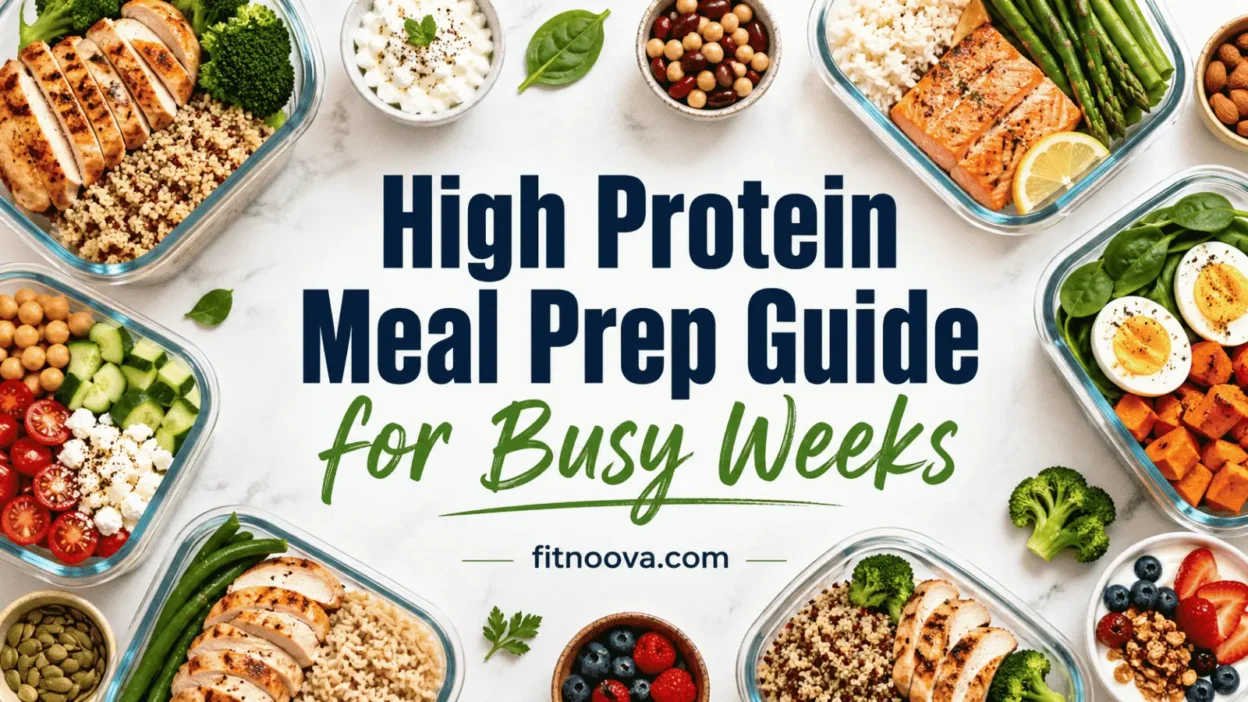
High protein meal prep is one of the easiest ways to make healthier eating feel less chaotic. Instead of hoping you will find a balanced lunch between meetings, errands, workouts, and late dinners, you prepare a few reliable protein-rich meals ahead of time and keep them ready for the week.
The goal is not to eat plain chicken and broccoli every day. A good high protein meal prep plan gives you enough protein to support fullness, muscle maintenance, and active living while still leaving room for fiber-rich carbs, healthy fats, sauces, flavor, and variety. Protein needs vary by age, body size, activity level, and health status, so this guide uses practical meal-building ranges rather than one rigid number. The Academy of Nutrition and Dietetics notes that protein needs depend on several individual factors, including age, sex, health status, and activity level.
Quick Answer
High protein meal prep means preparing meals ahead of time that include a solid protein source, such as chicken, turkey, fish, eggs, Greek yogurt, tofu, tempeh, lentils, beans, cottage cheese, or lean beef. A simple target for many adults is to build meals with about 25 to 40 grams of protein, plus vegetables, a fiber-rich carb, and a satisfying fat source. For safety, most cooked leftovers should be refrigerated promptly and eaten within 3 to 4 days, or frozen for longer storage.
What Counts As A High Protein Meal Prep?
A high protein meal prep is not just a meal with meat in it. It is a prepared meal or meal component that makes protein the anchor of the plate.
For most busy adults, that usually means each main meal includes:
- A clear protein source
- A vegetable or fruit
- A carbohydrate that supports energy
- A fat source or sauce for satisfaction
- Enough flavor that you actually want to eat it again
The Dietary Guidelines for Americans recommend eating a variety of protein foods from both animal and plant sources, including eggs, poultry, seafood, red meat, beans, peas, lentils, nuts, seeds, and soy foods. That variety matters because it helps prevent meal fatigue and gives you a broader mix of nutrients.
A practical meal prep plate might look like this:
Grilled chicken, roasted potatoes, green beans, and yogurt ranch.
Or:
Tofu, brown rice, edamame, cucumber, carrots, and spicy peanut sauce.
Or:
Turkey taco bowls with beans, rice, peppers, salsa, lettuce, and avocado.
The structure stays consistent. The flavors change.
Why Protein Matters When You Meal Prep
Protein is an essential nutrient involved in building and repairing body tissues, including muscle. It also tends to make meals feel more filling, which is one reason high protein meal prep is popular with people who are trying to eat more consistently, manage hunger, or support an active routine.
That does not mean more protein is always better. A balanced meal still needs carbs for energy, fats for satisfaction, and fiber-rich foods for digestive health. The best meal prep plan is not the one with the highest protein number on paper. It is the one you can repeat without feeling restricted, bored, or overly full.
If you have kidney disease, a medical condition that affects protein needs, a history of disordered eating, or nutrition instructions from a clinician, use those instructions instead of generic online targets.
How Much Protein Should You Put In Each Meal?
A useful starting point for many adults is 25 to 40 grams of protein per meal. Smaller bodies, lighter appetites, or lower-calorie meals may land closer to the lower end. Larger bodies, very active people, or people eating fewer meals per day may prefer the higher end.
Here is what that can look like in real food:
- 4 to 5 ounces cooked chicken breast: about 35 to 45 grams
- 1 cup plain Greek yogurt: often about 18 to 25 grams, depending on brand
- 1 cup cooked lentils: about 18 grams
- 2 large eggs plus ½ cup cottage cheese: about 25 to 30 grams
- 5 ounces extra-firm tofu: often about 15 to 20 grams, depending on brand
- 1 can tuna: often about 25 to 35 grams, depending on size and packing
These are estimates, not rules. Labels vary. Portions vary. A beginner does not need to track every gram forever. The bigger win is learning how to build a meal where protein is not an afterthought.
The Best Protein Sources For Meal Prep
The best protein for meal prep is the one that fits your budget, taste, cooking skill, and storage needs. A mix of animal and plant proteins usually gives you the most flexibility.
Lean Animal Proteins
Chicken breast, chicken thighs, turkey, lean ground beef, pork tenderloin, fish, shrimp, eggs, cottage cheese, and Greek yogurt all work well for meal prep.
Chicken breast is popular because it is lean and versatile, but it can dry out if overcooked. Chicken thighs are more forgiving and often taste better after reheating. Ground turkey and lean beef are easy to batch cook for bowls, pasta, tacos, stuffed peppers, and lettuce wraps.
Fish and shrimp can be excellent options, but they are often best for shorter prep windows because texture and smell can change quickly. If you are sensitive to reheated seafood, prep the sides ahead and cook the fish fresh in 10 minutes.
Plant-Based Proteins
Tofu, tempeh, edamame, lentils, beans, chickpeas, split peas, seitan, soy curls, and high-protein pasta can all support high protein meal prep.
Plant-based meals often work best when you combine protein sources. For example, a lentil bowl with quinoa and pumpkin seeds is more satisfying than plain lentils alone. Tofu with edamame and rice can make a strong meal prep bowl. Chickpea pasta with marinara, vegetables, and a side of roasted tofu can also work well.
The USDA’s current protein guidance includes plant-sourced foods such as beans, peas, lentils, legumes, nuts, seeds, and soy as part of a varied protein pattern.
Quick No-Cook Protein Options
Not every meal prep plan needs a full cooking day. Keep a few no-cook or low-cook options on hand:
- Rotisserie chicken
- Canned tuna or salmon
- Greek yogurt
- Cottage cheese
- Hard-boiled eggs
- Canned beans
- Edamame
- Deli turkey with lower sodium when possible
- Protein shakes for occasional convenience
- Pre-cooked lentils
Convenience foods are not a failure. They can be the difference between a balanced meal and skipping lunch.
A Simple High Protein Meal Prep Formula
Use this formula when you do not want to follow a recipe:
Protein + Vegetable + Carb + Fat Or Sauce + Flavor Finish
Here is how to build it.
1. Choose One Protein
Pick one or two proteins for the week. If you are new to meal prep, do not cook five different proteins on Sunday. That sounds efficient but often turns into too much work.
Good beginner choices:
- Ground turkey
- Chicken thighs
- Eggs
- Greek yogurt
- Tofu
- Lentils
- Cottage cheese
- Tuna packets
2. Add Two Vegetables
Use one cooked vegetable and one fresh vegetable when possible. That keeps texture more interesting.
Good combinations:
- Roasted broccoli and shredded cabbage
- Sautéed peppers and romaine
- Roasted carrots and cucumber
- Zucchini and cherry tomatoes
- Green beans and spinach
- Cauliflower rice and slaw
3. Pick A Carb That Reheats Well
High protein does not mean low carb. Carbs can support workouts, mood, energy, and meal satisfaction.
Meal prep-friendly carbs include:
- Rice
- Potatoes
- Sweet potatoes
- Quinoa
- Oats
- Whole grain pasta
- Beans
- Corn tortillas
- High-fiber wraps
4. Add Fat Or Sauce
This is where meal prep becomes food you actually enjoy.
Try:
- Avocado
- Olive oil vinaigrette
- Tahini sauce
- Peanut sauce
- Pesto
- Greek yogurt ranch
- Hummus
- Salsa and cheese
- Sesame dressing
5. Finish With Flavor
Use acid, herbs, spices, or crunch. These small details keep meals from tasting flat.
Try lime juice, lemon juice, pickled onions, cilantro, parsley, chili crisp, everything bagel seasoning, toasted nuts, crushed tortilla chips, or hot sauce.
High Protein Meal Prep Ideas For Breakfast
Breakfast meal prep should be easy to grab, satisfying, and not overly sweet unless that is what you enjoy.
Greek Yogurt Protein Bowls
Combine plain Greek yogurt with berries, oats or granola, chia seeds, and a drizzle of nut butter. Keep crunchy toppings separate until serving.
For a higher-protein version, use Greek yogurt as the base instead of regular yogurt. Add cottage cheese if you like a thicker texture.
Egg And Cottage Cheese Bake
Whisk eggs with cottage cheese, chopped spinach, peppers, onions, and shredded cheese. Bake in a greased dish, slice into squares, and refrigerate.
Serve with fruit, toast, potatoes, or a high-fiber wrap.
Protein Overnight Oats
Mix oats, Greek yogurt, milk, chia seeds, cinnamon, and berries. Refrigerate overnight.
This works well for people who want a balanced breakfast but do not want to cook in the morning. Add protein powder only if you like the taste and texture. It is optional, not required.
Turkey Breakfast Wraps
Scramble eggs with turkey sausage or lean ground turkey, peppers, and a little cheese. Wrap in tortillas and refrigerate or freeze.
To reheat, wrap in a paper towel and microwave until hot throughout.
High Protein Meal Prep Ideas For Lunch
Lunch meal prep needs to survive transport, reheating, and busy schedules. Bowls, wraps, salads, and bento-style boxes usually work best.
Chicken Shawarma Bowls
Prep chicken thighs with garlic, lemon, cumin, paprika, and oregano. Serve with rice, cucumber, tomato, lettuce, and Greek yogurt sauce.
Keep the fresh vegetables separate from the hot components if you want better texture.
Turkey Taco Bowls
Cook lean ground turkey with taco seasoning. Add black beans, rice, sautéed peppers, lettuce, salsa, and a small amount of cheese or avocado.
This is one of the easiest high protein meal prep ideas for beginners because the ingredients are inexpensive and forgiving.
Tuna White Bean Salad Boxes
Mix tuna with white beans, celery, red onion, olive oil, lemon juice, parsley, salt, and pepper. Pack with whole grain crackers, cucumber slices, and fruit.
This option is high in protein and requires no reheating.
Tofu Peanut Noodle Bowls
Bake or pan-sear tofu until firm. Serve with noodles, shredded cabbage, carrots, edamame, and peanut-lime sauce.
Store the sauce separately if you want the vegetables to stay crisp.
High Protein Meal Prep Ideas For Dinner
Dinner meal prep should feel less like “diet food” and more like something you would cook anyway.
Sheet Pan Chicken, Potatoes, And Green Beans
Roast chicken thighs, baby potatoes, and green beans on sheet pans with olive oil, garlic, smoked paprika, salt, and pepper.
This meal reheats well and does not require much cleanup.
Lean Beef And Veggie Pasta
Cook lean ground beef with marinara, mushrooms, spinach, and zucchini. Serve over whole grain or high-protein pasta.
Add a side salad if you want more volume and freshness.
Salmon Rice Bowls
Bake salmon with soy sauce, ginger, garlic, and a little honey. Serve with rice, cucumber, edamame, carrots, and sriracha yogurt sauce.
For best quality, eat salmon meals earlier in the week or prep the rice and vegetables ahead, then cook the salmon fresh.
Lentil Chili
Simmer lentils with beans, tomatoes, onions, peppers, chili powder, cumin, and broth. Add lean ground turkey if you want more protein, or keep it fully plant-based.
Chili is one of the best high protein meal prep recipes because it freezes well and often tastes better the next day.
A Beginner-Friendly 3-Day High Protein Meal Prep Plan
This plan is intentionally simple. It gives you repeatable meals without asking you to spend a whole day in the kitchen.
Prep These Ingredients
Cook:
- 1½ pounds chicken thighs or tofu
- 1 pound lean ground turkey or lentils
- 2 cups dry rice or quinoa
- 1 tray roasted vegetables
- 6 hard-boiled eggs
Wash and chop:
- Romaine or spinach
- Cucumbers
- Bell peppers
- Cherry tomatoes
Mix:
- Greek yogurt ranch
- Salsa-lime dressing
- Peanut sauce or tahini sauce
Day 1
Breakfast: Greek yogurt bowl with berries, oats, and chia seeds
Lunch: Chicken rice bowl with roasted vegetables and yogurt ranch
Dinner: Turkey taco bowl with beans, rice, lettuce, salsa, and avocado
Day 2
Breakfast: Eggs with fruit and toast
Lunch: Turkey taco salad with beans, peppers, and salsa-lime dressing
Dinner: Chicken wrap with roasted vegetables and Greek yogurt sauce
Day 3
Breakfast: Protein overnight oats
Lunch: Chicken salad box with rice, cucumber, tomatoes, and dressing
Dinner: Turkey stuffed sweet potato with greens and cheese
After three days, freeze extra portions or prep a second mini-batch. This keeps food safer and helps prevent boredom.
How To Store High Protein Meal Prep Safely
Meal prep only works if the food is safe to eat. Cooked leftovers should be refrigerated within two hours, or within one hour if the temperature is above 90°F, according to food-safety guidance from the Academy of Nutrition and Dietetics. Leftovers should be stored at 40°F or lower and reheated to 165°F.
USDA guidance says leftovers can generally be kept in the refrigerator for 3 to 4 days or frozen for 3 to 4 months for best quality.
Follow these basics:
- Use clean, airtight containers.
- Cool large batches in shallow containers.
- Label meals with the cooking date.
- Keep sauces separate when texture matters.
- Freeze meals you will not eat within 3 to 4 days.
- Reheat leftovers until steaming hot throughout.
- Throw food out if you are unsure how long it has been stored.
Do not rely on smell alone. Some unsafe food may not smell obviously spoiled.
How To Keep High Protein Meal Prep From Getting Boring
Most people do not quit meal prep because it is too complicated. They quit because the food gets repetitive.
The fix is to prep components, not identical meals.
For example, one batch of chicken can become:
- A rice bowl with salsa
- A wrap with yogurt ranch
- A salad with vinaigrette
- A pasta bowl with pesto
- A potato plate with barbecue sauce
Use the same protein, but change the sauce, carb, vegetables, and toppings. That gives you variety without doubling your cooking time.
Another useful trick: make one hot meal and one cold meal. Reheating the same bowl every day can feel stale by Wednesday. A cold tuna bean salad, Greek yogurt bowl, or chicken wrap can break up the week.
Common High Protein Meal Prep Mistakes
Prepping Too Much Food At Once
A full week of prepped meals sounds efficient, but it can backfire. Food quality drops, your appetite changes, and some meals may sit too long.
Start with three days. Once you know what you actually eat, increase from there.
Forgetting Fiber
A high protein meal with almost no fiber may leave you unsatisfied or sluggish. Add vegetables, fruit, beans, lentils, oats, potatoes with skin, whole grains, or seeds.
A balanced meal should help you feel steady, not stuffed and tired.
Going Too Lean
Very lean meals can taste dry and feel unsatisfying. Add sauce, olive oil, avocado, cheese, nuts, seeds, or a fattier protein when appropriate.
A little fat often makes meal prep easier to stick with.
Cooking Everything The Same Way
If every meal is baked chicken, rice, and broccoli, boredom is predictable. Use different cooking methods: roast, sauté, grill, slow cook, pressure cook, or simmer.
Texture matters as much as flavor.
Ignoring Your Real Schedule
Do not prep complicated meals for a week when you know you have late nights, travel, or social plans. Prep for the week you actually have.
Sometimes that means three lunches, two breakfasts, and a backup freezer meal. That still counts.
FAQ
Is high protein meal prep good for weight loss?
It can help, but it is not magic. High protein meal prep may support weight-loss efforts by making meals more filling and reducing last-minute food decisions. The bigger picture still matters: overall calorie intake, food quality, sleep, stress, activity, and consistency. Avoid extreme restriction, and choose meals you can repeat without feeling deprived.
Can I do high protein meal prep without chicken?
Yes. Turkey, eggs, fish, shrimp, lean beef, Greek yogurt, cottage cheese, tofu, tempeh, edamame, beans, lentils, and seitan can all work. Many people find meal prep easier when they rotate two or three favorite proteins instead of relying on chicken every week.
How long does high protein meal prep last in the fridge?
Most cooked leftovers should be eaten within 3 to 4 days when stored in the refrigerator. For longer storage, freeze meals in airtight containers. USDA food-safety guidance lists 3 to 4 days for refrigerated leftovers and 3 to 4 months in the freezer for best quality.
What is the easiest high protein meal prep for beginners?
The easiest option is a bowl formula: cooked protein, rice or potatoes, vegetables, and sauce. Turkey taco bowls, chicken rice bowls, tofu peanut bowls, Greek yogurt breakfasts, and lentil chili are all beginner-friendly because they use simple ingredients and reheat well.
Do I need protein powder for high protein meal prep?
No. Protein powder can be convenient, but it is not required. You can build high protein meals with regular foods such as eggs, poultry, seafood, dairy, soy foods, beans, lentils, and lean meats. Use protein powder only if it helps you meet your needs and you enjoy it.
Can high protein meal prep be plant-based?
Yes. Use tofu, tempeh, edamame, lentils, beans, chickpeas, seitan, soy milk, nuts, seeds, and high-protein grains or pastas. Plant-based meal prep often works best when you combine protein sources and include enough total food to make the meal satisfying.
Conclusion
High protein meal prep works best when it is simple, balanced, and realistic. Build each meal around a protein source, add vegetables and fiber-rich carbs, use sauces for flavor, and store leftovers safely. You do not need a perfect plan or a refrigerator full of identical containers. You need a few dependable meals that make eating well easier on busy days.