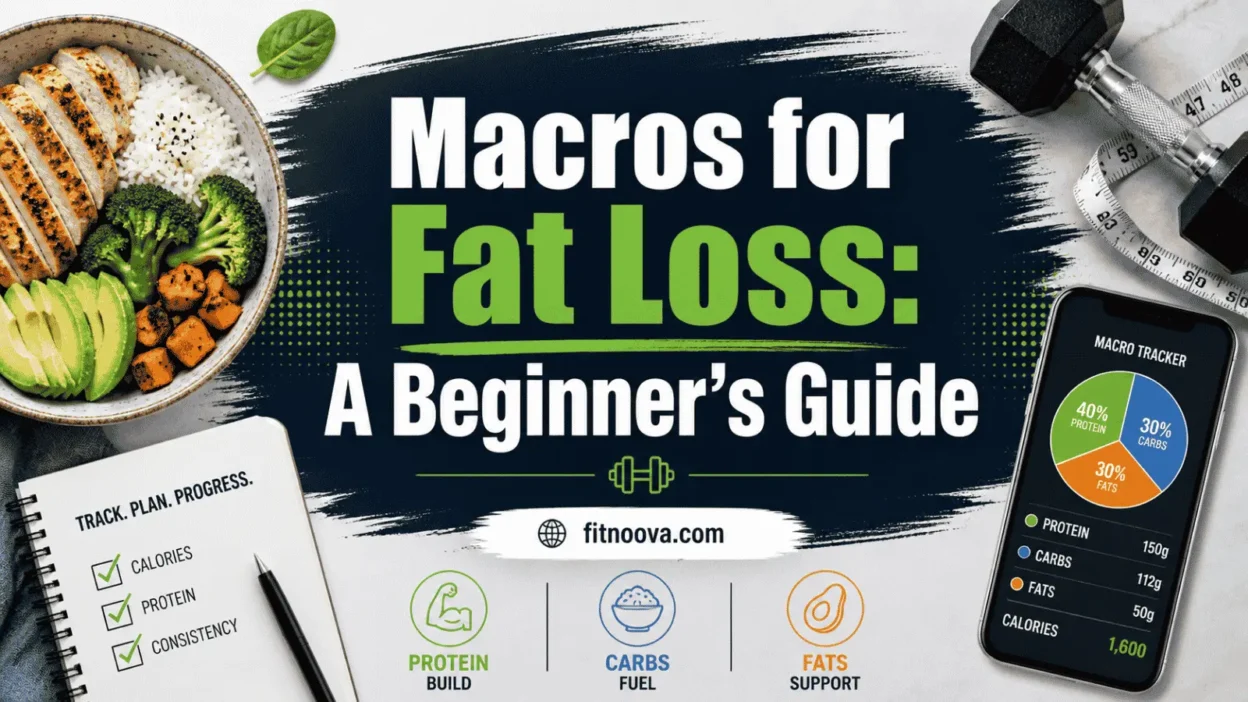
Macros for fat loss can help you understand where your calories come from, how to build more satisfying meals, and how to lose weight without relying on vague rules like “eat clean” or “cut carbs.” The basic idea is simple: protein, carbohydrates, and fat all provide energy, but they play different roles in hunger, training performance, muscle retention, and long-term consistency.
Tracking macros is not required for fat loss. A calorie deficit still matters most. But learning how macros work can make your eating plan feel less random and more repeatable, especially if you want to lose fat while keeping your energy, strength, and routine intact.
Quick Answer
Macros for fat loss are the grams of protein, carbohydrates, and fat you eat each day while staying in a calorie deficit. A good starting point is to prioritize protein, keep fat high enough for health and satisfaction, and use carbohydrates to support energy, workouts, and food preference. The best macro split is the one you can follow consistently, not the one that looks perfect on paper.
What Are Macros?
“Macros” is short for macronutrients. They are the three nutrients your body needs in larger amounts:
- Protein: Helps build and maintain body tissues, supports muscle repair, and can make meals more filling.
- Carbohydrates: Provide energy, especially for higher-intensity exercise and daily movement.
- Fat: Supports hormone production, cell function, nutrient absorption, and meal satisfaction.
Each macro provides calories:
- Protein: 4 calories per gram
- Carbohydrates: 4 calories per gram
- Fat: 9 calories per gram
That calorie math matters because fat loss requires using more energy than you take in over time. The CDC explains that reducing calorie intake, combined with physical activity, creates the calorie deficit that leads to weight loss; it also notes that most weight loss comes from lowering calorie intake, while regular physical activity is especially important for maintaining weight loss.
Why Macros Matter For Fat Loss
Macros do not override calories, but they can make a calorie deficit easier or harder to maintain.
A low-protein plan may leave you hungry and make it harder to preserve lean mass while losing weight. A very low-carb plan may work for some people, but it can also make workouts feel flat or reduce food flexibility. A very low-fat plan can feel unsatisfying and may be difficult to sustain.
A better approach is to use macros as a structure for better meals. You are not trying to “hack” fat loss. You are trying to make your calorie target more filling, nutritious, and realistic.
The National Institute of Diabetes and Digestive and Kidney Diseases recommends choosing a healthy eating plan you can maintain over time, with vegetables, fruits, whole grains, protein foods, dairy or fortified alternatives, and healthy oils. It also advises limiting added sugars, saturated fat, and sodium.
The Best Macro Split For Fat Loss
There is no single best macro split for everyone. Body size, activity level, training style, food preferences, age, health history, and appetite all affect what works.
For most beginners, the most useful order is:
- Set calories at a reasonable deficit.
- Set protein.
- Set fat at a healthy minimum.
- Fill the rest with carbohydrates.
A practical starting range for many adults is:
| Macro | Beginner-Friendly Fat-Loss Range |
|---|---|
| Protein | 25% to 35% of calories |
| Fat | 20% to 35% of calories |
| Carbohydrates | The remaining calories |
This range fits within the general Acceptable Macronutrient Distribution Ranges used in dietary planning, where carbohydrates, fat, and protein all have flexible intake ranges rather than one fixed ideal. The Office of Disease Prevention and Health Promotion describes these Dietary Reference Intake values as evidence-based nutrient reference values, including ranges intended to reduce chronic disease risk while supporting nutrient adequacy.
For fat loss, protein often deserves the most attention because it helps meals feel more substantial and supports training recovery. Active people and regular exercisers may benefit from higher protein than the basic minimum. The International Society of Sports Nutrition states that many exercising individuals should consume about 1.4 to 2.0 grams of protein per kilogram of body weight per day to support exercise adaptations.
That does not mean every beginner needs to chase the top end of that range. It means protein is worth planning intentionally.
How To Calculate Macros For Fat Loss
Here is a simple way to set your macros without making the process more complicated than it needs to be.
Step 1: Estimate Your Calorie Target
Start with your maintenance calories, then create a modest deficit. Many people do better with a small to moderate deficit than an aggressive one because it is easier to sustain, easier to train through, and less likely to trigger rebound eating.
A reasonable deficit might be around 10% to 20% below maintenance calories. For example, if your estimated maintenance intake is 2,300 calories per day, a fat-loss target might land around 1,850 to 2,070 calories.
This is only a starting point. Real results should be judged over several weeks, not one day.
Step 2: Set Protein First
A simple beginner target is:
0.7 to 1.0 gram of protein per pound of goal body weight per day
For someone aiming to weigh 160 pounds, that would be about 112 to 160 grams of protein per day.
You do not need to hit the same number perfectly every day. A consistent range is usually more useful than obsessing over a single gram target.
Good protein sources include:
- Chicken, turkey, lean beef, fish, eggs, and Greek yogurt
- Tofu, tempeh, edamame, lentils, beans, and soy milk
- Cottage cheese, protein powder, or high-protein snacks when convenient
Step 3: Set Fat At A Sustainable Level
Fat should not be pushed extremely low. It helps meals taste better, supports normal body functions, and makes eating feel more satisfying.
A practical starting point is:
0.3 to 0.4 gram of fat per pound of goal body weight per day
For a 160-pound goal weight, that would be about 48 to 64 grams of fat per day.
Choose mostly unsaturated fat sources, such as olive oil, avocado, nuts, seeds, and fatty fish, while keeping saturated fat within recommended limits.
Step 4: Use Carbs For The Remaining Calories
Once protein and fat are set, carbohydrates fill the rest of your calorie target.
Carbs are not required to be high or low for fat loss. They should fit your lifestyle and training. If you lift weights, run, play sports, or do higher-intensity workouts, moderate carbs often help performance and recovery.
Good carbohydrate sources include:
- Potatoes, oats, rice, quinoa, whole-grain bread, and pasta
- Fruit, beans, lentils, corn, and peas
- Yogurt, milk, and other nutrient-rich carb-containing foods
Less nutritious carbs can still fit occasionally, but if most of your carbs come from sweets, chips, pastries, or sugary drinks, your calories may disappear quickly without much fullness.
A Simple Macro Example
Let’s say someone wants to eat around 1,900 calories per day for fat loss and has a goal body weight of 160 pounds.
They might set:
- Protein: 140 grams = 560 calories
- Fat: 60 grams = 540 calories
- Carbs: 200 grams = 800 calories
Total: 1,900 calories
That is not a magic formula. It is a workable starting point. Another person might feel better with slightly more fat and fewer carbs, or more carbs and slightly less fat. The target should help you eat well, train consistently, and maintain a deficit without feeling punished.
What Should A Fat-Loss Plate Look Like?
Macro tracking is easier when your meals have a predictable structure.
A simple plate might include:
- One palm-sized portion of protein
- One fist-sized portion of high-fiber carbohydrates
- One to two thumbs of fat
- One to two fists of vegetables or fruit
For example:
Breakfast: Greek yogurt, berries, oats, and chia seeds
Lunch: Chicken bowl with rice, vegetables, salsa, and avocado
Dinner: Salmon, potatoes, roasted vegetables, and olive oil
Snack: Cottage cheese with fruit or a protein smoothie
This kind of structure works because it combines protein, fiber-rich carbs, fats, and volume. You get enough food to feel like you are eating real meals, not just surviving on small portions.
Do You Have To Track Macros Forever?
No. Macro tracking is a tool, not a lifelong requirement.
Some people like tracking because it gives them clarity. Others find it tedious or stressful. Both responses are valid.
You might track macros for a few weeks to learn portions, then transition to a looser method such as:
- Protein at each meal
- Mostly whole or minimally processed foods
- Planned snacks instead of grazing
- Consistent meal timing
- A weekly weight trend instead of daily panic
- Portion adjustments based on progress
The goal is not to become perfect at logging food. The goal is to understand your intake well enough to make informed changes.
Macros And Exercise: What Beginners Should Know
Exercise helps fat loss, but it is easy to overestimate how many calories workouts burn. Nutrition usually drives the deficit, while exercise supports health, fitness, muscle retention, and long-term weight maintenance.
Adults should aim for at least 150 minutes per week of moderate-intensity aerobic activity or 75 minutes of vigorous-intensity activity, plus muscle-strengthening work at least two days per week, according to CDC guidance.
Strength training is especially useful during fat loss because it gives your body a reason to keep muscle while weight comes down. The American College of Sports Medicine’s updated 2026 resistance training guidance emphasizes that moving from no resistance training to regular resistance training matters more for most adults than chasing a complicated program, and that training major muscle groups at least twice weekly is a practical target.
A beginner fat-loss routine might include:
- Two to three full-body strength workouts per week
- Two to four walks or easy cardio sessions per week
- Daily movement breaks if you sit most of the day
- At least one or two easier recovery days weekly
Do not slash calories and add hard workouts at the same time if you are already exhausted, sore, or sleeping poorly. A plan that looks aggressive on Monday can become unmanageable by Thursday.
Common Mistakes When Using Macros For Fat Loss
Cutting Calories Too Low
A very low calorie target may produce quick scale movement at first, but it often comes with hunger, low energy, poor training, irritability, and rebound eating.
Fat loss should feel challenging at times, but it should not feel like punishment.
Setting Protein Too Low
If your meals are mostly cereal, toast, pasta, snack foods, and small salads, you may hit your calorie target but still feel hungry. Protein helps make meals more filling and supports strength training.
A simple fix is to build each meal around a clear protein source before adding carbs and fats.
Treating Carbs As The Enemy
Carbs do not prevent fat loss when calories are controlled. Many high-quality carb foods also provide fiber, potassium, vitamins, minerals, and training fuel.
The better question is not “Should I cut carbs?” It is “Which carbs help me feel full, train well, and stay consistent?”
Forgetting About Fat Calories
Healthy fats are still calorie-dense. Olive oil, peanut butter, nuts, avocado, and cheese can fit into a fat-loss plan, but portions matter.
You do not need to avoid them. You just need to count them honestly if you are tracking.
Changing The Plan Too Quickly
Daily weight changes are noisy. Water retention, sodium, menstrual cycle changes, digestion, soreness, and stress can all affect the scale.
Give a macro plan at least two to four weeks before making major changes, unless it clearly feels unsafe or unsustainable.
Ignoring Hunger, Sleep, And Stress
Macros are useful, but they are not the whole picture. Poor sleep and high stress can make appetite harder to manage and training harder to recover from.
If your numbers are technically “right” but your lifestyle is falling apart, the plan needs adjusting.
How To Adjust Your Macros If Progress Stalls
A short stall does not always mean fat loss has stopped. Look at your average weight trend, measurements, progress photos, gym performance, hunger, and adherence.
If your weight trend has not moved for three to four weeks and you are tracking accurately, you can adjust by:
- Reducing calories slightly, often by 100 to 200 calories per day
- Increasing daily steps or low-intensity movement
- Tightening up weekend portions
- Reducing liquid calories or frequent bites and tastes
- Keeping protein stable while trimming carbs or fats
Avoid cutting protein first. If you need to lower calories, reduce carbs, fats, or a mix of both based on what feels easiest to maintain.
Who Should Be More Careful With Macro Tracking?
Macro tracking is not the right fit for everyone.
Consider a more flexible approach, or talk with a qualified healthcare professional or registered dietitian, if you:
- Have a history of disordered eating
- Are pregnant, breastfeeding, or trying to conceive
- Have diabetes, kidney disease, heart disease, or another medical condition
- Are taking medication affected by food intake or weight change
- Feel anxious, obsessive, or guilty around food tracking
- Are losing weight rapidly without trying
General nutrition education can be helpful, but individual medical needs require individual guidance.
FAQ
What is the best macro ratio for fat loss?
There is no universal best macro ratio for fat loss. A strong starting point is higher protein, moderate fat, and carbs adjusted to your calorie target, activity level, and preference. The most effective ratio is the one that helps you stay in a reasonable calorie deficit while eating enough protein and nutrient-rich foods.
Should I cut carbs to lose fat faster?
You do not have to cut carbs to lose fat. Lower-carb diets can work if they help someone eat fewer calories, but carbs themselves do not block fat loss. Many people do better with moderate carbs because they support training, mood, and meal satisfaction.
How much protein do I need for fat loss?
Many beginners do well with about 0.7 to 1.0 gram of protein per pound of goal body weight per day. Active people may benefit from higher protein targets, especially if they lift weights. People with kidney disease or medical nutrition needs should ask a healthcare professional before increasing protein significantly.
Can I lose fat without counting macros?
Yes. You can lose fat without counting macros if your eating habits create a consistent calorie deficit. Macro tracking is one tool for awareness, but portion control, higher-protein meals, more fiber-rich foods, fewer liquid calories, and regular activity can also work.
Are macros more important than calories?
Calories determine whether weight loss happens, but macros influence how the process feels. Protein, carbs, and fats affect fullness, energy, food quality, and workout performance. For fat loss, calories and macros work together.
How often should I change my macros?
Do not change your macros every few days. Follow a realistic target for at least two to four weeks, then review your average progress. If nothing is changing and adherence is solid, make a small adjustment instead of overhauling the entire plan.
Conclusion
Macros for fat loss are not about finding a perfect ratio or eating like a spreadsheet. They are a practical way to build meals that support a calorie deficit, protect your energy, and make weight loss feel more controlled.
Start with a reasonable calorie target, prioritize protein, keep fats at a sustainable level, and use carbs in a way that supports your training and lifestyle. The best macro plan is not the strictest one. It is the one you can repeat long enough to matter.