
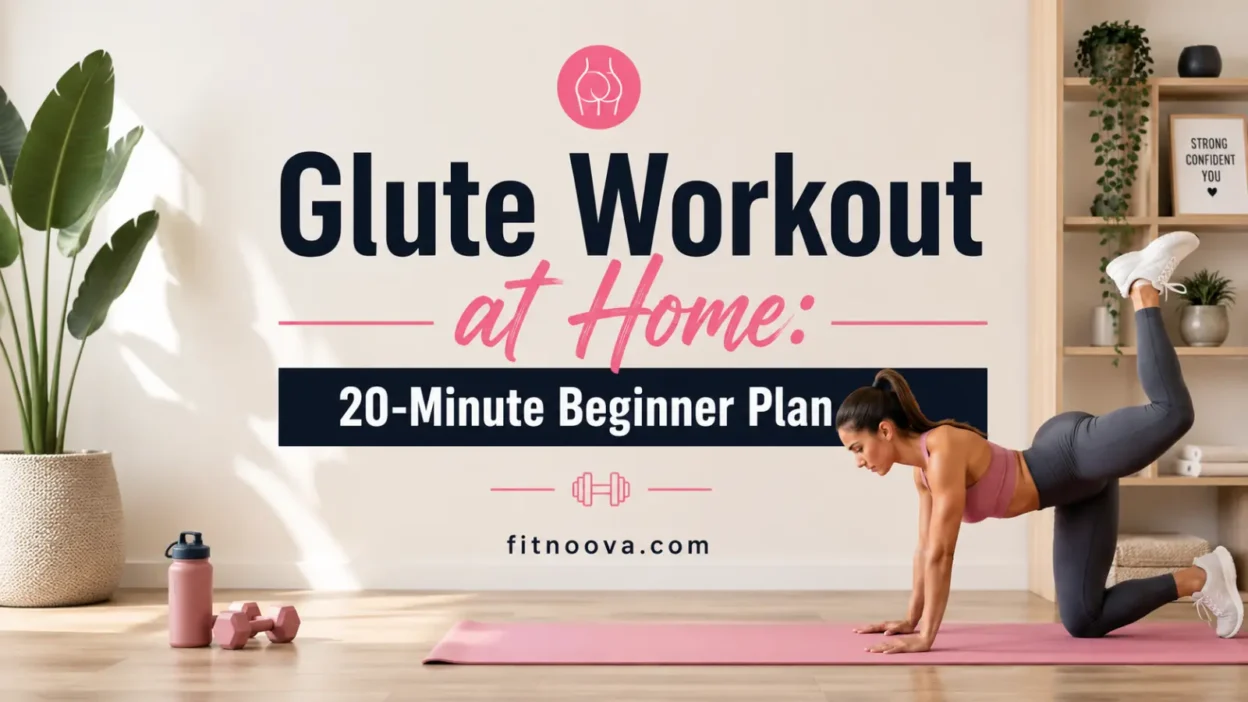
A good glute workout at home does not need machines, heavy weights, or a long list of complicated moves. For beginners, the best routine is simple: train the glutes through hip extension, squatting, lunging, and side-hip movements while keeping your form controlled.
This guide gives you a complete home glute routine, plus warm-up tips, exercise instructions, progression options, common mistakes, and a realistic weekly plan. It is designed for beginners and home workout users who want stronger, more active glutes without turning the workout into a punishment session.
Quick Answer
The best glute workout at home includes glute bridges, squats, reverse lunges, kickbacks, and side-lying leg raises. Do the routine 2 to 3 times per week, leave at least one rest or easier day between hard lower-body sessions, and progress gradually by adding reps, sets, slower tempo, resistance bands, or a loaded backpack. Focus on controlled form and stop if you feel sharp pain, joint pain, dizziness, or symptoms that feel unusual for you.
Why Home Glute Workouts Work
Your glutes are not one single muscle. The main glute muscles are the gluteus maximus, gluteus medius, and gluteus minimus, and they help with lower-body control, balance, posture, and hip movement.
That means a strong home glute workout should do more than “burn.” It should train your hips from a few angles:
- Hip extension: Moving the hip from bent to straight, as in glute bridges.
- Squatting and lunging: Training the glutes along with the thighs.
- Side-hip work: Helping the glute medius and minimus support hip and knee control.
- Stability: Teaching your body to keep the pelvis steady during single-leg movements.
For general health, adults are also encouraged to include muscle-strengthening activity at least 2 days per week, working major muscle groups including the legs and hips. A home glute routine can fit neatly into that goal.
Before You Start: Form, Effort, And Safety
This routine is beginner-friendly, but it should still feel like training. Aim for an effort level around 6 to 8 out of 10 by the end of most working sets. You should feel challenged, but not sloppy.
Keep these rules in mind:
- Move slowly enough to control each rep.
- Keep your knees tracking in the same direction as your toes during squats and lunges.
- Brace your midsection lightly so your lower back does not take over.
- Pause if you feel sharp pain, pinching, numbness, dizziness, chest discomfort, or pain that changes your movement.
- Take rest days seriously if you feel very fatigued or unusually sore.
Proper form matters for both safety and progress, especially when you are learning strength exercises. The American Academy of Orthopaedic Surgeons also notes that fatigue, significant soreness, and pain are good reasons to rest instead of pushing through.
The 20-Minute Glute Workout At Home
Do this routine 2 to 3 times per week. If you are brand new, start with 2 days per week for the first two weeks.
Warm-Up: 3 To 5 Minutes
Do one easy round:
- March In Place — 45 seconds
- Hip Circles — 8 each direction
- Bodyweight Good Mornings — 10 reps
- Glute Bridge Hold — 20 seconds
- Bodyweight Squat To Chair — 8 slow reps
The goal is not to tire yourself out. You are simply warming your hips, legs, and core before the main work.
Main Routine
1. Glute Bridge
Sets: 2 to 3
Reps: 10 to 15
Rest: 30 to 45 seconds
Lie on your back with your knees bent and feet flat on the floor. Keep your feet about hip-width apart. Press through your heels, squeeze your glutes, and lift your hips until your body forms a straight line from shoulders to knees. Pause briefly at the top, then lower with control.
Make it easier: Reduce the range of motion and focus on a gentle squeeze.
Make it harder: Pause for 2 seconds at the top or try a single-leg glute bridge.
2. Squat To Chair
Sets: 2 to 3
Reps: 8 to 12
Rest: 45 to 60 seconds
Stand in front of a chair with your feet about shoulder-width apart. Push your hips back, bend your knees, and lower until your hips lightly touch the chair. Stand back up by pressing through your feet and squeezing your glutes at the top.
Form tip: Do not collapse into the chair. Tap it lightly, then stand.
Make it harder: Use a slower 3-second lowering phase or hold a backpack at your chest.
3. Reverse Lunge
Sets: 2
Reps: 8 to 10 per side
Rest: 45 to 60 seconds
Stand tall, step one foot back, and lower into a lunge. Keep your front foot planted and your torso controlled. Push through the front foot to return to standing.
Make it easier: Hold a wall, countertop, or sturdy chair for balance.
Make it harder: Add a slight forward torso lean while keeping your back neutral, or hold light household weight.
4. Quadruped Glute Kickback
Sets: 2
Reps: 10 to 15 per side
Rest: 30 to 45 seconds
Start on your hands and knees. Brace your core gently. Keeping one knee bent, press your foot up and back as if pushing the sole of your foot toward the ceiling. Squeeze your glute at the top, then lower without arching your back.
Form tip: The movement should come from your hip, not your lower back.
Make it harder: Add a mini resistance band above your knees.
5. Side-Lying Leg Raise
Sets: 2
Reps: 10 to 15 per side
Rest: 30 to 45 seconds
Lie on your side with your legs stacked. Keep your hips facing forward. Lift your top leg slowly, pause, then lower with control.
This move helps train the side glutes, especially the muscles that support hip stability.
Make it easier: Bend the bottom knee for support.
Make it harder: Add a pause at the top or use a mini band.
6. Glute Bridge Finisher
Sets: 1 to 2
Time: 20 to 40 seconds
Rest: 45 seconds
Return to the glute bridge position. Lift your hips and hold. Keep breathing, keep your ribs down, and squeeze your glutes without over-arching your lower back.
This should feel challenging but controlled. Stop before your form breaks.
Weekly Plan For Beginners
Use this simple schedule if you want stronger glutes without overdoing it:
Option 1: Two Days Per Week
- Monday: Glute workout at home
- Tuesday: Walk, mobility, or rest
- Wednesday: Upper body or light activity
- Thursday: Glute workout at home
- Friday: Rest or easy cardio
- Weekend: Walk, stretch, or full-body workout
Option 2: Three Days Per Week
- Monday: Glute workout at home
- Wednesday: Glute workout at home
- Friday or Saturday: Glute workout at home
If your legs and hips feel heavy, sore, or less coordinated, stay with two days per week until your body adapts.
How To Make The Workout Harder Over Time
You do not need to change the whole routine every week. Progress comes from making the same basic exercises slightly more challenging.
Try one progression at a time:
- Add 2 reps per set.
- Add one extra set to one or two exercises.
- Slow down the lowering phase.
- Pause at the hardest part of the movement.
- Add a resistance band.
- Hold a backpack, water jug, or dumbbell if available.
- Move from two-leg exercises to single-leg variations.
A good sign you are ready to progress: you can finish every set with clean form and still feel like you had 2 to 3 solid reps left.
Best Optional Equipment For Home Glute Training
You can do this workout with no equipment, but a few simple tools can help later:
- Mini resistance band: Great for side-lying leg raises, clamshells, and bridge variations.
- Long resistance band: Useful for hip hinges and standing kickbacks.
- Dumbbell or kettlebell: Helpful for goblet squats and Romanian deadlifts.
- Step or sturdy chair: Useful for step-ups and elevated glute bridges.
Start with bodyweight first. Equipment is useful only when your form is already solid.
Common Mistakes To Avoid
Rushing Through The Reps
Fast reps may feel harder, but they often reduce control. Slow down enough to feel the target muscles working.
Arching The Lower Back During Bridges Or Kickbacks
If your lower back feels like it is doing most of the work, reduce the range of motion and brace your core. Think about moving from the hips, not the spine.
Letting The Knees Cave In
During squats and lunges, keep your knees tracking generally in line with your toes. They do not need to be perfectly rigid, but they should not collapse inward with every rep.
Training Glutes Hard Every Day
More is not always better. Your muscles need recovery time to adapt. For most beginners, 2 to 3 focused glute sessions per week is enough.
Chasing The Burn Instead Of Good Form
A muscle burn can happen during higher-rep work, but it is not the only sign of a good workout. Clean reps, steady progression, and consistency matter more.
When To Modify Or Back Off
Modify the workout if you feel joint pain, sharp pain, tingling, numbness, dizziness, or discomfort that does not feel like normal muscle effort. You should also reduce intensity if soreness affects your walking, sleep, or normal daily movement.
If you have a recent injury, are returning after surgery, are pregnant or postpartum, have a medical condition that affects exercise tolerance, or are unsure whether a movement is appropriate for you, get guidance from a qualified healthcare professional before pushing the routine harder.
FAQs
Can I build glutes at home without weights?
Yes. Bodyweight exercises can help beginners build strength, coordination, and muscle endurance, especially when the routine includes bridges, squats, lunges, and side-hip exercises. Over time, adding resistance bands, slower tempo, single-leg work, or household weight can make home glute training more challenging.
How often should I do a glute workout at home?
Most beginners do well with 2 to 3 glute workouts per week. Leave at least one rest or lighter day between hard lower-body sessions so your muscles and joints have time to recover.
Why do I feel glute exercises in my thighs instead?
That can happen, especially during squats and lunges. Try slowing down, pressing through your whole foot, keeping your torso controlled, and adding glute bridges before your lower-body exercises. Some thigh involvement is normal, but your lower back or knees should not be doing all the work.
Are squats enough for glutes?
Squats are useful, but they are not the whole picture. A stronger glute routine usually includes hip-extension exercises like glute bridges, single-leg work like reverse lunges, and side-glute exercises like side-lying leg raises.
How long should a home glute workout be?
A focused home glute workout can take 15 to 30 minutes. Beginners do not need long sessions. The quality of your reps, consistency, and gradual progression matter more than workout length.
Should my glutes be sore after every workout?
No. Mild soreness can happen, especially when you are new to training, but soreness is not required for progress. If soreness is intense, lasts several days, or changes how you move, reduce the volume or intensity next time.
Conclusion
A strong glute workout at home should be simple, balanced, and repeatable. Start with glute bridges, squats, reverse lunges, kickbacks, and side-lying leg raises, then progress slowly as your form improves. Done 2 to 3 times per week, this routine can help you build stronger hips and better lower-body control without needing a gym.