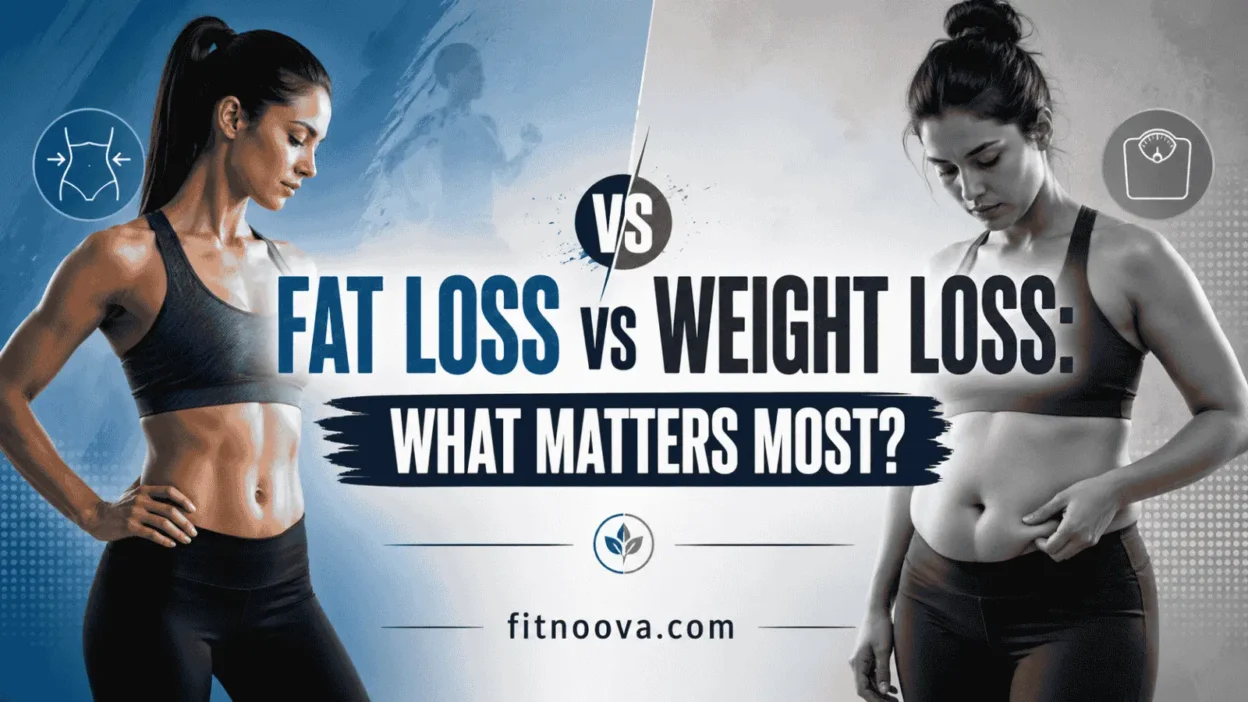
If you are trying to change your body, the difference between fat loss vs weight loss matters more than most beginners realize. Weight loss means the number on the scale goes down. Fat loss means your body loses stored body fat while you preserve as much lean muscle, strength, and day-to-day energy as possible.
Those two goals can overlap, but they are not the same. You can lose weight quickly and still lose muscle, water, or glycogen. You can also lose fat while the scale moves slowly because you are building or maintaining muscle. For long-term health, performance, and body composition, fat loss is usually the better target.
Quick Answer
Weight loss is any drop in total body weight, including fat, water, muscle, and stored carbohydrate. Fat loss is a more specific goal: reducing body fat while protecting lean mass. For most people, the best approach is not simply “make the scale smaller,” but to build habits that support gradual fat loss, strength, and long-term weight maintenance.
Fat Loss vs Weight Loss: The Core Difference
Body weight is the total of everything in your body: fat, muscle, bone, organs, water, food in your digestive tract, and stored carbohydrate. That is why your weight can change from one day to the next without much actual change in body fat.
Fat loss is narrower. It refers to losing stored body fat, which is the tissue many people are trying to reduce when they say they want to “lose weight.” The problem is that a bathroom scale does not tell you what kind of weight you lost.
A lower number on the scale may come from:
- Body fat
- Water
- Muscle tissue
- Glycogen, the stored form of carbohydrate
- Less food or fluid in your system
That is why crash dieting can look successful at first. The scale drops, but not all of that change is fat. A sustainable plan should support healthy eating patterns, regular physical activity, sleep, and stress management rather than depending on extreme restriction. The CDC describes healthy weight loss as a lifestyle approach that includes nutrition, movement, sleep, and stress management.
Why Scale Weight Can Be Misleading
The scale is useful, but it is not the full story. It can show trends over time, but it cannot separate fat loss from water shifts or muscle changes.
For example, a beginner who starts strength training may feel firmer, notice clothes fitting differently, and gain strength while the scale barely changes. That does not mean nothing is happening. It may mean fat loss is being partly masked by improved muscle tone, water retention from training, or normal day-to-day weight fluctuations.
On the other hand, someone using a very low-calorie diet may see fast scale loss in the first week. Some of that may be water and glycogen, not pure fat. If the plan is too aggressive, it can also increase the risk of losing muscle, feeling run down, and quitting.
This is why fat loss progress should be measured with more than one tool.
What To Track Instead Of Only Body Weight
You do not need complicated testing to understand your progress. A simple mix of body, behavior, and performance markers gives a clearer picture.
Useful signs of fat loss include:
- Your waist measurement gradually decreases
- Clothes fit more comfortably
- Progress photos show subtle changes over several weeks
- Strength stays stable or improves
- Daily energy is reasonably steady
- Your average weekly weight trends down slowly, if weight loss is also a goal
Body weight can still help, but weekly averages are more useful than single weigh-ins. A single day can be affected by salt intake, menstrual cycle changes, stress, sleep, soreness, digestion, and hydration. A trend over several weeks tells you more.
Why Fat Loss Is Usually The Better Goal
For most weight-loss audiences, the real goal is not just to become lighter. It is to improve body composition, health markers, mobility, confidence, and fitness without feeling trapped in an extreme routine.
Focusing on fat loss encourages better decisions. Instead of asking, “How can I drop weight as fast as possible?” you ask, “How can I lose fat while keeping muscle, training well, and eating in a way I can maintain?”
That shift matters. Strength training can help preserve and increase lean muscle mass, and Mayo Clinic notes that it can support lower body fat and better calorie use as part of an overall fitness plan.
A fat-loss-focused plan is usually built around:
- A modest calorie deficit
- Enough protein and fiber-rich foods
- Strength training
- Regular walking or cardio
- Adequate sleep
- Recovery days
- Consistency over intensity
That is less flashy than a rapid weight-loss promise, but it is more realistic.
How To Lose Fat Without Sacrificing Muscle
The best fat-loss plan is not the hardest one you can tolerate. It is the one that creates enough progress without draining your body, wrecking your workouts, or making your eating feel impossible to maintain.
Use A Moderate Calorie Deficit
Fat loss requires your body to use more energy than you take in over time. That does not mean you need to slash calories aggressively. In fact, cutting too hard can backfire by increasing hunger, lowering training quality, and making consistency harder.
A better approach is to make small changes you can repeat:
- Reduce large portions of calorie-dense foods
- Add more vegetables, fruit, beans, whole grains, and lean protein
- Limit frequent liquid calories
- Keep high-calorie snacks portioned instead of eating from the package
- Build meals that feel filling, not tiny
The NIDDK notes that adults who want to lose weight and keep it off generally need to reduce calorie intake while using physical activity to help support weight management.
Prioritize Strength Training
Strength training tells your body that muscle is still needed. This is especially important during fat loss, when your body has less incoming energy than usual.
Beginners do not need an advanced bodybuilding plan. A basic full-body routine two or three days per week can work well. Focus on major movement patterns:
- Squat or leg press pattern
- Hip hinge, such as Romanian deadlifts or glute bridges
- Push, such as push-ups or chest presses
- Pull, such as rows or pulldowns
- Core stability, such as planks or dead bugs
Mayo Clinic recommends training major muscle groups at least twice weekly and avoiding training the same muscle group hard on back-to-back days.
Keep Protein Consistent
Protein helps support muscle repair and fullness. You do not need to eat like a competitive athlete, but most people do better when each meal includes a clear protein source.
Practical options include:
- Eggs or Greek yogurt
- Chicken, turkey, fish, or lean beef
- Tofu, tempeh, lentils, or beans
- Cottage cheese
- Protein smoothies when whole-food meals are not practical
The goal is not perfection. It is making protein a normal part of your meals so fat loss does not come at the expense of strength and recovery.
Add Cardio Without Overdoing It
Cardio supports heart health, calorie expenditure, and endurance. It can also make fat loss easier when paired with nutrition changes.
Walking is underrated here. It is beginner-friendly, low-impact, and easier to recover from than hard intervals. Cycling, swimming, hiking, rowing, and incline treadmill walking can also work.
For general health, adults are commonly advised to get regular aerobic activity along with muscle-strengthening work. Mayo Clinic and public-health guidance consistently support combining movement and diet rather than relying on exercise alone for weight management.
Sleep More Than You Think You Need
Sleep is not a fat-loss trick, but it affects the behaviors that make fat loss possible. Poor sleep can make hunger harder to manage, reduce workout quality, increase cravings, and make recovery slower.
A practical fat-loss plan should not require you to run on five hours of sleep and caffeine. If your schedule is packed, improving sleep by even small margins may make your nutrition and training easier to follow.
A Beginner-Friendly Fat-Loss Framework
This is not a strict routine. It is a simple weekly structure that works for many beginners and busy adults.
Strength Training: 2 To 3 Days Per Week
Do full-body sessions with 5 to 7 exercises. Use a weight that feels challenging but controlled. Most sets should end with 1 to 3 good reps left in the tank.
Example session:
- Goblet squat or bodyweight squat: 2 to 3 sets
- Dumbbell Romanian deadlift or glute bridge: 2 to 3 sets
- Incline push-up or dumbbell press: 2 to 3 sets
- Seated row or one-arm dumbbell row: 2 to 3 sets
- Step-up or split squat: 2 sets per side
- Plank or dead bug: 2 to 3 sets
Rest as needed. Good form matters more than rushing.
Cardio Or Walking: 3 To 5 Days Per Week
Start with 20 to 40 minutes of brisk walking, cycling, or another manageable activity. You should be able to speak in short sentences. If you are gasping, slow down.
Beginners can also break this into shorter sessions, such as 10 minutes after meals or two 15-minute walks per day.
Nutrition: Build Repeatable Meals
Each meal should usually include:
- A protein source
- A high-fiber carbohydrate or vegetable
- A satisfying fat source
- Water or another low-calorie drink
For example:
- Greek yogurt with berries and oats
- Eggs with vegetables and whole-grain toast
- Chicken bowl with rice, vegetables, and avocado
- Lentil soup with a side salad
- Salmon with potatoes and roasted vegetables
This kind of structure makes fat loss less dependent on willpower.
Common Mistakes That Slow Fat Loss
Chasing Fast Weight Loss At Any Cost
Fast scale loss is tempting, but aggressive restriction is hard to maintain. It can also lead to poor workouts, fatigue, irritability, and rebound eating. A safer plan should feel challenging but not punishing.
The NIDDK advises looking for weight-loss programs that promote healthy behaviors, safe progress, and long-term support rather than extreme promises.
Ignoring Strength Training
Cardio is useful, but cardio alone is not the most complete plan for body composition. Strength training helps protect lean mass and gives your body a stronger signal to maintain muscle while losing fat.
Eating Too Little Protein
Many beginners cut calories by simply eating less of everything. That often means less protein too. Over time, this can make hunger and recovery harder.
Trusting The Scale Too Much
If you weigh yourself daily, expect noise. Water shifts are normal. Soreness after a hard workout can temporarily increase scale weight because of inflammation and fluid changes. A few higher weigh-ins do not automatically mean fat gain.
Changing The Plan Every Week
Fat loss needs enough consistency for your body to respond. If you change calories, workouts, supplements, and meal timing every few days, you will not know what is working.
Pick a realistic plan and evaluate it over several weeks, not several days.
When Weight Loss May Still Matter
Fat loss is usually the better body-composition goal, but scale weight is not meaningless. For some people, reducing body weight may help with health, mobility, joint stress, or medical risk factors. The right target depends on the person.
If you have diabetes, heart disease, a history of disordered eating, are pregnant or postpartum, take medications that affect weight or appetite, or have unexplained weight changes, talk with a qualified healthcare professional before starting a weight-loss plan.
The goal is not to ignore the scale. It is to understand what the scale can and cannot tell you.
FAQ
Is fat loss better than weight loss?
For most people trying to improve body composition, yes. Fat loss is more specific because it focuses on reducing stored body fat while preserving muscle. Weight loss only tells you that total body weight went down, not what kind of weight you lost.
Can you lose fat without losing weight?
Yes. This can happen when you lose body fat while gaining or preserving muscle. The scale may move slowly, but your measurements, strength, and how your clothes fit may improve.
Why did I lose weight quickly at first?
Early weight loss often includes water and glycogen changes, especially if you reduce carbohydrates, sodium, or overall food intake. That does not mean the progress is fake, but it does mean the first week is not always a reliable measure of fat loss.
How do I know if I am losing fat and not muscle?
Look for a combination of signs: your waist measurement is decreasing, strength is stable or improving, protein intake is consistent, and you are strength training regularly. If your weight is dropping very fast and your workouts are getting worse, the deficit may be too aggressive.
Should beginners focus on cardio or weights for fat loss?
Beginners should usually include both. Strength training helps preserve muscle and improve body composition, while cardio and walking support calorie expenditure and heart health. A balanced plan is more effective than relying on one type of exercise alone.
How often should I weigh myself?
That depends on your relationship with the scale. Some people like daily weigh-ins and weekly averages. Others do better with one or two weigh-ins per week. If weighing yourself causes stress or obsessive behavior, use measurements, progress photos, strength, and habit tracking instead.
Conclusion
The difference between fat loss vs weight loss is simple but important: weight loss is any drop in scale weight, while fat loss is the reduction of body fat. If your goal is to look, feel, and perform better, fat loss is usually the smarter focus.
Use the scale as one tool, not the final judge. Build your plan around strength training, sustainable eating, regular movement, sleep, and patience. That approach is less dramatic than chasing the fastest possible drop, but it is far more useful for long-term results.