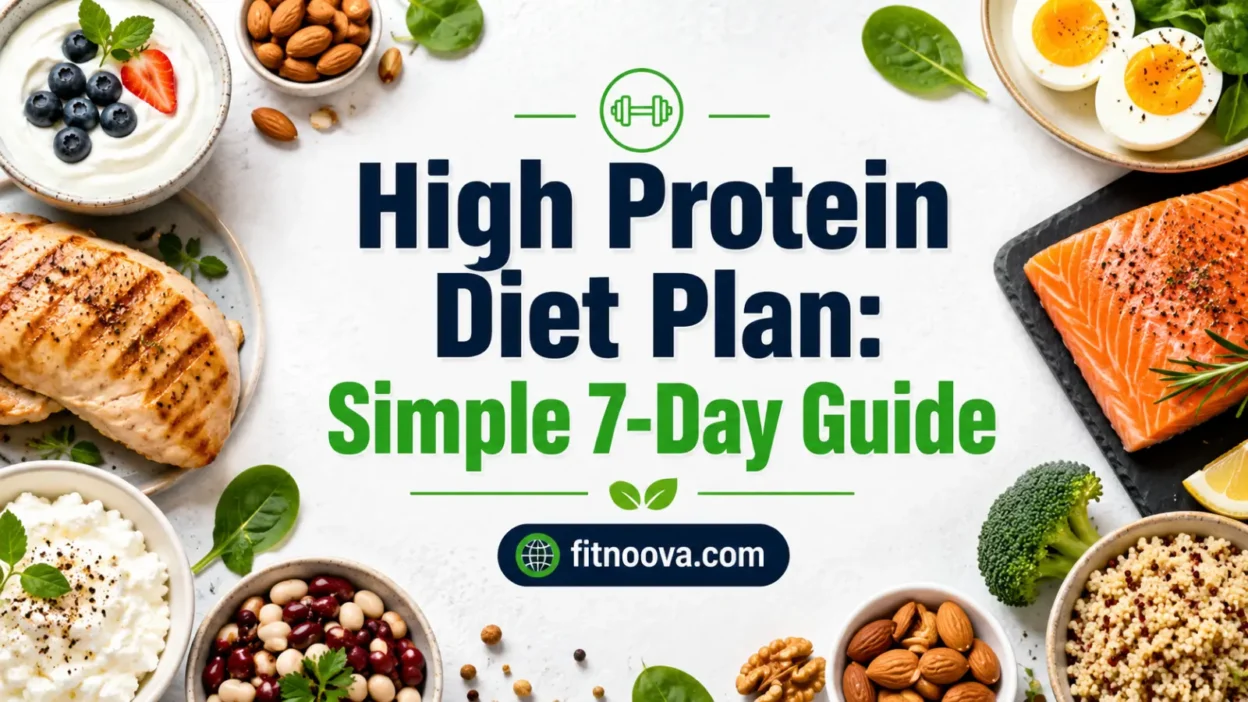
A high protein diet plan can help you build more filling meals, support strength training, and make weight management easier without relying on extreme rules. The goal is not to eat only chicken breast and protein shakes. A smart plan spreads protein across the day while still leaving room for vegetables, fruit, fiber-rich carbs, healthy fats, and foods you actually enjoy.
This guide is designed for healthy adults who want a practical, beginner-friendly way to eat more protein. If you have kidney disease, diabetes, are pregnant or breastfeeding, have a history of disordered eating, or follow a medically prescribed diet, use this as general education and ask a qualified health professional what target is right for you.
Quick Answer
A good high protein diet plan usually includes a protein source at each meal, such as eggs, Greek yogurt, poultry, fish, lean meat, tofu, tempeh, beans, lentils, cottage cheese, or protein-rich whole foods. The 2025–2030 Dietary Guidelines for Americans list protein serving goals of 1.2–1.6 grams per kilogram of body weight per day, adjusted for calorie needs and personal factors.
For most beginners, the easiest approach is to build three balanced meals and one protein-rich snack per day instead of trying to hit a perfect number immediately.
What Is A High Protein Diet Plan?
A high protein diet plan is an eating pattern that intentionally includes more protein-rich foods than a typical low-protein meal routine. It does not mean cutting out carbohydrates, avoiding fat, or eating the same meals every day.
Protein is made from amino acids and helps the body repair cells and make new ones. It also plays a role in growth, tissue repair, immune function, hormones, enzymes, and maintaining muscle tissue.
A balanced high protein plan usually includes:
| Meal Component | Examples |
|---|---|
| Protein | Eggs, chicken, turkey, fish, Greek yogurt, cottage cheese, tofu, tempeh, beans, lentils |
| Fiber-rich carbs | Oats, potatoes, brown rice, quinoa, whole-grain bread, fruit, beans |
| Vegetables | Leafy greens, peppers, broccoli, zucchini, carrots, tomatoes |
| Healthy fats | Olive oil, avocado, nuts, seeds, fatty fish |
| Fluids | Water, sparkling water, unsweetened tea, other low-sugar drinks |
The best version is the one you can repeat most weeks without feeling restricted.
How Much Protein Should You Eat Per Day?
A practical target for many adults is 1.2–1.6 grams of protein per kilogram of body weight per day, which matches the protein serving goal listed in the 2025–2030 Dietary Guidelines for Americans. That range should be adjusted based on calorie needs, body size, training, age, health status, and personal preference.
Here is what that looks like in real numbers:
| Body Weight | 1.2 g/kg | 1.6 g/kg |
|---|---|---|
| 130 lb | About 71 g/day | About 94 g/day |
| 150 lb | About 82 g/day | About 109 g/day |
| 180 lb | About 98 g/day | About 131 g/day |
| 220 lb | About 120 g/day | About 160 g/day |
You do not need to jump to the high end right away. If you currently eat very little protein at breakfast and lunch, start by adding 20–30 grams to one meal, then build from there.
For people who lift weights or train regularly, protein needs may be higher than for sedentary adults. The International Society of Sports Nutrition has stated that many exercising individuals benefit from roughly 1.4–2.0 grams per kilogram per day to support training adaptations.
How To Build A High Protein Meal
The simplest method is to choose your protein first, then build the rest of the plate around it.
A balanced high protein plate can look like this:
- One palm-sized protein serving, or more depending on your target
- One to two fists of vegetables or fruit
- One cupped-hand serving of carbs, especially around workouts or busy days
- One thumb-sized serving of fat, such as olive oil, nuts, seeds, or avocado
This is not a strict formula. It is a visual starting point that keeps meals balanced without requiring constant tracking.
Easy High Protein Breakfast Ideas
Breakfast is where many people fall short. A coffee and a pastry may be quick, but it usually does not keep you full for long.
Try one of these instead:
| Breakfast | Approximate Protein |
|---|---|
| Greek yogurt with berries, oats, and chia seeds | 25–35 g |
| 2 eggs plus egg whites with whole-grain toast | 25–35 g |
| Cottage cheese with fruit and walnuts | 25–30 g |
| Tofu scramble with potatoes and vegetables | 25–35 g |
| Protein smoothie with milk, protein powder, banana, and peanut butter | 25–40 g |
Easy High Protein Lunch Ideas
Lunch should be filling enough to prevent the late-afternoon snack spiral.
Good options include:
| Lunch | Approximate Protein |
|---|---|
| Chicken rice bowl with vegetables and salsa | 35–45 g |
| Tuna or salmon salad sandwich with fruit | 30–40 g |
| Turkey wrap with Greek yogurt on the side | 35–45 g |
| Lentil soup with cottage cheese or Greek yogurt | 25–40 g |
| Tofu or tempeh stir-fry with rice | 30–45 g |
Easy High Protein Dinner Ideas
Dinner is often the easiest meal for protein, but balance still matters. Pair protein with fiber-rich sides instead of making the whole plate meat.
Try:
| Dinner | Approximate Protein |
|---|---|
| Salmon with potatoes and roasted vegetables | 35–45 g |
| Lean beef or turkey chili with beans | 35–50 g |
| Chicken tacos with beans, salsa, and avocado | 35–45 g |
| Shrimp stir-fry with rice and vegetables | 35–45 g |
| Bean and tofu burrito bowl | 30–45 g |
High Protein Snacks That Actually Help
Snacks are useful when they solve a real problem: long gaps between meals, post-workout hunger, or low protein earlier in the day.
Good choices include:
| Snack | Approximate Protein |
|---|---|
| Greek yogurt | 15–25 g |
| Cottage cheese | 20–30 g |
| Protein shake | 20–30 g |
| Hard-boiled eggs | 12–18 g |
| Tuna packet with crackers | 18–25 g |
| Edamame | 15–20 g |
| Beef or turkey jerky, lower sodium if possible | 10–20 g |
Use protein bars and shakes when they are convenient, not because they are required. Whole foods should do most of the work.
7-Day High Protein Diet Plan
This sample high protein meal plan is flexible. Portions should change based on your hunger, body size, calorie needs, training schedule, and goals.
Day 1
Breakfast: Greek yogurt bowl with berries, oats, and chia seeds
Lunch: Grilled chicken bowl with rice, black beans, peppers, lettuce, and salsa
Snack: Cottage cheese with pineapple
Dinner: Salmon with roasted potatoes and broccoli
Day 2
Breakfast: Scrambled eggs with spinach, whole-grain toast, and fruit
Lunch: Turkey avocado wrap with carrots and Greek yogurt
Snack: Protein smoothie with milk, banana, and peanut butter
Dinner: Lean turkey chili with beans and a side salad
Day 3
Breakfast: Overnight oats made with Greek yogurt and protein powder
Lunch: Tuna salad sandwich on whole-grain bread with cucumber slices
Snack: Edamame with sea salt
Dinner: Chicken stir-fry with mixed vegetables and rice
Day 4
Breakfast: Cottage cheese with berries, walnuts, and cinnamon
Lunch: Lentil soup with a side of eggs or Greek yogurt
Snack: Apple with peanut butter and a cheese stick
Dinner: Shrimp tacos with cabbage slaw, beans, and salsa
Day 5
Breakfast: Tofu scramble with potatoes, peppers, onions, and avocado
Lunch: Chicken Caesar-style salad with extra vegetables and a whole-grain roll
Snack: Hard-boiled eggs and fruit
Dinner: Lean beef, bean, or tempeh burrito bowl
Day 6
Breakfast: Protein smoothie with Greek yogurt, berries, oats, and milk
Lunch: Salmon or chickpea salad bowl with quinoa and greens
Snack: Cottage cheese or skyr
Dinner: Turkey meatballs with pasta, marinara, and roasted vegetables
Day 7
Breakfast: Egg and vegetable breakfast sandwich with fruit
Lunch: Tofu, chicken, or shrimp rice bowl with vegetables
Snack: Greek yogurt with granola
Dinner: Grilled chicken, beans, sweet potato, and a large salad
Best High Protein Foods To Keep On Hand
The easiest diet plan is the one your kitchen supports. Keep a few fast protein options available so you are not starting from scratch every time you get hungry.
Animal-Based Protein Foods
- Eggs
- Greek yogurt
- Cottage cheese
- Milk or fortified dairy alternatives
- Chicken breast or thighs
- Turkey
- Lean beef
- Pork tenderloin
- Tuna
- Salmon
- Shrimp
- Sardines
Plant-Based Protein Foods
- Tofu
- Tempeh
- Edamame
- Lentils
- Black beans
- Chickpeas
- Split peas
- Soy milk
- Seitan
- Nuts and seeds
- Quinoa
The FDA lists protein foods from both plant and animal sources, including beans, peas, lentils, dairy, eggs, meats, poultry, nuts, seeds, seafood, soy products, whole grains, and vegetables. It also notes that animal foods and soy are complete protein sources, while many plant proteins can complement each other across the day.
High Protein Diet Plan For Weight Loss
A high protein diet plan can support weight loss because protein-rich meals are often more filling. But weight loss still depends on the overall pattern: calories, food quality, sleep, activity, consistency, and how well the plan fits your life.
For a weight-loss-focused approach:
- Keep protein steady at each meal.
- Build meals around lean or minimally processed protein most of the time.
- Add vegetables or fruit to increase volume and fiber.
- Use carbs strategically instead of removing them completely.
- Watch high-calorie extras such as oils, creamy sauces, nuts, cheese, and oversized smoothies.
- Avoid turning the plan into an all-or-nothing diet.
A useful plate might be grilled chicken, potatoes, roasted vegetables, and a small amount of olive oil. Another could be tofu, rice, edamame, vegetables, and a lighter sauce. Both can fit a fat-loss plan when portions match your needs.
High Protein Diet Plan For Muscle Gain
For muscle gain, protein matters, but it is not the only factor. You also need enough total food, progressive strength training, recovery, and sleep.
A muscle-focused plan should include:
- Protein at breakfast, lunch, dinner, and possibly a snack
- Carbohydrates around workouts for training energy
- Enough calories to support growth
- Strength training several days per week
- Rest days or lighter days to recover
Adults are generally encouraged to include muscle-strengthening activities that work the major muscle groups at least two days per week.
If you lift consistently but feel flat, sore, or low-energy, do not assume you need more protein immediately. You may need more total calories, more carbs, better sleep, or a more realistic training plan.
Who Should Be Careful With A High Protein Diet?
A higher-protein diet is not automatically right for everyone.
People with kidney disease need individualized guidance. The National Kidney Foundation explains that people with kidney disease may not remove protein waste normally, while people on dialysis may need more protein—not less—depending on treatment status.
Talk with a clinician or registered dietitian before increasing protein if you:
- Have chronic kidney disease or reduced kidney function
- Are on dialysis or have been told to follow a kidney diet
- Are pregnant or breastfeeding
- Have diabetes and are changing carb intake
- Have liver disease or another complex medical condition
- Have a history of an eating disorder
- Are an older adult with low appetite or unintentional weight loss
More protein is not always better. The right amount is the amount that supports your body, health status, training, and lifestyle without crowding out other important foods.
Common Mistakes To Avoid
Eating Protein But Ignoring Fiber
A high protein diet can become low in fiber if it pushes out beans, fruit, vegetables, oats, potatoes, and whole grains. That can make meals less satisfying and may affect digestion.
A better approach: pair protein with fiber at most meals. Think Greek yogurt with berries, chili with beans, eggs with vegetables, or salmon with potatoes and salad.
Relying Too Much On Protein Shakes
Protein powder is convenient, but it should not replace most meals. If your day is mostly bars, shakes, and low-fiber snacks, your plan may be high in protein but low in food quality.
Use shakes as a backup, post-workout option, or quick breakfast helper—not the foundation of your diet.
Cutting Carbs Too Aggressively
Carbs are not the enemy. If you train, walk a lot, work long days, or want meals that feel satisfying, you may do better with smart carb portions.
Choose carbs such as oats, rice, potatoes, beans, lentils, fruit, and whole-grain bread more often than sugary drinks or highly processed snack foods.
Choosing Mostly Processed Meats
Bacon, sausage, deli meats, hot dogs, and similar foods may contain protein, but they are not the best everyday staples. The FDA’s nutrition guidance encourages choosing a variety of protein foods and selecting lean meats, poultry, seafood, beans, lentils, soy foods, and unsalted nuts and seeds more often.
Changing Everything At Once
The fastest way to quit a diet plan is to make it too complicated. Start with one upgrade: add protein to breakfast, prep two protein options for the week, or swap a low-protein snack for Greek yogurt or cottage cheese.
Small changes repeated consistently beat a perfect plan you cannot maintain.
Simple Meal Prep Tips For A High Protein Week
Meal prep does not have to mean cooking 21 meals in identical containers. A more realistic system is to prepare building blocks.
Cook two proteins, two carbs, and two vegetables:
| Prep Category | Examples |
|---|---|
| Protein 1 | Chicken, turkey, tofu, salmon, lean beef |
| Protein 2 | Greek yogurt, eggs, cottage cheese, beans, lentils |
| Carb 1 | Rice, potatoes, oats, quinoa |
| Carb 2 | Whole-grain wraps, fruit, pasta, beans |
| Vegetable 1 | Roasted broccoli, peppers, zucchini |
| Vegetable 2 | Salad greens, carrots, tomatoes, cucumbers |
Then mix and match. Chicken can become a rice bowl, wrap, salad, or taco. Greek yogurt can become breakfast, a snack, or a smoothie base. Beans can go into chili, bowls, soups, or salads.
FAQs
Is a high protein diet plan good for beginners?
Yes, as long as it is balanced and not extreme. Beginners usually do best by adding one protein-rich food to each meal instead of tracking every gram from day one.
Can I follow a high protein diet plan without eating meat?
Yes. Tofu, tempeh, soy milk, edamame, lentils, beans, chickpeas, seitan, Greek yogurt, cottage cheese, eggs, nuts, seeds, and protein powders can all help. Plant-based eaters may need more planning, but they do not need meat to eat enough protein.
What is the easiest high protein breakfast?
Greek yogurt with fruit and oats is one of the easiest options because it requires no cooking and can provide about 25–35 grams of protein depending on the portion. Eggs, cottage cheese, tofu scramble, and protein smoothies are also simple choices.
Do I need protein powder?
No. Protein powder is optional. It can help when you are busy or struggling to meet your target, but whole foods such as eggs, yogurt, fish, poultry, tofu, beans, lentils, and cottage cheese should make up most of your plan.
Can a high protein diet help with weight loss?
It can help by making meals more filling, but it does not guarantee weight loss. Your overall calorie intake, food quality, movement, sleep, and consistency still matter.
Is too much protein bad?
Too much protein can crowd out fiber, carbs, healthy fats, and other nutrients. It can also be risky for people with kidney disease or certain medical conditions. If you are unsure, ask a registered dietitian or clinician for a personalized target.
Conclusion
A high protein diet plan works best when it is simple, balanced, and repeatable. Start with protein at each meal, choose mostly nutrient-dense foods, keep fiber-rich carbs and vegetables in the plan, and adjust portions based on your body, training, hunger, and health needs.
You do not need a perfect meal plan to eat more protein. You need a handful of reliable meals, a realistic daily target, and a way of eating that supports your goals without making food feel complicated.