
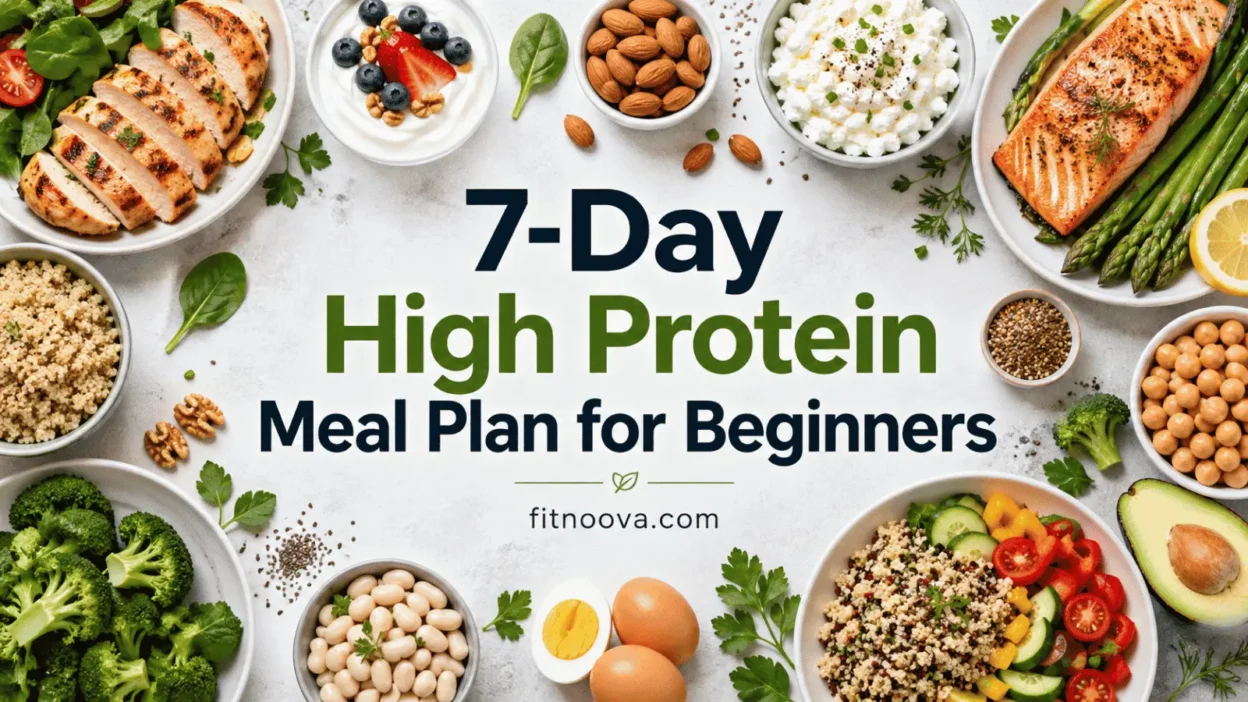
A good 7 day high protein meal plan should make eating enough protein easier without turning every meal into grilled chicken and protein shakes. The goal is simple: build each day around satisfying, protein-rich meals, add fiber-rich carbohydrates and healthy fats, and keep the plan realistic enough to repeat.
This beginner-friendly plan includes seven days of easy meals, practical swaps, and simple prep tips. It is designed for busy adults who want more structure for weight-loss support, muscle maintenance, workout recovery, or simply feeling fuller between meals.
Quick Answer
A 7-day high protein meal plan is a week of meals built around protein-rich foods such as eggs, Greek yogurt, chicken, fish, lean beef, tofu, beans, lentils, cottage cheese, and protein smoothies. Most healthy adults can use a moderate high-protein approach, but exact needs vary by body size, activity level, age, and medical history. The current adult protein RDA is 0.8 grams per kilogram of body weight per day, while active people often need more depending on training demands.
How Much Protein Should You Eat Per Day?
For a general meal plan, a practical starting point is about 25 to 35 grams of protein per meal, plus one higher-protein snack if needed. That often puts many adults in the range of roughly 90 to 130 grams of protein per day, though smaller, less active people may need less and larger, highly active people may need more.
Protein needs are not one-size-fits-all. The baseline RDA for healthy adults is 0.8 grams per kilogram of body weight per day, but sports nutrition guidance commonly uses a higher range of 1.2 to 2.0 grams per kilogram per day for athletes and active people, depending on training type and volume.
For safety, this plan avoids extreme protein targets. More is not automatically better. If you have kidney disease, reduced kidney function, diabetes-related kidney concerns, or you have been told to limit protein, talk with a qualified clinician or registered dietitian before following a high-protein diet. Mayo Clinic notes that high-protein diets may worsen kidney function in people with kidney disease.
What Counts As A High-Protein Meal?
A high-protein meal usually includes one clear protein anchor, then adds produce, carbohydrates, and fats around it. That could look like Greek yogurt with berries and nuts, salmon with rice and vegetables, tofu stir-fry, turkey chili, or eggs with whole-grain toast.
Strong protein choices include:
- Eggs and egg whites
- Greek yogurt, cottage cheese, milk, and kefir
- Chicken breast, turkey, lean beef, and lean pork
- Salmon, tuna, shrimp, cod, and sardines
- Tofu, tempeh, edamame, lentils, beans, and chickpeas
- Protein powder, when it helps fill a gap
- Nuts, seeds, and nut butters as supporting proteins
Try to think beyond protein grams alone. Harvard’s Nutrition Source emphasizes that the “protein package” matters because protein foods also bring different amounts of fat, fiber, sodium, and other nutrients. Plant proteins, fish, poultry, nuts, and beans are generally stronger everyday choices than relying heavily on processed meats.
The 7-Day High Protein Meal Plan
The protein numbers below are estimates. Brands, portions, and recipes vary, so use them as a practical guide rather than a strict rule.
Day 1
Breakfast: Greek yogurt bowl with berries, chia seeds, and a small handful of walnuts
Approximate protein: 30 grams
Lunch: Grilled chicken salad with quinoa, mixed greens, cucumber, tomatoes, olive oil vinaigrette, and feta
Approximate protein: 40 grams
Snack: Cottage cheese with pineapple or berries
Approximate protein: 20 grams
Dinner: Salmon with roasted sweet potato and broccoli
Approximate protein: 35 grams
Daily Protein Estimate: 125 grams
Day 2
Breakfast: Two eggs plus egg whites with spinach, peppers, and whole-grain toast
Approximate protein: 32 grams
Lunch: Turkey and avocado wrap with a side of carrots and hummus
Approximate protein: 35 grams
Snack: Protein smoothie with milk, protein powder, banana, and peanut butter
Approximate protein: 30 grams
Dinner: Lean beef and bean chili with a side salad
Approximate protein: 40 grams
Daily Protein Estimate: 137 grams
Day 3
Breakfast: Overnight oats made with Greek yogurt, milk, oats, cinnamon, and berries
Approximate protein: 30 grams
Lunch: Tuna bowl with brown rice, cucumbers, edamame, shredded carrots, and a light yogurt-based sauce
Approximate protein: 42 grams
Snack: Hard-boiled eggs with fruit
Approximate protein: 12 grams
Dinner: Chicken fajita plate with peppers, onions, black beans, salsa, and corn tortillas
Approximate protein: 40 grams
Daily Protein Estimate: 124 grams
Day 4
Breakfast: Cottage cheese bowl with sliced banana, cinnamon, and pumpkin seeds
Approximate protein: 30 grams
Lunch: Lentil soup with a side of Greek yogurt or a boiled egg
Approximate protein: 30 grams
Snack: Turkey roll-ups with cucumber slices
Approximate protein: 20 grams
Dinner: Shrimp stir-fry with vegetables and jasmine rice
Approximate protein: 38 grams
Daily Protein Estimate: 118 grams
Day 5
Breakfast: Protein pancakes made with oats, eggs, cottage cheese, and berries
Approximate protein: 35 grams
Lunch: Chicken, chickpea, and vegetable bowl with tzatziki
Approximate protein: 42 grams
Snack: Greek yogurt with a tablespoon of peanut butter
Approximate protein: 25 grams
Dinner: Turkey meatballs with marinara, zucchini, and whole-grain pasta
Approximate protein: 38 grams
Daily Protein Estimate: 140 grams
Day 6
Breakfast: Breakfast burrito with eggs, black beans, salsa, and a little cheese
Approximate protein: 30 grams
Lunch: Salmon salad sandwich on whole-grain bread with a side of fruit
Approximate protein: 35 grams
Snack: Edamame with sea salt
Approximate protein: 17 grams
Dinner: Grilled chicken, roasted potatoes, and green beans
Approximate protein: 42 grams
Daily Protein Estimate: 124 grams
Day 7
Breakfast: Smoothie bowl with Greek yogurt, protein powder, berries, and granola
Approximate protein: 40 grams
Lunch: Tofu and vegetable stir-fry with rice or noodles
Approximate protein: 30 grams
Snack: Cottage cheese or a ready-to-drink protein shake
Approximate protein: 20 to 30 grams
Dinner: Turkey burger bowl with roasted vegetables, greens, avocado, and a yogurt-based sauce
Approximate protein: 40 grams
Daily Protein Estimate: 130 to 140 grams
Simple Grocery List For The Week
Protein Foods
Buy enough to match your appetite and household size:
- Eggs or egg whites
- Plain Greek yogurt
- Cottage cheese
- Chicken breast or thighs
- Turkey slices or ground turkey
- Salmon, tuna, shrimp, or another fish
- Lean beef
- Tofu or tempeh
- Lentils, black beans, chickpeas, and edamame
- Protein powder, optional
Carbohydrates
- Oats
- Brown rice, jasmine rice, or quinoa
- Whole-grain bread or wraps
- Whole-grain pasta
- Sweet potatoes or potatoes
- Corn tortillas
- Fruit such as bananas, berries, apples, and pineapple
Vegetables And Extras
- Spinach or mixed greens
- Broccoli
- Bell peppers
- Cucumbers
- Carrots
- Tomatoes
- Green beans
- Zucchini
- Avocado
- Salsa
- Hummus
- Olive oil
- Nuts, seeds, and nut butter
How To Meal Prep Without Spending Your Whole Weekend Cooking
A high protein meal plan works best when the hard parts are already handled. You do not need to cook seven full days of meals at once. Prep the pieces, then assemble meals quickly.
Start with three basics:
Cook two proteins. Make a batch of chicken, turkey meatballs, tofu, or chili. Keep one fish option for a quick weeknight dinner since seafood is often best cooked fresh.
Prepare two carbohydrates. Cook rice, quinoa, potatoes, or oats so meals come together faster.
Wash and chop vegetables. Keep greens, cucumbers, carrots, peppers, and broccoli ready to use. This makes it easier to build bowls, wraps, salads, and stir-fries without relying on low-fiber convenience foods.
The 2025–2030 Dietary Guidelines emphasize whole, nutrient-dense foods such as protein foods, vegetables, fruits, dairy, healthy fats, and whole grains, while encouraging people to reduce highly processed foods, added sugars, excess sodium, and less healthy fats.
Easy Swaps To Fit Your Preferences
Use this plan as a framework, not a rigid menu.
If you do not eat meat, swap chicken or turkey for tofu, tempeh, lentils, edamame, Greek yogurt, cottage cheese, eggs, or beans. If you do not eat dairy, use soy yogurt, tofu, edamame, beans, lentils, fish, poultry, or a dairy-free protein powder. If you prefer lower-carb meals, reduce portions of rice, pasta, or bread and add more non-starchy vegetables. If you train hard or feel low-energy, add more carbohydrates around workouts.
For weight-loss support, avoid slashing carbs and fats too aggressively. A higher-protein plan can help meals feel more satisfying, but sustainable fat loss still depends on overall calorie intake, food quality, sleep, stress, activity, and consistency. Protein is helpful; it is not magic.
Common Mistakes To Avoid
Going Too High Too Fast
Jumping from a low-protein diet to a very high-protein diet can cause digestive discomfort, especially if fiber and fluids drop at the same time. Increase protein gradually and keep fruits, vegetables, beans, oats, and whole grains in the plan.
Eating Protein But Skipping Fiber
A plate of chicken by itself is not a balanced meal. Add vegetables, fruit, beans, lentils, oats, whole grains, nuts, or seeds. Fiber supports fullness, digestion, and overall diet quality.
Relying Too Much On Processed Meats
Turkey bacon, deli meats, sausages, and jerky can be convenient, but they should not be the foundation of a high-protein diet. Use them occasionally, and build most meals from less processed options such as fish, poultry, eggs, yogurt, tofu, beans, and lentils.
Treating Protein Powder Like A Requirement
Protein powder can be useful, especially when breakfast is rushed or appetite is low after training. But it is optional. Whole foods should carry most of the plan because they provide additional nutrients that a scoop of powder does not.
Ignoring Medical Needs
High-protein meal plans are not appropriate for everyone. People with kidney disease or medical conditions requiring protein restriction need individualized guidance. The National Kidney Foundation explains that people with chronic kidney disease may need to limit protein because the kidneys may struggle to remove protein waste products.
FAQ
Can I Use This 7-Day High Protein Meal Plan For Weight Loss?
Yes, this plan can support weight loss if it fits your calorie needs and helps you stay consistent. Protein-rich meals may help with fullness, but portions still matter. For a weight-loss version, keep the protein anchors, use moderate portions of carbohydrates and fats, and fill more of the plate with vegetables.
Is 100 Grams Of Protein A Day Too Much?
For many healthy, active adults, 100 grams of protein per day can be reasonable. For a smaller sedentary person, it may be more than needed. For a larger or highly active person, it may be moderate. Your best target depends on body weight, training, age, goals, and health status.
Can I Follow This Plan If I Am A Beginner At The Gym?
Yes. Beginners often benefit from spreading protein across the day because it makes meals more satisfying and supports recovery from strength training. Pair the plan with a realistic workout routine, rest days, and gradual progression rather than trying to overhaul everything at once.
What Is The Best High-Protein Breakfast?
The best high-protein breakfast is one you can repeat consistently. Greek yogurt bowls, eggs with toast, cottage cheese with fruit, protein oatmeal, and smoothies are all strong options. Aim for about 25 to 35 grams of protein at breakfast if you struggle with hunger later in the day.
Can I Make This Meal Plan Cheaper?
Yes. Use eggs, canned tuna, canned salmon, cottage cheese, Greek yogurt, dry lentils, beans, tofu, frozen edamame, and bulk chicken when available. Frozen vegetables and store-brand oats, rice, and potatoes can also keep the plan affordable.
Do I Need To Eat Protein At Every Meal?
You do not need perfect protein timing, but spreading protein across meals usually works better than saving most of it for dinner. It can improve fullness, make the plan easier to follow, and help active people cover their needs without oversized meals.
Conclusion
A 7 day high protein meal plan works best when it is simple, balanced, and flexible. Build each meal around a clear protein source, add fiber-rich carbohydrates and colorful produce, and use snacks only when they help you meet your needs. Keep the plan moderate, choose mostly nutrient-dense protein foods, and adjust portions based on your appetite, activity level, and health needs.