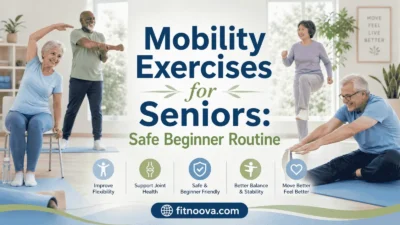

A low impact workout for seniors should be gentle on the joints, easy to modify, and balanced enough to support strength, mobility, balance, and everyday stamina. The goal is not to exercise harder than your body is ready for. It is to move consistently, build confidence, and make daily activities feel a little easier over time.
Low impact does not mean low value. Walking, chair exercises, light strength training, balance drills, water exercise, and controlled mobility work can all support healthy aging when they are done at the right pace. Public-health guidance for adults 65 and older emphasizes a mix of aerobic activity, muscle-strengthening work, and balance training each week.
Quick Answer
A good low impact workout for seniors includes a gentle warm-up, simple strength exercises, balance practice, light cardio, and a relaxed cool-down. Start with 15 to 20 minutes, keep the effort moderate, and use a chair, wall, or countertop for support when needed. Aim to move most days, add strength exercises at least twice a week, and stop if you feel chest pain, dizziness, unusual shortness of breath, or sharp joint pain.
What Makes A Workout “Low Impact”?
A low impact workout keeps at least one foot on the floor or uses a supported position, such as sitting in a chair. It avoids jumping, fast direction changes, hard landings, and high-impact moves that can irritate knees, hips, ankles, or the lower back.
Common low impact exercises for older adults include:
- Marching in place
- Walking
- Chair squats
- Seated knee lifts
- Wall push-ups
- Heel raises
- Step taps
- Gentle resistance band exercises
- Water aerobics
- Tai chi-inspired balance work
The best low impact workout is not the one that looks the most impressive. It is the one you can do safely, repeat consistently, and adjust on days when your energy, balance, or joints feel different.
Before You Start: Safety Comes First
Most older adults benefit from regular movement, but some people should be more cautious before beginning a new routine. Talk with a healthcare professional if you have new or worsening chest discomfort, unexplained dizziness, recent falls, uncontrolled blood pressure, severe shortness of breath, a recent surgery, or a medical condition that affects exercise tolerance.
During the workout, use the “talk test” as a simple guide. At a moderate effort, you should be breathing faster but still able to speak in short sentences. If you cannot talk, feel faint, or need to grip furniture tightly just to stay upright, slow down.
Normal exercise sensations may include mild muscle warmth, light fatigue, and slightly heavier breathing. Warning signs include sharp pain, chest pressure, sudden weakness, severe joint pain, dizziness, nausea, or shortness of breath that feels out of proportion. Stop and seek medical guidance if those occur.
The 20-Minute Low Impact Workout For Seniors
This beginner-friendly routine can be done at home with a sturdy chair. Choose a chair that does not roll. Wear supportive shoes, clear the floor around you, and keep water nearby.
Do the workout 2 to 4 days per week to start. Rest as needed between exercises.
1. Gentle Warm-Up: 3 Minutes
Start slowly to prepare your joints and muscles.
Seated Or Standing March — 60 Seconds
March in place at an easy pace. If standing feels unsteady, sit tall near the front of a chair and lift one knee at a time.
Shoulder Rolls — 30 Seconds Each Direction
Roll your shoulders up, back, and down. Keep the movement smooth, not forced.
Ankle Circles — 30 Seconds Each Side
Hold the chair if standing, or sit down. Circle one ankle slowly, then switch sides.
Side Step Taps — 60 Seconds
Step one foot to the side, tap the other foot in, then switch. Keep the steps small and controlled.
2. Chair Squat Or Sit-To-Stand: 2 Minutes
Stand in front of the chair with your feet about hip-width apart. Sit back slowly, touch the chair, then stand up again.
Do 6 to 10 repetitions.
Make it easier by using your hands lightly on the chair arms or doing only the standing-up portion. Make it harder by sitting down more slowly or pausing for one second before standing.
This exercise helps train the movement used for getting up from chairs, toilets, cars, and low couches.
3. Wall Push-Up: 2 Minutes
Stand facing a wall with your hands at chest height. Step your feet back slightly. Bend your elbows and bring your chest toward the wall, then press away.
Do 8 to 12 repetitions.
Keep your body long from head to heels. Avoid shrugging your shoulders toward your ears. This move strengthens the chest, shoulders, and arms without getting down on the floor.
4. Standing Heel Raises: 2 Minutes
Hold the back of a sturdy chair or a countertop. Rise onto the balls of your feet, pause briefly, then lower slowly.
Do 8 to 12 repetitions.
Heel raises strengthen the calves and ankles, which matter for walking, stair climbing, and balance. Keep the movement controlled. Do not bounce.
5. Seated Knee Lifts: 2 Minutes
Sit tall with both feet flat on the floor. Lift one knee a few inches, lower it, then switch sides.
Do 8 to 12 repetitions per side.
Keep your chest lifted and avoid leaning far back. This is a gentle way to train the hip flexors and core muscles used for walking and getting in and out of a car.
6. Supported Balance Practice: 3 Minutes
Stand behind a chair and hold it with both hands.
Feet Together Hold — 30 Seconds
Stand with your feet close together. Keep your eyes forward.
Semi-Tandem Stand — 30 Seconds Each Side
Place one foot slightly in front of the other, as if standing on railroad tracks rather than a tightrope. Switch sides.
Side Leg Lift — 8 Reps Each Side
Hold the chair. Lift one leg out to the side a few inches, lower slowly, then switch.
Balance activities are especially important for older adults because they help reduce fall risk and support safer daily movement. The CDC includes balance work as one of the key activity types older adults should include each week.
7. Low Impact Cardio Finisher: 3 Minutes
Choose one option:
Option A: March And Reach
March in place while gently reaching one arm forward at a time.
Option B: Step Taps
Step right, tap left foot in, step left, tap right foot in.
Option C: Seated Cardio March
Sit tall and march your feet while lightly pumping your arms.
Keep the pace comfortable. This section should feel energizing, not exhausting.
8. Cool-Down: 3 Minutes
Slow your breathing and let your heart rate come down.
Slow March — 60 Seconds
March lightly or walk around the room.
Calf Stretch — 30 Seconds Each Side
Place one foot behind the other, keep the back heel down, and lean slightly forward while holding a wall or chair.
Chest Opener — 30 Seconds
Bring your hands behind your back or rest them at your sides. Gently open through the chest.
Neck And Shoulder Release — 30 Seconds
Lower your shoulders, turn your head slowly side to side, and breathe calmly.
How Often Should Seniors Do Low Impact Workouts?
For general health, older adults are encouraged to include aerobic activity, strength training, and balance work across the week. CDC guidance says adults 65 and older need aerobic, muscle-strengthening, and balance activities weekly, and smaller chunks of movement can count toward the total.
A realistic beginner schedule could look like this:
- Monday: 20-minute low impact workout
- Tuesday: 10- to 20-minute walk
- Wednesday: Rest or gentle stretching
- Thursday: 20-minute low impact workout
- Friday: Easy walk or water exercise
- Saturday: Balance practice and light mobility
- Sunday: Rest
If that feels like too much, start with 10 minutes twice a week. Consistency matters more than doing the full plan immediately.
How Hard Should The Workout Feel?
Use a 1-to-10 effort scale.
- 1 to 2: Very easy
- 3 to 4: Light effort
- 5 to 6: Moderate effort
- 7 and above: Hard effort
Most seniors starting a low impact workout should stay around a 3 to 6. You should feel like you are working, but not straining. If you are recovering from illness, returning after a long break, or managing joint pain, stay closer to the easier end.
Easy Modifications For Joint Pain Or Limited Mobility
Low impact workouts should meet your body where it is. Use these adjustments as needed.
If Your Knees Feel Sensitive
Keep squats shallow, sit fully into the chair between reps, and avoid twisting while your feet are planted. Step taps may feel better than marching if knee lifting bothers you.
If Your Hips Feel Tight
Use smaller steps and reduce the height of knee lifts. Gentle side steps and seated marching can help you move without forcing range of motion.
If Your Balance Feels Unsteady
Do more exercises seated. For standing moves, hold a chair, countertop, or wall. Avoid single-leg drills unless you have reliable support.
If Your Shoulders Feel Stiff
Keep arm movements below shoulder height. For wall push-ups, stand closer to the wall and use a smaller bend in the elbows.
If You Get Tired Quickly
Break the routine into two 10-minute sessions. You can do the warm-up, strength moves, and cool-down in the morning, then balance and light cardio later.
How To Progress Without Overdoing It
Progress should feel gradual. You do not need to make every workout harder.
Choose one small change at a time:
- Add 1 or 2 repetitions to an exercise.
- Add 2 to 5 minutes to the total workout.
- Slow down the lowering phase of chair squats or heel raises.
- Use a light resistance band for seated rows or side steps.
- Reduce how much you rely on the chair, but only when balance is steady.
Give your body time to adapt. If soreness lasts more than a couple of days, your joints feel worse, or your next workout feels unusually difficult, scale back.
Common Mistakes To Avoid
Skipping The Warm-Up
Cold muscles and stiff joints usually do not respond well to sudden effort. A few minutes of easy movement can make the workout feel smoother and safer.
Holding Your Breath
Many people hold their breath during strength exercises without realizing it. Breathe out during the effort, such as when standing from the chair or pushing away from the wall.
Moving Too Fast
Fast repetitions can hide poor form and make balance harder. Controlled movement is more useful than rushing through the routine.
Ignoring Pain Signals
Mild muscle effort is normal. Sharp, sudden, or worsening pain is not something to push through.
Doing Only Cardio
Walking is excellent, but older adults also need strengthening and balance activities. The National Institute on Aging highlights endurance, strength, balance, and flexibility as important types of exercise for healthy aging.
FAQ
What is the best low impact workout for seniors?
The best low impact workout for seniors combines gentle cardio, basic strength exercises, balance practice, and mobility work. A routine with marching, chair squats, wall push-ups, heel raises, seated knee lifts, and supported balance drills is a strong starting point for many beginners.
Can seniors do low impact workouts every day?
Many seniors can do some form of low impact movement daily, such as walking, stretching, or gentle balance practice. Strength-focused workouts are usually best done with rest days between sessions, especially for beginners.
Are chair exercises effective for seniors?
Yes. Chair exercises can improve confidence, circulation, range of motion, and basic strength, especially for people with limited balance or mobility. They are also useful on low-energy days or when standing exercise is not comfortable.
How long should a senior workout be?
A good starting point is 10 to 20 minutes. Some people may build toward 30 minutes, while others may do better with shorter sessions spread throughout the day.
What exercises should seniors avoid?
There is no single list that applies to everyone, but many beginners should be cautious with jumping, fast twisting, deep unsupported squats, high-impact aerobics, and floor exercises that are hard to get out of safely. The right choice depends on strength, balance, joint health, medical history, and confidence.
Is walking enough exercise for seniors?
Walking is valuable, but it does not cover everything. A complete weekly plan should also include muscle-strengthening and balance exercises, especially for older adults who want to maintain independence and reduce fall risk.
Conclusion
A low impact workout for seniors should feel approachable, steady, and easy to adjust. Start with simple movements, use support when needed, and focus on good form rather than speed or intensity. With a balanced mix of gentle cardio, strength, balance, and mobility work, low impact exercise can become a practical part of staying active, capable, and confident in daily life.