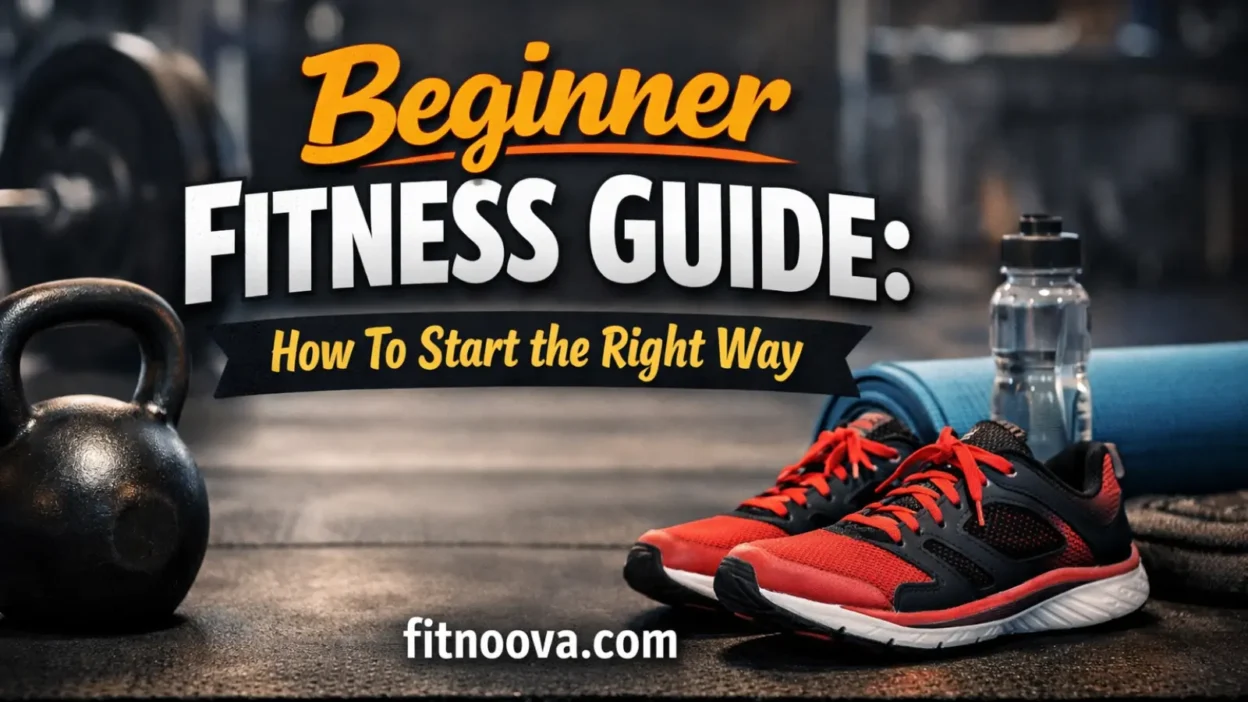
Beginner fitness does not have to mean hard workouts, long gym sessions, or chasing an “all in” mindset from day one. For most people, it means starting with a simple mix of walking or other cardio, basic strength work, and enough recovery to repeat the plan next week. Public health guidance still centers on a practical target for adults: at least 150 minutes of moderate-intensity aerobic activity each week, plus muscle-strengthening work on 2 or more days a week. Just as important, some activity is better than none, and building up gradually is the recommended way to start.
Quick Answer
If you are new to exercise, the best beginner fitness plan is one you can repeat consistently. Start with 3 to 5 days of movement each week, keep most sessions at a moderate effort, add 2 full-body strength workouts, and progress slowly instead of trying to “make up for lost time.” That approach lines up with current U.S. activity guidance and is safer, more sustainable, and more useful than jumping into an aggressive program.
What Beginner Fitness Actually Means
A good beginner fitness plan is not about proving toughness. It is about building a base. That usually means improving your ability to move regularly, tolerate exercise without feeling wrecked, and handle the basics well enough to keep going. For beginners, consistency matters more than complexity, and recent ACSM guidance on resistance training emphasizes that moving from no resistance training to any regular resistance training produces the biggest meaningful change for most adults.
It also helps to think of fitness as a few connected skills instead of one big goal. You are building basic cardiovascular endurance, muscular strength, joint confidence, coordination, and recovery habits at the same time. That is why a beginner routine should feel structured but not extreme.
Start Smaller Than You Think You Need To
One of the biggest mistakes beginners make is starting at the level they wish they were already at. That often leads to excessive soreness, skipped sessions, and the feeling that exercise is “too hard to maintain.”
A better starting point is to leave some room in the tank. The CDC notes that activity can be broken into smaller chunks across the week, and moderate intensity generally means you can still talk but not sing during the effort. That makes beginner fitness easier to judge without relying on gadgets or complicated calculations.
For most beginners, this is a smart opening approach:
• 2 days of full-body strength work
• 2 to 3 days of brisk walking, cycling, or another easy-to-moderate cardio option
• 1 to 2 easy movement days, such as relaxed walking or mobility work
• At least 1 lower-effort day each week
That is enough to build momentum without turning exercise into a full-time project.
The Four Building Blocks Of Beginner Fitness
Cardio
Cardio improves general endurance and supports heart and lung health. For beginners, brisk walking is often the best place to start because it is accessible, easy to scale, and fits the standard moderate-intensity target used in U.S. physical activity guidance. Adults can spread their aerobic activity across the week rather than doing it all at once.
Strength Training
Strength work is not just for people trying to build muscle. It helps beginners improve strength, maintain muscle mass, and handle daily tasks more comfortably. Current guidance recommends muscle-strengthening activity on 2 or more days per week, covering all major muscle groups: legs, hips, back, abdomen, chest, shoulders, and arms.
Mobility And Movement Quality
Beginner fitness also benefits from basic mobility and controlled movement. This does not mean turning every workout into a stretching session. It means moving through exercises with manageable ranges, steady tempo, and positions you can control.
Recovery
Recovery is part of training, not a break from it. Sleep, rest between harder sessions, and realistic progress all matter. If you recover well, you can keep training. If you do too much too soon, your schedule usually falls apart before your fitness improves.
A Simple Beginner Fitness Routine for the First Week
This sample routine works well for many generally healthy adults who are starting from a low or inconsistent activity level.
Day 1: Full-Body Strength
Choose 5 movements and do 1 to 2 sets of 8 to 12 controlled reps:
• Chair squat or bodyweight squat
• Wall push-up or incline push-up
• Hip hinge or glute bridge
• Dumbbell row or band row
• Front plank or dead bug
Rest as needed, move with control, and stop each set with a few reps left in reserve. You should feel like you worked, not like you emptied the tank.
Day 2: Easy Cardio
Do 20 to 30 minutes of brisk walking, cycling, or another moderate-intensity activity. Use the talk test: you should be able to talk, but singing would be hard.
Day 3: Recovery Or Light Movement
Take an easy walk, do gentle mobility work, or simply stay lightly active through the day.
Day 4: Full-Body Strength
Repeat the strength workout from Day 1. If one movement felt awkward, adjust it instead of forcing it. Beginner fitness works better when exercises fit your current level.
Day 5: Cardio
Do another 20 to 30 minutes of moderate cardio. If you feel good, add a few short brisk intervals, but keep the session controlled.
Day 6: Optional Easy Activity
Take a relaxed walk, do light stretching, or repeat an easy cardio session if your body feels good.
Day 7: Rest
Take a full lower-effort day or stay casually active without doing a formal workout.
This routine will not maximize everything, and that is the point. It gives beginners enough training to improve while keeping recovery realistic.
How Hard Should Beginner Workouts Feel?
Most beginner sessions should feel moderate, not punishing. The talk test is one of the simplest ways to judge cardio intensity: moderate effort means you can talk but not sing, while vigorous effort means you can only say a few words before pausing for breath.
For strength training, beginners usually do best when sets feel challenging but controlled. A simple rule is to finish most sets knowing you probably could have done 2 or 3 more clean reps. That gives you enough stimulus to improve without turning every workout into a grind.
If every session leaves you exhausted, unusually sore, or dreading the next workout, the plan is probably too hard for your current level.
How To Progress Without Burning Out
Progress in beginner fitness should feel steady, not dramatic. The goal is to make your routine a little more effective over time while keeping it repeatable.
You can progress by changing just one variable at a time:
• Add 5 minutes to a cardio session
• Add 1 or 2 reps to each set
• Add a little resistance
• Add one extra set to a couple of exercises
• Improve exercise form before increasing load
Recent ACSM messaging around resistance training leans in the same direction: the biggest win is regular participation, not overly detailed programming for someone who is just getting started.
A useful beginner rule is to stay with a routine for at least 2 to 4 weeks before changing everything. You do not need a new plan every Monday. You need enough repetition to actually get better at the current one.
Warm-Up, Cool-Down, And Recovery Basics
You do not need a long, elaborate warm-up before every beginner workout. In many cases, 5 to 10 minutes of easier movement is enough. The American Heart Association recommends warming up and cooling down gradually so heart rate and breathing can rise and fall more smoothly around exercise.
That can look like this:
• Before cardio: start at an easier pace for 5 minutes
• Before strength training: do one easier round of the movements you plan to use
• After training: walk slowly for a few minutes and do light stretching if it feels good
Recovery also means letting hard days stay hard and easy days stay easy. Beginners do not need to train hard every day to improve.
Soreness, Pain, And When To Back Off
Some soreness after a new workout is common. Delayed onset muscle soreness, or DOMS, often shows up 1 to 3 days after a challenging session and usually settles as the muscles recover.
That said, normal soreness is not the same as warning-sign symptoms. Stop exercising and get medical help if you develop symptoms such as chest pain, unusual shortness of breath, marked dizziness, feeling faint, or other concerning symptoms during activity. CDC and heart health guidance treat symptoms like chest pain, shortness of breath, light-headedness, and unusual fatigue as signs that deserve attention rather than being pushed through.
It also makes sense to slow down and modify your plan if you have:
• pain that changes your movement pattern
• soreness that keeps getting worse instead of easing
• swollen joints
• lingering exhaustion between workouts
• a chronic health condition that makes exercise tolerance less predictable
Moderate activity is safe for most people, but CDC guidance says people with chronic conditions should talk with a clinician about the types and amounts of activity that are right for them. The same goes for people who have been inactive and want to jump into vigorous exercise.
What Beginner Fitness Should Look Like After the First Month
After a few weeks, beginner fitness usually starts to feel less foreign. You may notice that walking feels easier, strength exercises feel more controlled, and recovery between sessions improves.
At that point, a solid next step is to work toward the standard adult benchmark over time:
• 150 to 300 minutes of moderate-intensity aerobic activity each week, or 75 to 150 minutes of vigorous activity, or a mix of both
• muscle-strengthening work at least 2 days a week
• exercises that cover all major muscle groups
You do not have to hit the full target immediately. The CDC is clear that some activity is better than none, and building up gradually still counts as meaningful progress.
Common Beginner Fitness Mistakes To Avoid
Doing Too Much Too Soon
This is the fastest way to turn motivation into soreness and missed workouts. Start with a level you can repeat.
Copying Advanced Plans
A routine built for an experienced lifter, runner, or class regular is often a bad fit for a true beginner. Your body needs a base first.
Training Hard Every Time
Most beginner sessions should not feel brutal. Consistency beats intensity when you are still learning the basics.
Ignoring Strength Training
Some beginners do only cardio because it feels simpler. But the basic public-health recommendation includes both aerobic and muscle-strengthening activity for a reason.
Changing the Program Constantly
You do not need endless variety in the early phase. Repeating a few basic movements is often the fastest route to better form and steady progress.
Treating Soreness As Proof of Success
Soreness can happen, especially at first, but it is not the goal. Feeling wiped out after every session usually means the plan needs adjustment.
FAQ
How often should a beginner work out?
For many beginners, 3 to 5 workout days per week is a practical starting range, especially if those sessions include a mix of cardio, strength work, and easier movement days. That setup helps you build toward the adult recommendation of 150 minutes of moderate aerobic activity plus 2 days of strength training without cramming everything into a few exhausting sessions.
Is walking enough for beginner fitness?
Walking is a strong place to start because it is accessible, easy to scale, and fits moderate-intensity activity guidance for many people. But for a more complete beginner fitness plan, it helps to pair walking with at least 2 days of muscle-strengthening work.
Should beginners join a gym or start at home?
Either can work. Home training removes travel and can make consistency easier. A gym gives you more equipment and sometimes more structure. The better option is the one you are most likely to use regularly.
How long should a beginner workout be?
It depends on the session, but many beginner workouts work well in the 20- to 45-minute range. Public-health guidance allows activity to be spread across the week and broken into smaller chunks, so you do not need long sessions to get started.
Do I need to feel sore for the workout to count?
No. Soreness can happen after a new or harder workout, but it is not required for progress. Training that feels challenging, controlled, and repeatable is usually more useful for beginners than workouts that leave them overly sore for days.
Who should check with a doctor before starting?
Healthy adults generally do not need clearance for moderate activity, but people with chronic conditions, disabilities, pregnancy, or a long period of inactivity before vigorous exercise should talk with a clinician about what is appropriate for them.
Conclusion
Beginner fitness works best when it is simple enough to follow, challenging enough to matter, and realistic enough to keep doing. Start with a manageable mix of cardio and full-body strength training, keep most sessions at a moderate effort, and progress gradually instead of chasing fast results. That is not the flashy approach, but it is the one most likely to help a beginner get stronger, move better, and still be exercising a month from now.