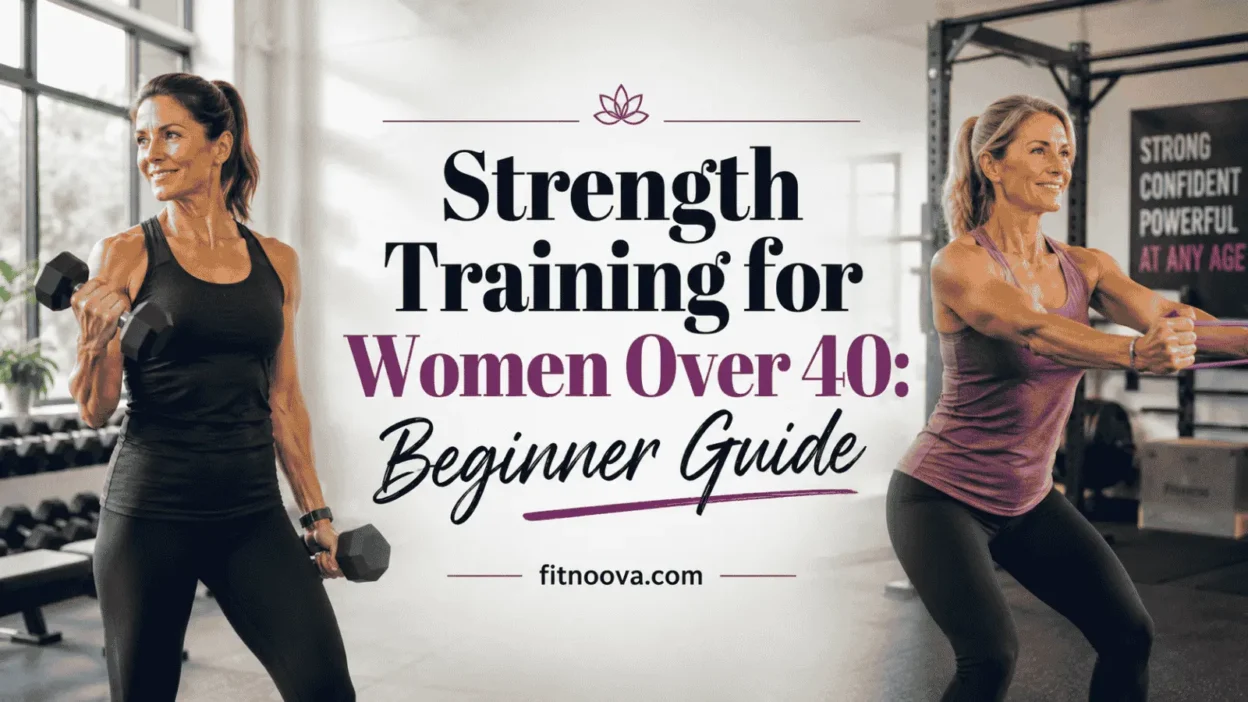
Strength training for women over 40 is one of the most practical ways to support muscle, bone health, balance, metabolism, and everyday confidence as the body changes with age. You do not need to lift heavy on day one, train like an athlete, or spend hours in a gym. The best starting point is a simple plan you can repeat, recover from, and gradually make more challenging.
The goal is not to punish your body into changing. It is to teach your muscles, joints, bones, and nervous system to handle life better: carrying groceries, climbing stairs, getting up from the floor, protecting your back, and feeling stronger in daily movement.
Quick Answer
Strength training for women over 40 should usually start with two to three full-body sessions per week, focusing on basic movement patterns like squats, hinges, pushes, pulls, carries, and core stability. The CDC recommends adults do muscle-strengthening activity at least two days per week, working all major muscle groups.
Beginners should start with manageable resistance, leave a few reps “in the tank,” prioritize form, and increase weight or reps gradually. A good plan should feel challenging, not crushing.
Why Strength Training Matters More After 40
After 40, many women notice that the same habits do not produce the same results. Muscle can become harder to maintain, recovery may need more attention, and hormonal shifts around perimenopause and menopause can affect sleep, energy, body composition, and bone health.
Strength training helps because it gives the body a clear signal: keep and build muscle, maintain useful strength, and support stronger bones. Mayo Clinic has highlighted the value of resistance exercise during perimenopause and after menopause because loading the bones can support bone density and help reduce osteoporosis risk.
That does not mean every woman over 40 needs barbell lifting, high-impact workouts, or intense gym programs. It means resistance training should become a regular part of the week, just like walking, mobility, sleep, and balanced nutrition.
What Counts as Strength Training?
Strength training means using resistance to challenge your muscles. That resistance can come from:
- Dumbbells
- Kettlebells
- Resistance bands
- Weight machines
- Cable machines
- Barbells
- Bodyweight exercises
- Weighted backpacks or household items
For beginners, the tool matters less than the movement quality. A controlled bodyweight squat, a band row, or a dumbbell deadlift can be more useful than a complicated workout done with poor form.
The most effective beginner programs train the whole body across a few basic patterns:
- Squat: Sitting down and standing up
- Hinge: Bending from the hips, as in a deadlift
- Push: Pressing away from the body
- Pull: Rowing or pulling toward the body
- Carry: Walking while holding weight
- Core stability: Resisting movement through the trunk
These movements carry over well to real life, which is one reason they are worth learning early.
How Often Should Women Over 40 Strength Train?
Most beginners do well with two full-body strength sessions per week. After four to eight weeks, many can move to three sessions if recovery, schedule, and energy allow.
A simple weekly setup might look like this:
Option 1: Two Days Per Week
- Monday: Full-body strength
- Tuesday: Walk or light cardio
- Wednesday: Rest or mobility
- Thursday: Full-body strength
- Friday: Walk or light cardio
- Weekend: Active recovery, stretching, recreation, or rest
Option 2: Three Days Per Week
- Monday: Full-body strength
- Wednesday: Full-body strength
- Friday: Full-body strength
- Other days: Walking, mobility, light cardio, or rest
The CDC recommends adults get at least 150 minutes of moderate-intensity aerobic activity weekly plus muscle-strengthening activity on two or more days per week. You do not need to hit the perfect schedule immediately. Start where you are and build consistency first.
How Hard Should Strength Training Feel?
A beginner strength workout should feel focused and challenging, but not overwhelming.
A useful target is to finish most sets with two to three good reps left in reserve. That means you could have done a few more reps with proper form, but you stopped before technique broke down.
For example, if your plan says 10 reps of a dumbbell squat, the weight should feel like you could maybe do 12 or 13 clean reps, not 25. It also should not be so heavy that your knees cave in, your back rounds, or you hold your breath through the whole set.
A practical effort scale:
- Too easy: You could keep going for many more reps.
- About right: The last few reps require focus, but your form stays solid.
- Too hard: You are rushing, straining, twisting, or losing control.
The sweet spot is controlled effort. That is where beginners build skill and strength without turning every workout into a recovery problem.
A Beginner Strength Training Routine for Women Over 40
This routine is designed for gym beginners, home workout users, and women returning after a long break. Do it two days per week for the first month. Rest at least one day between sessions.
Warm-Up: 5 To 8 Minutes
Do enough to feel warmer, looser, and more alert.
Try:
- 2 minutes of easy walking or marching in place
- 8 bodyweight squats to a chair
- 8 hip hinges with hands on hips
- 8 wall push-ups
- 10 band pull-aparts or gentle rows
- 5 slow breaths with ribs down and shoulders relaxed
The warm-up should prepare you, not tire you out.
Workout A
1. Chair Squat Or Goblet Squat
Do 2 to 3 sets of 8 to 10 reps.
Sit your hips back, keep your feet planted, and stand tall at the top. Use a chair if you are learning the pattern. Hold a dumbbell at your chest when bodyweight feels too easy.
2. Dumbbell Romanian Deadlift
Do 2 to 3 sets of 8 to 10 reps.
Hold dumbbells in front of your thighs. Push your hips back, keep your spine long, and stop when you feel tension in the backs of your legs. This trains the glutes, hamstrings, and back side of the body.
3. Incline Push-Up
Do 2 to 3 sets of 6 to 10 reps.
Place your hands on a countertop, bench, or sturdy elevated surface. Keep your body in a straight line and lower with control. The higher the surface, the easier the movement.
4. One-Arm Dumbbell Row Or Band Row
Do 2 to 3 sets of 8 to 12 reps per side.
Pull your elbow back, pause briefly, and avoid shrugging your shoulder toward your ear. Rows help balance posture and strengthen the upper back.
5. Farmer Carry
Do 3 rounds of 20 to 40 seconds.
Hold a dumbbell, kettlebell, or loaded bag in each hand and walk with tall posture. This builds grip, core strength, and full-body stability.
6. Dead Bug
Do 2 sets of 6 to 8 reps per side.
Lie on your back, brace gently, and move opposite arm and leg while keeping your lower back controlled. Go slowly.
Workout B
1. Step-Up
Do 2 to 3 sets of 8 reps per side.
Use a low step or sturdy platform. Press through the full foot, stand tall, and step down with control. Keep the height low enough that you do not need to push off aggressively from the floor.
2. Glute Bridge
Do 2 to 3 sets of 10 to 12 reps.
Lie on your back with knees bent. Press through your heels, lift your hips, and squeeze your glutes at the top without arching your lower back.
3. Dumbbell Floor Press
Do 2 to 3 sets of 8 to 10 reps.
Lie on the floor with a dumbbell in each hand. Press up, lower until your upper arms touch the floor lightly, and repeat. This is often more shoulder-friendly than a bench press for beginners.
4. Lat Pulldown Or Band Pulldown
Do 2 to 3 sets of 8 to 12 reps.
Pull your elbows down toward your sides. Keep your ribs from flaring and avoid leaning far back.
5. Suitcase Carry
Do 3 rounds of 20 to 30 seconds per side.
Hold one weight at your side and walk slowly without leaning. This trains the core in a way that carries over to real life.
6. Side Plank From Knees
Do 2 sets of 15 to 25 seconds per side.
Keep your body in a straight line from shoulders to knees. Stop before your hips sag or your shoulder feels strained.
How To Progress Without Overdoing It
Progression is what makes strength training work. But after 40, especially if you are new or returning, the smartest progress is steady rather than dramatic.
Use one of these methods at a time:
- Add 1 to 2 reps per set.
- Add one extra set to one or two exercises.
- Use slightly heavier weights.
- Slow down the lowering phase.
- Improve range of motion without pain.
- Rest a little less between sets, if form stays strong.
A simple rule: when you can complete all assigned reps with clean form and the effort feels moderate, increase the challenge slightly next time.
For example, if you are doing goblet squats for 3 sets of 10 and all sets feel controlled, move from a 15-pound dumbbell to a 17.5- or 20-pound dumbbell. If that jump feels too large, keep the same weight and slow each rep down.
What Weight Should You Start With?
Start lighter than your ego wants and heavier than “barely noticeable.”
For many beginners, that might mean:
- 5 to 10 pounds for upper-body exercises
- 10 to 25 pounds for lower-body exercises
- Bodyweight or a chair-supported version for squats, step-ups, and planks
- Light to medium resistance bands for rows or pulldowns
These are only starting examples. Your current strength, injury history, sleep, experience, and equipment all matter.
The right weight lets you move smoothly, breathe, and keep control. If you cannot complete the reps without twisting, bouncing, or bracing desperately, reduce the load.
Recovery Matters More Than You Think
Strength training does not build strength only during the workout. The body adapts afterward, when you recover.
Recovery basics include:
- Taking at least one day between full-body strength sessions at first
- Sleeping enough whenever possible
- Eating enough protein across the day
- Drinking water regularly
- Walking or doing gentle movement on non-lifting days
- Not increasing every exercise at once
Mild muscle soreness can be normal, especially when you are learning new movements. Sharp pain, joint pain, swelling, numbness, dizziness, chest pain, or pain that worsens as you continue are not signs to “push through.” The National Institute on Aging emphasizes safe, appropriate exercise as part of healthy aging, and beginners should adjust activity when needed rather than forcing intensity.
Strength Training During Perimenopause And Menopause
Many women become more interested in lifting during perimenopause or menopause because they notice changes in body composition, energy, sleep, or joint comfort. Strength training can be especially valuable during this stage, but it should still be matched to the person’s current capacity.
A few practical adjustments may help:
- Use longer warm-ups on stiff or low-energy days.
- Keep two to three strength days as the base instead of chasing daily hard workouts.
- Prioritize heavier basics gradually, not randomly.
- Include balance and core stability work.
- Watch recovery, especially if sleep is disrupted.
- Keep walking or low-impact cardio in the week for heart health and stress support.
Bone health is another major reason to take resistance training seriously after 40. Weight-bearing and resistance exercises place useful stress on bones, which is part of why they are commonly recommended for supporting bone strength with age.
Women with osteoporosis, pelvic floor symptoms, recent surgery, uncontrolled blood pressure, significant joint pain, or a history of fractures should get individualized guidance before adding heavy lifting, jumping, or high-impact training.
Home Vs. Gym: Which Is Better?
Both can work.
A gym gives you more equipment, easier weight progression, and machines that can help beginners learn movements with support. A home setup is more convenient, private, and easier to maintain for busy schedules.
For home strength training, start with:
- One pair of light dumbbells
- One pair of medium dumbbells
- A long resistance band
- A mini band
- A sturdy chair or bench
- A mat
Over time, adjustable dumbbells or a kettlebell can make progression easier.
For gym training, start with:
- Goblet squats
- Dumbbell deadlifts
- Cable rows
- Lat pulldowns
- Dumbbell presses
- Leg press
- Carries
- Core stability exercises
The best option is the one you will use consistently. A modest home routine done twice a week beats an ideal gym plan you avoid.
Common Mistakes To Avoid
Doing Too Much Too Soon
Motivation often spikes at the beginning, but joints, tendons, and connective tissue may need time to adapt. Start with fewer exercises and repeat them long enough to improve.
Changing Workouts Every Week
Variety feels fun, but constant changes make it harder to track progress. Keep the same basic routine for at least four to six weeks before making major changes.
Treating Soreness As The Goal
Soreness is not proof of a better workout. A productive session should leave you feeling worked, not wrecked.
Skipping Pulling Exercises
Many beginners do plenty of squats and presses but ignore rows, pulldowns, and upper-back work. Pulling exercises support posture, shoulder balance, and daily strength.
Using Cardio To Replace Strength Work
Walking, cycling, swimming, and other cardio are valuable, but they do not replace progressive resistance training. The strongest weekly routine usually includes both.
Ignoring Pain Signals
Muscle effort is expected. Sharp, sudden, worsening, or joint-specific pain deserves attention. Modify the movement, reduce the load, or stop and seek professional guidance when needed.
How To Stay Consistent When Life Gets Busy
Consistency does not require perfect weeks. It requires a plan that can survive normal life.
Use a minimum version of your workout for difficult weeks:
- Squat or step-up
- Hinge or bridge
- Push-up or press
- Row or pulldown
- Carry or plank
Do 1 to 2 sets of each. That may take 20 minutes. It is enough to keep the habit alive.
You can also pair strength training with existing routines. Train after school drop-off, before dinner, during lunch, or immediately after a walk. The fewer decisions you need to make, the easier it becomes to follow through.
FAQ
Is strength training safe for women over 40?
Yes, strength training is generally safe for many women over 40 when it starts at an appropriate level and progresses gradually. Women with medical conditions, recent injuries, osteoporosis, unexplained pain, or major concerns should check with a qualified healthcare professional before starting or increasing intensity.
Will lifting weights make women over 40 bulky?
Most women will not become bulky from basic strength training. Building large amounts of muscle usually requires years of highly specific training, progressive overload, enough calories, and consistent programming. For most beginners, strength training improves muscle tone, strength, posture, and function.
How long does it take to see results from strength training?
Some people notice better energy, confidence, and movement quality within a few weeks. Visible muscle or body composition changes usually take longer and depend on training consistency, nutrition, sleep, genetics, and starting point. Avoid judging progress only by the scale.
Should women over 40 lift heavy weights?
Eventually, many women benefit from lifting challenging weights, but “heavy” is relative. Beginners should first learn proper form, build consistency, and progress slowly. A weight is heavy enough when the final reps require focus while still allowing safe, controlled technique.
Can I strength train if I have knee or back pain?
Possibly, but the exercise selection may need to change. Pain-free range of motion, lighter loads, slower tempo, and supportive variations can help. Persistent, sharp, radiating, or worsening pain should be evaluated by a healthcare professional or physical therapist.
Is strength training better than cardio after 40?
It is not an either-or choice. Strength training supports muscle, bones, and daily function, while cardio supports heart health, endurance, and overall fitness. A balanced weekly routine usually includes both.
Conclusion
Strength training for women over 40 works best when it is simple, progressive, and realistic. Start with two full-body sessions per week, focus on the major movement patterns, use weights you can control, and build gradually instead of rushing.
The most effective plan is not the hardest one. It is the one you can repeat, recover from, and keep improving over time.