Last Updated:MAY 19, 2026
mobility exercises help you move with more control, comfort, and ease during daily activity or workouts. They focus on range of motion, joint stability, and smooth movement patterns, not just stretching. A good routine can prepare your hips, shoulders, ankles, and spine for squats, walks, runs, lifting, or long hours at a desk. The goal is simple: move each joint through a safe, useful path while staying steady and relaxed. Start with slow, low-strain drills, then build consistency before adding intensity. This approach works best when you match each movement to your body, avoid pain, and use steady breathing. Done well, it can make warm-ups better and help stiff areas feel less locked up.
Quick Answer
mobility exercises are controlled movements that train your joints and muscles to move better through a useful range. They are best done slowly, with steady breathing and no sharp pain. Common choices include hip circles, ankle rocks, shoulder CARs, cat-cow, and deep squat holds.
What Mobility Exercises Actually Do
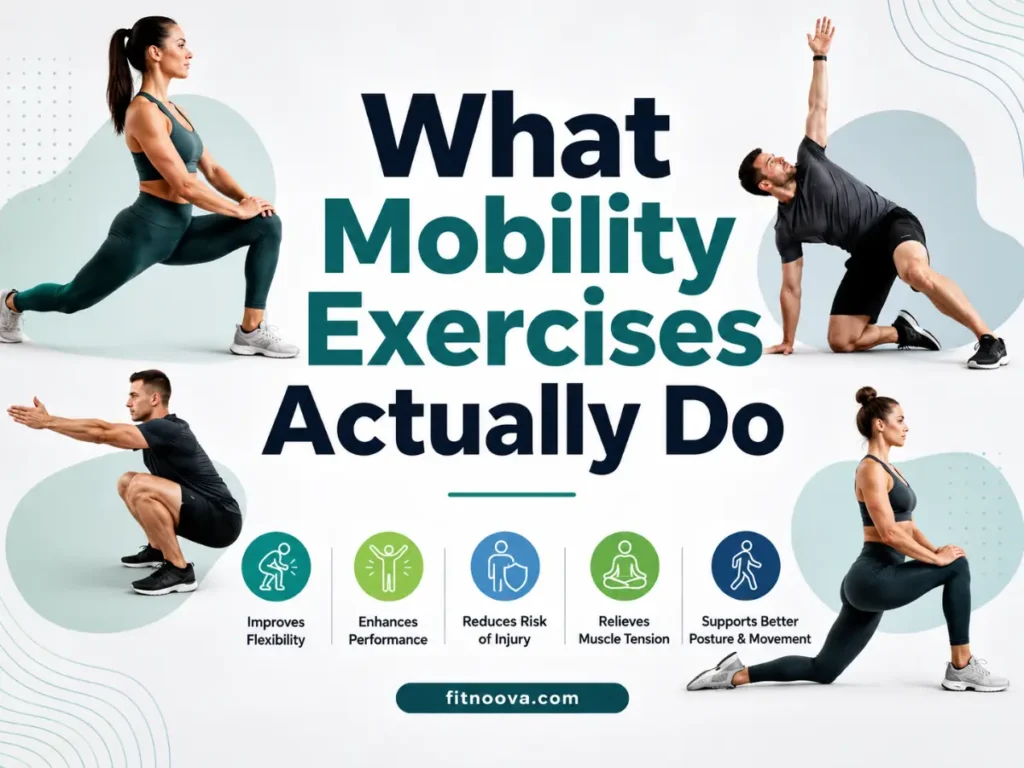
Mobility is your ability to actively move a joint through a usable range of motion. That is different from passive flexibility, which is how far a muscle or joint can be moved with outside help. In practical terms, mobility is what lets you squat without your heels popping up, reach overhead without arching your lower back, or turn your head comfortably while driving.
That matters whether you exercise regularly or not. Better joint motion and better control can support daily function, make strength training technique easier to learn, and reduce the feeling of moving like you are “locked up” after sitting for long stretches. Health organizations also consistently recommend movement that includes flexibility and balance work, especially as adults get older.
Who Should Do Mobility Exercises
Almost anyone can benefit from a basic mobility routine, especially:
- beginners starting exercise
- desk workers who feel stiff through the hips, chest, or upper back
- gym-goers who struggle with squat depth or overhead positions
- active adults who want a smarter warm-up
- older adults who want to maintain movement confidence and balance
Mobility work is especially useful when your body feels stiff, but not injured. If you have significant pain, numbness, weakness, swelling, or symptoms that shoot down an arm or leg, that is a different situation and it is worth getting medical guidance instead of trying to stretch through it.
The Best Mobility Exercises for Beginners
The most effective mobility exercises are simple, controlled, and easy to repeat often. You do not need an hour, special equipment, or extreme ranges of motion.
Neck Rotations
Sit or stand tall. Slowly turn your head to one side as far as feels comfortable, return to center, then turn the other way. This helps with neck mobility, especially if you spend much of the day looking at a screen. Move gently. The goal is smooth motion, not forcing range.
Shoulder Rolls
Roll both shoulders up, back, and down in a slow circle, then reverse the direction. This is a useful reset if your upper body feels tight from typing or hunching forward.
Arm Circles
Extend your arms to the sides and draw small circles, gradually making them larger. Then reverse. This warms the shoulders through motion instead of asking them to jump straight into heavier work. Dynamic movement is commonly recommended as part of a warm-up before exercise.
Thoracic Rotations
Start on all fours or sit tall with your hands across your chest. Rotate through your upper back rather than twisting aggressively through your lower back. This helps restore movement in the thoracic spine, which often gets neglected when people spend a lot of time seated.
Cat-Cow
On hands and knees, alternate between gently rounding and extending your spine. This is not about chasing a huge range. It is a low-pressure way to get the spine moving and coordinate breathing with motion.
Hip Circles
Stand holding a wall or counter for support. Lift one knee and make a slow circle from the hip, then switch directions. Repeat on the other side. Controlled hip circles can help with balance and hip control at the same time.
90/90 Hip Rotations
Sit on the floor with both knees bent, one in front and one to the side. Rotate from side to side without using momentum. This move trains hip internal and external rotation, which many adults lose over time.
World’s Greatest Stretch
Step into a lunge, place both hands inside the front foot, then rotate the same-side arm toward the ceiling. It combines hip mobility, thoracic rotation, and a dynamic stretch for the lower body, which makes it useful in a warm-up.
Deep Squat Hold With Support
Hold onto a door frame, rack, or sturdy post and sink into a comfortable squat. Let your body settle while you breathe. This can help the ankles, hips, and lower back work together, but it should feel supported, not forced.
Ankle Rocks
Stand facing a wall with one foot forward. Keeping the heel down, drive the front knee toward the wall, then back off. Good ankle mobility matters for walking, stairs, squats, and lunges.
Glute Bridge
Although it is often treated as a strength move, the glute bridge also supports hip mobility by helping you use the hips instead of relying on the lower back. Squeeze the glutes at the top without overextending.
Walking Knee Hugs
Take a step, pull one knee toward your chest, release, and continue walking. This combines balance, gentle hip movement, and warm-up value in one simple drill.
A Simple Full-Body Mobility Routine
If you want one practical starting point, use this 10- to 12-minute routine:
1. Warm Up for 2 to 3 Minutes
Walk around the room, march in place, or pedal lightly on a bike. Warm muscles generally tolerate stretching and movement work better than cold muscles do.
2. Move Through These Exercises
Perform each move slowly:
- Neck rotations: 5 reps each side
- Shoulder rolls: 8 reps each direction
- Arm circles: 10 reps each direction
- Cat-cow: 8 reps
- Thoracic rotations: 6 reps each side
- Hip circles: 6 reps each direction per side
- 90/90 hip rotations: 6 reps each side
- Ankle rocks: 8 reps each side
- Deep squat hold with support: 20 to 30 seconds
- Walking knee hugs: 6 reps each side
3. Finish With Easy Breathing
Stand or lie on your back and take 4 to 6 slow breaths. That helps you come out of the session without rushing and can make the routine feel more restorative.
How Often Should You Do Mobility Exercises?
For most people, three to five short sessions per week works well. Daily mobility can also be fine if the work is gentle and not irritating. You do not need to push hard. Think consistency over intensity. A few minutes done regularly tends to matter more than one long session you never repeat. General exercise guidance also supports building up gradually rather than doing too much too soon.
A useful split looks like this:
- Before workouts: use dynamic mobility exercises like arm circles, hip circles, ankle rocks, and walking knee hugs
- On rest days or after training: use slower mobility work and light stretching
- After long sitting periods: do a quick 5-minute reset for the neck, shoulders, hips, and upper back
How Hard Should Mobility Work Feel?
Mobility exercises should feel controlled, mildly challenging, and sometimes a little stiff at first, but they should not feel sharp, unstable, or alarming. A light pulling sensation is usually fine during stretching. Pain is your sign to ease off, shorten the range, or stop. Reputable guidance on stretching and exercise safety consistently recommends gentle movement, gradual progression, and stopping when something hurts rather than trying to force it.
As a simple rule, use a smooth effort level around 3 to 5 out of 10. You should stay relaxed enough to breathe normally.
How To Progress Without Overdoing It
Once the routine feels easy, progress in one small way at a time:
- add a few reps
- slow the movement down for better control
- hold end positions a little longer
- improve the quality of the motion before chasing more range
- use the exercises in a warm-up before strength training or cardio
What you do not need is aggressive stretching, bouncing, or trying to “win” mobility work. That usually backfires, especially for beginners. Gentle, repeatable movement is the safer bet.
Common Mistakes That Make Mobility Work Less Useful
Doing It Only When You Feel Tight
Mobility tends to respond better to regular practice than occasional rescue sessions. Waiting until you feel extremely stiff usually means you are playing catch-up.
Confusing Mobility With Stretching Alone
Stretching can help, but mobility also needs active control. That is why drills like hip circles, ankle rocks, and thoracic rotations often carry over better to real movement.
Forcing Range of Motion
Pushing into pain does not make the process faster. It usually makes you guard the movement more. Stay in a range you can own.
Skipping Strength Training
Mobility and strength work well together. If you only stretch but never build control, new range may not feel stable or useful.
Using the Same Routine Forever
Your needs change. A runner may need more ankle and hip work. Someone lifting overhead may need more thoracic spine and shoulder mobility. A good routine is simple, but it should still match your body and goals.
When To Back Off And Get Medical Advice

A basic mobility routine is meant for general stiffness and movement quality, not for diagnosing or treating injuries. Slow down and get checked by a qualified clinician if you notice:
- sharp or worsening pain
- swelling
- joint locking or giving way
- numbness or tingling
- pain that shoots down the arm or leg
- symptoms that do not improve or keep returning
That is especially important if pain began after a fall, collision, sudden twist, or other obvious injury.
FAQ
Are mobility exercises the same as stretching?
Not exactly. Stretching focuses mostly on lengthening muscles and improving flexibility. Mobility exercises also train active control, coordination, and usable joint motion. In practice, a good mobility routine may include stretching, but it is not limited to it.
Should I do mobility exercises before or after a workout?
Dynamic mobility exercises usually fit best before a workout because they warm you up while moving. Slower stretches and gentler mobility work often make more sense after training or on recovery days.
How long does it take to improve mobility?
That depends on your starting point, consistency, and whether stiffness is caused mostly by inactivity, training habits, or something medical. Many people feel better within a few weeks of regular practice, but lasting changes usually come from repeating manageable work over time rather than trying to force fast results.
Can mobility exercises help with back or joint pain?
They may help some people move more comfortably when stiffness and deconditioning are part of the problem, but pain is more complicated than tightness alone. If movement consistently hurts, symptoms travel down a limb, or the joint feels unstable, get individual advice instead of guessing.
Is it okay to do mobility exercises every day?
Usually yes, as long as the work is gentle and your body is tolerating it well. Daily movement snacks can be especially useful if you sit a lot. Just keep the intensity low enough that you are not irritating the same area over and over.
What are the best mobility exercises for beginners at home?
A good place to start is neck rotations, shoulder rolls, arm circles, cat-cow, thoracic rotations, hip circles, 90/90 hip rotations, ankle rocks, and a supported deep squat hold. Together, they cover the major areas that commonly feel stiff in everyday life.
Conclusion
mobility exercises work best when they stay simple, steady, and specific to how you move each day. Focus on joint control, posture, flexibility, and warm-up quality instead of forcing deeper positions. A few focused minutes can make your routine feel smoother and easier to repeat. Keep each rep controlled, stop before pain, and progress only when the movement feels clean. Start with one daily routine.