
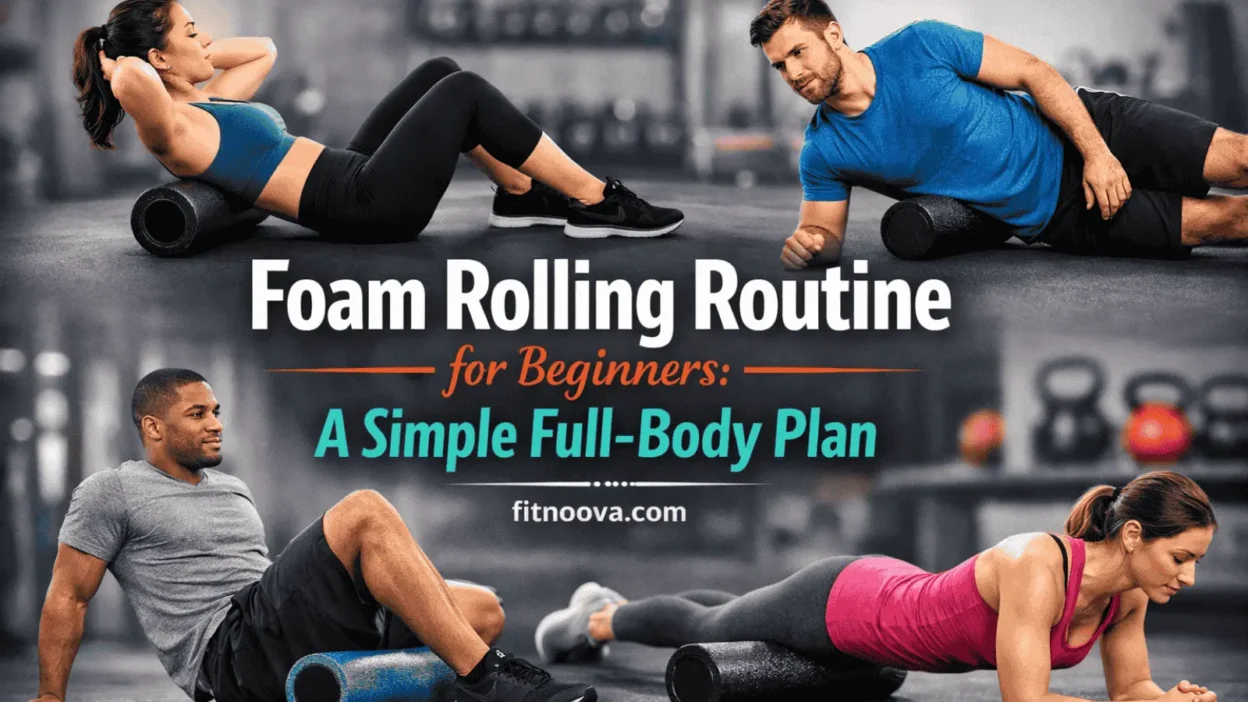
A good foam rolling routine is short, simple, and focused on the muscle groups that tend to feel tight from training, sitting, or daily life. For most beginners, that means spending a little time on the calves, quads, glutes, upper back, and lats with slow pressure, steady breathing, and no aggressive grinding. Used well, foam rolling can help improve short-term range of motion and make stiff muscles feel less restricted, but it is not a cure-all or a substitute for strength work, good sleep, and sensible training.
Quick Answer
A beginner-friendly foam rolling routine usually takes 5 to 10 minutes and works best when you move slowly over large muscle groups, pause briefly on tender spots, and avoid rolling directly over joints, bones, or sharp pain. Foam rolling is most useful as a warm-up add-on or a post-workout recovery tool, especially for improving short-term mobility and easing general muscle tightness.
What A Foam Rolling Routine Is Actually For
Foam rolling is a form of self-myofascial release. In plain terms, it is a way to apply pressure to muscles and surrounding soft tissue using your own body weight and a roller. The practical goal is not to “break up knots” in a dramatic way. It is to help a tight area relax enough that you can move more comfortably and get into positions that feel stiff before or after exercise.
That distinction matters. Foam rolling can be useful, but it tends to work best as one piece of a bigger routine. It can help with short-term range of motion and may reduce the feeling of tightness or soreness for some people. The research is more mixed when it comes to big recovery claims, major performance gains, or preventing all delayed-onset muscle soreness.
Who This Routine Is Best For
This routine is a strong fit for:
- Beginners who want a simple recovery habit
- People who sit for long stretches and feel generally stiff
- Lifters who want a quick mobility reset before training
- Walkers, runners, and gym-goers with tight calves, quads, or glutes
- Home exercisers who want a low-skill recovery tool
It is less appropriate if you are trying to treat an active injury, unexplained pain, swelling, or symptoms that feel more medical than muscular.
When To Foam Roll
There is no single perfect time, but these are the most practical options.
Before A Workout
Use foam rolling as a brief prep tool if you feel stiff going into training. A few minutes can help you feel looser and more ready to move, especially before lower-body sessions or full-body workouts. It is best paired with dynamic warm-up moves rather than used alone.
After A Workout
After training, foam rolling can be a way to wind down and reduce that “locked up” feeling in worked muscles. Some people find it helps them feel less tight later in the day, even though the evidence is less clear on whether it truly prevents delayed soreness.
On Recovery Days
A short session on rest days can make sense if your body feels stiff from sitting, travel, or the previous day’s training. Keep it easy. This is not the time to turn it into a pain tolerance contest.
How Long A Foam Rolling Routine Should Be
For most people, 5 to 10 minutes is enough. You do not need a long session to get value from it. Spend roughly 30 to 60 seconds on each major area, and stay a little longer only if one spot clearly feels tighter than the rest. That is enough for a useful beginner routine without overdoing it.
How Hard Foam Rolling Should Feel
Foam rolling should feel like firm pressure, not panic. Mild to moderate discomfort is common, especially over tight areas, but sharp pain, tingling, numbness, or a bruised feeling means back off. You should be able to breathe normally while you roll. If you are holding your breath or tensing your whole body, the pressure is probably too high.
For beginners, a softer, smooth roller is usually the smartest choice. It is more forgiving and easier to control than a hard textured roller. HSS specifically recommends softer, smoother rollers for beginners, and Harvard Health also advises starting with a softer model rather than a more aggressive one.
A Simple Full-Body Foam Rolling Routine
This routine is designed for beginners and mixed-fitness readers. It covers the areas that most often feel tight without getting too technical.
1. Calves
Sit on the floor with one calf on the roller and your hands behind you for support. Lift your hips slightly so you can move your leg over the roller. Roll from just above the ankle to just below the knee. Turn the leg slightly inward and outward to cover more of the calf.
Time: 30 to 45 seconds per side
This is a good place to start because the calves are easy to control and often tight from walking, running, and standing. HSS includes the calves as a basic foam rolling area and notes that you can angle the foot to reach more of the muscle.
2. Quads
Lie face down with the roller under the front of one thigh or both thighs. Support yourself on your forearms and slowly roll from above the knee toward the top of the thigh. Keep your core lightly braced so you are not dumping pressure into your lower back.
Time: 30 to 60 seconds per side
The quads are one of the most commonly rolled muscle groups because they can feel tight after squats, lunges, cycling, and long periods of sitting.
3. Hip Flexor-Quad Junction
Shift slightly higher on the front of the thigh, near the top of the quad. Use lighter pressure here than you would on the mid-thigh. This area can feel intense quickly.
Time: 20 to 30 seconds per side
This can be useful if sitting all day leaves the front of your hips feeling stiff, but keep it controlled. You are looking for a reduction in tension, not deep pain.
4. Glutes
Sit on the roller and shift your weight onto one side. You can cross the ankle of the rolling side over the opposite knee to expose the glute muscles more clearly. Roll slowly through the back and outer portion of the hip.
Time: 30 to 45 seconds per side
This is one of the most practical areas for desk workers and lifters alike. Tight glutes can make squatting, hinging, and even walking feel stiff.
5. Hamstrings
Sit with the roller under the back of one thigh or both thighs. Prop yourself up with your hands and roll from just above the knee toward the bottom of the glutes.
Time: 30 to 45 seconds per side
Go easy here. Hamstrings often feel more sensitive than people expect, especially if you are new to foam rolling.
6. Upper Back
Lie on your back with the roller across the upper back, not the lower back. Support your head with your hands, lift your hips slightly, and roll from around the mid-back up toward the area between the shoulder blades.
Time: 30 to 60 seconds
This is one of the best areas to include if you spend hours at a desk. The upper back often tolerates foam rolling well and can feel noticeably better afterward. Cleveland Clinic highlights upper back rolling as a common use, and HSS notes that a longer roller tends to be more stable for beginners, especially for the back.
7. Lats
Lie slightly on one side with the roller under the side of your upper back, just below the armpit area. Extend the same-side arm overhead if comfortable and make small, slow passes.
Time: 20 to 30 seconds per side
This is useful for people who lift, swim, climb, or simply feel tight through the shoulders and upper torso.
How To Use Tender Spots Without Overdoing It
When you find a sensitive area, do not rapidly scrub over it. Slow down or pause for a few seconds and keep breathing. That approach is commonly recommended in practical guidance because it is more tolerable and easier to control than fast rolling. HSS suggests holding briefly on sensitive spots and breathing through the position rather than aggressively grinding over them.
A good rule: if the discomfort eases a little as you breathe, stay. If it gets sharper, more electric, or more intense, move off the spot.
A 5-Minute Foam Rolling Routine
If you want the shortest useful version, do this:
- Calves: 30 seconds per side
- Quads: 30 seconds per side
- Glutes: 30 seconds per side
- Upper back: 60 seconds total
That is enough for a quick reset before a workout or after a long day.
A 10-Minute Foam Rolling Routine
If you want fuller coverage, do this:
- Calves: 45 seconds per side
- Quads: 45 seconds per side
- Hamstrings: 30 seconds per side
- Glutes: 45 seconds per side
- Upper back: 60 seconds total
- Lats: 30 seconds per side
This version works well on recovery days or after training.
How Often To Do This Routine
For general fitness, 2 to 5 times per week is realistic. You can do it more often if you keep the pressure moderate and the sessions short. Harvard Health notes that beginners can start around 30 to 60 seconds per muscle group and repeat the practice at least twice a week, with some people choosing daily rolling if it feels helpful and does not irritate them.
The better question is not “What is the perfect frequency?” It is “Can I do this often enough that it actually helps?” A short routine you will stick with beats a long routine you avoid.
What Foam Rolling Can And Cannot Do
A smart foam rolling routine can:
- Improve short-term range of motion
- Help you feel less stiff before training
- Give temporary relief to tight, overworked muscles
- Make it easier to move into warm-up drills or stretching
It probably cannot:
- Fix poor exercise technique
- Replace strength training or mobility work
- Treat every cause of pain
- Guarantee better recovery after hard training
- “Break up” tissue in the dramatic way social media often suggests
That more balanced view matches both clinical guidance and the broader review literature. Foam rolling can be useful, but it works best when expectations stay grounded.
Common Mistakes To Avoid
Rolling Too Fast
Fast rolling usually turns the whole thing into mindless movement. Slower passes help you notice where tension actually is and control pressure better.
Using Too Much Pressure
More pressure is not automatically more effective. If you are wincing, holding your breath, or feeling sore for hours after, you are probably going too hard.
Rolling Over Joints Or Bones
Keep the roller on muscle tissue. HSS and Mayo Clinic guidance both caution against rolling directly over bones or joints.
Trying To Foam Roll Everything
You do not need a 25-minute head-to-toe routine. Focus on the few areas that are tight, stiff, or relevant to that day’s training.
Using It As A Substitute For Warm-Up Or Strength Work
Foam rolling can support movement prep, but it should not replace an actual warm-up, progressive loading, or a well-built training plan.
When To Skip Foam Rolling Or Get Medical Advice First
Foam rolling is not appropriate for every situation. Expert consensus has identified open wounds and bone fractures as contraindications, and it has flagged local tissue inflammation, deep vein thrombosis, osteomyelitis, and myositis ossificans as situations requiring caution or avoidance. Cleveland Clinic also advises that self-myofascial release should be approached carefully and ideally with provider guidance if you have a health condition that affects safety.
You should also stop and get medical advice if you notice:
- Sharp or worsening pain
- Swelling, redness, or heat
- Numbness, tingling, or radiating symptoms
- A recent injury
- Pain that feels deep, unstable, or unrelated to muscle tightness
- Easy bruising or unusual sensitivity
Normal training discomfort is one thing. Symptoms that feel threatening, strange, or clearly not muscular are another.
FAQ
Should you foam roll before or after a workout?
Both can work. Before a workout, foam rolling can be a short movement-prep tool if you feel stiff. After a workout, it may help you feel less tight and more comfortable. The best time is the one you will use consistently.
How long should a foam rolling routine be?
For most people, 5 to 10 minutes is enough. Spend around 30 to 60 seconds on each area and keep the routine targeted instead of turning it into a long session.
Is foam rolling supposed to hurt?
It can feel tender, but it should not feel sharp, alarming, or intolerable. Think firm pressure, not aggressive pain. If you cannot breathe normally or relax into it, lighten the pressure.
Can foam rolling help with sore muscles?
It can help some people feel less sore or tight, especially right after exercise, but the evidence is mixed on whether it meaningfully prevents delayed-onset muscle soreness. It is best treated as a helpful option, not a guaranteed recovery fix.
What muscles should beginners foam roll first?
Start with the calves, quads, glutes, and upper back. Those areas are usually easier to position on the roller and tend to respond well in beginners.
Do you need a hard textured roller?
Usually not. Beginners generally do better with a smooth, softer roller because it is easier to tolerate and control. You can always move to a firmer roller later if you want more pressure.
Conclusion
A practical foam rolling routine does not need to be long or intense to be useful. For most beginners, a few minutes spent on the calves, quads, glutes, upper back, and lats is enough to reduce that stiff, locked-up feeling and improve short-term mobility. Keep the pressure moderate, stay off bones and joints, and treat foam rolling as a support tool, not a miracle fix. Used that way, it is one of the simplest recovery habits you can add to a training week.