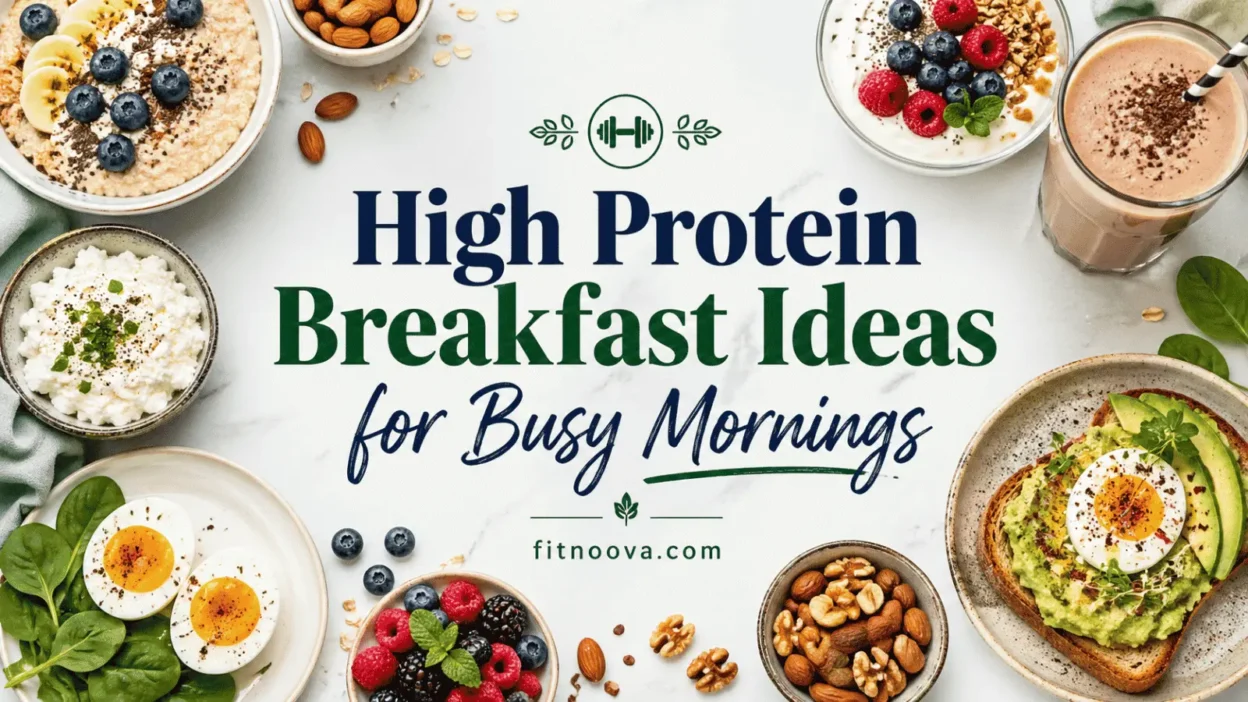
A good breakfast does not need to be complicated, but it should do more than give you a quick burst of energy. The best high protein breakfast ideas pair a solid protein source with fiber-rich carbohydrates, fruit or vegetables, and healthy fats so the meal feels satisfying and fits your real morning.
Protein matters because it helps build and maintain body tissues, supports muscle repair, and usually digests more slowly than a mostly refined-carb breakfast. For most healthy adults, the long-standing Recommended Dietary Allowance is 0.8 grams of protein per kilogram of body weight per day, though individual needs can vary with age, training, health status, and goals.
Quick Answer
High protein breakfasts usually include about 20 to 35 grams of protein from foods such as eggs, Greek yogurt, cottage cheese, tofu, beans, lean meats, fish, protein smoothies, or high-protein oats. For the most balanced meal, add fiber from fruit, vegetables, beans, oats, or whole grains instead of relying only on protein. A simple example is Greek yogurt with berries and nuts, eggs with whole-grain toast and vegetables, or overnight oats made with milk, chia seeds, and protein-rich toppings.
What Makes A Breakfast “High Protein”?
There is no single legal definition for a high protein breakfast in everyday meal planning, but a practical target for many adults is 20 to 30 grams of protein at breakfast. Active adults, larger bodies, older adults, and people trying to preserve muscle while eating fewer calories may benefit from the higher end of that range, while smaller or less active adults may need less.
The goal is not to force as much protein as possible into one meal. A better approach is to distribute protein across the day and build meals that are still balanced. Harvard’s Nutrition Source notes that adults need a minimum of 0.8 grams of protein per kilogram of body weight daily, while acceptable intake can vary widely depending on the total diet.
A high protein breakfast should still leave room for:
- Fiber-rich carbs, such as oats, berries, beans, potatoes, or whole-grain toast
- Healthy fats, such as avocado, olive oil, nuts, seeds, or nut butter
- Micronutrient-rich foods, such as fruit, vegetables, dairy, fortified soy milk, or legumes
- Enjoyment, because a breakfast you dislike is not a sustainable habit
Why Protein At Breakfast Can Help
A protein-rich breakfast may help you feel fuller and more steady through the morning compared with a meal made mostly from refined carbs. Harvard Health reported that people who consumed extra protein at breakfast had lower appetite later in the day in research it reviewed.
That does not mean breakfast is magic, or that skipping it automatically harms your health. Some people feel best eating later. Others need breakfast to train, focus, manage hunger, or avoid overeating at night. The useful question is not “Is breakfast required?” but “Would a better breakfast make my day easier?”
A good high protein breakfast can help when you:
- Get hungry again an hour after cereal or toast
- Train in the morning and need recovery support
- Are trying to build or maintain muscle
- Want a more filling breakfast for weight-loss support
- Need a portable meal for work, school, or commuting
- Tend to snack heavily because breakfast is too small
Easy High Protein Breakfast Ideas
1. Greek Yogurt Bowl With Berries, Nuts, And Seeds
Greek yogurt is one of the easiest high protein breakfast bases because it requires no cooking and pairs well with sweet or savory toppings. Choose plain Greek yogurt when you can, then add berries, chopped nuts, chia seeds, or a small drizzle of honey.
A simple bowl can include:
- Plain Greek yogurt
- Blueberries or strawberries
- Chia seeds or ground flaxseed
- Walnuts, almonds, or peanut butter
- Cinnamon
This breakfast works well for busy adults because it is fast, cold, and easy to prep in a container. For more fiber, add oats or high-fiber cereal. For more calories, add nut butter or granola. For a lighter meal, keep the toppings simple and fruit-forward.
2. Cottage Cheese Toast With Tomato And Pepper
Cottage cheese has made a comeback for a reason: it is high in protein, mild in flavor, and easy to use in quick meals. Spread it on whole-grain toast and add sliced tomato, black pepper, and a little olive oil.
You can also make it sweet with banana, berries, cinnamon, and a few crushed nuts. The savory version feels more like a meal, especially if you add cucumber, avocado, smoked salmon, or a hard-boiled egg on the side.
3. Eggs With Whole-Grain Toast And Vegetables
Eggs are convenient, affordable, and rich in high-quality protein. To make the meal more filling and nutrient-dense, pair them with vegetables and a fiber-rich carb instead of eating eggs alone.
Try:
- Scrambled eggs with spinach and mushrooms
- Two eggs with whole-grain toast and fruit
- A veggie omelet with avocado
- Egg tacos with beans, salsa, and corn tortillas
- Boiled eggs with toast and a side of berries
For heart health, the American Heart Association recommends overall dietary patterns that emphasize fruits, vegetables, whole grains, healthy protein sources, and foods lower in sodium, added sugars, and saturated fat.
4. Overnight Oats With Milk, Chia Seeds, And Greek Yogurt
Oats are often thought of as a carb-heavy breakfast, but they can become high protein with the right add-ins. Mix oats with milk, Greek yogurt, chia seeds, and fruit, then refrigerate overnight.
A balanced version:
- ½ cup oats
- ½ cup milk or fortified soy milk
- ½ cup Greek yogurt
- 1 tablespoon chia seeds
- Berries, banana, or apple
- Cinnamon or vanilla
This is a strong option for meal prep because you can make two or three jars at once. It also gives you a better mix of protein and fiber than instant oats made only with water.
5. Tofu Scramble With Potatoes And Salsa
A tofu scramble is a practical high protein breakfast for people who do not eat eggs or want more plant-based meals. Crumble firm tofu into a skillet with turmeric, garlic, pepper, and vegetables. Serve it with roasted potatoes, beans, corn tortillas, or whole-grain toast.
Good add-ins include:
- Bell peppers
- Spinach
- Mushrooms
- Onion
- Black beans
- Avocado
- Salsa
Soy foods, beans, peas, lentils, nuts, seeds, eggs, seafood, poultry, and lean meats can all fit into the protein foods group, giving you plenty of variety across the week.
6. Breakfast Burrito With Eggs, Beans, And Salsa
A breakfast burrito is one of the easiest ways to combine protein, fiber, and flavor. Use eggs or tofu, add beans, and wrap everything in a whole-grain or corn tortilla.
A simple version:
- Scrambled eggs or tofu
- Black beans or pinto beans
- Salsa
- Spinach or peppers
- A little cheese or avocado
- Whole-grain tortilla
Make several at once, wrap them individually, and refrigerate or freeze. Reheat until steaming hot, especially if they were frozen.
7. Protein Smoothie That Actually Keeps You Full
A smoothie can be high protein, but it needs more than fruit and juice. The most filling smoothies include protein, fiber, and fat.
Use a base like:
- Greek yogurt
- Cottage cheese
- Milk or fortified soy milk
- Protein powder, if you use it
- Silken tofu
Then add fruit, spinach, oats, chia seeds, peanut butter, or ground flaxseed. Avoid making the smoothie mostly fruit juice, which can leave you hungry sooner.
A balanced smoothie formula is:
Protein base + fruit + fiber add-in + healthy fat + liquid
For example, blend Greek yogurt, frozen berries, spinach, chia seeds, and milk. It takes less than five minutes and works well after a morning workout.
8. Smoked Salmon Or Tuna Toast
Fish at breakfast is not for everyone, but it is a strong option if you enjoy savory meals. Smoked salmon on whole-grain toast with cottage cheese or Greek yogurt spread can deliver protein without much cooking.
Try:
- Whole-grain toast
- Cottage cheese or mashed avocado
- Smoked salmon
- Cucumber
- Lemon
- Dill or black pepper
Tuna toast can also work, especially with Greek yogurt instead of mayonnaise. Keep sodium in mind with smoked fish and packaged tuna, especially if you are watching blood pressure.
9. Egg Muffins Or Sheet-Pan Eggs
Egg muffins are a meal-prep favorite because they solve the “I have no time” problem. Whisk eggs with chopped vegetables, cheese if desired, and cooked lean protein such as turkey or chicken sausage. Bake in a muffin tin and refrigerate.
You can also bake eggs in a sheet pan, cut them into squares, and use them for breakfast sandwiches. Add whole-grain English muffins, spinach, and fruit on the side for a fuller meal.
10. High Protein Avocado Toast
Avocado toast is satisfying, but avocado alone is not high protein. To make it a true high protein breakfast, add eggs, cottage cheese, smoked salmon, tofu, tempeh, or white beans.
Good combinations include:
- Avocado toast with two eggs
- Avocado toast with cottage cheese and tomato
- Avocado toast with mashed white beans and hemp seeds
- Avocado toast with smoked salmon and cucumber
This keeps the flavor people like while making the meal more balanced.
11. Breakfast Bowl With Chicken, Eggs, Or Beans
A breakfast bowl is flexible and useful when you have leftovers. Start with potatoes, rice, quinoa, or greens, then add a protein source and vegetables.
Try:
- Eggs, roasted sweet potatoes, spinach, and salsa
- Chicken, quinoa, avocado, and peppers
- Black beans, eggs, potatoes, and pico de gallo
- Tofu, brown rice, edamame, and vegetables
This is a good choice for people who prefer a bigger breakfast or train early in the day.
12. Peanut Butter Banana Toast With Greek Yogurt
Peanut butter adds some protein, but not enough by itself for a high protein breakfast. Pair it with Greek yogurt, milk, or a protein smoothie on the side.
A simple plate:
- Whole-grain toast
- Peanut butter
- Banana slices
- Cinnamon
- Plain Greek yogurt on the side
This gives you carbs, protein, fat, and fiber in a meal that feels familiar and takes only a few minutes.
13. Chia Pudding With Greek Yogurt
Chia pudding is easy to prep, but it can be too light if made only with chia seeds and almond milk. Add Greek yogurt, dairy milk, or fortified soy milk to raise the protein.
Use:
- Chia seeds
- Greek yogurt
- Milk or fortified soy milk
- Berries
- Vanilla or cinnamon
- Nuts or seeds on top
Let it sit overnight so the texture thickens. This works well for people who want a cold breakfast that is not oats.
14. Turkey, Egg, And Cheese Breakfast Sandwich
A breakfast sandwich can be a balanced high protein meal if you build it carefully. Use a whole-grain English muffin, egg, lean turkey, and a modest amount of cheese. Add tomato, spinach, or avocado for more flavor and nutrients.
This is also easy to prep ahead. Cook the eggs in batches, assemble sandwiches, refrigerate, and reheat as needed.
15. Lentil Or Bean Breakfast Hash
Beans and lentils are underrated breakfast foods. They provide protein and fiber, which makes them especially helpful for staying full.
Make a skillet with:
- Lentils or beans
- Eggs or tofu
- Potatoes or sweet potatoes
- Peppers and onions
- Salsa or hot sauce
This meal is affordable, filling, and easy to adapt for vegetarian or gluten-free eating patterns.
How To Build A High Protein Breakfast Without Overthinking It
Use this simple structure:
Choose one protein anchor, one fiber-rich carb, one fruit or vegetable, and one flavor or fat source.
For example:
| Protein Anchor | Fiber-Rich Carb | Fruit Or Vegetable | Flavor Or Fat |
|---|---|---|---|
| Greek yogurt | Oats | Berries | Chia seeds |
| Eggs | Whole-grain toast | Spinach | Avocado |
| Tofu | Potatoes | Peppers | Salsa |
| Cottage cheese | Whole-grain toast | Tomato | Olive oil |
| Beans | Corn tortillas | Pico de gallo | Cheese |
| Smoked salmon | Whole-grain toast | Cucumber | Lemon |
This keeps breakfast balanced without requiring calorie counting or complicated tracking.
High Protein Breakfast Ideas For Weight-Loss Support
A high protein breakfast can support weight-loss efforts when it helps you feel satisfied and makes your overall day easier to manage. It does not cause fat loss by itself, and more protein is not automatically better.
For weight-loss support, focus on meals that are:
- Filling enough to reduce grazing
- Built around mostly minimally processed foods
- Moderate in added sugars
- Rich in fiber
- Enjoyable enough to repeat
- Matched to your hunger, schedule, and activity level
Good options include Greek yogurt with berries, eggs with vegetables, tofu scramble, cottage cheese toast, or a breakfast burrito with eggs and beans. Be careful with “high protein” packaged foods that are still high in added sugar or low in fiber. Read labels and judge the full meal, not just the protein number.
High Protein Breakfast Ideas For Muscle Support
If you strength train, breakfast is a useful chance to spread protein across the day. Muscle protein synthesis responds to protein intake, and research in older adults often discusses roughly 30 to 40 grams of protein per meal as a useful range for stimulating muscle protein synthesis, though needs vary by age, body size, and training status.
Good muscle-supportive breakfasts include:
- Greek yogurt, oats, berries, and nuts
- Eggs, egg whites, toast, and fruit
- Cottage cheese bowl with granola and berries
- Protein smoothie with milk, Greek yogurt, and fruit
- Tofu scramble with beans and potatoes
- Turkey breakfast sandwich with fruit
For best results, pair nutrition with consistent resistance training, adequate total calories, sleep, and progressive training. Breakfast alone will not build muscle without the rest of the routine.
Plant-Based High Protein Breakfast Ideas
Plant-based breakfasts can be high in protein with a little planning. The easiest anchors are tofu, tempeh, edamame, soy milk, beans, lentils, nut butters, seeds, and higher-protein plant yogurts.
Try:
- Tofu scramble with black beans and salsa
- Soy milk overnight oats with chia seeds
- Tempeh breakfast sandwich
- Lentil hash with potatoes and vegetables
- Smoothie with silken tofu, berries, and soy milk
- Peanut butter oats with hemp seeds and fortified soy milk
Fortified soy milk is often closer to dairy milk in protein than many almond, oat, or rice milks. If you rely on plant-based milk for protein, check the label.
Fast High Protein Breakfasts Under 10 Minutes
When mornings are rushed, choose breakfasts that require assembly instead of cooking.
Good options:
- Greek yogurt, berries, and nuts
- Cottage cheese toast
- Hard-boiled eggs with fruit and toast
- Peanut butter banana toast with Greek yogurt
- Protein smoothie
- Leftover egg muffins
- Tuna or salmon toast
- Overnight oats
- Bean and cheese tortilla
The best breakfast is the one you can repeat on a normal weekday, not the one that looks perfect online.
Common Mistakes To Avoid
Relying Only On Protein
Protein helps, but a breakfast with no fiber may still leave you unsatisfied. Add fruit, vegetables, oats, beans, or whole grains whenever possible.
Turning Breakfast Into A Math Problem
You do not need to calculate every gram forever. Track for a few days if it helps you learn, then use repeatable meal templates.
Assuming More Protein Is Always Better
Very high protein intakes are not necessary for everyone. People with kidney disease or other medical conditions should talk with a healthcare professional before significantly increasing protein.
Ignoring Sodium And Saturated Fat
Processed meats, salty smoked fish, and large amounts of high-fat cheese can push breakfast in a less heart-friendly direction. The American Heart Association recommends choosing foods lower in sodium, added sugars, and saturated fat as part of an overall healthy eating pattern.
Eating A Breakfast That Does Not Fit Your Life
A beautiful meal-prep plan is useless if you hate reheated eggs or never have time to cook. Choose the version that fits your appetite, schedule, budget, and kitchen.
FAQ
What is a good high protein breakfast?
A good high protein breakfast includes a clear protein source plus fiber and enough energy to keep you satisfied. Examples include Greek yogurt with berries and nuts, eggs with vegetables and whole-grain toast, tofu scramble with beans, cottage cheese toast, or overnight oats made with milk and Greek yogurt.
How much protein should I eat at breakfast?
Many adults do well with about 20 to 30 grams of protein at breakfast, but the right amount depends on body size, age, activity level, health status, and total daily intake. The adult RDA is 0.8 grams per kilogram of body weight per day, though some people need more depending on their circumstances.
Are eggs enough for a high protein breakfast?
Eggs can be part of a high protein breakfast, but two eggs alone may not provide as much protein as some people expect. Pair them with Greek yogurt, cottage cheese, beans, tofu, smoked salmon, or a higher-protein side if you need a larger protein target.
What is a high protein breakfast without eggs?
Good egg-free options include Greek yogurt bowls, cottage cheese toast, tofu scramble, protein smoothies, chia pudding with Greek yogurt, overnight oats with milk, lentil hash, bean burritos, or smoked salmon toast.
Can a high protein breakfast help with weight loss?
It can help if it keeps you fuller, reduces mindless snacking, and supports a sustainable calorie intake. It does not guarantee weight loss on its own, and the quality of the whole diet still matters.
What is the easiest high protein breakfast for meal prep?
Overnight oats with Greek yogurt, egg muffins, breakfast burritos, chia pudding, and cottage cheese bowls are some of the easiest options. They store well, require little morning effort, and can be adjusted with different toppings.
Conclusion
The best high protein breakfast ideas are simple, balanced, and realistic enough to repeat. Start with one protein anchor, add fiber from fruit, vegetables, oats, beans, or whole grains, and adjust portions based on your hunger and schedule. Whether you prefer eggs, Greek yogurt, tofu, cottage cheese, smoothies, or breakfast burritos, the goal is the same: a morning meal that supports energy, fullness, and a healthier day without making breakfast complicated.