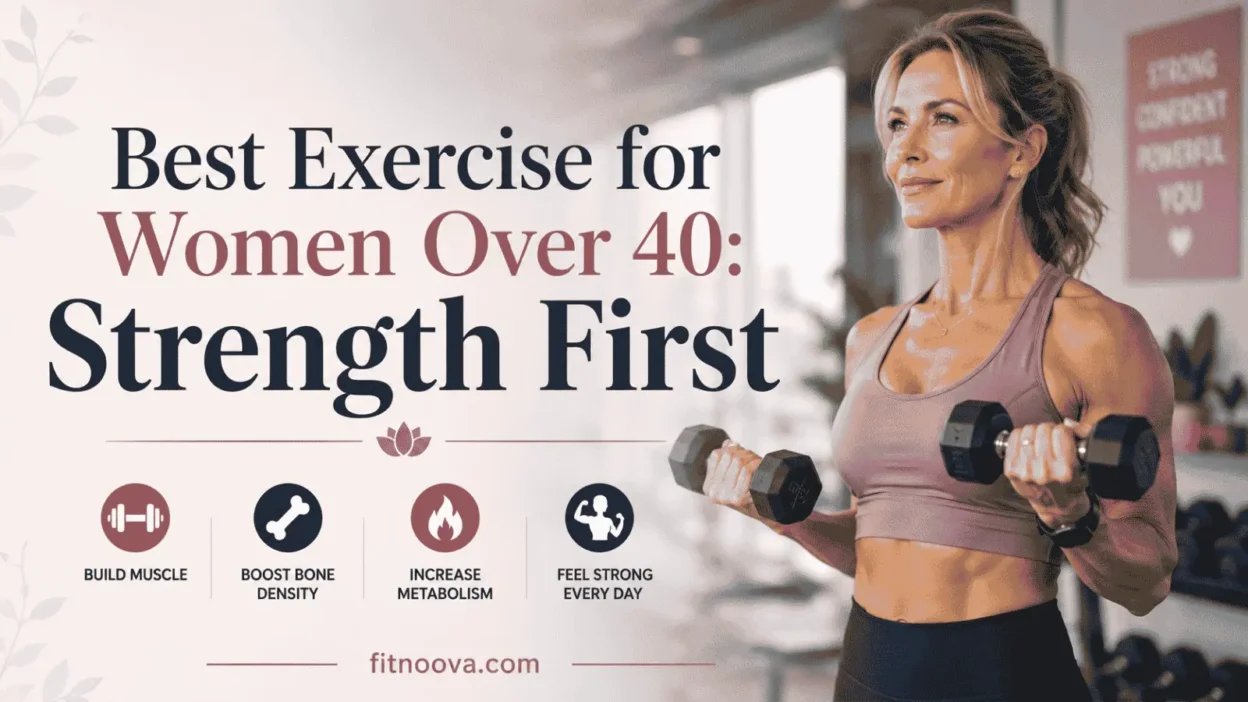
The best exercise for women over 40 is not one single move. It is strength training done consistently, supported by walking or other cardio, mobility work, and balance training. After 40, a smart routine should help you build muscle, support bone health, protect your joints, improve energy, and make daily life feel easier without requiring punishing workouts.
That does not mean you need to train like an athlete or spend hours in the gym. The most effective plan is usually simple: lift, push, pull, squat, hinge, carry, walk, recover, and gradually make the work a little more challenging.
Quick Answer
The best exercise for women over 40 is strength training, especially full-body movements like squats, deadlifts, rows, presses, lunges, and carries. For the best results, pair strength training with regular aerobic exercise, mobility work, and balance practice. U.S. physical activity guidelines recommend adults do muscle-strengthening activity at least two days per week and aim for 150 minutes of moderate-intensity aerobic activity weekly.
Why Strength Training Comes First After 40
Strength training deserves the top spot because it helps address several changes that often become more noticeable in midlife: muscle loss, changes in body composition, joint stiffness, reduced power, and declining bone density.
Muscle is not only about appearance. It supports metabolism, posture, balance, blood-sugar control, and independence. Stronger legs make stairs easier. A stronger back helps with posture and daily lifting. Stronger hips and core can make walking, hiking, gardening, and travel feel better.
Resistance exercise also matters for bone health. Mayo Clinic guidance highlights weight-resistance exercise as especially valuable during perimenopause and after menopause because loading the bones can help support bone density and reduce osteoporosis risk.
The key is not to chase soreness. The goal is to train the major movement patterns often enough that your body has a reason to stay strong.
The Best Types Of Exercise For Women Over 40
A complete routine does not need to be complicated. Most women over 40 do well with four main categories.
1. Strength Training
Strength training includes any exercise that makes your muscles work against resistance. That resistance can come from dumbbells, barbells, kettlebells, resistance bands, weight machines, or your own body weight.
Good strength exercises for women over 40 include:
- Squats or sit-to-stands
- Romanian deadlifts or hip hinges
- Step-ups or lunges
- Glute bridges or hip thrusts
- Rows
- Chest presses or push-ups
- Shoulder presses
- Farmer’s carries
- Planks, dead bugs, or Pallof presses
Beginners can start with two full-body sessions per week. More experienced women may prefer three or four sessions, but more is not automatically better. Progress comes from good form, appropriate effort, recovery, and consistency.
2. Brisk Walking Or Other Cardio
Cardio still matters. Walking, cycling, swimming, rowing, hiking, dancing, and low-impact fitness classes can all support heart health, endurance, mood, and weight management.
For many women over 40, brisk walking is the most underrated exercise. It is accessible, joint-friendly, easy to scale, and simple to repeat. The CDC and federal guidelines recommend adults aim for 150 minutes of moderate-intensity aerobic activity per week, which can be broken into manageable sessions.
A practical target is 20 to 30 minutes of brisk walking on most days. You should be able to talk, but not sing comfortably.
3. Mobility Work
Mobility helps you move through a comfortable range of motion with control. It is especially useful if you sit for long periods, feel stiff in the morning, or notice tight hips, shoulders, or ankles.
Good options include:
- Hip flexor stretches
- Thoracic rotations
- Ankle mobility drills
- Cat-cow stretches
- Shoulder wall slides
- Gentle yoga-style flows
Mobility work does not need to be a separate long session. Five to ten minutes before or after training is enough for many people.
4. Balance And Stability Training
Balance becomes more important with age, even before you think you need it. Older-adult guidance from the CDC and National Institute on Aging emphasizes a mix of aerobic, muscle-strengthening, and balance activities as people age.
Women in their 40s do not need a senior-focused fall-prevention routine, but it is smart to build balance early. Single-leg exercises, step-ups, carries, split squats, and controlled lunges all train stability while also building strength.
The Best Strength Exercises To Build A Routine Around
The most useful exercises are the ones that train movement patterns you use in real life. You do not need dozens of moves. You need a few reliable ones done well.
Squat Pattern
Squats train your quads, glutes, hips, and core. They also carry over to sitting, standing, stairs, and picking things up from a lower position.
Good options:
- Chair squat
- Goblet squat
- Box squat
- Leg press
- Bodyweight squat
Start with a range of motion you can control. Your knees can move forward as long as the movement feels stable and pain-free.
Hip Hinge Pattern
Hinge exercises train the glutes, hamstrings, back, and core. They are especially useful for learning how to lift from the hips instead of rounding the back.
Good options:
- Romanian deadlift
- Kettlebell deadlift
- Dumbbell deadlift
- Hip thrust
- Glute bridge
Keep the movement controlled. Think “hips back,” neutral spine, and pressure through the feet.
Push Pattern
Push exercises train the chest, shoulders, triceps, and core.
Good options:
- Incline push-up
- Dumbbell chest press
- Machine chest press
- Dumbbell shoulder press
- Landmine press
If your shoulders are sensitive, start with an incline push-up or neutral-grip dumbbell press rather than forcing a painful range.
Pull Pattern
Pulling exercises strengthen the upper back, lats, rear shoulders, and arms. They are important for posture and shoulder health.
Good options:
- Seated cable row
- One-arm dumbbell row
- Resistance-band row
- Lat pulldown
- Assisted pull-up
Most women benefit from doing at least as much pulling as pushing, especially if they work at a desk.
Carry Pattern
Carries are simple and powerful. They train grip, core, posture, shoulders, and legs at the same time.
Good options:
- Farmer’s carry
- Suitcase carry
- Front-rack carry
- Overhead carry, if shoulders tolerate it
Start light enough that you can walk tall without leaning or twisting.
A Simple Weekly Exercise Plan For Women Over 40
This beginner-friendly plan works well for women who want strength, energy, and better fitness without overcomplicating the week.
Weekly Schedule
Monday: Full-Body Strength
- Goblet squat: 2 to 3 sets of 8 to 10 reps
- Dumbbell Romanian deadlift: 2 to 3 sets of 8 to 10 reps
- Incline push-up or chest press: 2 to 3 sets of 8 to 12 reps
- Seated row or dumbbell row: 2 to 3 sets of 8 to 12 reps
- Farmer’s carry: 3 rounds of 30 to 45 seconds
Tuesday: Brisk Walk And Mobility
Walk for 25 to 35 minutes. Finish with five minutes of hip, ankle, and upper-back mobility.
Wednesday: Rest Or Gentle Movement
Choose an easy walk, stretching, or a low-effort recovery day.
Thursday: Full-Body Strength
- Step-up or split squat: 2 to 3 sets of 8 reps per side
- Glute bridge or hip thrust: 2 to 3 sets of 10 to 12 reps
- Shoulder press: 2 to 3 sets of 8 to 10 reps
- Lat pulldown or band row: 2 to 3 sets of 8 to 12 reps
- Dead bug or Pallof press: 2 to 3 sets of 8 to 12 reps per side
Friday: Cardio
Do 25 to 40 minutes of moderate cardio. Walking, cycling, swimming, or an elliptical session all work.
Saturday: Optional Strength, Yoga, Hike, Or Longer Walk
Keep this flexible. Choose something you enjoy and can recover from.
Sunday: Rest
Use the day to recover, sleep well, and prepare for the next week.
How Hard Should You Train?
You do not need to max out. In most strength workouts, aim to finish each set with about two or three good reps left in reserve. The last few reps should feel challenging, but your form should not fall apart.
A helpful effort scale:
- Easy: You could do many more reps.
- Moderate: You are working, but still fully in control.
- Challenging: You could do two or three more good reps.
- Too Hard: Your form changes, pain appears, or you have to grind through the movement.
For most women over 40, “challenging but controlled” is the sweet spot.
How To Progress Without Getting Hurt
Progression is what makes exercise work. But progression does not always mean adding more weight every session.
You can progress by:
- Adding one or two reps
- Adding a small amount of weight
- Adding a set
- Slowing the lowering phase
- Improving range of motion
- Taking shorter rest periods
- Moving with better control
Change one thing at a time. If you add weight, keep the reps and sets steady. If you add volume, do not also increase intensity sharply in the same week.
A good rule: after you can complete all sets with clean form and a little energy left, increase the challenge slightly.
Home Workout Options For Women Over 40
You can build strength at home with very little equipment. A pair of adjustable dumbbells, a few resistance bands, and a sturdy step or bench can cover most needs.
A simple home strength circuit:
- Chair squat: 10 reps
- Dumbbell deadlift: 10 reps
- Incline push-up: 8 to 12 reps
- Band row: 12 reps
- Glute bridge: 12 reps
- Suitcase carry: 30 seconds per side
Repeat for two to four rounds. Rest as needed. The workout should feel productive, not frantic.
If you are brand new, start with two rounds. When that feels comfortable, add a third round before adding more weight.
Gym Workout Options For Women Over 40
The gym gives you more tools, but the plan stays the same. Machines can be especially helpful for beginners because they provide stability while you build confidence.
A simple gym workout:
- Leg press: 2 to 3 sets of 8 to 12 reps
- Dumbbell Romanian deadlift: 2 to 3 sets of 8 to 10 reps
- Machine chest press: 2 to 3 sets of 8 to 12 reps
- Seated cable row: 2 to 3 sets of 8 to 12 reps
- Lat pulldown: 2 to 3 sets of 8 to 12 reps
- Farmer’s carry or plank: 2 to 3 rounds
You do not need to use every machine. Pick exercises you can perform safely and repeat consistently.
What To Avoid
The biggest mistakes are usually not dramatic. They are small choices that make exercise harder to sustain.
Doing Only Cardio
Cardio is valuable, but cardio alone does not provide the same muscle-building stimulus as resistance training. A better approach is to keep cardio and add two strength sessions per week.
Starting Too Aggressively
A hard first week can lead to soreness, frustration, or injury. Start below your maximum and build gradually. You should leave your workouts feeling like you could return in a day or two.
Changing Exercises Constantly
Variety can be fun, but too much variety makes progress harder to measure. Keep the main exercises consistent for four to six weeks before changing them.
Ignoring Recovery
Recovery is part of training. Sleep, protein-rich meals, rest days, and lighter weeks all help you adapt. If your performance is dropping, your joints ache, or you feel unusually fatigued, reduce the load or volume.
Training Through Sharp Pain
Muscle effort, mild burning, and next-day soreness can be normal. Sharp pain, joint pain, numbness, swelling, dizziness, chest pain, or pain that changes your movement is different. Stop the exercise and seek medical guidance when symptoms are concerning or persistent.
Who Should Get Medical Guidance First?
Most healthy adults can start with light to moderate exercise, but some people should check with a healthcare professional first. That includes anyone with chest pain, unexplained shortness of breath, dizziness, fainting, uncontrolled blood pressure, recent surgery, a major injury, or a medical condition that affects exercise tolerance.
You should also get individualized guidance if you have osteoporosis, significant arthritis, pelvic floor symptoms, a history of falls, or pain that limits normal daily movement.
This does not mean you cannot exercise. It means your plan may need smarter modifications.
FAQ
What is the single best exercise for women over 40?
If you had to choose one category, strength training is the best exercise for women over 40 because it supports muscle, bones, joints, balance, and daily function. If you had to choose one movement, a squat or sit-to-stand is one of the most practical because it trains a pattern you use every day.
How many days a week should a woman over 40 exercise?
A realistic goal is two to three strength workouts per week plus regular walking or other cardio. Federal guidelines recommend at least two days of muscle-strengthening activity and 150 minutes of moderate-intensity aerobic activity weekly for adults.
Is it better to lift weights or do cardio after 40?
Both matter, but they do different jobs. Strength training is best for building and maintaining muscle and supporting bone health, while cardio supports heart health and endurance. A balanced routine includes both.
Can beginners start strength training after 40?
Yes. Beginners can start with bodyweight exercises, resistance bands, machines, or light dumbbells. The safest approach is to learn good form, use manageable resistance, and progress gradually.
What exercise helps with belly fat after 40?
No exercise targets belly fat directly. Strength training, walking, cardio, sleep, stress management, and sustainable nutrition habits can support healthier body composition over time. Avoid plans that promise spot reduction or fast fat loss.
Should women over 40 lift heavy weights?
Women over 40 can benefit from progressively challenging resistance training, but “heavy” is relative. A weight is appropriate when it challenges the target muscles without causing pain or breaking form. Beginners should build technique and confidence before pushing heavier loads.
Conclusion
The best exercise for women over 40 is strength training supported by cardio, mobility, balance, and recovery. You do not need an extreme plan. You need a routine that trains the major movement patterns, challenges you safely, and fits your real life well enough to repeat.
Start with two full-body strength sessions per week, walk regularly, move your joints through comfortable ranges, and progress one step at a time. That combination is simple, sustainable, and strong enough to carry you well beyond 40.