Lower back stretches can help reduce stiffness, improve comfortable movement, and support better daily mobility when they are done gently and consistently. They are not a cure for every type of back pain, but for many people with mild tightness from sitting, lifting, training, or everyday stress, simple stretching can be a useful first step.
The key is choosing movements that feel controlled, not aggressive. Your goal is not to force your spine into a deep position. It is to help the muscles around your lower back, hips, glutes, and hamstrings relax enough that moving feels easier.
Quick Answer
The best lower back stretches for beginners are gentle movements such as knee-to-chest, child’s pose, cat-cow, pelvic tilts, figure-four stretch, supine twist, and seated hamstring stretch. Hold each stretch for about 15 to 30 seconds, breathe normally, and stop if pain increases, spreads down the leg, or feels sharp. Exercise often helps ease back discomfort, but ongoing or injury-related pain should be checked by a healthcare professional.
Before You Start: When Lower Back Stretches Are Appropriate
Lower back stretches are most appropriate for mild stiffness, tightness after sitting, general mobility work, or a gentle return to movement after your back has calmed down. They may also be useful as part of a broader routine that includes walking, light strengthening, and better movement habits.
They are not the right answer for every back problem. Get medical guidance before stretching if your back pain started after a fall, car accident, sports injury, or heavy lifting incident that caused sudden severe pain. You should also seek care if you have new numbness, weakness, pain traveling strongly down the leg, fever, unexplained weight loss, or changes in bladder or bowel control. MedlinePlus advises calling a healthcare provider if back pain is severe, does not improve after three days, or follows an injury.
A rare but serious warning sign is possible cauda equina syndrome, which may involve major changes in bladder or bowel habits or altered sensation between the legs. NHS Greater Glasgow and Clyde advises urgent assessment for these symptoms.
How To Stretch Your Lower Back Safely
A good lower back stretch should feel like mild tension or gentle pulling. It should not feel sharp, electric, pinching, or progressively worse as you hold it.
Use these basic rules:
- Move slowly into each position.
- Breathe normally instead of bracing.
- Hold most stretches for 15 to 30 seconds.
- Repeat 1 to 3 rounds if it feels helpful.
- Keep the effort at about 3 to 5 out of 10.
- Stop if symptoms increase or travel farther down your leg.
The American Academy of Orthopaedic Surgeons recommends warming up with 5 to 10 minutes of low-impact activity before spine exercises and not ignoring pain during exercise. A short walk around the house, easy marching in place, or a few minutes on a stationary bike can be enough.
7 Gentle Lower Back Stretches For Beginners
These stretches are beginner-friendly and require no equipment beyond a mat, towel, or comfortable floor space. Do them slowly and choose the ones that feel best for your body.
1. Knee-To-Chest Stretch
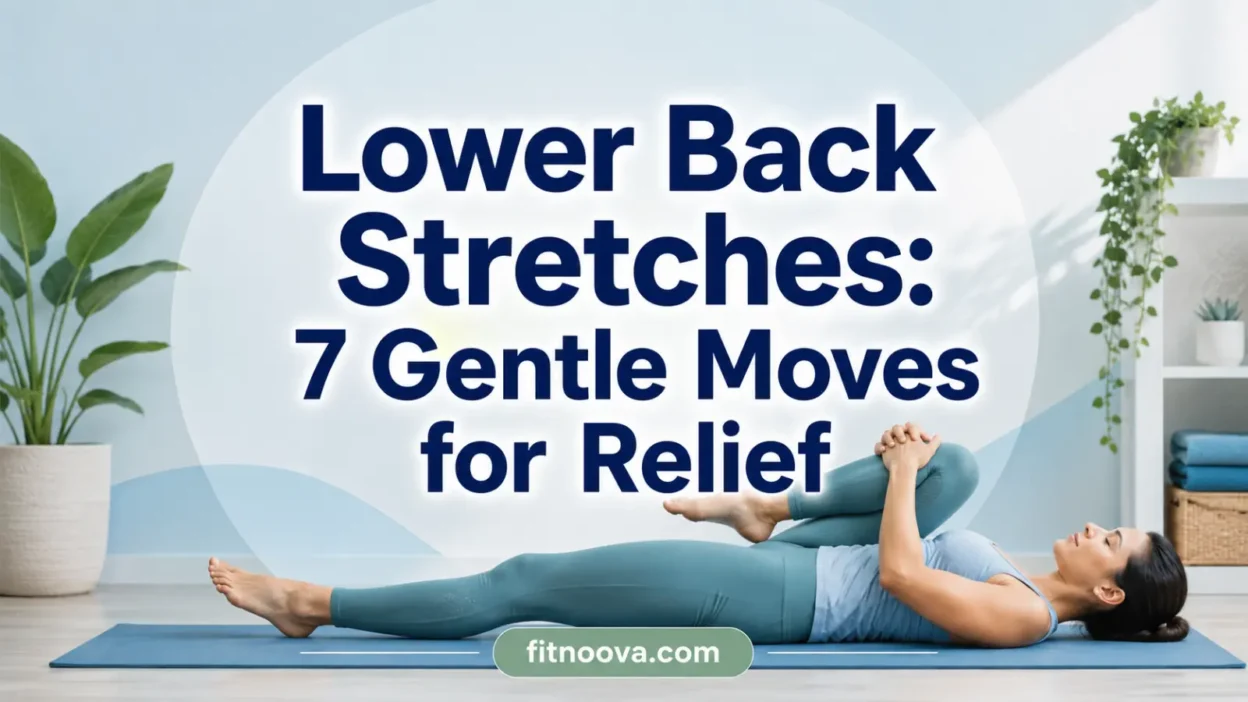
The knee-to-chest stretch is one of the simplest ways to ease lower back tension. It gently rounds the lower spine and can help relax the muscles around the back and hips.
Lie on your back with both knees bent and your feet flat on the floor. Bring one knee toward your chest, holding behind the thigh or over the shin. Keep the other foot planted unless straightening that leg feels better. Hold for 15 to 30 seconds, then switch sides.
For a deeper version, bring both knees toward your chest at the same time. Keep your shoulders relaxed and avoid yanking your knees in. Mayo Clinic includes knee-to-chest as part of a back exercise routine and recommends starting with a few repetitions before increasing gradually.
2. Child’s Pose
Child’s pose gently lengthens the lower back, hips, and sides of the torso. It is especially useful when your back feels compressed after sitting or standing for a long time.
Start on your hands and knees. Sit your hips back toward your heels and reach your arms forward. Let your chest soften toward the floor. If your hips do not reach your heels, place a pillow or folded towel between your thighs and calves.
Hold for 20 to 40 seconds. Breathe into your back and ribs. Keep the stretch gentle; it should feel calming, not forced.
3. Cat-Cow Stretch
Cat-cow is a mobility drill rather than a deep static stretch. It moves your spine through gentle flexion and extension, which can help reduce stiffness and improve awareness of how your back moves.
Start on your hands and knees with your wrists under your shoulders and knees under your hips. Round your back upward like a cat, letting your head drop slightly. Then slowly arch your back, lifting your chest and tailbone without collapsing into your lower spine.
Move through 6 to 10 slow repetitions. Keep the motion smooth and pain-free.
4. Pelvic Tilts
Pelvic tilts are small, controlled movements that teach your lower back and deep core muscles to work together. They are a good choice when larger stretches feel like too much.
Lie on your back with knees bent and feet flat. Gently flatten your lower back toward the floor by tightening your abdominal muscles and tilting your pelvis slightly upward. Hold for 3 to 5 seconds, then relax.
Repeat 8 to 12 times. Harvard Health lists pelvic tilts among stretching and strengthening exercises that may help with lower back pain prevention and relief.
5. Figure-Four Glute Stretch
Tight glutes and deep hip muscles can make the lower back feel stiff, especially after sitting. The figure-four stretch targets the back of the hip without forcing the spine to twist.
Lie on your back with both knees bent. Cross your right ankle over your left thigh, creating a “4” shape. If you already feel a stretch in your right hip, stay there. For more intensity, lift your left foot and hold behind the left thigh.
Hold for 20 to 30 seconds, then switch sides. Keep your head and shoulders relaxed.
6. Supine Lower Back Twist
A gentle supine twist can help the lower back, hips, and outer thighs relax. The goal is not to crack your back. The goal is easy rotation.
Lie on your back with knees bent. Let both knees slowly fall to one side while keeping both shoulders as relaxed as possible. Place a pillow between your knees if that feels better. Hold for 15 to 30 seconds, then return to center and switch sides.
Avoid pushing your knees down with your hand. Let gravity do most of the work.
7. Seated Hamstring Stretch
Your hamstrings attach near the pelvis, so tightness in the back of the thighs can contribute to a pulled, stiff feeling around the lower back and hips. A seated hamstring stretch can help, as long as you keep your spine long.
Sit near the edge of a chair. Place one heel on the floor with that leg extended and toes pointing upward. Keep your back straight and hinge slightly forward from your hips until you feel a stretch behind the thigh.
Hold for 15 to 30 seconds per side. Do not round your back aggressively to reach farther. Cedars-Sinai notes that hamstrings and glutes connect to the pelvis and lower spine, and recommends listening to your body rather than pushing into pain.
A Simple 10-Minute Lower Back Stretching Routine
Use this routine when your back feels stiff but not acutely painful. It works well after sitting, after a light walk, or in the evening.
Beginner Lower Back Stretch Routine
- Easy Walk Or March In Place — 2 Minutes
- Cat-Cow — 8 Slow Reps
- Knee-To-Chest Stretch — 30 Seconds Per Side
- Figure-Four Glute Stretch — 30 Seconds Per Side
- Child’s Pose — 40 Seconds
- Supine Twist — 30 Seconds Per Side
- Pelvic Tilts — 10 Controlled Reps
Do this routine 3 to 5 days per week if it feels good. If your back is sensitive, start with every other day and use shorter holds. If it feels better afterward and you do not notice a flare-up later, you can gradually add time or repeat a second round.
Should You Stretch Every Day?
Daily gentle stretching is usually fine for general stiffness if your body responds well. For back pain, more is not always better. A few calm, consistent minutes often work better than one long, intense session.
If a stretch gives you short-term relief but your back tightens again quickly, you may need more than stretching. Weak glutes, poor hip mobility, low activity, long sitting periods, or sudden increases in training load can all contribute to the same “tight lower back” feeling.
Harvard Health notes that a useful back routine should target not only the back, but also the abdominal, buttock, and upper-leg muscles that help support the spine.
Stretching Helps, But Strength Matters Too
Stretching can reduce stiffness, but strength helps your back tolerate daily life. A lower back that always feels tight may actually need better support from the core, hips, and glutes.
Beginner-friendly strengthening options include:
- Glute bridges
- Dead bugs
- Bird dogs
- Side planks from the knees
- Bodyweight hip hinges
- Easy walking
For chronic low back pain, the American College of Physicians guideline summary lists exercise, yoga, tai chi, motor control exercise, and other non-drug approaches as first-line options before medication in many cases.
That does not mean every person needs the same plan. It means movement is usually part of the solution when it is matched to the person and performed at the right level.
Common Mistakes To Avoid
Stretching Through Sharp Pain
Sharp pain is not a sign that a stretch is “working.” It is a signal to back off. Adjust the position, reduce the range, or skip that stretch.
Pulling Too Hard On The Knees Or Legs
Forcing a knee-to-chest or hamstring stretch can irritate the back or hips. Use your hands for support, not leverage.
Holding Your Breath
Breath-holding increases tension. Slow breathing helps your muscles relax and keeps the stretch from turning into a strain.
Only Stretching The Lower Back
The lower back often feels tight because nearby areas are not moving well. Include the hips, glutes, hamstrings, and gentle core work.
Staying In Bed Too Long
Rest can help during the first painful phase, but too much bed rest may make back pain worse. MedlinePlus notes that staying in bed for more than 1 or 2 days can worsen back pain.
When To Back Off Or Get Help
Stop the routine and consider professional guidance if stretching makes your pain worse, causes numbness or tingling, increases leg symptoms, or leaves you more irritated the next day. Also get help if your pain keeps returning despite gentle mobility work, walking, and basic strength training.
If you are pregnant, recovering from surgery, managing osteoporosis, dealing with a known disc issue, or have a history of significant injury, ask a healthcare professional which movements are appropriate for you.
FAQs
What are the best lower back stretches for beginners?
The best beginner lower back stretches are knee-to-chest, child’s pose, cat-cow, pelvic tilts, figure-four stretch, supine twist, and seated hamstring stretch. They are simple, low-equipment movements that can be adjusted easily.
How long should I hold lower back stretches?
Most people do well holding gentle lower back stretches for 15 to 30 seconds. If you feel yourself bracing, shaking, or pushing into pain, shorten the hold or reduce the range.
Can lower back stretches help sciatica?
They may help some people, but sciatica can be sensitive. If pain travels down the leg, certain stretches may aggravate symptoms. Harvard Health notes that some movements can worsen sciatica depending on the cause, so a slower and more cautious approach is best.
Is it better to stretch or strengthen a tight lower back?
Most people benefit from both. Stretching can ease stiffness, while strengthening the core, glutes, hips, and back helps improve support. If you only stretch and never build strength, the tightness may keep returning.
Should I stretch my lower back in the morning or at night?
Either can work. Morning stretching may help with stiffness, while evening stretching may help you unwind after sitting or training. Start gently in the morning because your body may feel less mobile right after waking.
Why does my lower back feel tighter after stretching?
You may be stretching too aggressively, holding positions too long, or choosing stretches that do not match your body. Try shorter holds, smaller ranges, and more warm-up first. If tightness keeps worsening, stop and get guidance.
Conclusion
Lower back stretches work best when they are gentle, consistent, and paired with smart movement habits. Start with simple options like knee-to-chest, child’s pose, cat-cow, pelvic tilts, and hip-focused stretches. Keep the intensity mild, avoid pushing through pain, and remember that a resilient back usually needs both mobility and strength.