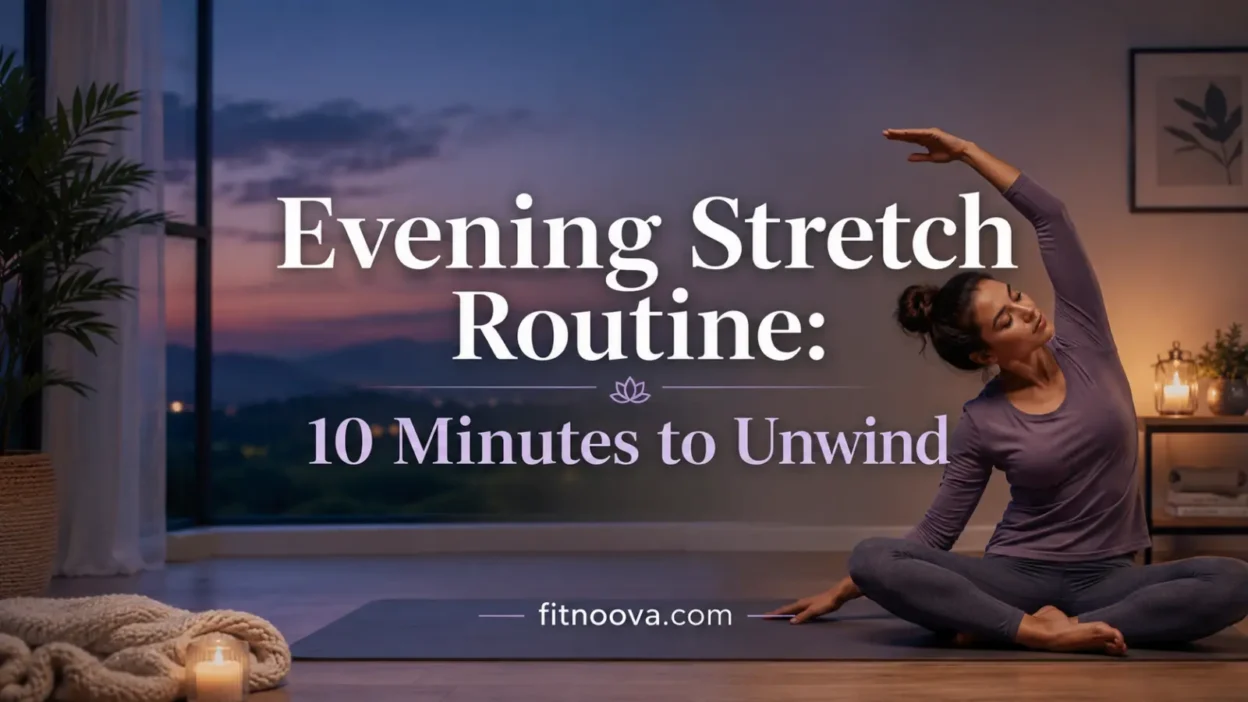
An evening stretch routine does not need to be long, intense, or complicated. For most beginners, 8 to 12 minutes of slow, comfortable stretching can help release common tight spots from sitting, commuting, lifting, walking, or standing all day.
The goal is not to force flexibility before bed. It is to move gently, breathe steadily, and give your body a clear signal that the day is winding down. Stretching may support flexibility and easier movement, but it should feel calm and controlled—not painful or strenuous. Mayo Clinic advises stretching gently, avoiding bouncing, breathing through each stretch, and backing off if a stretch hurts.
Quick Answer
A good evening stretch routine should include gentle stretches for the neck, shoulders, back, hips, hamstrings, calves, and chest. Hold each stretch for about 20 to 30 seconds, breathe slowly, and keep the intensity at a mild to moderate pull. Evening stretching may help you relax before bed, but it should not be treated as a cure for sleep problems or pain.
Why Stretch In The Evening?
Evening is a practical time to stretch because it fits naturally into a wind-down routine. Many people feel tight through the hips, lower back, neck, and shoulders after a day of sitting, driving, working at a desk, carrying bags, or training.
Stretching at night can help with three realistic goals:
- Loosening areas that feel stiff after the day
- Building a consistent mobility habit
- Creating a calmer transition before sleep
Flexibility work helps muscles and joints move more freely, which can support everyday movement and exercise quality. The American Heart Association notes that flexibility exercises help the body move and bend more easily, although they do not replace strength or endurance training.
The key word is gentle. A bedtime stretch routine should feel different from a hard workout. If your heart rate climbs, your breathing becomes heavy, or the routine leaves you feeling wired, it is probably too intense for the evening.
The 10-Minute Evening Stretch Routine
Use this routine after a warm shower, a short walk, light housework, or a few minutes of easy movement. Warm muscles usually stretch more comfortably than cold muscles.
Move slowly and hold each stretch for about 20 to 30 seconds. Do one round on busy nights or two rounds when you have more time.
1. Neck Side Stretch
Sit or stand tall. Let your right ear move gently toward your right shoulder. Keep both shoulders relaxed and avoid pulling hard on your head. Hold, then switch sides.
You should feel this along the side of your neck, not in the spine. Keep your jaw relaxed and breathe normally.
2. Shoulder And Upper-Back Reach
Reach both arms forward and clasp your hands, or hold one wrist with the opposite hand. Round your upper back slightly as if you are reaching away from your body.
This stretch is helpful if your shoulders feel tight from working at a computer or looking down at your phone. Keep it soft and easy rather than aggressive.
3. Doorway Chest Stretch
Stand in a doorway and place your forearms on the frame with elbows around shoulder height. Step one foot forward until you feel a light stretch across your chest.
Do not arch your lower back to make the stretch bigger. Keep your ribs down and your breathing slow.
4. Cat-Cow
Get on your hands and knees. Inhale as you gently lift your chest and tailbone. Exhale as you round your spine and let your head relax.
Move through 5 to 8 slow reps. This is less about “stretching hard” and more about giving your spine easy movement after a long day.
5. Child’s Pose With Side Reach
From hands and knees, sit your hips back toward your heels and reach your arms forward. Stay there for a few breaths. Then walk both hands slightly to the right to stretch the left side of your body. Switch sides.
Place a pillow under your hips or chest if the position feels uncomfortable. Your knees can be together or slightly apart.
6. Seated Figure-Four Stretch
Sit on a chair or the floor. Cross your right ankle over your left thigh. Keep your back long and lean forward slightly until you feel a stretch in the outer hip.
Hold, then switch sides. This is a useful stretch for people who feel tight through the glutes or hips after sitting.
7. Low Lunge Hip Flexor Stretch
Step one foot forward and lower the opposite knee to the floor, using a folded towel or mat for comfort. Gently shift your hips forward until you feel the stretch at the front of the back hip.
Keep your torso upright and avoid collapsing into your lower back. For a smaller version, do this beside a couch or bed for support.
8. Seated Hamstring Stretch
Sit with one leg extended and the other knee bent. Keep your spine long and hinge forward slightly from your hips until you feel a stretch along the back of the extended leg.
You do not need to touch your toes. Reaching for the foot often makes beginners round their back and strain. A comfortable stretch behind the thigh is enough.
9. Calf Stretch Against A Wall
Place both hands on a wall. Step one foot back, keep that heel down, and bend the front knee slightly. Hold, then switch sides.
This is especially helpful after walking, standing, running, or wearing stiff shoes. Keep the back foot pointing forward rather than turned out.
10. Legs-Up-The-Wall Breathing
Lie on your back and place your legs up a wall, couch, or bed. Bend your knees slightly if your hamstrings feel tight. Rest your arms at your sides and take slow breaths for 1 to 2 minutes.
This final position should feel restful. If it causes tingling, numbness, pressure, or discomfort, come out of it and choose a simpler resting position with your knees bent and feet on the floor.
How Hard Should An Evening Stretch Feel?
Use a 1-to-10 effort scale. Your evening stretches should stay around a 3 or 4: noticeable, but easy to breathe through.
A stretch should feel like mild tension, not sharp pain. Mayo Clinic recommends stopping or easing off when stretching becomes painful and avoiding bouncing during static stretches.
Back off if you feel:
- Sharp, stabbing, or shooting pain
- Numbness or tingling
- Dizziness
- Joint pressure instead of muscle tension
- Pain that gets worse as you hold the position
- Symptoms that linger after the stretch
Normal tightness should ease as you breathe. Pain is a signal to change the angle, reduce the range, or skip that stretch.
How Often Should You Do This Routine?
For general mobility, 3 to 5 evenings per week is a realistic starting point. Daily gentle stretching is fine for many people if it feels good and does not irritate any joints or injuries.
For flexibility work, many guidelines and reviews commonly use holds of about 15 to 30 seconds per muscle group, often repeated for multiple sets. A 2024 systematic review on static stretching notes that existing ACSM guidance has commonly recommended stretching at least 2 to 3 days per week, with each stretch held to the point of tightness or slight discomfort for 2 to 4 sets of 15 to 30 seconds.
For a bedtime routine, consistency matters more than perfection. A calm 6-minute routine you actually do is more useful than a 30-minute plan you abandon after two nights.
When To Stretch In The Evening
The best time is usually 30 to 60 minutes before bed, especially if you are using stretching as part of a wind-down routine. Sleep Foundation describes a bedtime routine as a set of repeated activities done in the same order during the 30 to 60 minutes before sleep.
You can also stretch:
- After an evening walk
- After a shower
- After light chores
- After a workout cooldown
- Before reading or quiet screen-free time
Avoid turning this into intense exercise right before bed. Vigorous workouts close to bedtime may interfere with sleep for some people, especially when they raise body temperature and keep the nervous system stimulated.
Modifications For Beginners
If Your Hips Feel Too Tight
Use pillows, yoga blocks, or a chair. You do not need deep lunges or advanced floor positions to benefit from stretching. A supported version done well is better than forcing a pose your body is not ready for.
If Your Lower Back Feels Sensitive
Keep stretches smaller and avoid aggressive forward folds or twisting. Choose cat-cow, child’s pose with support, and gentle hip stretches. Stop if symptoms travel down the leg or feel nerve-like.
If Getting On The Floor Is Difficult
Do the whole routine from a chair:
- Neck side stretch
- Shoulder reach
- Seated figure-four
- Seated hamstring stretch
- Seated calf stretch with heel forward
- Gentle seated side bend
- Slow breathing with feet flat on the floor
A routine does not have to be floor-based to be effective.
If You Are Sore From Training
Keep the intensity lower than usual. Stretching should not feel like a punishment for soreness. Gentle movement, easy breathing, hydration, sleep, and sensible training load all matter for recovery.
Common Mistakes To Avoid
Stretching Too Aggressively
Pushing harder does not automatically lead to better results. It can make your body tense up or irritate sensitive areas. Stay within a comfortable range.
Holding Your Breath
Breath-holding often means the stretch is too intense. Slow breathing helps keep the routine calm and makes it easier to notice when you are forcing the position.
Bouncing In Static Stretches
Bouncing can increase strain and reduce control. Hold still, ease in gradually, and let the stretch settle.
Treating Stretching As A Complete Fitness Plan
Stretching is useful, but it does not replace strength training, aerobic exercise, balance work, or regular movement. Adults are generally advised to get 150 minutes of moderate-intensity activity per week plus 2 days of muscle-strengthening activity.
Ignoring Pain Signals
Do not stretch through sharp pain or symptoms that feel unusual. Modify the movement, reduce the range, or stop. If pain is persistent, worsening, or related to an injury, get guidance from a qualified healthcare professional.
Who Should Be More Careful?
A gentle evening stretch routine is appropriate for many beginners, but some people should move more cautiously.
Check with a healthcare professional or physical therapist if you have:
- A recent injury or surgery
- New or unexplained pain
- Severe back, hip, neck, or shoulder pain
- Nerve symptoms such as numbness, tingling, or radiating pain
- Dizziness or balance concerns
- A condition that affects joints, bones, circulation, or connective tissue
- Pregnancy-related pain or pelvic instability
This does not mean you cannot stretch. It means your routine may need individual adjustments.
FAQ
Is it good to stretch every evening?
Yes, gentle stretching every evening can be fine for many people, as long as it feels comfortable and does not cause pain. Start with a few nights per week and increase based on how your body responds.
How long should an evening stretch routine be?
Most beginners do well with 8 to 12 minutes. You can go shorter on busy nights or longer when you want more recovery time, but the routine should still feel relaxing rather than demanding.
Should I stretch before or after a shower?
Either can work. Many people prefer stretching after a warm shower because their muscles feel more relaxed. You can also stretch after a short walk or light movement.
Can stretching before bed help me sleep better?
It may help you relax, especially when paired with a consistent bedtime routine, dimmer lights, and less screen stimulation. However, evidence is still limited on stretching as a direct treatment for sleep disorders, so it should not replace medical care for ongoing insomnia or serious sleep problems.
What stretches are best before bed?
The best bedtime stretches are gentle and easy to control. Good options include neck stretches, chest stretches, cat-cow, child’s pose, seated figure-four, hip flexor stretches, hamstring stretches, calf stretches, and legs-up-the-wall breathing.
Is it normal to feel sore after stretching?
Mild muscle awareness can happen, especially if you are new to stretching. Sharp pain, joint pain, nerve symptoms, or soreness that lasts or worsens is not something to ignore. Reduce the intensity or stop that movement.
Conclusion
A good evening stretch routine should feel simple, calm, and repeatable. Focus on the areas that get tight during your day, hold each stretch gently, breathe steadily, and stop well before pain.
You do not need advanced flexibility or a long routine to benefit. Ten quiet minutes of stretching in the evening can help you loosen up, slow down, and end the day with better body awareness.