Last Updated: MAY 17, 2026
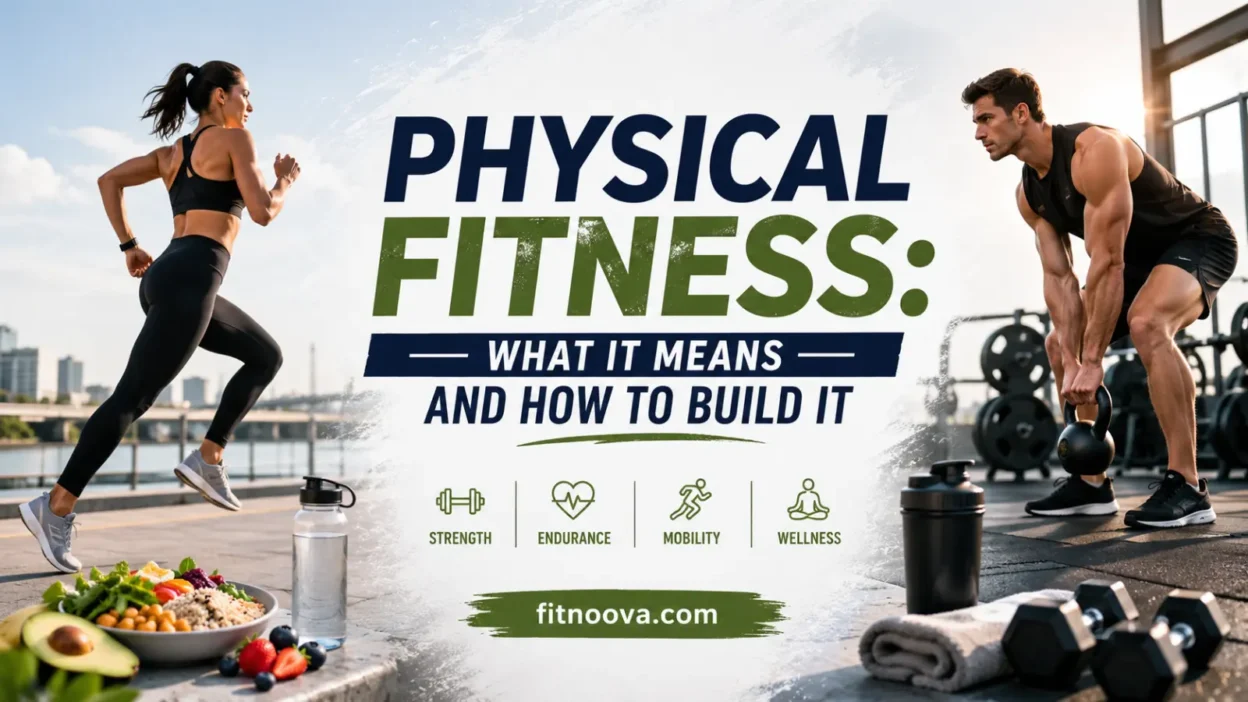
Physical fitness means your body can handle daily life with enough energy, control, and resilience to move well, work, play, and age with more independence. It is not only about gym performance or appearance. A well-rounded routine includes aerobic activity for heart and lung endurance, strength training for major muscle groups, balance work for steadier movement, and mobility practice so joints move through a useful range. For most adults, the best starting point is simple and repeatable: walk more often, train with good form, build gradually, and recover between harder efforts. You do not need extreme workouts to improve. You need steady habits that match your current ability, fit your schedule, and can grow safely over time.
Quick Answer
Physical fitness is the ability to move through daily life with endurance, strength, balance, mobility, and control. A practical way to build it is to combine regular cardio, muscle-strengthening work, easy movement on lighter days, and enough rest to recover. Start at a level you can repeat, then increase time, effort, or resistance slowly.
What Physical Fitness Really Means
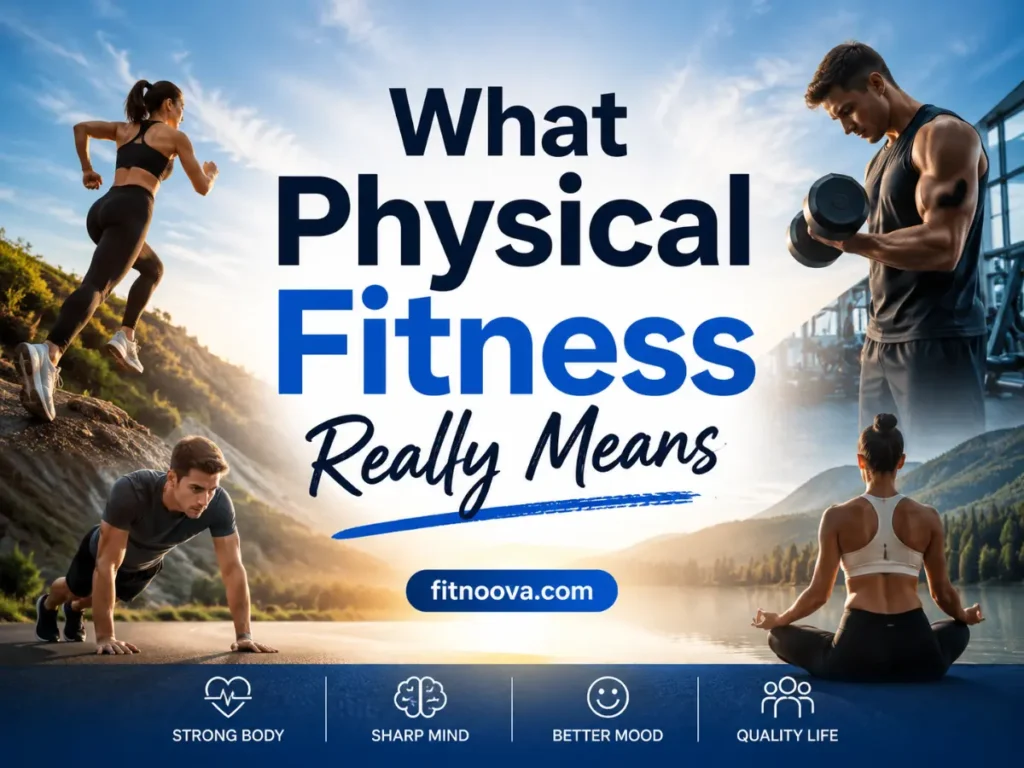
A lot of people hear “physical fitness” and think of sports performance, weight loss, or intense workouts. In reality, a useful definition is much broader. Physical activity is any body movement that uses energy, while fitness reflects the qualities that help you move and function well. For everyday health, the most important qualities are aerobic endurance, muscular strength, balance, and flexibility or mobility.
That matters because real-life fitness is functional. It shows up in ordinary tasks: carrying groceries, getting up from the floor, walking longer without feeling wiped out, keeping steady on stairs, and staying active without aches caused by doing too much too soon. A good fitness plan should make daily life feel easier, not just harder. This is also why balanced training usually works better than doing only cardio or only weights.
The Main Parts of Physical Fitness
Aerobic Endurance
Aerobic fitness helps your heart, lungs, and circulation handle sustained movement. Brisk walking, cycling, swimming, dancing, and similar activities all count. Over time, this kind of training makes it easier to do more with less fatigue.
Muscular Strength
Strength matters far beyond the weight room. It helps with lifting, carrying, climbing, posture, and joint support. Public-health guidance recommends muscle-strengthening work on 2 or more days a week, covering all the major muscle groups, including the legs, hips, back, abdomen, chest, shoulders, and arms.
Balance
Balance gets ignored until it becomes a problem. It is especially important with age, but it matters for everyone because it supports coordination, body control, and safer movement. Health guidance for older adults specifically recommends balance-focused activity as part of a complete routine.
Flexibility And Mobility
Flexibility and mobility help you move more comfortably through a healthy range of motion. They can make daily tasks easier and improve how exercise feels. Stretching and mobility work are not a substitute for cardio or strength training, but they are useful additions to a well-rounded routine.
Why Physical Fitness Matters
Regular physical activity supports much more than body composition. According to CDC and MedlinePlus, it can improve sleep, mood, daily function, and long-term health, while also helping reduce the risk of several chronic conditions. Even a single session of moderate-to-vigorous activity can provide immediate benefits, and consistent activity adds up over time.
Physical fitness also helps people stay capable. Stronger muscles, better endurance, and better balance can make it easier to stay independent, especially later in life. That is one reason fitness should be viewed as a health skill, not just an appearance goal.
How Much Physical Activity Adults Need
For most adults, the core target is straightforward: aim for at least 150 minutes of moderate-intensity aerobic activity each week, or 75 minutes of vigorous activity, or a combination of both. On top of that, do muscle-strengthening activity on 2 or more days each week. These targets can be spread across the week, and you do not have to do everything in long, perfect sessions for it to count.
If you already meet that minimum, more activity can provide additional benefits. Public-health guidance commonly points to about 300 minutes of moderate activity per week as a higher target for additional health gain, but the key message for beginners is simpler: start where you are, then build gradually. Some activity is better than none, and consistency matters more than intensity in the beginning.
How Hard Physical Fitness Work Should Feel
A useful beginner tool is the talk test. During moderate-intensity activity, you should usually be able to talk but not sing. Vigorous activity feels harder, and saying more than a few words becomes difficult without pausing for breath. This is a practical way to judge effort without overcomplicating things.
For strength training, a beginner set should feel challenging by the final few reps without your form breaking down. You should not need to grind, twist, hold your breath, or push through sharp pain. Good training is hard enough to stimulate progress but controlled enough that you can recover and repeat it.
A Simple Physical Fitness Plan For Beginners
If you are new to exercise, a good weekly plan should be realistic, repeatable, and balanced. One simple way to apply the public-health guidelines is to combine walking or other moderate cardio with two full-body strength sessions and a small amount of balance and mobility work.
Here is a practical example:
- Monday: 20 to 30 minutes of brisk walking
- Tuesday: Full-body strength workout
- Wednesday: 20 to 30 minutes of moderate cardio, plus 5 to 10 minutes of mobility work
- Thursday: Rest day or easy walk
- Friday: Full-body strength workout
- Saturday: 20 to 40 minutes of walking, cycling, dancing, or another activity you enjoy
- Sunday: Easy movement, stretching, or rest
This kind of schedule gives you enough aerobic work to build stamina, enough strength work to improve muscle function, and enough recovery to avoid the common beginner mistake of doing too much in week one.
A basic full-body strength session can be built around simple patterns such as:
- Squat or sit-to-stand
- Hip hinge or glute bridge
- Push movement, such as wall push-ups or incline push-ups
- Pull movement, such as band rows
- Core stability work, such as a dead bug or plank variation
- Loaded carry, step-up, or another practical movement
You do not need fancy equipment to get started. Bodyweight, resistance bands, dumbbells, or machines can all work. The best option is the one you can use safely and consistently.
How To Improve Physical Fitness Without Burning Out
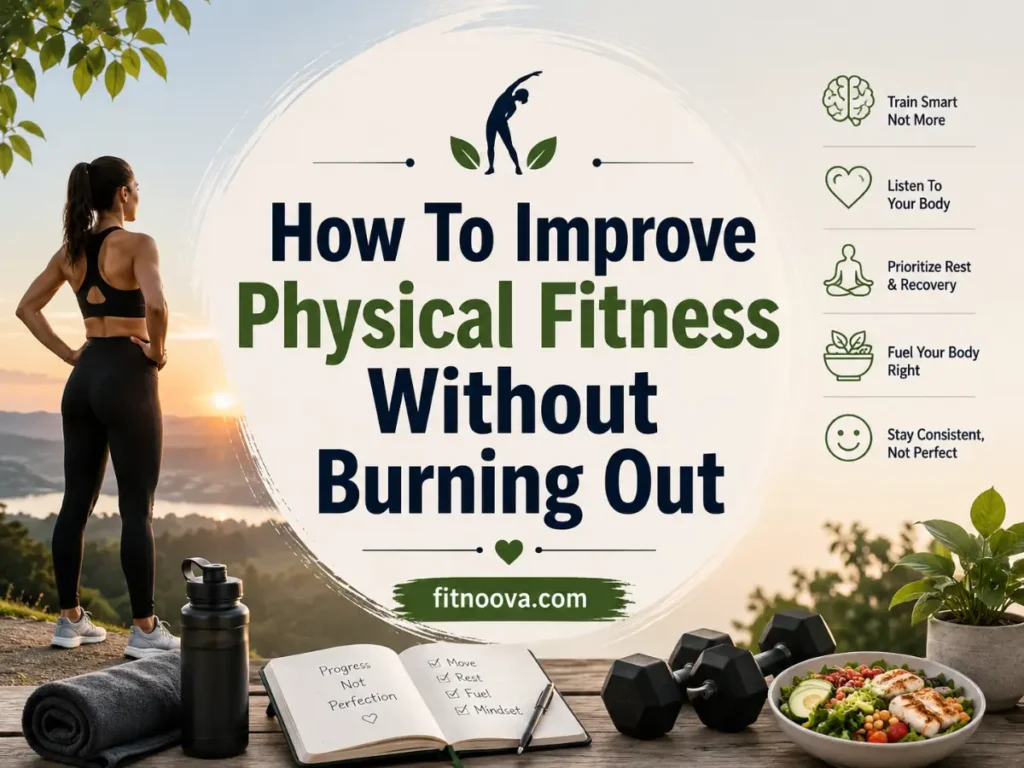
The safest way to improve fitness is to add a little at a time. Build up your activity level slowly, then progress by increasing only one variable at once, such as time, pace, resistance, or total sets. That gradual approach is consistent with guidance from CDC, MedlinePlus, and NIA.
In practice, that might mean adding 5 minutes to a walk, using slightly more resistance, or repeating the same routine for a few weeks before changing anything else. Fast progress is not the goal. Stable progress is. If you finish most sessions feeling challenged but not crushed, you are usually in a productive range.
Warm-ups and cool-downs also help. A short warm-up with easy movement allows heart rate and breathing to rise gradually, while a cool-down helps your body settle after exercise. A simple 5- to 10-minute walk before and after harder work is often enough for beginners.
Common Mistakes That Hold Physical Fitness Back
Doing Too Much Too Soon
Jumping from inactive to intense training is one of the fastest ways to get discouraged, overly sore, or injured. Beginners usually do better when they start below their maximum and build from there.
Treating Cardio As The Whole Plan
Walking, running, or cycling are excellent, but they are not the full picture. A complete fitness routine should also include strength work, and for many people, mobility and balance work too.
Training Hard Without Recovering Well
Physical fitness improves from the combination of training and recovery. If every session leaves you exhausted, sleep is poor, or soreness keeps lingering, your plan may be too aggressive for your current level.
Ignoring Form And Control
More weight, more speed, or more reps are not useful if movement quality falls apart. Controlled reps, stable positions, and an appropriate exercise choice are usually better for long-term progress than chasing intensity early.
Using Pain As A Progress Marker
Effort is normal. Sharp pain is not. Mild muscle soreness can happen when you begin or progress a program, but chest pain, dizziness, nausea, fainting, or unusual shortness of breath are not signs to “push through.”
When To Slow Down Or Get Medical Guidance
Many generally healthy adults can begin moderate-intensity activity without a medical visit first. But if you have heart disease, diabetes, high blood pressure, recent heart procedures, or symptoms such as chest pain or dizziness, it is smart to speak with a clinician about what types of activity are safe for you.
You should also back off and get evaluated if exercise causes chest pain, pressure, fainting, severe dizziness, or other concerning symptoms. Exercise should challenge you, but it should not feel medically alarming.
FAQ
Is physical fitness the same as exercise?
Not exactly. Physical activity is any movement that uses energy, while exercise is a planned form of physical activity done to improve or maintain fitness. Physical fitness is the result: the qualities that help you move and function well.
How long does it take to improve physical fitness?
That depends on your starting point, how often you train, how well you recover, and what you mean by “improve.” Many beginners notice better stamina, mood, or daily energy within a few weeks of consistent activity, but meaningful fitness is built over time. Public-health guidance emphasizes regular weekly activity rather than quick results.
Can walking improve physical fitness?
Yes. Brisk walking is a legitimate moderate-intensity activity and can improve aerobic fitness, especially for beginners or people returning to exercise. It becomes even more effective when paired with strength training during the week.
Do I need a gym to get physically fit?
No. You can build a strong beginner routine at home with walking, stairs, bodyweight exercises, resistance bands, or basic dumbbells. The important part is meeting your activity needs in a way you can sustain safely.
What if I am over 65?
The core adult guidelines still apply, but balance work becomes especially important. Older adults are encouraged to include activities that improve balance along with aerobic and muscle-strengthening work.
Is soreness required for physical fitness progress?
No. Mild soreness can happen, especially when you are starting out or trying something new, but it is not a requirement for progress. A good program should challenge you without leaving you wiped out or unable to move normally for days.
Conclusion
Physical fitness is built through consistent movement, not short bursts of intensity you cannot sustain. Focus on endurance, strength, balance, and mobility in a way that supports your daily life. A simple plan works best for most beginners: walk regularly, train major muscle groups, move with control, and add challenge only when your body is ready. Recovery matters because progress depends on what you can keep doing. Start with one walk today.