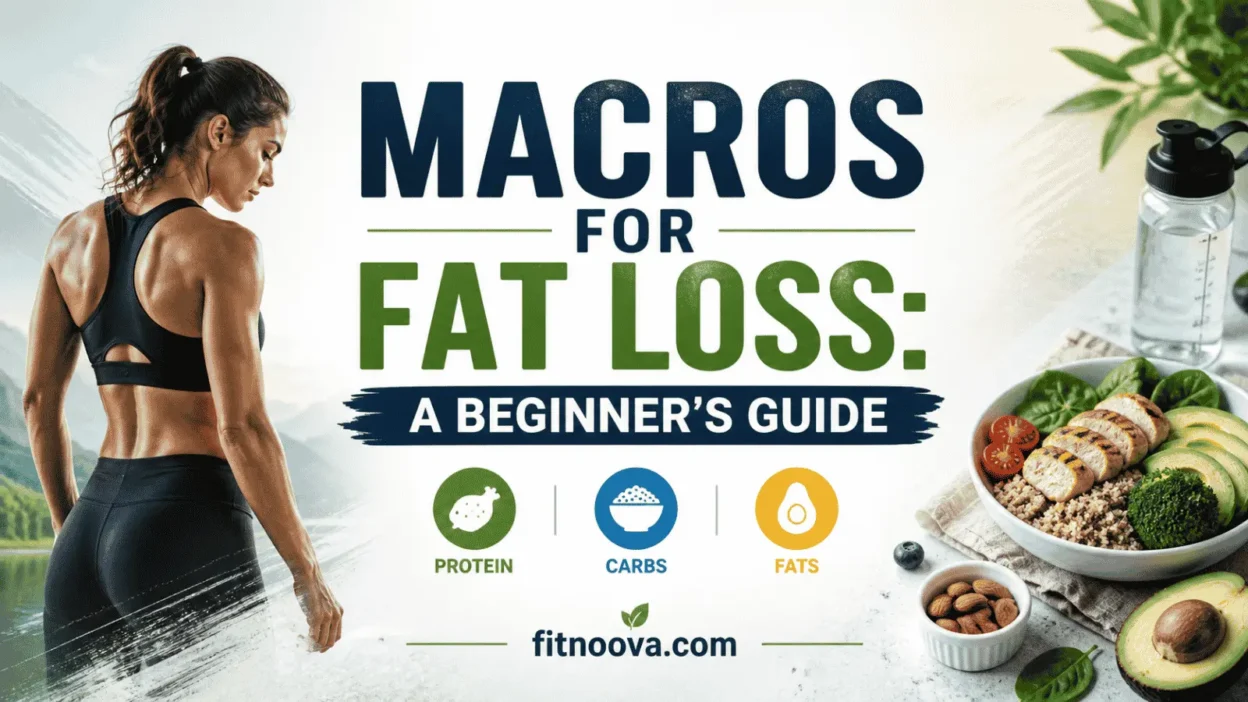
Macros for weight loss female searches usually come from one question: “How much protein, carbs, and fat should I eat to lose weight without feeling miserable?” The honest answer is that there is no single perfect macro split for every woman, but there is a smart way to set your numbers.
For most women, weight loss comes from a consistent calorie deficit, enough protein to support muscle, enough carbs to fuel training and daily life, and enough fat to support health and satisfaction. The best macro plan is not the strictest one. It is the one you can follow while eating real food, staying active, sleeping enough, and adjusting when your body gives you feedback.
Quick Answer
For women trying to lose weight, a practical starting macro range is 25–35% of calories from protein, 35–45% from carbs, and 20–30% from fat. This is not a medical prescription, but it fits within widely used macronutrient guidance and tends to work well for appetite control, training energy, and balanced meals.
A good first step is to set calories, aim for protein at most meals, then divide the rest between carbs and fats based on preference, activity level, and how you feel. Gradual weight loss is safer and more sustainable than aggressive dieting; the CDC notes that people who lose weight steadily, about 1 to 2 pounds per week, are more likely to keep it off.
What Are Macros?
Macros, short for macronutrients, are the nutrients that provide calories:
Protein supports muscle repair, helps maintain lean mass during weight loss, and can make meals more filling.
Carbohydrates are your body’s easiest fuel source, especially for walking, lifting, running, cycling, and busy days.
Fat helps with fullness, hormone production, cell function, and absorption of fat-soluble vitamins.
Alcohol also contains calories, but it is not usually treated as a target macro because it does not support training, recovery, or nutrient needs in the same way.
The National Academies’ Dietary Reference Intakes include Acceptable Macronutrient Distribution Ranges, which are used as broad healthy eating ranges for adults. The commonly cited ranges are 45–65% of calories from carbohydrate, 10–35% from protein, and 20–35% from fat. For weight loss, many women prefer a slightly higher-protein setup within those ranges because it can make dieting easier and help preserve muscle.
Do Women Need Different Macros Than Men?
Women do not need a completely separate nutrition rulebook, but they often need a more realistic setup than the generic “eat 1,200 calories and cut carbs” advice found online.
Women’s macro needs can vary based on body size, muscle mass, training routine, age, menstrual cycle, perimenopause, medical history, appetite, sleep, stress, and weight-loss goal. A petite woman who works at a desk and trains twice per week will not need the same calories or carbs as a taller woman who lifts four days per week and walks 10,000 steps daily.
The goal is not to copy another woman’s macros. The goal is to build a target that fits your body, your routine, and your ability to stay consistent.
The Best Macro Split for Female Weight Loss
A strong beginner-friendly macro split for many women is:
- Protein: 25–35% of total calories
- Carbs: 35–45% of total calories
- Fat: 20–30% of total calories
This gives you enough protein to support muscle, enough carbs for energy, and enough fat to make meals satisfying.
For example, on a 1,800-calorie weight-loss plan, that might look like:
- Protein: 135 grams
- Carbs: 180 grams
- Fat: 50 grams
That works out to about 30% protein, 40% carbs, and 25% fat.
This is only a starting point. Some women feel better with more carbs and less fat, especially if they lift weights, run, cycle, or do higher-volume workouts. Others prefer slightly higher fat and moderate carbs because it helps them stay full. Both can work if calories, protein, food quality, and consistency are in place.
Step 1: Set a Realistic Calorie Target First
Macros matter, but calories still set the foundation for weight loss. If your macros add up to more energy than your body uses over time, fat loss will be difficult. If your calories are too low, you may feel hungry, tired, irritable, and more likely to quit.
A moderate calorie deficit is usually better than an aggressive one. The NIDDK recommends safe weight-loss programs that are based on healthy eating patterns, regular physical activity, and habits that are realistic to maintain.
A simple way to start:
- Estimate your maintenance calories with a reputable calculator or tracking app.
- Subtract about 250–500 calories per day.
- Track your weight trend, hunger, energy, strength, sleep, and mood for two to four weeks.
- Adjust only if your trend is clearly not moving or the plan feels too hard to sustain.
Avoid dropping calories extremely low just to speed up progress. Fast weight loss often comes with more hunger, lower training quality, and a greater risk of losing muscle along with fat.
Step 2: Set Protein First
Protein should be the first macro you set because it is the most useful macro for preserving lean mass during weight loss.
A practical target for many active women is 0.7 to 1.0 gram of protein per pound of goal body weight. Another evidence-aware range often discussed for active adults is about 1.2 to 1.6 grams per kilogram of body weight, with some athletic or resistance-training situations going higher. Research reviews have found that higher protein intakes in this range can support fat loss while helping preserve lean mass.
For a woman whose goal weight is 150 pounds, a reasonable protein range might be:
- Lower end: about 105 grams per day
- Middle target: about 120–135 grams per day
- Higher end: about 150 grams per day
You do not need to hit protein perfectly every day. A useful habit is to include a protein source at each meal, such as eggs, Greek yogurt, chicken, fish, lean beef, tofu, tempeh, lentils, cottage cheese, protein powder, or edamame.
Step 3: Choose Carbs Based on Activity and Preference
Carbs are not the enemy of fat loss. They are often the macro women cut first, but cutting them too low can make workouts feel harder and meals feel less satisfying.
If you strength train, walk a lot, run, cycle, do fitness classes, or have an active job, carbs can help you perform better and recover more comfortably. If you are less active or prefer more fats, you may feel fine with a lower-carb approach.
Good carbohydrate sources include:
- Potatoes and sweet potatoes
- Oats
- Rice
- Quinoa
- Beans and lentils
- Fruit
- Whole-grain bread or wraps
- Vegetables
- Yogurt and milk
For weight loss, the quality of your carbs matters. Highly processed snacks and sugary drinks are easy to overeat and less filling. The 2025–2030 Dietary Guidelines emphasize nutrient-dense foods and limiting highly processed foods, added sugars, and refined carbohydrates.
Step 4: Keep Fat High Enough
Dietary fat is calorie-dense, so portions matter. But going too low in fat can make meals bland, unsatisfying, and harder to stick with.
A good beginner target is often 20–30% of daily calories from fat. For many women, this lands somewhere around 45–70 grams per day, depending on total calories.
Helpful fat sources include:
- Olive oil
- Avocado
- Nuts and nut butter
- Seeds
- Eggs
- Salmon and sardines
- Full-fat or reduced-fat dairy, depending on your calorie target
Fat adds flavor and fullness, but it is easy to underestimate. A tablespoon of oil, a handful of nuts, or an extra spoon of peanut butter can add up quickly. That does not make these foods bad. It simply means portions deserve attention when weight loss is the goal.
Macro Examples for Female Weight Loss
Here are three sample macro setups. These are general examples, not personalized prescriptions.
Example 1: 1,600 Calories
This may fit some smaller or less active women, though it may be too low for others.
- Protein: 120 grams
- Carbs: 150 grams
- Fat: 44 grams
This gives a higher-protein structure while keeping carbs high enough for daily energy.
Example 2: 1,800 Calories
This is a common starting range for many moderately active women.
- Protein: 135 grams
- Carbs: 180 grams
- Fat: 50 grams
This works well for women who lift, walk regularly, or want a balanced approach without cutting carbs too hard.
Example 3: 2,000 Calories
This may fit taller women, active women, or those starting from a higher maintenance calorie level.
- Protein: 150 grams
- Carbs: 210 grams
- Fat: 56 grams
This setup supports training while still allowing a calorie deficit for women whose maintenance calories are higher.
A Simple Day of Eating With Balanced Macros
Here is what a balanced macro day could look like without turning every meal into math.
Breakfast
Greek yogurt bowl with berries, oats, chia seeds, and a scoop of protein powder or a side of eggs.
Lunch
Chicken, tofu, or salmon bowl with rice, vegetables, avocado, and salsa or yogurt-based sauce.
Snack
Cottage cheese with fruit, a protein smoothie, or turkey slices with whole-grain crackers.
Dinner
Lean beef, beans, turkey, fish, or tempeh with potatoes, roasted vegetables, and olive oil.
This style works because each meal has protein, fiber-rich carbs, produce, and enough fat to feel satisfying. You can still include favorite foods. The goal is not perfection; it is structure.
How to Track Macros Without Obsessing
Tracking macros can teach portion awareness, but it should not make eating feel like a full-time job.
Start by tracking for one to two weeks, not forever. Learn what 30 grams of protein looks like, how much fat is in your usual breakfast, and which meals leave you full. Once you understand your patterns, you may be able to switch to a simpler method.
A low-stress plate method can work well:
- Fill one-quarter to one-third of your plate with protein.
- Add a fist-sized portion of carbs.
- Add vegetables or fruit.
- Include a thumb-sized portion of fat.
- Adjust portions based on hunger, progress, and training.
Tracking is a tool, not a moral scorecard. Missing a macro target does not ruin your progress. The weekly pattern matters more than one imperfect day.
Common Mistakes Women Make With Macros
Cutting Calories Too Low
Many women start with calories that are too aggressive. This can cause intense hunger, low energy, poor workouts, and rebound overeating. A moderate deficit is usually more effective because it is easier to repeat.
Eating Too Little Protein
Low-protein dieting can make it harder to stay full and may increase the risk of losing lean mass during weight loss. Aim for protein at breakfast, lunch, dinner, and possibly one snack.
Cutting Carbs Even When Training Hard
If your workouts feel flat, your sleep worsens, or you feel unusually irritable, your plan may be too restrictive. Carbs can be especially helpful around workouts.
Ignoring Fiber and Food Quality
Macros do not replace nutrition quality. A macro plan built mostly from snack foods will not feel the same as one built from protein, fruits, vegetables, legumes, whole grains, and healthy fats.
Changing the Plan Too Often
Do not adjust your macros after two “bad” days or one higher weigh-in. Weight can fluctuate because of sodium, menstrual cycle changes, soreness, digestion, and water retention. Look at trends over several weeks.
Expecting One Macro Ratio to Work Forever
Your needs may change as your weight, training, schedule, stress, and goals change. A good macro plan is flexible enough to adjust.
When to Modify Your Macros
Consider adjusting your macros if:
- Your weight trend has not changed after three to four consistent weeks.
- You are constantly hungry or thinking about food.
- Your workouts are getting worse.
- You are losing weight faster than intended.
- Your menstrual cycle becomes irregular.
- You feel unusually fatigued, cold, dizzy, or run-down.
- Your plan is interfering with social life or mental well-being.
If you have diabetes, kidney disease, a history of eating disorders, are pregnant or breastfeeding, take weight-loss medication, or have a medical condition affected by diet, speak with a qualified health professional or registered dietitian before making major macro changes.
Macros vs. Calories: Which Matters More?
Calories determine whether weight loss is likely to happen. Macros determine how the diet feels and what kind of weight you are more likely to lose.
A calorie deficit with poor macros may still reduce scale weight, but it can leave you hungry, low-energy, and more likely to lose muscle. A well-set macro plan makes the calorie deficit more livable by improving fullness, supporting training, and giving meals structure.
So the better question is not “macros or calories?” It is “How can I set macros that make my calorie target easier to follow?”
Do You Need to Count Macros to Lose Weight?
No. Many women lose weight without counting macros. You can make progress by eating protein at each meal, adding fruits and vegetables, reducing high-calorie snacks and drinks, walking more, lifting weights, sleeping better, and watching portions.
Macro tracking is most useful if you:
- Feel stuck despite eating “healthy”
- Want more structure
- Struggle to eat enough protein
- Train regularly and want better performance
- Prefer numbers over vague food rules
If tracking makes you anxious or overly rigid, use a simpler approach. The best fat-loss method is the one that supports both your health and your consistency.
FAQ
What is the best macro ratio for weight loss for women?
A good starting point is 25–35% protein, 35–45% carbs, and 20–30% fat. This gives most women enough protein for fullness and muscle support, enough carbs for energy, and enough fat for satisfaction. You can adjust from there based on your calories, activity level, hunger, and progress.
How much protein should a woman eat for weight loss?
Many women do well with about 0.7 to 1.0 gram of protein per pound of goal body weight. For a goal weight of 150 pounds, that would be about 105–150 grams per day. Women with medical conditions, especially kidney disease, should ask a healthcare professional before increasing protein significantly.
Should women cut carbs to lose weight?
Not necessarily. Carbs can fit well in a weight-loss plan, especially if you exercise. The key is choosing mostly filling, nutrient-dense carbs and keeping total calories appropriate. Cutting carbs too low may make workouts and daily energy worse for some women.
Is 1,200 calories enough for female weight loss?
For some smaller, sedentary women, 1,200 calories may create weight loss, but it is too low for many adults and can be hard to sustain. Active women, taller women, and women who strength train often need more. A safer approach is to use a moderate deficit and adjust based on real progress and how you feel.
How often should I change my macros?
Give your macros at least two to four consistent weeks before changing them, unless you feel unwell or the target is clearly unrealistic. Weight fluctuates naturally, so adjust based on trends, not one weigh-in.
Can I lose weight without tracking macros?
Yes. Macro tracking is optional. You can lose weight with balanced meals, portion control, regular activity, strength training, and consistent habits. Tracking is simply one tool that can help you understand your intake more clearly.
Conclusion
Macros for weight loss female goals should not be extreme or complicated. Start with a realistic calorie target, set protein first, keep carbs high enough to support your life and workouts, and include enough fat to make meals satisfying.
The best macro plan is not the one that looks perfect in an app. It is the one that helps you eat consistently, train well, manage hunger, and lose weight at a pace your body can handle.