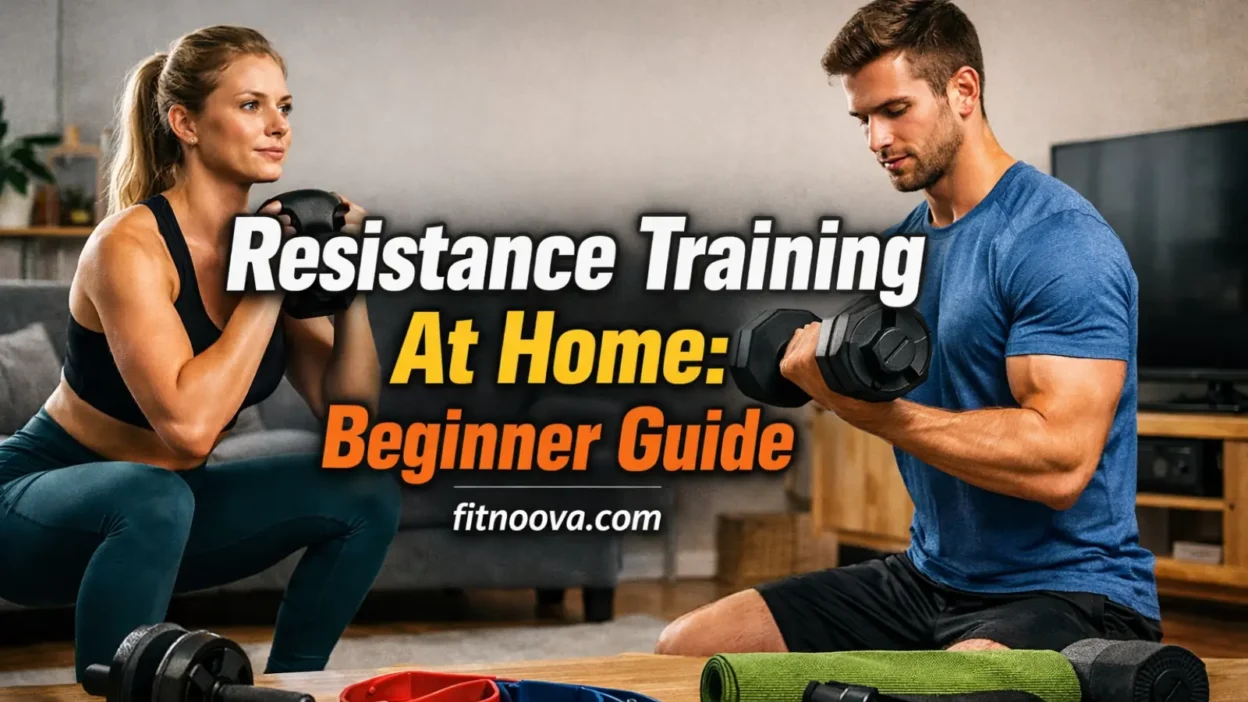
Resistance training at home is one of the simplest ways to build strength, improve everyday function, and make exercise more consistent without needing a gym. It can include bodyweight exercises, resistance bands, dumbbells, or even slow, controlled movements that make your muscles work against resistance. Adults should do muscle-strengthening work at least 2 days per week, and those sessions should cover all major muscle groups.
Introduction
If you want to get stronger without joining a gym, resistance training at home is a practical place to start. You do not need fancy equipment, long workouts, or an advanced plan. What matters most is choosing a few effective movements, doing them with control, and progressing gradually over time.
For beginners, home resistance training works well because it removes a lot of the usual friction. You can train on your own schedule, learn the basics at your own pace, and build confidence before adding more intensity or equipment.
Quick Answer
Resistance training at home means using body weight, bands, dumbbells, or other forms of resistance to challenge your muscles and make them stronger. A good beginner plan usually includes full-body workouts 2 to 3 times per week, a manageable number of exercises, controlled reps, and gradual progression as the movements start to feel easier.
What Resistance Training At Home Actually Includes
A lot of people hear “resistance training” and think only of heavy barbells. That is too narrow. Resistance training simply means your muscles are working against a force. That force can come from your own body weight, resistance bands, dumbbells, a backpack, or even slower tempo work that makes a familiar movement harder.
That means all of these can count:
- Squats
- Sit-to-stands
- Push-ups against a wall, counter, or floor
- Rows with a band
- Glute bridges
- Lunges or split squats
- Overhead presses with light weights
- Deadlift-style hip hinges with dumbbells or household items
Home training is real training when the exercises are challenging enough to make the final reps feel hard to finish with good form.
Who This Type Of Training Is Best For
Resistance training at home is especially useful for:
- Beginners who want a lower-pressure way to start
- Busy adults who need shorter, more flexible workouts
- People who prefer privacy
- Anyone building a basic strength habit before moving to a gym
- People who want a low-cost training option
It can also work well for more experienced exercisers, but beginners usually benefit the most because the barrier to entry is low and the learning curve is manageable.
The Main Benefits Of Resistance Training At Home
A consistent home strength routine can help improve muscle strength, physical function, and overall health. Strength training is also linked with better bone, muscle, and connective tissue health, and it supports long-term movement capacity as people age.
In practical terms, that can mean:
- Everyday tasks feel easier
- Stairs and carrying things feel less demanding
- Balance and control often improve alongside strength
- You are less dependent on motivation, travel time, or gym access
For many people, the biggest benefit is consistency. A good-enough plan done regularly at home usually beats a perfect plan you rarely follow.
How Often To Do Resistance Training At Home
For most beginners, 2 to 3 full-body workouts per week is a strong starting point. Public-health guidance recommends muscle-strengthening work on 2 or more days per week, and leaving at least a day between hard full-body sessions is a smart way to manage recovery when you are new.
A simple weekly setup could look like this:
- Monday: Full-body workout
- Wednesday: Full-body workout
- Friday or Saturday: Full-body workout or optional lighter session
That is enough to make progress without turning training into a burden.
How Hard Your Workouts Should Feel
Beginners do not need to train to complete failure. A better target is finishing most sets feeling like you could maybe do 1 to 3 more good reps if you had to. That keeps the work challenging without making technique fall apart.
A helpful beginner rule is this:
- If a set feels extremely easy, it may not be enough resistance
- If your form breaks down early, the exercise is too hard right now
- If the last few reps feel difficult but still controlled, you are probably in the right zone
The National Institute on Aging notes that strengthening work should reach at least a moderate level of effort and that one set of 8 to 12 reps can be effective, while 2 to 3 sets may be more effective for some people.
The Best Exercises To Start With At Home
A good beginner program does not need a huge exercise list. It needs a short group of movements that cover the main patterns.
Lower-Body Push
These exercises train the thighs and glutes:
- Bodyweight squat
- Chair squat
- Sit-to-stand
- Split squat
Hip-Dominant Lower Body
These train the glutes and hamstrings:
- Glute bridge
- Hip hinge
- Romanian deadlift with dumbbells or a backpack
Upper-Body Push
These train the chest, shoulders, and triceps:
- Wall push-up
- Incline push-up on a counter or bench
- Floor push-up
- Overhead press with bands or dumbbells
Upper-Body Pull
These train the upper back and arms:
- Resistance band row
- One-arm dumbbell row
- Backpack row
Core Stability
These help you control the trunk:
- Dead bug
- Bird dog
- Side plank
- Front plank
Carry Or Total-Body Work
These help tie strength together:
- Farmer carry with bags or dumbbells
- Step-up
- Marching in place with load
If you only have 20 to 30 minutes, these basic patterns are enough.
A Simple Beginner Resistance Training At Home Routine
Here is a practical full-body plan for beginners. Do it 2 to 3 times per week on nonconsecutive days.
Warm-Up
Spend 5 to 10 minutes doing light movement before you start. March in place, walk, do easy arm circles, and perform a few slow reps of the exercises you are about to train. Warm-ups and cool-downs help the body adjust more gradually to exercise.
Workout
1. Chair Squat or Bodyweight Squat
2 to 3 sets of 8 to 12 reps
2. Wall Push-Up or Incline Push-Up
2 to 3 sets of 8 to 12 reps
3. Glute Bridge
2 to 3 sets of 10 to 15 reps
4. Resistance Band Row or One-Arm Row
2 to 3 sets of 8 to 12 reps
5. Split Squat or Reverse Lunge Hold
2 sets of 6 to 10 reps per side
6. Dead Bug or Bird Dog
2 to 3 sets of 6 to 10 controlled reps per side
Cool-Down
Walk around for a few minutes and let your breathing settle. You can add a few gentle stretches if they feel good, but the main goal is simply to come down gradually instead of stopping abruptly.
What To Do If You Have No Equipment
You can still build a solid base with bodyweight training, especially at the start.
A no-equipment session might include:
- Sit-to-stands
- Squats
- Wall push-ups
- Incline push-ups on a sturdy surface
- Glute bridges
- Split squats
- Planks
- Bird dogs
The main limitation is progression. Bodyweight alone can work well in the beginning, but eventually you may want bands, adjustable dumbbells, or a loaded backpack so you can keep making exercises harder in a simple, measurable way.
How To Progress Without Overcomplicating It
Progression matters because your body adapts. If the workout never gets more challenging, results usually level off.
You do not need complicated programming. Start with these options:
1. Add Reps
If you were doing 8 reps per set and it feels easier, move toward 10, then 12.
2. Add A Set
Move from 2 sets to 3 sets once you can handle the work well.
3. Increase Resistance
Use a thicker band, heavier dumbbells, or a heavier backpack.
4. Slow The Tempo
Lower yourself more slowly or pause at the hardest part of the movement.
5. Use A Harder Variation
Progress from wall push-ups to counter push-ups, then to lower surfaces, then eventually the floor.
Gradual increases in weight, reps, sets, or training days are established ways to build stronger muscles over time.
How Long It Takes To Notice Progress
Beginners often notice progress in stages. First, movements start to feel more coordinated. Then the same routine feels less tiring. After that, daily tasks may feel easier, and strength starts to build more clearly.
This does not happen on a perfect schedule. It depends on consistency, sleep, total activity, nutrition, recovery, and whether your training is actually challenging enough. The goal is not instant change. The goal is steady improvement over weeks and months.
Common Mistakes That Hold Beginners Back
Doing Too Much Too Soon
A hard first week can make you so sore that you skip the next two. Start with a level you can recover from.
Using Only Easy Exercises Forever
Begin with simple movements, but do not stay stuck there. If nothing ever feels challenging, your body has no reason to adapt.
Training With Sloppy Form
Messy reps usually mean the exercise is too advanced, too heavy, or too fast. Scale it down and rebuild control.
Changing The Plan Every Few Days
You do not need endless variety. Repeating a few good exercises long enough to improve at them is usually more productive.
Ignoring Recovery
Rest days matter. Muscles do not get stronger only during the workout. They also adapt between sessions.
What Soreness Is Normal And When To Back Off
Some mild to moderate muscle soreness can happen when you start resistance training or increase the challenge. That is common. What you want to avoid is pushing through symptoms that suggest something more serious.
Back off, modify, or stop the session if you notice:
- Sharp or worsening pain
- Chest pain or pressure
- Dizziness or feeling faint
- Nausea during exercise
- Sudden joint pain
- Unusual shortness of breath that feels alarming
- Significant swelling or loss of function afterward
Guidance from the National Institute on Aging notes that exercise should not cause dizziness, chest pain or pressure, or nausea, and NHS and CDC materials also advise stopping activity if you feel faint, weak, or develop concerning symptoms.
If you have a medical condition, recent surgery, major joint problems, balance issues, or you are unsure whether exercise is safe for you, get medical guidance before pushing ahead. MedlinePlus specifically advises checking with a healthcare provider first if you have trouble moving, balancing, or are concerned exercise may not be safe.
How To Make Resistance Training At Home Easier To Stick With
The best home routine is one you can repeat next week.
A few ways to make that more likely:
- Keep your workouts short enough to finish
- Train at the same general time on planned days
- Leave your band or dumbbells where you will see them
- Use a written plan instead of deciding on the fly
- Stop each workout feeling worked, not wrecked
- Track reps, sets, or exercise versions so you can see progress
Consistency usually comes from reducing friction, not from waiting to feel highly motivated.
Resistance Bands Vs Dumbbells Vs Bodyweight
Each tool works. The best choice depends on your situation.
Bodyweight
Best for absolute beginners, limited space, and zero cost.
Main drawback: progression can become less precise.
Resistance Bands
Best for low-cost variety and easy storage.
Bands work well for rows, presses, pulldown-style patterns, and added resistance on squats or bridges.
Dumbbells
Best for simple, measurable loading.
They make progression straightforward, especially for squats, rows, presses, lunges, and hinges.
If you are starting from scratch, bands or a pair of adjustable dumbbells can make home resistance training much easier to progress.
FAQ
Can resistance training at home build real strength?
Yes. Home training can build real strength if the exercises are challenging enough, cover the main muscle groups, and progress over time. Bodyweight, bands, dumbbells, and loaded household items can all work.
How many days a week should beginners do resistance training at home?
Most beginners do well with 2 to 3 full-body sessions per week. Public-health guidance recommends muscle-strengthening work on 2 or more days weekly.
Is 20 minutes enough for a home strength workout?
Yes, especially for beginners. A focused 20- to 30-minute full-body session can be enough if you choose effective exercises and keep the effort appropriate.
Should I do cardio and resistance training together?
You can. Many people combine both across the week. Adults are generally advised to include both aerobic activity and muscle-strengthening activity for overall health.
Do I need soreness to know the workout worked?
No. Soreness is not a reliable scorecard for progress. You are looking for steady improvement in control, reps, resistance, and overall strength, not the most soreness possible.
What if I cannot do push-ups yet?
Start with wall push-ups or incline push-ups on a sturdy surface. As those get easier, lower the angle gradually. That is a normal progression, not a shortcut.
Conclusion
Resistance training at home is a practical, effective way to get stronger without needing a gym membership or a complicated setup. For most beginners, the best approach is a simple full-body routine done 2 to 3 times per week, with manageable exercises, steady progression, and enough recovery to keep going.
You do not need to start big. You need to start in a way you can repeat. When resistance training at home is simple, challenging, and consistent, it becomes much easier to turn it into a lasting habit.